第四章 革命烈士
Chapter Four The revolutionary Martyrs
1.瞿秋白
1930年8月瞿秋白从莫斯科回国,同周恩来主持了六届三中全会。他纠正了李立三“左”倾冒险主义错误,但是不久遭到王明等诬陷、打击,被解除中央领导职务。1934年2月到达瑞金,任中华苏维埃共和国临时中央政府教育人民委员部委员兼中华苏维埃大学校长。10 月红军主力长征后留下坚持游击战争,任中央分局宣传部长。1935 年2月24日被俘,6月18日在福建长汀就义,年仅36岁。
1. Qu Qiubai(1899-1935)
In August 1930,Qu Qiubai came back from Moscow, and presided the third plenary session of the 6th central committee with Zhou Enlai. He corrected the left-leaning adventurism error of Li Lisan, but was soon framed and hit by the Wang Ming and others, and lost his job of central leadership. In February,1934,when he arrived at Ruijin, he served as the commissioner of the Education Committee of Interim Central Government of the Soviet Republic of China, and the president of the Soviet University of China. In October, when the Red Army set up for the Long March, he stayed to fight the guerrilla as the Central sub-bureau publicity minister. On February 24th 1935,he was captured by enemies. On June 18th,he sacrificed his life at the age of 36 at Changting, Fujian province.
2.何叔衡 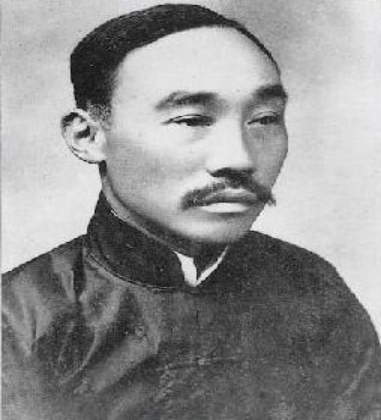
何叔衡(1876-1935) ,湖南宁乡人。1928 年6月,赴莫斯科参加中共第六次全国代表大会。同年9月进入莫斯科中山大学学习。1930年7月从莫斯科回到上海,1931年秋转至中央苏区,在第一次全国苏维埃代表大会上当选为中央执行委员会委员、中央政府最高法院院长。1933年冬,因抵制"左倾错误,被临时中央撒铺了全部领导职务。1934年10月红军长征后,留在根据地坚持斗争。1935年2月在福建上杭县水口牺牲。
2. He Shuheng
He Shuheng(1876-1935) came from Ningxiang, Hunan Province. In June 1928, he went to Moscow for attending the sixth national congress of the Communist Party of China. Then in September, he went to the Sun Yat-Sen University in Moscow. He came back to Shanghai in July 1930. A year later, he arrived at the central Soviet Area in autumn. At the first national Soviet Congress, he was appointed as the commissioner of Central Executive Committee, and the president of the Central Government Supreme Court. In the winter of 1933, he was dismissed from his job by the Interim Central government because he resisted the left-leaning mistake. When the main force of Red Army started the Long March in October 1934,he stayed at the base area for fight. In February 1935, he sacrificed his life in Shanghang county in Fujian province.
3.毛泽覃
毛泽覃(1905- 1935),湖南湘潭人。1927年奉命参加南昌起义,安排到叶挺的第十一军政治部工作。起义部队在广东潮汕地区受挫后被派往井冈山,联络毛泽东的秋收起义部队。1929年初随红四军主力挺进赣南,担任中共赣西南特委委员、中共吉安县东固区委书记。在第三次反“围剿’战中,与师长萧克指挥部队连续取得富田、老盘山等战斗的胜利。1933年初,在瑞金中央苏区担任中央局秘书长期间,和邓小平、古柏、谢维俊一道,被指责为“罗明路线在江西的执行者”而遭到错误撒职处分。中央红军长征前夕,被任命为中央苏区分局委员和红军独立师师长。主力红军长征后,率领独立师转战于闽赣边界和武夷山区。1935年4月25日在江西瑞金黄鳝口牺牲。
3. Mao Zeqin
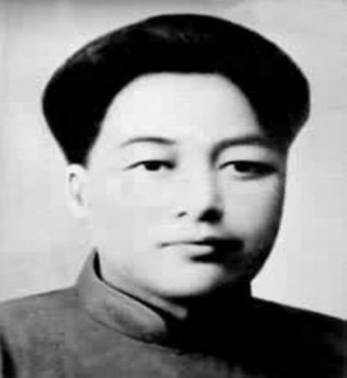
Mao Zeqin(1905-1935)was born in Xiangtan, Hunan Province.In1927,he joined the Nanchang Uprising under orders,working in the eleventh army political department led by Ye Ting.Their uprising team was sent to Jinggangshan after the setback in Chaoshan area to contact with the Autumn Harvest Uprising team led by Mao Zedong.In the year of 1929,he headed for the south of Ganzhou with the fourth Red Army,and was appointed as the commissioner of the Special Committee in Southwest Ganzhou of CPC,and the secretary of Donggu district in Ji’an county.In the third fight of anti- encirclement and suppression,he won the successive triumphs with the troop commanded by Xiao Ke,the division commander.In the beginning of the year 1933,when he was the secretary general of central agency in Central Soviet Area,he was criticized with Deng Xiaoping,Gu Bo and Xie Weijun as the performer of route of Luo Ming in Jiangxi province,and was finally dismissed.At the eve of the Long March,he was appointed as the commissioner of the sub-office of Central Soviet Area and the division commander of the Red Army’s Independent division.After the main force set off,he commanded the division to transfer to the border of Fujian-Jiangxi province and Wuyi Mountain. On April 25th ,1935,he sacrificed his life in Ruijin.
4.赵博生 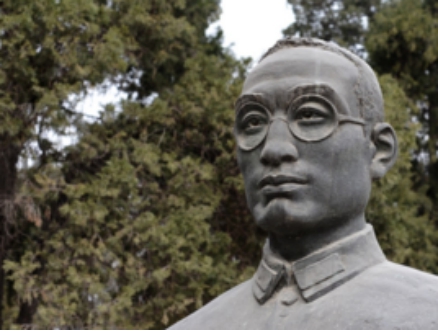
赵博生(1897- 1933) ,河北黄骅人。1930 年任国民革命军第二十六路军参谋长。“九一八”事变后请求北上抗日遭拒。在中共地下党组织的帮助下,赵博生于1931年10月加人中国共产党。12月14日,与董振堂等在江西宁都率部起义。部队改编为中国工农红军第五军团,赵博生任军团参谋长兼十四军军长。1933年1月,在第四次反“围剿”中壮烈牺牲,毛泽东称他为“坚决革命的同志”。
4. Zhao Bosheng
Zhao Bosheng(1897-1933),was born in Huanghua,Hebei province. In 1930, he was the chief of staff of the twenty-sixth army of national revolutionary army. After the Mukden incident, he requested to go north to join the anti-Japan war,but was refused. With the assistance of underground Party of CPC,he joined the CPC in October,1931.On December 14th,he led an uprising with Dong Zhentang and others in Ningdu,Jiangxi province. His army was later reorganized into the fifth legions of the Chinese Red Army of the Peasants and Workers, and he served as the chief of staff of legions and the commander of 14th army.In January 1933, he sacrificed in the fight of the fourth anti-encirclement and suppression. Mao Zedong praised him as the Comrades of the Resolute Revolution.
5.刘伯坚 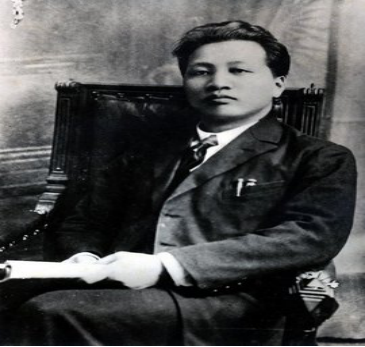
刘伯坚(1895- 1935),四川平昌人。1930 年秋从苏联回国到中央苏区工作,任中共中央军委秘书长。1931年11月当选为中华苏维埃共和国中央执行委员,并任苏区工农红军学校政治部主任。12月,参与策划宁都起义。协助季振同、董振堂等领导了红五军团参加反“围剿”作战,屡建战功。1934年10月红军长征后,刘伯坚留守赣南坚持游击战争。1935年3月4日在信丰、会昌交界处被俘。1935 年3月21日在江西大余县英勇就义。
5.Liu Bojian
Liu Bojian(1895-1935),was born in Pingchang,Sichuan province.When he came back China from the Soviet Union in the autumn,1930,he served as the secretary general of Central Military Commission at Central Soviet Area.In November,1931,he was appointed as the central executive member of Soviet Republic of China,and the political director of the school of Chinese Red Army of the Peasants and Workers in Soviet Area.In December,he planned and joined the Ningdu Uprising.He helped Ji Zhentong,Dong Zhentang and others led the fifth legion to fight for anti-encirclement and suppression,and repeatedly built up war achievements.After the starting of the Long March in October,1934,he stayed in the south of Ganzhou for guerrilla war.On March 4th ,1935,he was captured at the junction of Xinfeng county and Hui Chang county.On March 21st,he sacrificed in Dayu county in Jiangxi province.
6.阮啸仙
广东河源人。1927年10月任中共广东省委组织部长。“九一八”事变后调中央苏区工作。1931年被选为中华苏维埃执行委员会委员,担任审计委员会主席。红军长征后留下继续斗争,担任中共赣南省委书记兼赣南军区政治委员。1935年3月6日,在指挥作战中不幸中弹牺牲。
6. Ruan Xiaoxian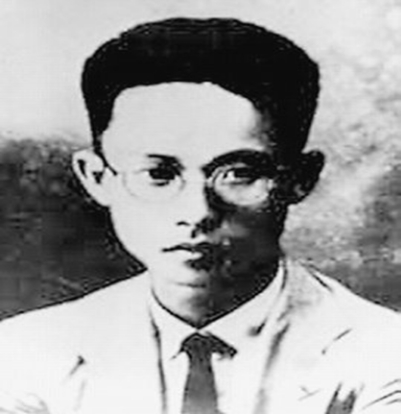
Ruan Xiaoxian was from Heyuan,Guangdong province.In October,1927,he served as the Minister of Organization of CPC Guangdong Provincial Party Committee.After the Mukden Incident,he was sent to the Central Soviet Area for working.In the year of 1931,he was elected as the commissioner of Central Soviet Executive Committee,and also served as the Chairman of Audit Committee.He stayed at the Soviet Area after the setting off of the Long March,serving as the secretary of the CPC south of Ganzhou Provincial Party Committee,and the Political Commissioner of military district of the south of Ganzhou.On March 6th,1935,he was shot and sacrificed his life in a fight.
7.贺昌
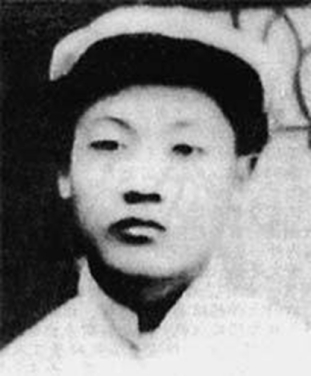
贺昌(1906- -1935),山西离石县柳林镇人。1927 年8月,参加南昌起义,随部队转战广东潮汕地区。11月,辗转香港参加中共广东省委常委会,参与筹划广州起义。1931 年1月被派往中央苏区。1932 年2月任红军总政治部副主任。红军长征后奉命任中央军区政治部主任,与项英、陈毅一起留守坚持斗争。1935年3月5日在会昌河边壮烈牺牲。
7.He Chang
He Chang(1906-1935),was from Liulin town,in Lishi county ,Shanxi province.In August,1927,he joined the Nanchang Uprising,and then transferred to Chaoshan,Guangdong province with the army.In November,he went to Hong Kong for attending the standing committee of the CPC Guangdong provincial committee,and planned the Guangzhou Uprising.In January,1931,he was sent to work in Central Soviet Area.In February,1932,he served as the deputy director of the Red Army General Political Department.After the setting off of the Long March,he was appointed as the director of Political department of Central Military District ,and stayed at the Soviet Area under orders with Xiang Ying,Chen Yi.On March 5th,1935,he heroically gave his life by the Huichang River.
8.梁柏台 
梁柏台(1899- -1935) ,浙江新昌人。1931 年5月自苏联回国参加国内革命斗争。9月奉命前往江西瑞金,在11月召开的第一次全国苏维埃代表大会上,被选入宪法起草委员会,执笔起草了《中华苏维埃共和国宪法大纲》《中华苏维埃共和国婚姻条例》和《苏维埃政府组织法》等法令。中华苏维埃共和国临时中央政府成立后,历任中央司法委员会委员,临时最高法庭委员等职。期间,负责制订了一系列条例和法令,亲自培训司法干部,建立起苏维埃共和国独特的司法机关和司法制度。红军长征后与陈毅等留在江西坚持斗争。1935年3月3日在率部突围中被俘,不久在江西大余县英勇就义。
8.Liang Botai
Liang Botai(1899-1935)was from Xinchang,Zhejiang province.In May,1931,he came back China from the Soviet Union for the Internal revolution.In September,he went to Ruijin.In November,he was elected as the commissioner of the Constitution Drafting Committee on the first national Soviet Congress.He drafted the outline of the Constitution of the Soviet Republic of China,the Marriage Ordinance of the Soviet Republic of China,and Organic Law of the Soviet Government,etc.After the establishment of the Interim Central Government of Soviet Republic of China,he served as the commissioner of the central judicial Commission,the commissioner of the Interim Supreme Court and other positions.During his incumbency,he was responsible for formulating a series of regulations and laws,and personally trained judicial cadres.He founded the unique judiciary authorities and systems of the Soviet Republic of China.He stayed at the Soviet Area with Chen Yi.On March 3rd,1935,he was captured when he broke out of the encirclement.Later he gave his life at Dayu county,Jiangxi province.