第二章“苏维埃”政权及苏区
Chapter Two Soviet Regime and Soviet Areas
1.中华苏维埃共和国的成立
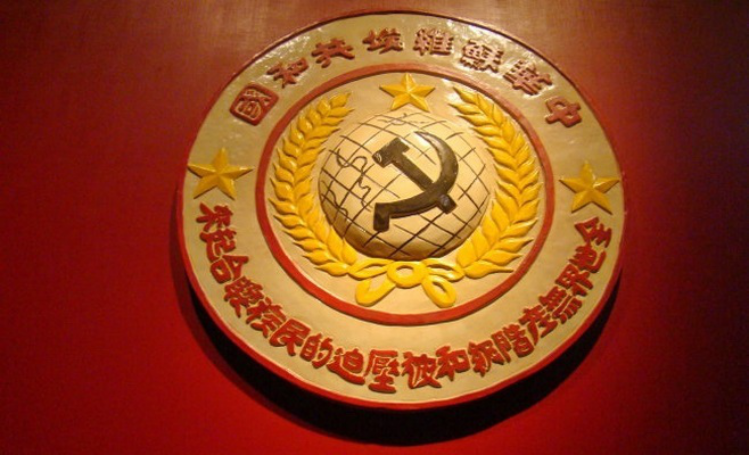
中华苏维埃共和国,是土地革命战争时期,由中国共产党人独立领导创建的第一个国家政体,是中华人民共和国的历史预演。
1931年11月7日,中华苏维埃共和国临时中央政府在江西中央苏区成立,毛泽东任主席,定都于瑞金,以中国工农红军作为国家的武装力量。中华苏维埃中央政府的建立,是中国共产党人创建人民革命政权的宝贵探索与尝试。中华苏维埃共和国政府的成立,是中共中央根据当时革命斗争形势发展的客观需要和现实可能性作出的重大决策。
一是统一领导全国各根据地和红军斗争的迫切需要。从1927年10月毛泽东率领秋收起义部队开始创建井冈山根据地,到1931年秋短短的4年时间里,中国共产党领导人民创建了10多块“工农武装割据”的农村革命根据地,掀起了土地革命的高潮。然而,由于中华民国政府的严密封锁、积极围剿,加上交通阻隔,各根据地和红军的斗争活动基本上是各自为政,难以形成合力。因此,中国共产党迫切需要建立一个全国性的政权来加强领导、统一步调。
二是争取政治主动,实现人民利益的迫切需要。在当时的中国政坛上,实际上已经存在着两种性质截然不同的政权,一种是共产党领导的苏维埃政权,一种是国民党执政的国家政权。随着各地苏维埃区域的建立和迅速发展,中国共产党迫切需要建立苏维埃国家政权,以便赢得政治斗争的主动权,同时也只有尽快建立苏维埃国家政权,才能更好地保护和实现苏区人民乃至全国人民的根本利益。
三是以瑞金为中心的中央苏区的形成为开基建国创造了有利条件。1930年12月到1931年9月,毛泽东、朱德领导红一方面军连续取得第一、二、三次反“围剿”战争的胜利,赣南、闽西两块革命根据地连成一片,形成了以瑞金为中心的拥有21座县城、5万平方公里面积、250万人口的全国最大的根据地--中央根据地,这就为中华苏维埃共和国的成立奠定了坚实的基础。瑞金因其具有优越的地理位置、深厚的群众基础和稳定的周边环境,成为红色首都的不二选地。
1. The Establishment of the Soviet Republic of China
The Soviet Republic of China is the first national polity founded by Chinese Communists independently. It is the historical preview of the People’s Republic of China.
On November 7th,1931 Interim Central Government of Soviet Republic of China was founded in the Jiangxi central Soviet Area,with Mao Zedong being the president, Ruijin being the capital, and Chinese Workers’ and Peasants’ Red Army being the national major force. The establishment of the Interim Central Government of Soviet Republic of China is the precious exploration and effort of Chinese Communists to establish People’s revolutionary regime. It is the significant decision made by the Central Committee of CPC on the basis of the object needs and realistic possibilities of the development of the revolutionary struggle at that time.
The first is the urgent need for unified leadership of the national bases and the Red Army struggle. In October 1927, Mao Zedong commanded the contingent of the Autumn Harvest Uprising to found the Jinggangshan Mountain Base Area. Until the autumn in 1931, the CPC led the people to create more than 10 rural revolutionary base areas that were fragmented by the armed force of the peasants and the workers. These achievements had set off the climax of the Land Revolution. However, due to the tight blockade and the encirclement and suppression of the Republic of China, as well as the traffic block, the struggles of Red Army and each base area were difficult to unite together. This was the reason why the CPC needed to establish a national regime to reinforce the leadership and the step conformity.
The second is the urgent need for the political initiative and the achievement of people’s interests. In Chinese Politics at the time, there were actually two different regimes, namely the soviet regime led by the CPC, and the national regime led by the KMT. With the establishment and rapid development of local Soviet Areas, CPC had to found the soviet national regime so as to win the initiative of political struggle, to protect and achieve the fundamental interests of people in Soviet Area, and even the whole nation.
The third is the advantage for the foundation of the country created by the establishment of Central Soviet Area. From December 1930 to the September 1931, the First Front Army of the Chinese Red Army of the Peasants and the Workers led by Mao Zedong and Zhu De won the successive triumphs in the first, second and third fights of anti-encirclement and suppression. The two revolutionary base areas including the south of Ganzhou and the west of Fujian were formed into one area, and thus formed Central base area--- the largest base area, with 21 counties, an area of 50,000 square kilometers, and a population of 2.5 million, centered on Ruijin. This laid a solid foundation for the establishment of the Soviet Republic of China .The superior location, the solid mass foundation and the stable surrounding made Ruijin a good choice to be the capital.
2.中央苏区及地方苏区
(1)中央苏区
由以瑞金为中心的赣南、闽西苏维埃区域组成的中央革命根据地,也称中央苏区,是第二次国内革命战争时期全国最大的革命根据地,是全国苏维埃运动的中心区域,在我国新民主主义革命时期起到了承上启下的作用,为新中国的成立奠定了坚实基础,为后人留下了辉煌的历史和丰富的遗产。
2. Central Soviet Area and Local Soviet Areas
(1)Central Soviet Area
The central revolutionary base area is formed by the Soviet Areas of the south of Ganzhou and the West of Fujian. It is also called the Central Soviet Area. It is the largest revolutionary base area centered on Ruijin during the period of the second Internal Revolutionary War. It was the center of the central area of national soviet campaign, and played a transitional role in the Chinese New Democratic Revolution. Central Soviet Area laid a solid foundation for the founding of the People’s Republic of China, and left its people with glorious history and abundant legacies.
(2)闽浙赣(赣东北)苏区
闽浙赣苏区位于福建、浙江、江西三省边界,由方志敏、邵式平、黄道等建立辖三省边界20余县。1928年1月,方志敏在江西弋阳、横峰领导武装起义,创建赣东北革命根据地。1928年冬,闽北革命根据地创立。不久,赣东北革命根据地与闽北革命根据地合并,赣东北红军与闽北红军合编为红十军。1932年冬,赣东北省委,省苏维埃政府改为闽浙赣省委和省苏维埃政府,正式创建了闽浙赣苏区。1935年1月,苏区遭到国民党军袭击,方志敏被俘后牺牲,闽浙赣苏区转为游击区。
(2)Fujian-Zhejiang-Jiangxi(Northeast Jiangxi) Soviet Area.
Being located in the borders of Fujian, Zhejiang and Jiangxi provinces, Fujian-Zhejiang-Jiangxi Soviet Area was established by Fang Zhimin, Shao Shiping and Huang Dao, ect., who established and governed over 20 counties along the borders of three provinces. In January 1928, Fang Zhimin commanded an armed uprising at Yiyang and Hengfeng in Jiangxi province, and set up the Northeast Jiangxi Revolutionary Base. In the winter of 1928, North Fujian Revolutionary Base was established. Later, the two revolutionary bases merged and the two armies combined into the Tenth Red Army. In the winter of 1932, The Northeast Jiangxi Province Party Committee and Provincial Soviet Government were changed into Fujian-Zhejiang-Jiangxi Provincial Party Committee and Provincial Soviet Government, and the Fujian-Zhejiang-Jiangxi Soviet Area was formally established. In January 1935, the Soviet Area was attacked by KMT. Fang Zhimin gave his life after capture. As a result, Fujian-Zhejiang-Jiangxi Soviet Area became a guerrilla zone.
(3)湘鄂西苏区
湘鄂西苏区位于湖北、湖南两省交界地区,包括湘鄂边区和洪湖苏区,面积2.5万平方公里,人口370万。湘鄂西苏区主要领导为贺龙,周逸群,邓中夏等。1930年7月,周逸群领导的红六军与贺龙领导的红四军(后改为红二军)在湖北公安会师组成红二军团(后改为红三军)。洪湖和湘鄂边两块根据地连成一片,湘鄂西革命根据地成立。1933年12月,由于反“围剿”战争失利,红三军遭到重大损失,部队向川东南和黔东转移,创建湘鄂川黔边苏区。
(3)The Western Hunan-Hubei Soviet Area
Being located in the border regions of Hunan and Hubei provinces, West Hunan-Hubei Soviet Area consisted of Hunan-Hubei Soviet Area and Honghu Lake Soviet Area, covering an area of 25,000 square kms., with a population of 3.7 million. The main leaders of this Soviet Area included He Long, Zhou Yiqun, Deng Zhongxia, etc. In July 1930, the sixth Red Army led by Zhou Yiqun and the Fourth Red Army Group (later changed into the Second Red Army) led by HeLong joined forces in Gong’an ,Hubei province, to form the Second Red Army Group(later changed into the Third Red Army).The two revolutionary bases, namely Honghu Lake and Hunan-Hubei Border united and the Western Hunan-Hubei Revolutionary Base was established. On December 12,1933, due to the setback of anti-encirclement and suppression, the Third Red Army suffered heavy losses and was forced to transfer to Southeast Sichuan and East Guizhou to establish Hunan-Hubei-SicHuan-Guizhou Border Soviet Area.
(4)鄂豫皖苏区
鄂豫皖苏区位于湖北、湖南、安徽三省边界的大别山,前身为鄂东、豫南和皖西根据地。1931年,三块根据地连成一片形成鄂豫皖苏区,所辖面积4万平方公里,人口约35万。在1932年4月,张国焘,陈昌浩等到达鄂豫皖苏区,成立中共鄂豫皖中央分局。同年11月,鄂豫皖苏区红军合编为中国工农红军第四方面军。1932年10月,由于第四次反“围剿”战争失败,红四方面军退出鄂豫皖苏区,留下红二十五军继续坚持斗争。
(4)Hubei-Henan-Anhui Soviet Area
Hubei-Henan-Anhui Soviet Area was located in Dabie Mountain, the border of Hubei, Henan and Anhui Provinces. Its predecessor was East Hubei, South Henan and West Anhui revolutionary base. In 1931, the three revolutionary bases merged into Hubei-Henan-Anhui Soviet Area, covering an area of 40,000 square kms, with a population of about 350,000.In April,1932,Zhang Guotao, Chen Changhao, etc arrived at the Soviet Area and set up CPC Hubei-Henan-Anhui Branch. In November, the Red Army of this Soviet Area was reorganized as the Fourth Red Army. In October 1932, due to the failure of the fourth anti-encirclement and suppression war, the Fourth Red Army retreated from Hubei-Henan-Anhui Soviet Area, leaving the Twenty-fifth Corps to continue the struggle.
(5)鄂豫陕苏区
鄂豫陕苏区位于湖北、河南、陕西三省边界。1934年11月,中共鄂豫皖省委和徐海东率红二十五军离开鄂豫皖苏区开始长征,12月9日到达陕西省洛南县庾家河(今属丹凤县)地区。12月10日,中共鄂豫皖省委决定创建鄂豫皖苏区,改鄂豫皖省委为鄂豫陕省委,徐宝珊、吴焕先先后任书记、代理书记。1935年5月,鄂豫陕苏区建成,人口50万。7月,红二十五军离开鄂豫陕苏区西征北上,转向陕甘苏区,红军余部留下继续坚持游击战争。
(5)Hubei-Henan-Shaanxi Soviet Area
Hubei-Henan-Shaanxi Soviet Area was located in the border of Hubei, Henan and Shaanxi provinces. In November 1934, under the leadership of the CPC Hubei-Henan-Anhui Provincial Committee and Xu Haidong, who led the Red Army Twenty-fifth Corps left the Soviet Area and started the Long March. They arrived at Yujiahe region of Luonan County (belongs to Danfeng County at present), Shaanxi province on December 10th . The CPC Hubei-Henan-AnHui Provincial Committee determined to establish Hubei-Henan-Shaanxi Soviet Area and changed CPC Hubei-Henan-Anhui Provincial Committee into CPC Hubei-Henan-Shaanxi Provincial Committee, with Xu Baoshan, Wu Huaxian serving as the secretary and acting secretary successively. In May 1935,Hubei-Henan-Shaanxi Soviet Area was established with a population of 500,000 .In July, the Red Army Twenty-fifth Corps left the Soviet Area and forged northwest to Shaanxi-Gansu Soviet Area. The remaining army left behind continued the guerrilla war.
(6)左右江苏区
左右江苏区位于广西左江右江和红水河流域。1929年12月11日,邓小平,张云逸,韦拔群等在广西右江领导了百色起义,成立了红七军和右江苏维埃政府。1930年2月1日,邓小平,李明瑞,俞作豫等领导龙州起义,成立了红八军和左江苏维埃政府,并创建了左右江苏区。不久,龙州城失守,红八军编入到红七军。1931年2月,邓小平等率红七军转战到中央苏区,留下韦拔群等坚持斗争。至1932年8月,苏区基本丧失。
(6)Zuo River-You River Soviet Area
Zuo River -You River Soviet Area was located in the basin of Zuo River, You River and Hongshui River of Guangxi Province. On December 11th ,1929,Deng Xiaoping, Zhang Yunyi, Wei Baqun, etc led Baise Uprising in the You River of Guangxi, and set up the Seventh Red Army and You River Soviet Government. On February 1st ,1930,Deng Xiaoping, Li Minrui, Yu Zuoyu, etc, commanded Longzhou Uprising. As a result, the Eighth Red Army transferred to the Central Soviet Area under the leadership of Deng Xiaoping. Other leaders such as Wei Baqun stayed to keep on struggling. Till August 1932, the Soviet Area was mostly lost.
3.宁都起义
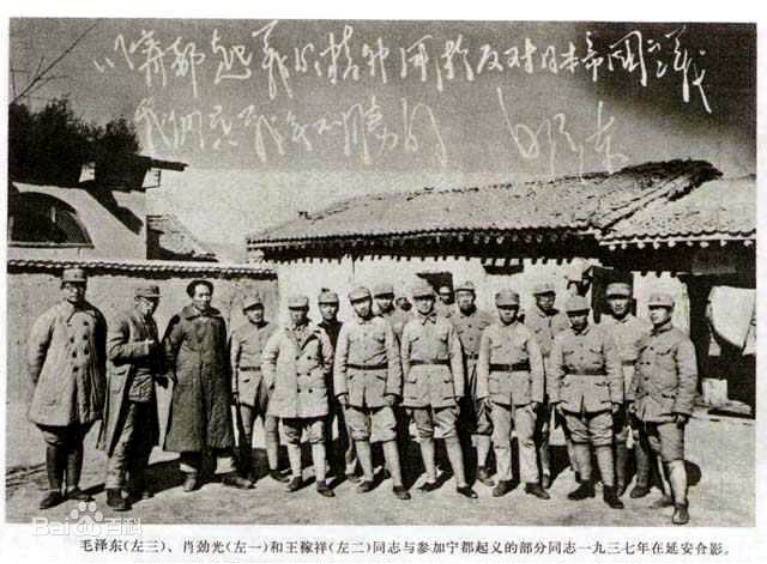
宁都县位于江西省赣州市北部。1931年12月,国民革命军第26路军在中国共产党苏区中央局的指导下,于江西省宁都城举行的武装起义。宁都起义是第二次国内革命战争时期一次著名的起义,它有力地打击了国民党反动派反对共产党的政策,给中国工农红军增加了一支新的力量,极大地鼓舞了全国人民的革命士气,对巩固和发展中央革命根据地起了重要作用。
3. Ningdu Uprising
Ningdu county is located in the north of Ganzhou, Jiangxi province. In December 1931, the 26th army of the National Revolutionary Army held the armed uprising in Yudu under the command of the Soviet Area Central Agency of CPC. This uprising is a well-known uprising during the period of the Second Internal Revolutionary War. It vigorously combated the anti-Communist policies of the KMT, adding a new force to the Chinese Peasant Red Army, greatly boosting the revolutionary morale of the people throughout the country, and played an important role in consolidating and developing the central revolutionary base.
4.红军长征
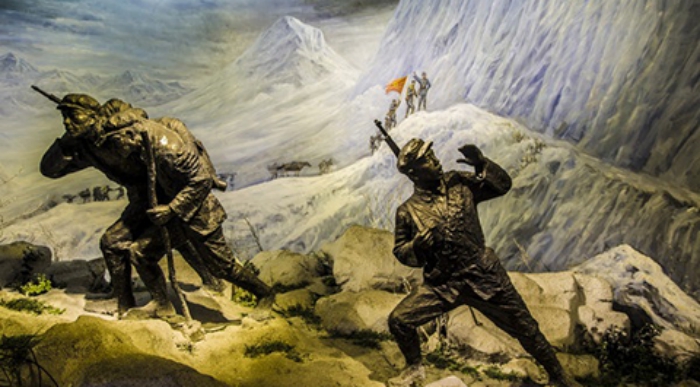
红军长征,是第二次国内革命战争时期中国工农红军主力从长江南北各根据地向陕北革命根据地进行的战略大转移。第五次反围剿失败后,中央主力红军为摆脱国民党军队的包围追击,被迫实行战略性转移,退出中央根据地,进行长征。1934年10月,中国工农红军主力军从赣州出发,到1936年10月,红军三大主力在甘肃会师,万里长征胜利结束。历时两年,行程二万五千里。故而又称两万五千里长征。中国工农红军的长征是一部伟大的革命英雄主义史诗。它向全中国和全世界宣告,中国共产党及其领导的人民军队,是一支不可战胜的力量。红军长征,铸就了伟大的长征精神,直到现在也深深地影响着中国人民。
4. The Long March of Red Army
The Long March of Red Army is a strategic transfer of the major force of Chinese Red Army from the northern and southern bases of Yangtze River to the revolutionary base in the north of Shaanxi province during the second Internal Revolutionary War. After the failure of anti-encirclement and suppression, the Central major force of Red Army had to transfer in order to get rid of the chase of KMT army. Chinese Red Army was forced to leave the central base area and start the Long March. In October 1934, major force of Chinese Red Army started the Long March from Ganzhou. In October 1936, the successful meeting of three main forces of Red Army symbolized the ending of the Long March. They took two years and traveled 25,000 kms, thus the Long March is also called the Long March of twenty-five thousand kilometers. It is a great epic of revolutionary heroism, announcing to the whole nation and the world that the CPC and its armies and people is a powerful and invincible team .The Long March created the great Long March spirit that still influences and educates Chinese deeply nowadays.