第四章 革命英雄
Chapter 4 Revolutionary Heroes
一、起义的决策者和领导者——毛泽东
毛泽东在1927年“八七”会议后,受中共中央委托,以中央特派员身份赴湖南,同中共湖南省委讨论秋收起义计划,成立前敌委员会,毛泽东任书记。8月下旬,毛泽东在安源张家湾召开军事会议,对秋收起义作具体部署。9月9日,震撼湘赣的秋收起义爆发。起义初期受到了挫折。9月19日,毛泽东在文家市召开前委会议,决定改变攻打长沙的计划,向井冈山进军。29日,部队在江西永新县三湾村进行改编,确立了党对军队的绝对领导和在军队中实行民主制度,奠定了无产阶级领导的新型人民军队的基础。10月27日,毛泽东率领部队到井冈山的中心茨坪,并向四周的永新、宁冈、遂川、茶陵、酃县、桂东、莲花出击,历时一个多月,创立了在中国共产党领导下中国第一个农村革命根据地。毛泽东同志在秋收起义中的主要贡献是:发动和领导了秋收起义,并在起义陷入危机的时刻保存了革命火种,探索出了中国革命的正确道路。
The decision maker and leader of the uprising -- Mao Zedong 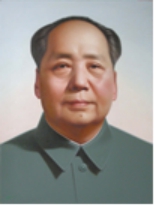
After the "August 7th" meeting in 1927, Mao Zedong, entrusted by the CPC Central Committee, went to Hunan as a special commissioner of the CPC Central Committee to discuss the autumn harvest uprising plan with Hunan Provincial Party Committee of the Communist Party of China and establish the former enemy Committee, appointing Mao Zedong as the secretary. In late August, Mao Zedong held a military conference in Zhangjiawan, Anyuan, and made specific arrangements for the Autumn Harvest Uprising. On September 9, the Autumn Harvest Uprising that shocked Xiang and Gan broke out. The early uprising suffered setbacks. On September 19th, Mao Zedong held a committee meeting in Wenjia City and decided to change his plan of attacking Changsha and march towards Jinggangshan. On the 29th, the army was reorganized in Sanwan Village, Yongxin County, Jiangxi Province, which established the party’s absolute leadership over the army and the implementation of a democratic system in the army, laying the foundation for the new type of people’s army led by the proletariat. On January 27, Mao Zedong led his troops to Ciping, the center of Jinggang Mountain, and attacked Yongxin, Ninggang, Suichuan, Chaling, Yingxian, and Guidong and Lianhua all around. It took more than a month to create China’s first rural revolutionary base under the leadership of the Communist Party of China. The main contribution of comrade Mao Zedong in the Autumn Harvest Uprising was: initiating and leading the Autumn Harvest Uprising, and preserving the revolutionary kindling when the uprising was in crisis, and exploring the correct path of the Chinese revolution.
二、秋收起义总指挥——卢德铭
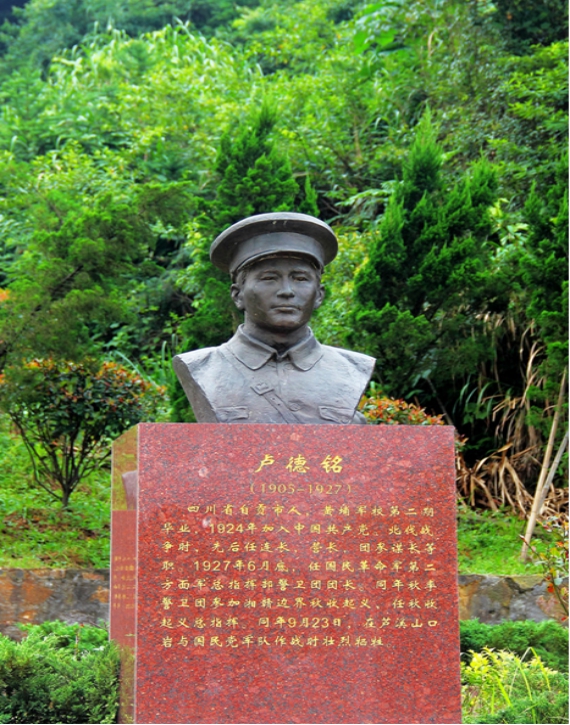
卢德铭( 1905—1927),四川宜宾县双石铺狮子湾(今四川自贡市)人,6岁入私塾,受到了传统的启蒙教育。1924 年春,卢德铭投考黄埔军校。在校期间,成绩优异,孙中山誉其为“学生的楷模”,并成为中国共产党党员。毕业留校在政治部组织科工作。1925 年11月,卢德铭任叶挺独立团第二营第四连连长。北伐平江战役中,他出奇制胜;在攻占汀泗桥、贺胜桥的恶战中,他勇猛拼杀,立了大功而升任第二营营长;攻克武昌城,因战功卓著和指挥有方,升任二十四师七十三团参谋长。
根据“八七”会议精神,1927年9月初,毛泽东在安源张家湾召开军事会议确定了秋收起义计划,组建了约5000人的工农革命军第一师,辖3个团,卢德铭任起义军总指挥。9月9日,湘赣边界秋收起义爆发。在起义受到挫折后,卢德铭坚定地支持毛泽东的主张,指挥全师向罗霄山脉进发,22日下午抵达萍乡芦溪更田村,部队在此宿营。23日拂晓,部队出发,后卫部队被敌人追上,卢德铭在指挥部队突围的战斗中壮烈牺牲。
Commander in chief of Autumn Harvest Uprising—Lu Deming
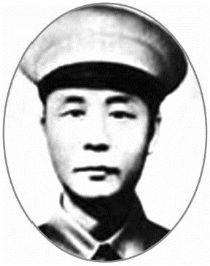
Lu Deming (1905-1927), a native of Shuangshipu Lion Bay (now Zigong City, Sichuan), Yibin County, Sichuan Province, entered the private school at the age of 6 and received traditional enlightenment education. In the spring of 1924, Lu Deming entered the Huangpu Military Academy. During his time at school, he has achieved outstanding results. Sun Yat-sen praised him as a "model student" and then he became a member of the Communist Party of China. After graduation, he stayed to work in the organization section of the Political Department. In November 1925, Lu Deming was appointed as the fourth company commander of the second battalion at Ye Ting’s independent regiment. In the battle of Pingjiang in the Northern Expedition, he defeated the enemy by an unexpected action. In the fierce battle of capturing Tingsi Bridge and Hesheng Bridge, he bravely fought and made great achievements and was promoted to the commander of the second battalion. In the battle to conquer Wuchang City, he was promoted to the chief of staff of the 73rd regiment of the 24th Division because of his outstanding combat skills and effective command.
According to the spirit of the "August 7th" conference, in early September 1927, Mao Zedong held a military conference in Zhangjiawan, Anyuan, and determined the Autumn Harvest Uprising plan. He established the first division of the industrial and agricultural revolutionary army with about 5000 people, which had three regiments under its jurisdiction. Lu Deming was the commander in chief of the uprising army. On September 9, the Autumn Harvest Uprising broke out in the border between Hunan and Jiangxi. After the setback of the uprising, Lu Deming firmly supported Mao Zedong's idea and directed the whole division to advance to the Luoxiao mountains. On the afternoon of the 22nd, he arrived at Pingxiang Luxi Gengtian Village, where the troops camped. At dawn on the 23rd, the troops set off but the guards were overtaken by the enemy. Lu Deming sacrificed vigorously in the battle to command the troops to break through.