第三章 萍乡革命胜迹
Chapter 3 Revolutionary Sites of Pingxiang
一、全国爱国主义教育基地:安源路矿工人运动纪念馆
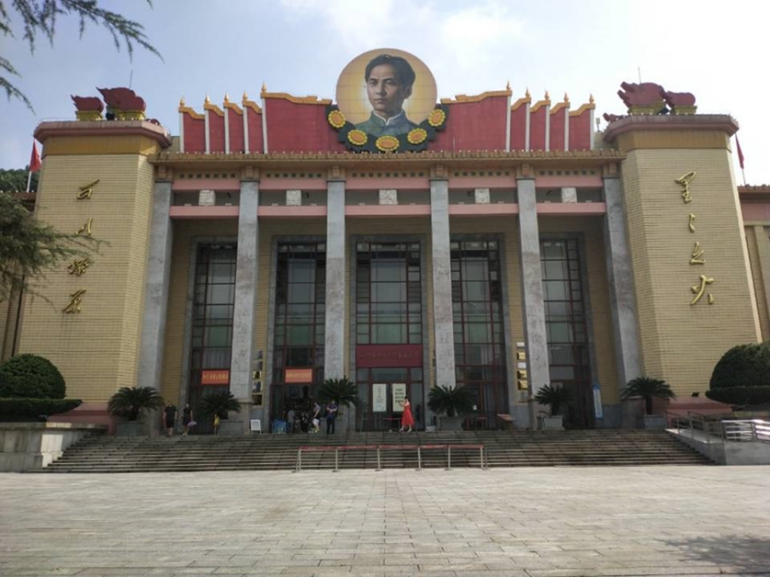
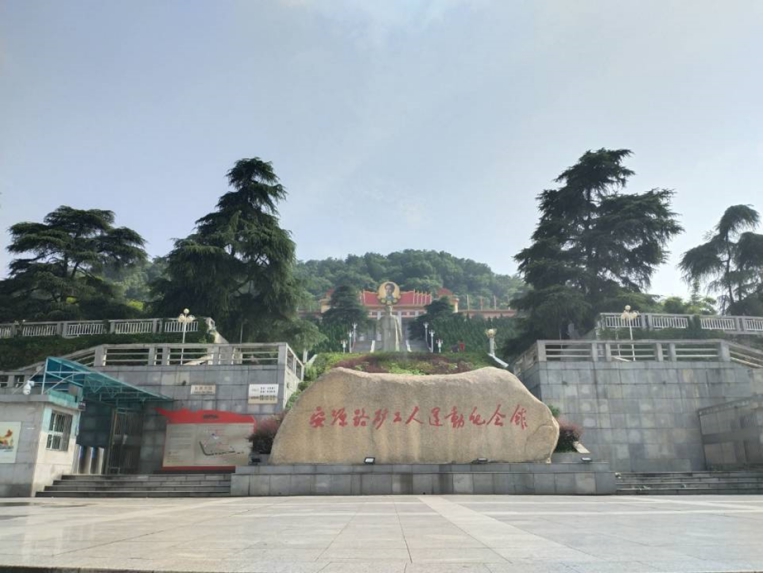
安源路矿工人运动纪念馆是纪念性革命博物馆,位于萍乡市安源区。纪念馆前身是安源路矿工人俱乐部遗址陈列室,创办于1956年,1968年兴建陈列馆,1969年开放,1984年改为现名。该馆占地面积200亩,建筑面积3245平方米,陈列面积2400平方米,坐落在安源牛形岭山腰。主体建筑高24米,长100米,宽30米,系二层钢筋混凝土结构。主楼正中悬挂的是安源路矿工人俱乐部部徽,两边是红色瓷砖组成的五星红旗和大型有机玻璃火炬灯。大厅门口有6根用大理石砌成夫人方开型大柱,高约14米。纪念馆地势巍峨,建筑雄伟,在苍松翠柏芳草花卉衬托点缀下宛如公园,是一个典型的革命文物与自然景观相结合的游览地。1984年,邓小平为安源路矿工人运动纪念馆题写了馆名。
在安源路矿工人运动纪念馆收藏的8000余件革命文物中一级藏品约200件。其中安源工人集体创作的长达1600多行的长篇叙事歌谣《劳工记》(手抄本),在中国现代文学史上占有一定地位,是很珍贵的藏品。纪念馆展示内容除了文字图片和实物外,还有《矿工苦》《毛主席去安源》《大罢工》《工农联盟》《奔向井冈山》等大型雕塑,全面介绍了1921--1930年安源工人运动的历史,反映这一时期中国共产党及其优秀代表毛泽东刘少奇、李立三、陈潭秋等把马克思列宁主义与安源工人运动具体实践相结合,建立党、团、工会组织,领导工人罢工,开展农民运动,建立革命统一战线,参加武装斗争,走农村包围城市武装夺取政权道路的伟大历史过程。
National patriotism education base- Memorial Hall of Railway Workers and Coal Miners
Anyuan Road Mine Workers Movement Memorial Hall, located in Anyuan Town, Pingxiang City, Jiangxi Province, is a Memorial Revolutionary Museum. It is formerly known as the Anyuan Road Mine Workers Club site showroom. Founded in 1956, the exhibition hall was built in 1968. And it was opened in 1969 and the present name was changed in August 1984. The museum covers an area of 200 mu. The construction area is 3245 square meters and the display area is 2400 square meters. It stands on the hillside of Niuxingling, Anyuan. The main building is 24 meters high, 100 meters long and 30 meters wide. It is a two-layer reinforced concrete structure. In the center of the main building, there hangs an emblem of the Anyuan road and mine workers' club with both sides flanked by red tiles with five-star red flags and large Perspex torch lights. At the entrance of the hall, there are 6 large columns made of marble, which are about 14 meters high. The memorial hall, with its lofty terrain and majestic architecture, looks like a park against the background of pines, cypresses, grasses and flowers. It is a typical scenic spot combining revolutionary cultural relics and natural landscape. In 1984, Deng Xiaoping inscribed the name of the Anyuan Road Mine Workers’ Movement Memorial Hall.
There are about 200 first-class collections of more than 8000 revolutionary cultural relics in Anyuan Road and Mine Workers' Movement Memorial Hall. Among them, the long narrative ballad of more than 1600 lines called "labor records" (handwritten copies) written by Anyuan workers, which occupies a certain position in the history of modern Chinese literature and is an extremely precious collection. In addition to the text and pictures, the display of the memorial also includes large-scale sculptures such as "Miners 'Suffering", "Mao Chairman Goes to Anyuan", "Great Strike", "Workers and Peasants' Union", and "Going to Jing Gangshan", which comprehensively introduces the history of Anyuan worker’ movement from 1921 to 1930, reflecting that during this period the Communist Party of China and its outstanding representatives Mao Zedong Liu Shaoqi, Li Lisan, Chen Tanqiu, etc. put Marxism Leninism into practice combined with the specific practice of Anyuan workers' movement and the great historical process of establishing party, league and union organizations, leading workers' strikes, implementing peasant movement, establishing revolutionary united front, participating in armed struggle and taking the road of encircling the countryside and seizing power by armed forces in cities.
二、安源纪念广场——胜利广场
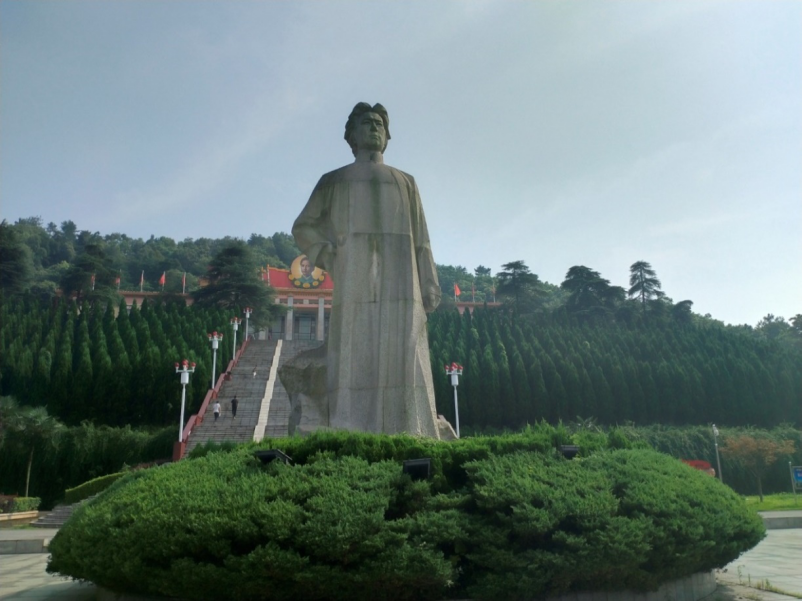
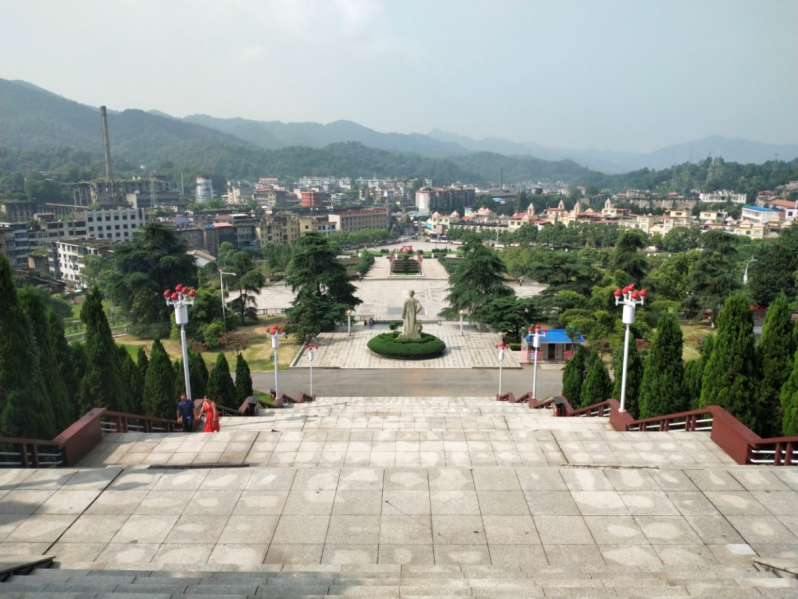
胜利广场由江西萍矿集团出资建设,占地面积近4800平方米。广场中央的毛泽东雕像是根据著名画家刘春华先生所创作的《毛主席去安源》油画,经中宣部批准,由南京美术学院雕刻院吴显村院长雕刻,南京晨光机械厂以锡铜为材料铸造的。雕像高5.2米、基座2.8米,合计8米,重3.6吨。毛泽东雕像于2002年9月18日落成,是为纪念产业工人第一个共产党支部——安源路矿支部成立80周年、安源路矿工人大罢工胜利80周年而建造的。雕像基座2.8米表示从1921年中国共产党成立后,毛泽东来安源开展工人运动到1949年全国解放28年的革命史。铜像高5.2米,表示从1949年到2002年的52年建设社会主义新中国的历史。基座加上铜像为8米,象征着毛主席八次来安源。
安源胜利广场还有一组浮雕群,主题是《安源之歌》,介绍了安源煤矿自1989年建矿一百年来的发展史。浮雕共分六个部分:第一部分为“苦难的日子”,反映在旧社会资本家压迫下的安源矿工的苦难生活:第二部分为“星星之火”,反映的是1921年中共“一大”召开不久,时任中共湖南湘区支部书记的毛泽东第一次来安源下矿井与矿工促膝谈心,从此点燃安源工运的星星之火;第三部分为“大罢工”,反映的是在1922年9月中共安源路矿支部发动的,由刘少奇和李立三直接领导的震惊中外的安源路矿工人大罢工;第四部分为“秋收起义”,反映的是1927年秋,根据党的“八七”会议精神,在湘赣边界举行秋收起义,为此,担任起义前委书记的毛泽东同志,在安源张家湾主持召开了秋收起义军事会议,从而开始农村包围城市,武装夺取政权的革命道路的探索;第五、第六部分为“义无反顾、再创辉煌”,反映的是解放后,安源工人发扬“义无反顾、团结奋斗、开拓进取、再创辉煌”的精神,建设社会主义新中国的伟大事业。
Anyuan Memorial Square---Shengli Square
Shengli square is invested and constructed by Jiangxi Ping Mine Group, covering an area of nearly 4800 square meters. With the approval of the Propaganda Department of the CPC Central Committee, the statue of Mao Zedong in the center of the square is craved by Wu Xiancun, the dean of the Sculpture Institute of Nanjing Academy of Fine Arts, with the material of tin and copper supplied by Nanjing Chenguang Machinery Factory, according to the oil painting "Chairman Mao goes to Anyuan" created by the famous painter Liu Chunhua. The statue is 5.2 meters high and the base is 2.8 meters, add up to 8 meters and 3.6 tons in weight. The statue of Mao Zedong was completed on September 18, 2002, in order to commemorate the 80th anniversary of the founding of Anyuan Road and Mine Branch, the first branch of the Communist Party of China, and the 80th anniversary of the victory of the Anyuan Road Miners' People's Congress strike. The 2.8m-long statue base shows the 28 year revolutionary history from the founding of the Communist Party of China in 1921, Mao Zedong's workers' movement in Anyuan to the liberation of the whole country in 1949. The bronze statue is 5.2 meters high, indicating the 52 years' history of the construction socialist of a new China from 1949 to 2002. The base plus the bronze statue is 8 meters, which symbolizes Chairman Mao's eight visits to Anyuan.
Anyuan Shengli Square also has a group of reliefs. The theme of those is “the song of Anyuan”, which introduces the development history of Anyuan coal mine since it was built in 1989.The relief is divided into six parts: the first part is the "days of suffering", reflecting the suffering life of Anyuan miners under the oppression of the old social capitalists: the second part is "the fire of the stars", which reflects the after the 1st National Congress of the Communist Party of China conference, Mao Zedong, the secretary of the Hunan Xiang District Branch of the Communist Party of China, first came to Anyuan to have a heart to heart talk with the miners, which ignited the spark of Anyuan labor movement
The third part is the "Great Strike", which reflects the strike of the Anyuan Road and Mine workers that shocked the Chinese and foreign under the direct leadership of Liu Shaoqi and Li Lisan, launching by the Anyuan Road and Mine Branch of the Chinese Communist Party in September 1922.The fourth part is "Autumn Harvest Uprising", which reflects the emergency of the Autumn Harvest Uprising on the border of Hunan and Jiangxi in the autumn of 1927, according to the spirit of the party's "August 7th" conference. For this reason, Comrade Mao Zedong, who was the Secretary of the uprising Committee, presided over the military conference of the Autumn Harvest Uprising in Zhangjiawan, Anyuan. From then on, he began to explore the revolutionary road of encircling the city in rural areas and seizing power by armed forces. The fifth and sixth parts are "no hesitation, no resplendence". They reflect that after liberation theworkers advocate the spirit of "proceeding without hesitation, working together, forging ahead and creating splendid achievement again", and the great cause of constructing a new socialist China.
三、安源路矿工人运动旧址群
1.安源路矿工人俱乐部旧址
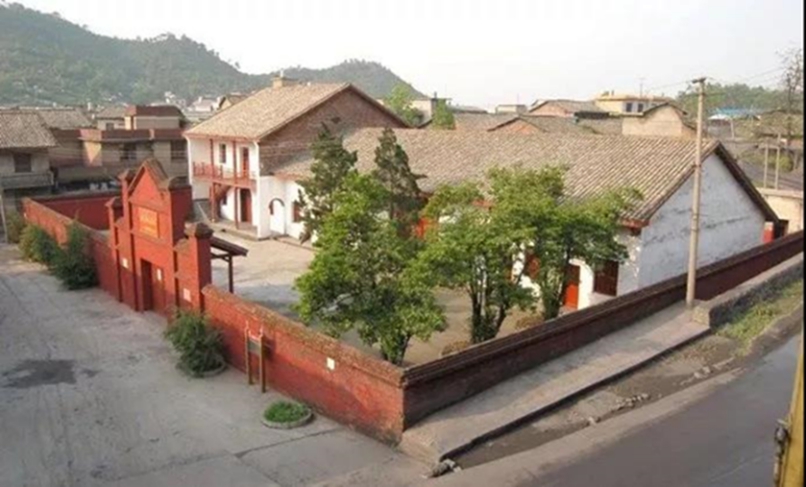
旧址位于萍乡市安源镇牛角坡52号,共8栋7间,为砖木结构平房,建筑面积206平方米,原为湖北同乡会会馆。1921年冬,毛泽东、李立三到安源煤矿进行考察,决定在此发动工人运动,建立工人革命团体。毛泽东给这个团体取名为“安源路矿工人俱乐部”。1922年2月,在李立三的领导下,安源建立了第一个共产党支部。3月,成立了工人俱乐部筹备委员会,李立三等将俱乐部的宗旨定为“联络感情,交换知识”,并呈文萍乡县署备案。5月1日,安源路矿工人俱乐部成立,李立三任主任,朱少连任副主任。1982年2月23日,旧址被列入第二批全国重点文物保护单位。
Anyuan Road and Mine Workers Movement Old Site Group
1. Anyuan Road and Mine Workers Movement Old Site Group
The former site is located at No. 52, Niujiaopo, Anyuan Town, Pingxiang City. There are 8 buildings and 7 rooms in total. It is a brick and wood structure bungalow with a building area of 206 square meters. It was originally the guild hall of Hubei Province.In the winter of 1921, Mao Zedong and Li Lisan visited Anyuan coal mine and decided to launch the workers' movement and establish workers' revolutionary groups here. Mao Zedong named the group”Anyuan Road and Mine Workers' Club”.
In February 1922, under the leadership of Li Lisan, Anyuan established the first Communist Party branch. In March, the Preparatory Committee of the Workers ’Club was established. Li Lisan and others set up the club in the purpose of “ connecting feelings and exchanging knowledge ”, and submitted it to Pingxiang County Office for the record.

2.安源煤矿总平巷井口旧址
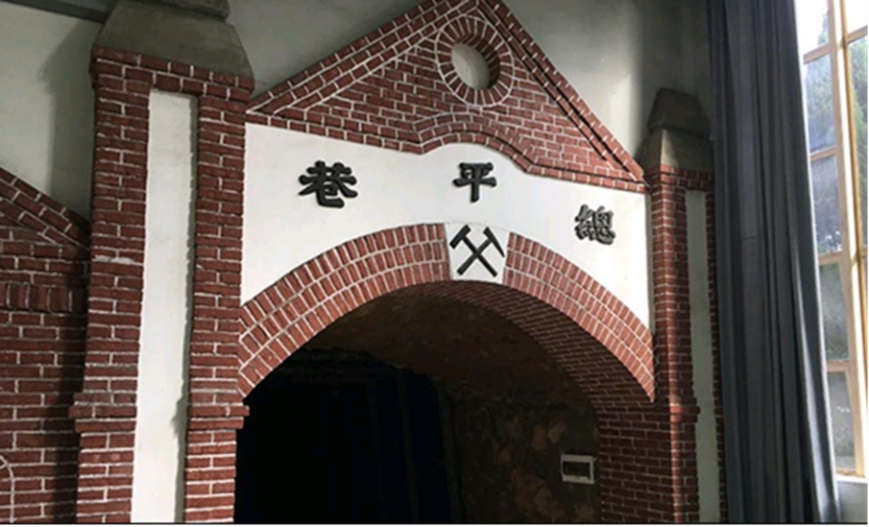
安源煤矿总平巷井口旧址位于萍乡市安源镇,是1898年清政府洋务运动中开办安源煤矿时建造的,呈牌坊形,是安源煤矿矿井总出入口。总平巷井口上方塑有铁锤和岩尖图案,井口一直保存完好。1921年秋,毛泽东来安源煤矿考察,曾从此井口到矿井与工人交谈。李立三、刘少奇在安源领导工人运动时,也常来此了解工人生产、生活情况。1922年9月,安源工人大罢工时,总平巷井口是工人主要的斗争场所。1957年被列为江西省重点文物保护单位。
2. The General Roadway site of Anyuan Coal Mine
The general roadway site of Anyuan coal mine is located in Anyuan Town, Pingxiang City. It was built in 1898 when Anyuan coal mine was opened by the Qing government during the Westernization Movement. It is in the shape of an archway and it was the general entrance and exit of Anyuan coal mine. There are hammer and rock tip patterns on the top of the wellhead of the general roadway and the wellhead has been well preserved.In the autumn of 1921, Mao Zedong came to Anyuan coal mine for investigation and talked with workers from the wellhead to the mine. When Li Lisan and Liu Shaoqi were leading the labor movement in Anyuan, they often came here to learn about the production and living conditions about workers. In September 1922, when the workers in Anyuan went on strike, the main place for workers to fight was at the head of the main level lane. In 1957, it was listed as a key cultural relic protection unit in Jiangxi Province.
3.安源毛泽东旧居
毛泽东旧居位于安源镇八方井44号毛紫云家里。该建筑是安源煤矿建矿初期所盖,为砖瓦结构平房,以后几经维修,保持原貌。1921 年秋,毛泽东来安源就住在这里。该旧址现为萍乡市重点文物保护单位。
3. The former residence of Mao Zedong in Anyuan
The former residence of Mao Zedong is located in Mao Ziyun's house at No. 44 Bafangjing, Anyuan Town. The building was covered by the Anyuan Coal Mine at the initial stage of construction, and it was a brick and tile structure bungalow. After several times maintenance, it remains the original appearance. In the autumn of 1921, Mao Zedong came to Anyuan and lived here. The old site is now a key cultural relic protection unit in Pingxiang City.
4.安源路矿工人补习夜校旧址
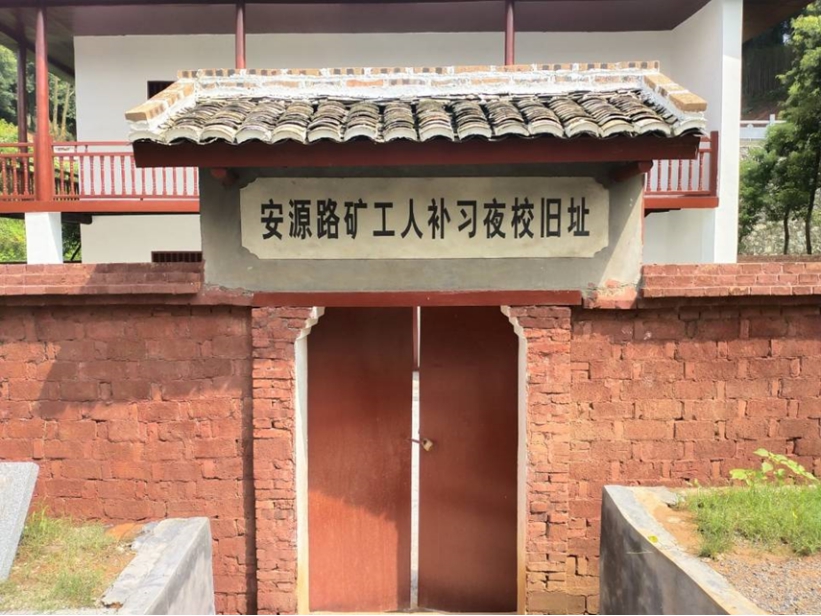
安源路矿工人补习学校,位于安源五福斋巷内,为二层砖木结构楼房,面积约800平方米。该夜校由李立三创建。李立三(1899-1967),原名李陈部,又名李能至,湖南醴陵人,1919年赴法国勤工俭学,1921年9月回到上海后、由中共中央派湖南。不久,按照毛泽东的布置,李立三来到安源工作,着手筹办平民小学招收工人子弟免费人学,并亲自任教。在办学过程中,李立三以访同学生家长的名义,广泛接触工人,了解各方面情况,宣传工人阶级团结奋斗、自己解放自己的通理。通过思想启蒙和实践考察,李立三发展了一批社会主义青年团团员,并于 1921年底,成立了由8名团员组成的工人小团体。1922年1月,李立三创办了工人补习学校,附设于平民小学内。为了使工人在学习中易于理解、接受,并把教学活动与工人俱乐部的筹建联系起来,李立三在教学中联系工人的日常生活实际问题,自编教材,通俗地向工人讲解马列主义的基本现点,把阶级启蒙教育同传授文化知识结合起来。在办工人补习学校过程中,李立三见建党条件已成熟,便从青年团员中吸收了5名先进分子加入中国共产党。1922 年2月间,中共安源路矿支部成立,有党员6人,李立三任支部书记,这是中国共产党在中国产业工人中的第一个支都。1922年罢工胜利后,工人补习学校扩充为7所,分布于安源、紫家冲、湘东、醴陵、株洲各地。该旧址现为江西省重点文物保护单位。
4. The Anyuan Road Mine Workers Tutorial Night School Site
Anyuan Road and Mine Workers Tutoring School, located in Anyuan Wufuzhai Alley, is a two-story building with wooden brick, covering an area of about 800 square meters. The evening school was established by Li Lisan. Li Lisan(1899-1967),formerly known as Li chenbu, also known as Li Nengzhi, was born in Liling, Hunan Province. He went to France for study in 1919. After returning to Shanghai in September 1921, he was appointed by CPC to Hunan. Soon after, according to Mao Zedong’s arrangement, he came to work in Anyuan. He was about to organizing civilian primary school and recruiting worker’s children for free. Besides, he decided to teach them in person. In the course of managing the school, Li Lisan, in the name of visiting the parents of the students, extensively contacted the workers, and learned about all aspects of the situation, and promoted the working class solidarity and liberation. Through ideological enlightenment and practical investigation, Li Lisan developed a group of members of Socialist Youth League, and at the end of 1921, he established a small group of workers composed of eight league members. In January 1922, Li Lisan founded the workers' supplementary school, which was attached to the civilian primary school. In order to make workers understand and accept easily in learning, and link teaching activities with the establishment of workers' club, Li Lisan contacted the workers' daily life problems in teaching, and compiled his own teaching materials. He explained the basic points of Marxism-Leninism to workers in a popular way, combining class enlightenment education with imparting cultural knowledge. In the process of running the workers' Remedial school, Li Lisan saw that the conditions for the establishment of the party were mature, thus he recruited 5 advanced elements from the Youth League members to join the Communist Party of China. In February 1922, Anyuan Road and Mine Branch of the Communist Party of China was established with 6 party members and Li Lisan served as the Secretary of the branch, which was the first branch capital of the Communist Party of China among the industrial workers in China. After the victory of the strike in 1922, the workers' tutoring school was expanded to seven, distributed in Anyuan, Zijiachong, Xiangdong, Liling and Zhuzhou. The old site is now a provincial key cultural relic protection unit.
四、秋收起义革命胜迹
1.秋收起义纪念碑
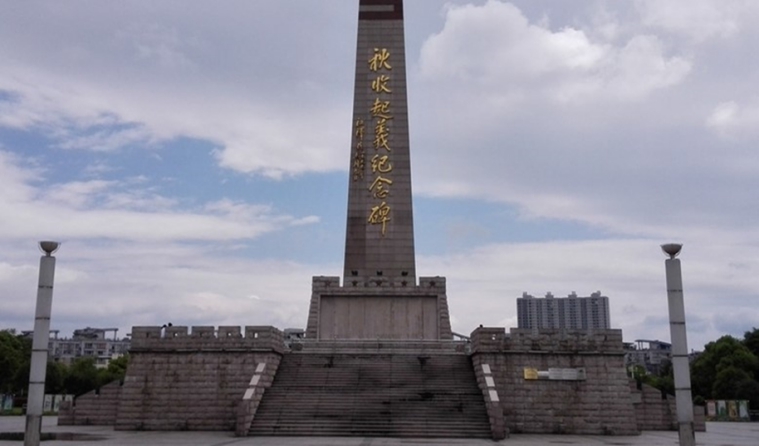
萍乡是秋收起义策源地。1927年初,毛泽东在安源主持召开秋收起义军事会议,并于9月9日亲自发动和领导了震撼全国的秋收起义,第一次高举起工农革命军的旗帜。为纪念这一在中国革命史上占有重要地位的伟大历史事件,1998年6月21日,中共中央办公厅、国务院办公厅批准在萍乡市建立秋收起义纪念碑;2000年8月27日落成。
秋收起义纪念碑矗立在秋收起义广场中心广场的主轴带上,紧临城市主干道建设路。秋收起义纪念碑碑高30.9米,占地面积151平方米,巍然屹立,气势宏伟。纪念碑基座内设有电控设备,长城堡四角和碑顶部装有活动彩色射灯;基座周围有绿化区域;纪念碑基座四周设有较大的平台,成为独具特色的一大景观。
Victory of the Autumn Harvest Uprising Revolution
1. Autumn Harvest Uprising Monument
Pingxiang was the birthplace of the autumn harvest uprising. In early 1927, Mao Zedong presided over the military meeting of the autumn harvest uprising in Anyuan, and personally launched and led the autumn harvest uprising that shocked the whole country on September 9, raising the banner of the workers and peasants revolutionary army for the first time. In order to commemorate this great historical event, which occupies an important position in the history of Chinese revolution, on June 21, 1998, the General Office of the CPC Central Committee and the General Office of the State Council approved the establishment of a monument to the autumn harvest uprising in Pingxiang City. And it was completed in August 27th, 2000.
The autumn harvest uprising monument stands on the main axis of the central of the autumn harvest uprising square, adjacent to the construction road of the city’s main road. The autumn harvest uprising monument stands tall and magnificent with 30.9 meters high and covering an area of 151 square meters .The monument pedestal is equipped with electronic control equipment. The four corners of the long castle and the top of the monument are equipped with mobile color spotlights. There are green areas around the base. The base of the monument is surrounded by a large platform, which becomes a unique landscape.
2.秋收起义军事会议旧址
秋收起义军事会议旧址坐落于安源镇东面张家湾村,占地面积1717平方米,左右两栋房屋相连,左边为砖木结构的四栋三间二层楼房,右边是七间平房。 1927年9月初,毛泽东到安源,在这里召集安源、浏阳等地党和军事负责人会议,传达中共“八·七”会议精神和中共湖南省委关于秋收暴动的决定,讨论了平江、浏阳、醴陵和安源各地农民暴动问题。
安源军事会议不仅是秋收起义的一次军事会议,而且是前敌委员会的第一次会议,是中国工人运动史上和中国工农红军建军史上的一次重要会议,它标志着中国工人运动同农民运动、武装斗争三者开始紧密结合,它确定组建的工农革命军是中国工农红军的前身。
2. The site of Autumn Harvest Uprising Military Conference
The former site of the autumn harvest uprising military conference is located in ZhangJia wan village, east of Anyuan town,covering an area of 1717 square meters. The two houses are connected, with four three-story two-story buildings with brick and wood structure on the left and seven bungalows on the right. In early September 1927, Mao Zedong went to Anyuan, where he called on a meeting of party and military leaders in Anyuan, Liuyang and other places to convey the spirit of the "August 7" meeting of the Communist Party of China and the decision of the Hunan Provincial Committee of the Communist Party of China on the autumn harvest uprising, and discussed the problem of peasant uprising in Pingjiang, Liuyang, Liling and Anyuan.
The Anyuan military conference was not only a military meeting of the autumn harvest uprising, but also the first meeting of the former enemy committee, and an important meeting in the history of the Chinese workers' movement and the history of the construction of the army by the Chinese Workers' and Peasants' Red Army. It marked the beginning of the close integration of the Chinese Workers’ Movement with the peasant movement and the armed struggle. It determined that the formed Workers’ and Peasants’ Revolutionary Army was the predecessor of the Chinese Workers’ and Peasants’ Red Army.