第二章 湘赣边秋收起义
Chapter 2 Autumn Harvest Uprising in Hunan-Jiangxi border region
一、湘赣边秋收起义
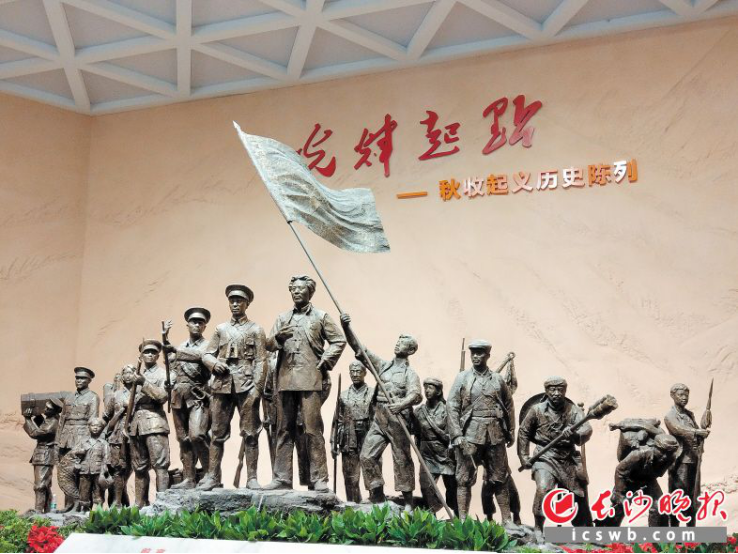
秋收起义是由毛泽东同志在湖南东部和江西西部领导的一次武装起义,这是继南昌起义之后,由中国共产党领导的又一次著名的武装起义。秋收起义是在革命形势极其危急的情形之下,由中国共产党领导的向国民党反动派发起的一次武装反击。从秋收起义开始,毛泽东同志开始了他的职业革命家生涯,展现出了非凡的军事素质和长远的政治眼光,并且较好地解决了中国革命的道路问题。在这次起义过程中,还涌现出了一大批优秀人物,其中许多人后来成为党和国家的栋梁和领导人。秋收起义与南昌起义、广州起义一起成为“大革命”失败后,中国共产党人独立地领导武装斗争的“三大起义”,秋收起义部队进行“三湾改编”确立的“支部建立在连上就”的原则成为人民军队保证“党指挥枪”的重要建军原则。
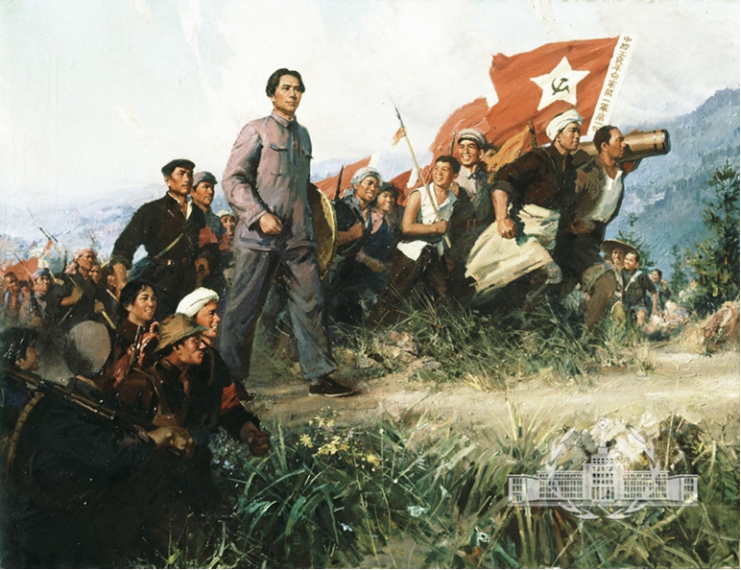
Autumn Harvest Uprising in Hunan-Jiangxi border region
The Autumn Harvest Uprising was an armed uprising led by Comrade Mao Zedong in the east of Hunan and the west of Jiangxi. It was another famous armed uprising led by the Communist Party of China after the Nanchang Uprising. The Autumn Harvest Uprising was an armed counterattack against the Kuomintang (Nationalist party) reactionaries launched by the Communist Party of China under the extremely critical situation of the revolution. From the beginning of the Autumn Harvest Uprising, Comrade Mao Zedong began his career as a professional revolutionary, demonstrating his extraordinary military quality and long-term political vision, and better solved the problem in the path of the Chinese revolution. In the course of the uprising, a large number of outstanding people emerged, many of whom later became pillars and leaders of the party and the state. After the failure of “Great revolution”, the Autumn Harvest Uprising, together with the Nanchang Uprising and the Guangzhou Uprising, became the "three major uprisings" of the armed struggle, which was independently led by the Chinese Communists. The principle of “The branch is built on the basis of the company" established by the autumn harvest uprising troops under the "Three Bays Adaptation" has become an important military principle for the People's Army to ensure that the "party commands guns".
二、秋收起义的爆发
1.起义背景
第一次国内革命战争沉重地打击了北洋军阀。当革命发展到长江和黄河流域,蒋介石、汪精卫等国民党反动派叛变了革命,向中国共产党和革命群众举起了屠刀,轰轰烈烈的大革命失败了。为了挽救革命,1927年8月1日,周恩来、贺龙、叶挺、朱德、刘伯承等在南昌举行起义,打响了武装反对国民党反动派的第一枪。
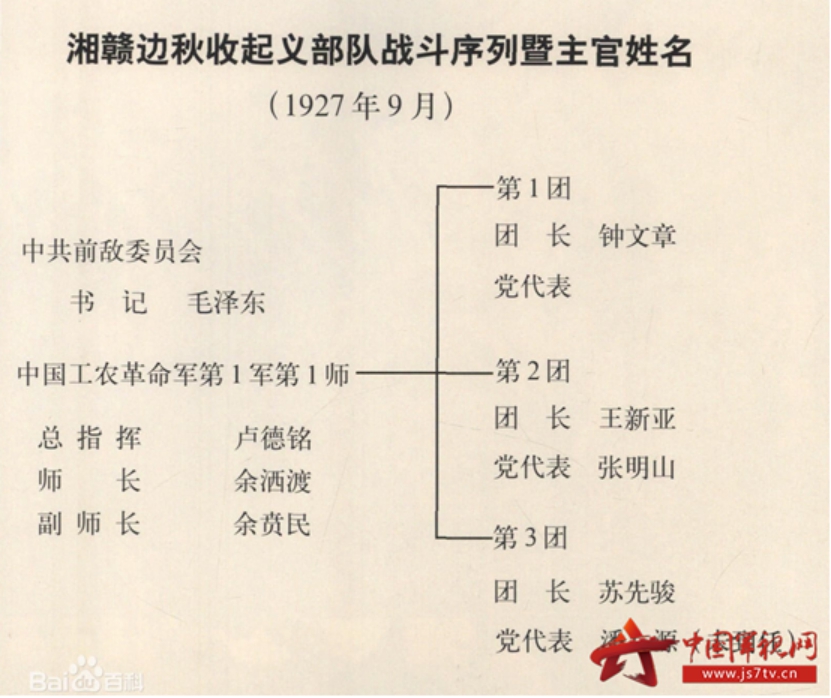
1927年8月7号,党中央在汉口召开了紧急会议,即“八七”会议。会议决定在湘、鄂赣、粤四省举行秋收起义。会后,中共中央委员会委派毛泽东为中央特派员和彭公达一起到湖南,传达“八七”会议精神,改组中国共产党湖南省委员会,领导秋收起义。8月16日,中共湖南省委改组,彭公达任书记。成立了中共湖南省委前敌委员会和行动委员会,毛泽东任前委书记,易礼容任行委书记。决定以中国共产党的名义领导这次起义。由毛泽东负责将修水、铜鼓和安源的武装力量编成工农革命军第一师,并率领该师会攻长沙。任命卢德铭为总指挥,余洒渡任师长,余贲民任副师长,下辖4个团:第一团以原武汉国民政府警卫团为主力,与平江工农义勇队和鄂南崇阳、通城农民自卫军共同组成,钟文璋任团长;第二团由安源工人纠察队和中共党组织控制的矿警队以及安福、永新、莲花、萍乡、醴陵等县的部分农军组成,王新亚任团长;第三团由警卫团一部和浏阳工农义勇军组成,苏先骏任团长。另外还收编了以邱国轩为首的一股土匪武装,改编为第四团,共计5000余人。
9月初,毛泽东先后到达安源、铜鼓,多次召集会议,传达“八七”会议精神和省委决定秋收起义计划,并进行起义前的组织准备和具体部署。秋收起义的目标就是攻打敌人的中心城市—湖南省会长沙,以此扩大革命影响,带动全国革命形势。
The outbreak of Autumn Harvest Uprising
1. The background of the uprising
The first civil war hit the Northern Warlords heavily. When the revolution developed into the Yangtze and Yellow River basins, Chiang Kai-shek, Wang Jingwei and other Kuomintang (Nationalist party) reactionaries rebelled against the revolution and raised a butcher's knife to the Chinese Communist Party and revolutionary masses, and the great revolution failed. In order to save the revolution, on August 1, 1927, Zhou Enlai, He Long, Ye Ting, Zhu De, and Liu Bocheng, etc. held an uprising in Nanchang, firing the first shot of the armed opposition against the Kuomintang (Nationalist party) reactionaries.
On August 7, 1927, the CPC Central Committee held an emergency meeting in Hankou, namely the "August 7" meeting. The meeting decided to hold Autumn Harvest Uprising in Hunan, Hubei, Jiangxi and Guangdong provinces. After the meeting, the Central Committee of the Communist Party of China appointed Mao Zedong as the central commissioner of the Central Committee with Peng Gongda to Hunan to convey the spirit of the "August 7th" meeting, which is to reorganize the Hunan Provincial Committee of the Communist Party of China and lead the Autumn Harvest Uprising. On August 16, the CPC Hunan Provincial Committee was reorganized with Peng Gongda as secretary. The former enemy Committee and Action Committee of the Hunan Provincial Committee of the Communist Party of China were established. Mao Zedong was the Secretary of the former Committee, and Yi Lirong was the Secretary of the Executive Committee. They decided to lead the uprising in the name of the Communist Party of China. Mao Zedong was in charge of compiling the armed forces of Xiushui, Tonggu and Anyuan into the first division of the Workers and Peasants Revolutionary Army, and led the division to attack Changsha. Appointed Lu Deming as the commander-in-chief, Yu Sadu as the commander, Yu Benmin as the deputy commander, under the jurisdiction of 4 regiments: The first regiment, with the former Wuhan National Government Security regiment as the main force, is composed of Pingjiang workers' and peasants' volunteer team, Chongyang and Tongcheng peasants' self-defense forces in southern Hubei, headed by Zhong Wenzhang; the second regiment is composed of Anyuan workers' picket team, the mining police team controlled by the Communist Party of China, as well as some peasant troops in Anfu, Yongxin, Lianhua, Pingxiang and Liling counties, headed by Wang Xinya; the third regiment is composed of the first part of the security regiment It is composed of Liuyang workers' and peasants' Volunteer Army, headed by Su Xianjun. In addition, a group of bandit armed forces headed by Qiu GuoXuan was reorganized into the fourth regiment, with a total of more than 5000 people.
At the beginning of September, Mao Zedong arrived in Anyuan and Tonggu successively, and convened several meetings to convey the spirit of the August 7th meeting and the Provincial Party Committee’s decision on the Autumn Harvest Uprising and carry out the organizational preparation and specific arrangements before the uprising. The goal of the Autumn Harvest Uprising is to attack the enemy's central city, Changsha, the capital of Hunan Province, in order to expand the revolutionary influence and drive the national revolutionary situation.
2.战斗经过
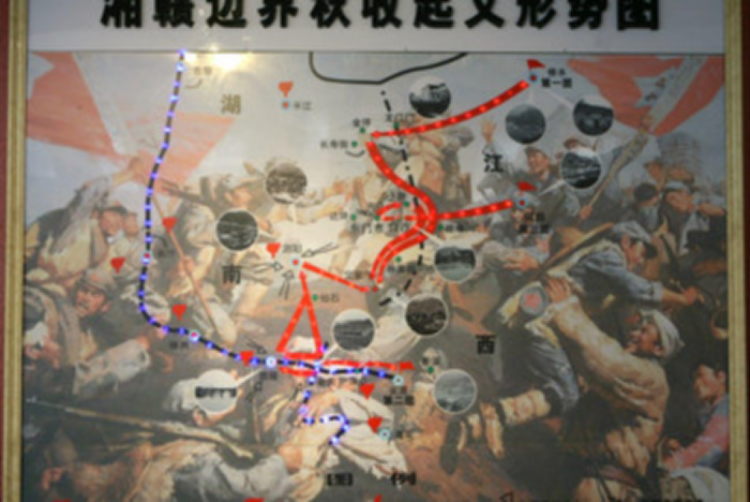
1927年9月9日,在毛泽东为首的前敌委员会领导下,震惊中外的湘赣边界的秋收起义爆发了。参加起义的铁路工人和农民,首先破坏了岳阳至黄沙街,长沙至株洲两段铁路,切断了敌人的交通运输。
第一团从江西修水出发,向长寿街进攻,于9月10日占领了平江县龙门厂。这时混入起义部队的邱国轩部乘机叛变。当第一团路过金坪攻打长寿街时,邱部突然袭击,致使该团腹背受敌,损失200多人,步枪200多支,团长钟文璋失踪,被迫撤出战斗,向浏阳方向转移。
工农革命军第二团于9月9日在安源起义,但进攻萍乡未克。9月12日,二团攻下醴陵,又北进占领浏阳。由于部队麻痹轻敌,9月16日陷入优势敌人的包围,部队被打散,部分突围脱险,不少人牺牲。
工农革命军第三团,在毛泽东同志亲自领导下,于9月11日在铜鼓起义。三团首战告捷,胜利地占领了白沙镇。9月12日又占领了东门市。9月14日,敌人兵分两路包围第三团,该团被迫向上坪撤退。
由于当时革命形势已处于低潮,敌强我弱,加上群众缺乏作战经验,起义军某些指挥员指挥失当,新收编的第四团在战斗中又临阵叛变,致使起义军受到严重挫折。9月14日晚,毛泽东同志在上坪召集3个团的负责人开了紧急会议,鉴于三路起义部队均受挫,毛泽东当机立断改变了攻打长沙的计划,并以前委书记的名义通知起义各部队到浏阳县文家市集结。
1. The process of the battle
On September 9, 1927, under the leadership of the former enemy Committee headed by Mao Zedong, the Autumn Harvest Uprising, which shocked at home and abroad, broke out. The railway workers and peasants who took part in the uprising first destroyed two sections of the railway from Yueyang to Huangsha Street and Changsha to Zhuzhou, cutting off the enemy's transportation.
The first regiment attacked Changshou Street from Xiushui, Jiangxi Province, and occupied Longmen factory of Pingjiang County on September 10. At this time, Qiu GuoXuan, who was involved in the uprising, took the opportunity to rebel. When the first regiment passed by Jinping to attack Changshou Street, the Minister of Qiu suddenly attacked, causing the regiment trapped in a dilemma, and losing more than 200 people and rifles. Zhong Wenzhang, the head of the regiment, disappeared and the group was forced to withdraw from the battle and move to Liuyang.
The Second Regiment of the Workers and Peasants Revolutionary Army revolted in Anyuan on September 9, but attacked Pingxiang unsuccessfully. On September 12, the second regiment captured Liling and then moved north to occupy Liuyang. As the army underestimated the enemy, it was trapped into the encirclement of the enemy on September 16.The troops were broken up and part of them escaped from danger successfully. Many people sacrificed.
The Third Regiment of the Workers and Peasants Revolutionary Army, under the personal leadership of Comrade Mao Zedong, revolted in Tonggu on September 11. The three regiments won the first battle and successfully occupied Baisha Town. On September 12, Dongmen was occupied again. On September 14, the enemy soldiers surrounded the third regiment in two directions, so the regiment was forced to retreat to Shangping.
At that time, the revolutionary situation was at a low ebb, and the enemy was stronger than us. Owing to lacking of combat experience and the inadequate command of the uprising army, the fourth regiment, which was newly incorporated, rebelled in battle causing serious setbacks to the uprising army. On the evening of September 14, Comrade Mao Zedong convened the leaders of the three regiments in Shangping to hold an emergency meeting. In view of the setbacks of the three uprising forces, Mao Zedong immediately changed the plan of attacking Changsha and in the name of the Secretary of the former Party committee informed the uprising forces to gather in Wenjia City, Liuyang County.
3.文家市会师
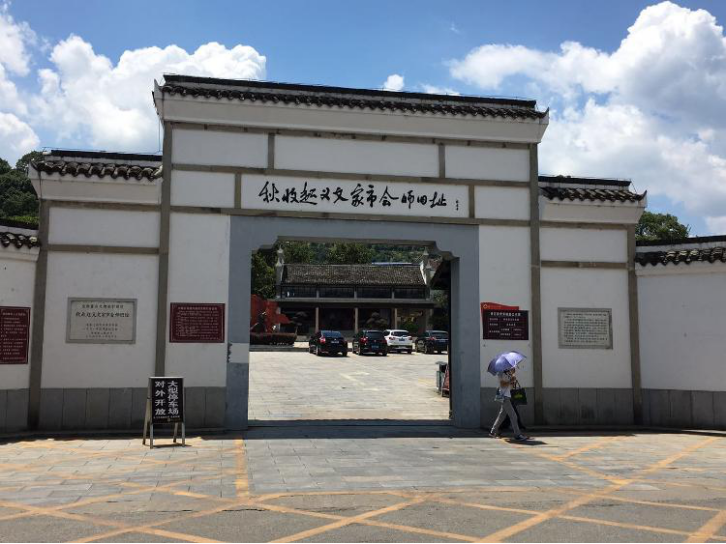
各路起义部队于9月19日在浏阳县文家市会师,师部驻扎在里仁学校。毛泽东当晚在里仁学校召开了前敌委员会会议,分析了当前形势,认为攻打长沙不现实,要改变这个计划,转移到敌人统治力量薄弱的农村去,进行土地革命,发动农民群众,坚持武装斗争。在讨论到哪个地方合适的时候,毛泽东指着湘赣边山形最宽的部分,用生动形象的比喻说:这个像眉毛一样的地方,是罗霄山脉的中段,最适合我们落脚。罗霄山脉地处湖北、湖南、江西、广东四省的交界处,北端地势不如中段险要,又太靠近大城市,敌人统治力量比较强,南段地势比北段好,但是群众基础不如中段。中段地势险要,崇山峻岭,进可以攻,退可以守,离大城市比较远,敌人力量较薄弱。而且革命力量的存在还可以对周围产生政治影响。经过激烈争论,否定了个别人坚持“取浏阳直攻长沙”的主张,决定部队立即离开本地区,沿罗霄山脉南下。
2. Joining Forces in Wenjia City
On September 19, the uprising troops met in Wenjia City, Liuyang County, and the division headquarters were stationed in Liren School. Mao Zedong held a meeting of the former enemy Committee in Liren School that night, and analyzed the current situation. He thought that it was unrealistic to attack Changsha. We should change this plan and transfer it to the countryside where the enemy's ruling power is weak, advocating the agrarian revolution, mobilizing the masses of farmers, and persisting in armed struggle. When discussing which place is suitable, Mao pointed to the widest part of the mountain beside Hunan and Jiangxi, and said with vivid words: this place like eyebrows is the middle part of Luoxiao mountain range, which is most suitable for us to settle down. Luoxiao Mountain stands at the junction of Hubei, Hunan, Jiangxi and Guangdong provinces. The terrain in the north is not as dangerous as that in the middle section, and it is too close to big cities. The enemy has a strong ruling power. The terrain in the south section is better than that in the north section, but the mass base is not as good as that in the middle section. In the middle section, the terrain is precipitous with high mountains and lofty hills, which allows us to take the offensive or the defensive as we choose. And it is far away from the big cities, where the enemy is relatively weak. Moreover, the existence of revolutionary forces can also have political influence on the surrounding areas. After a heated debate, he rejected the idea of "attacking Changsha directly from Liuyang", and decided to leave the local area immediately and go south along the Luoxiao Mountain.
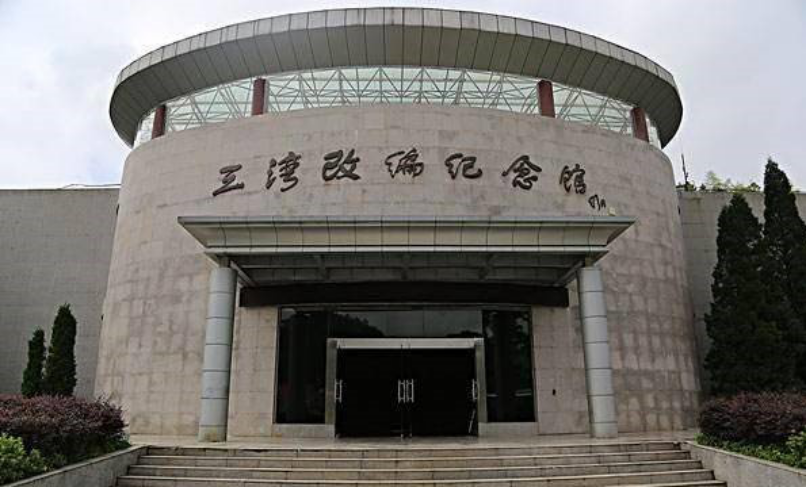
4.三湾改编
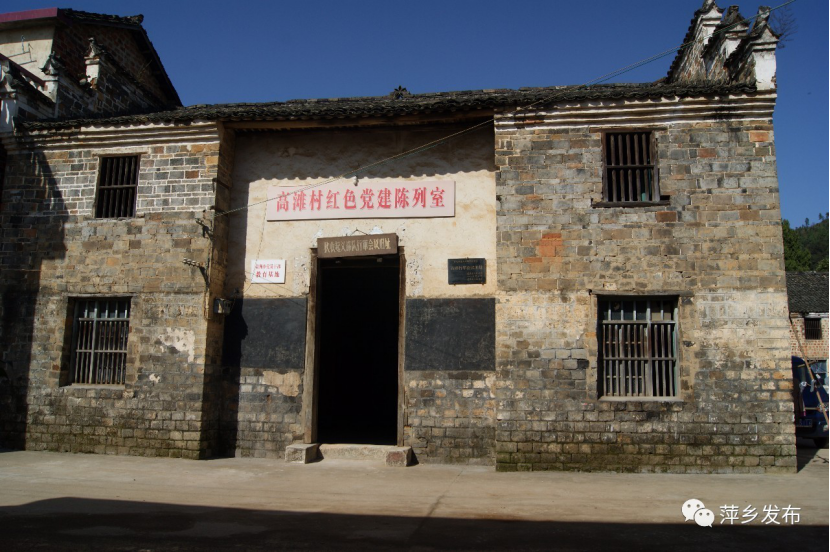
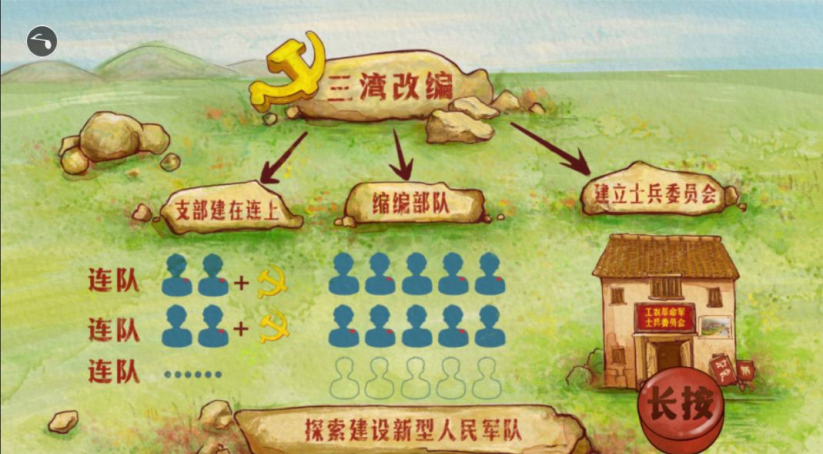
1927年9月29日起义部队到达江西永新县三湾村。三湾村地处湘赣边区的九陇山区,是茶陵、莲花永新、宁冈四县的交界地。为了巩固这支新生的革命军队,适应革命斗争的需要,毛泽东在到达三湾的当天晚上,就主持召开了前敌委员会会议,决定对起义部队进行整顿和改编,确立了党对军队绝对领导的原则,在军队中建立党的各级组织,班设党小组,连设支部,营团建党委,连以上各级均设党代表,全军由毛泽东任书记的前委领导。
三湾改编在人民军队的建军史上具有重要意义,确立了“党指挥枪”的原则,确定了中国共产党对军队的绝对领导,保证了工农革命军的无产阶级性质,从政治上、组织上奠定了新型人民军队的基础。
3. The adaptation of Sanwan
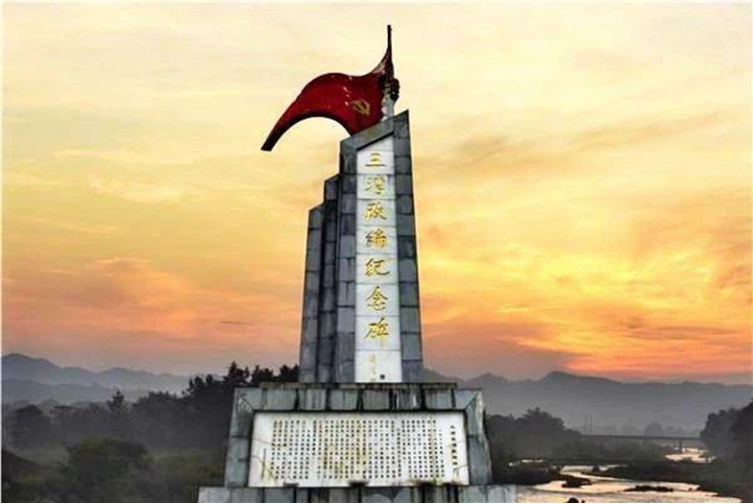
On September 29, 1927, the uprising troops arrived at Sanwan village, Yongxin County, Jiangxi Province. Sanwan village is located in Jiulong Mountain Area, the border area of Hunan and Jiangxi, which is the junction of Chaling, Lianhua, Yongxin and Ninggang counties. In order to consolidate the new revolutionary army and meet the needs of the revolutionary struggle, Mao Zedong, on the night of his arrival at Sanwan, presided over the meeting of the former enemy Committee. He made a decision to undertake and reorganize the uprising troops, and established the principle of the party's absolute leadership over the army. He set up party organizations at all levels in the army, party groups in the class, branches in the company, party committees in the battalion and party representatives all over the company, and the whole army is appointed by Mao Zedong.
Sanwan reorganization is of great significance in the military history of the people's army. It established the principle of "the party commands the gun", determined the absolute leadership of the CPC over the army, guaranteed the proletarian nature of the workers' and peasants' revolutionary army, and laid the foundation of a new type of people's army politically and organizationally.
5.古城会议
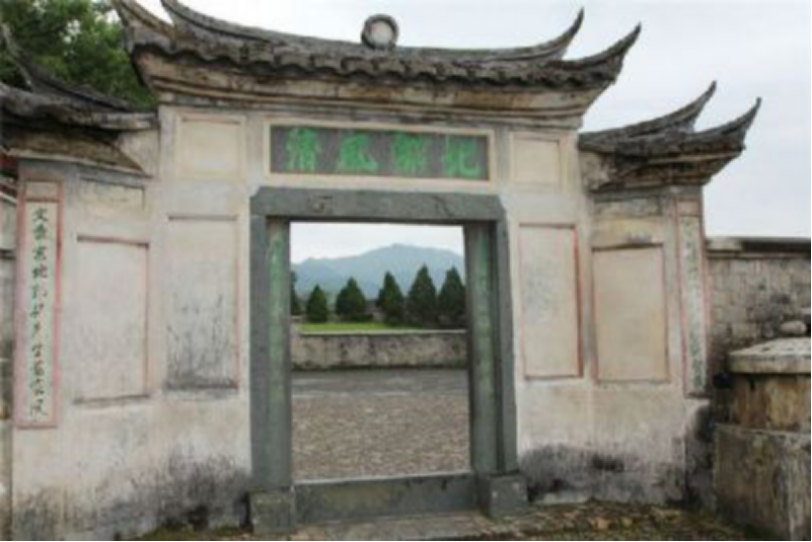
1927年10月3日,毛泽东同志率领工农革命军从三湾来到古城,当天在这里主持召开了前委扩大会议。古城会议是三湾前委会议的继续和发展,历时三天,总结了秋收起义的经验教训,讨论了在罗霄山脉中段建立根据地,开展武装斗争以及争取改造袁文才、王佐两支地方武装等问题。
4. The meeting in ancient pagoda
On October 3, 1927, Comrade Mao Zedong led the Revolutionary Army of Workers and Peasants to the ancient pagoda from Sanwan, where he presided over an enlarged meeting of the former committee. The Ancient City Conference is the continuation and development of the Sanwan Former Committee Meeting. It lasted for three days that summarized the experience and lessons of the Autumn Harvest Uprising and discussed the problems of the establishment of base areas in the middle of the Luoxiao Mountains, carrying out armed struggle and striving to transform the two local armed forces of Yuan Wencai and Wang Zuo.
三、秋收起义的影响和意义
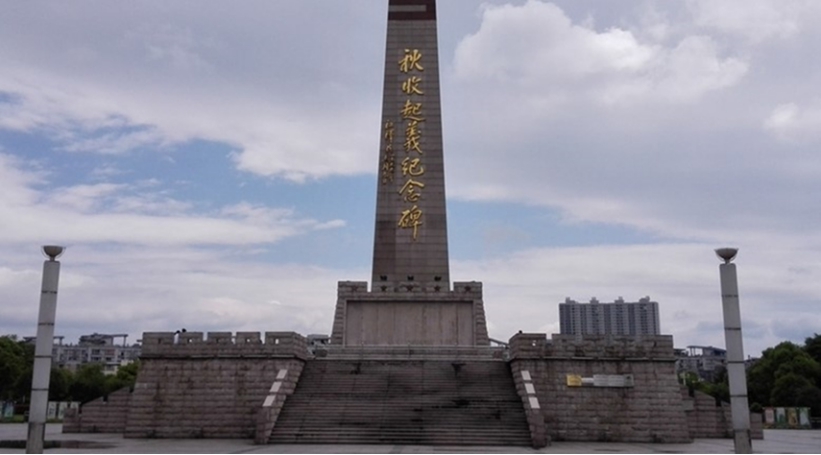
秋收起义扩大了中国共产党的政治影响,探索出了中国革命的正确道路,带动了周边地区的革命发展,在中国革命史上具有开创性的地位。秋收起义对中国革命有着特殊的历史贡献及深远影响,主要体现在以下几个方面:
第一,秋收起义是打出工农革命军的旗号的武装起义,提出并正确地回答了挽救中国革命和夺取革命胜利的关键问题——革命的领导权问题,标志着完全意义上的共产党独立领导革命战争的真正开始。
第二,秋收起义后建立了全国第一个农村革命根据地和红色政权,代表了中国革命的正确方向和道路,中国革命从此进入了以农村为中心、以土地革命为主要任务的革命新阶段,开始走上了以农村包围城市、最后夺取全国政权的中国特色的革命道路。
第三,秋收起义是中国共产党组织领导的最早的工农兵大联合的武装起义。它以军队为主力,把军事运动与民众运动相结合,在起义中建立政权,是“枪杆子里面出政权”这一马克思主义著名论断提出后的第一次全面实践,是“工农武装割据”的萌芽。
第四,秋收起义是毛泽东关于中国革命战略思想伟大实践的起点。毛泽东领导秋收起义的过程是马克思主义普遍真理和中国革命的具体实践相结合的开端,是开辟井冈山道路的开端,是毛泽东思想产生的一个里程碑。
第五,秋收起义是中国共产党武装斗争的有机组成部分。秋收起义、南昌起义和广州起义等大革命失败后的“三次起义”,是中国共产党对革命道路的积极探索;而秋收起义反映党开始独创性地寻求中国特色的革会道路,反映党开始创建新型人民军队的伟大实践。
The influence and significance of Autumn Harvest Uprising
The Autumn Harvest Uprising expanded the political influence of the Communist Party of China, explored the correct path of the Chinese revolution, promoted the revolutionary development of the surrounding areas, and had a pioneering position in the history of Chinese revolution. The Autumn Harvest Uprising has a special historical contribution and profound influence on the Chinese revolution, which is mainly reflected in the following aspects:
First, the Autumn Harvest Uprising is an armed uprising under the banner of the Workers’ and Peasants’ Revolutionary Army. It puts forward and correctly answers the key question of saving the Chinese revolution and winning the victory of the revolution---the question of revolutionary leadership, which symbolizes the real beginning of the revolutionary war under the independent leadership of the Communist Party in a complete sense.
Second, after the Autumn Harvest Uprising, the establishment of the first rural revolutionary base and the red regime represented the correct direction and path of the Chinese revolution. Since then, the Chinese revolution has entered a new stage of revolution with the countryside as the center and the agrarian revolution as the main task. It has embarked on the revolutionary road with Chinese characteristics which is to surround the city with rural villages and finally seize the national power.
Third, the Autumn Harvest Uprising was the earliest armed uprising of workers, peasants and soldiers organized and led by the Communist Party of China. It takes the army as the main force, combines the military movement with the mass movement, and establishes the political power in the uprising. It is the first comprehensive practice after the famous Marxist theory of "political power comes out of the barrel of a gun" was put forward and it is the sprout of the "armed separation of workers and peasants ".
Fourth, the Autumn Harvest Uprising is the starting point of Mao Zedong's great practice of China's revolutionary strategic thought. The process of the Autumn Harvest Uprising led by Mao Zedong is the beginning of the combination of Marxism universal truth and the concrete practice of the Chinese revolution, the beginning of opening up the Jinggangshan Road, and a milestone in the emergence of Mao Zedong thought.
Fifth, the Autumn Harvest Uprising is an integral part of the armed struggle of the Communist Party of China. The "three uprisings" after the failure of the great revolution, such as the Autumn Harvest Uprising, the Nanchang Uprising and the Guangzhou Uprising, are the active explorations of the revolutionary road by the CPC. The Autumn Harvest Uprising reflects the party's original pursuit of the revolutionary way with Chinese characteristics and the great practice of the party in creating a new type of people's army.