第三章 南昌革命胜迹
Chapter Three The Revolutionary Sites of Nanchang
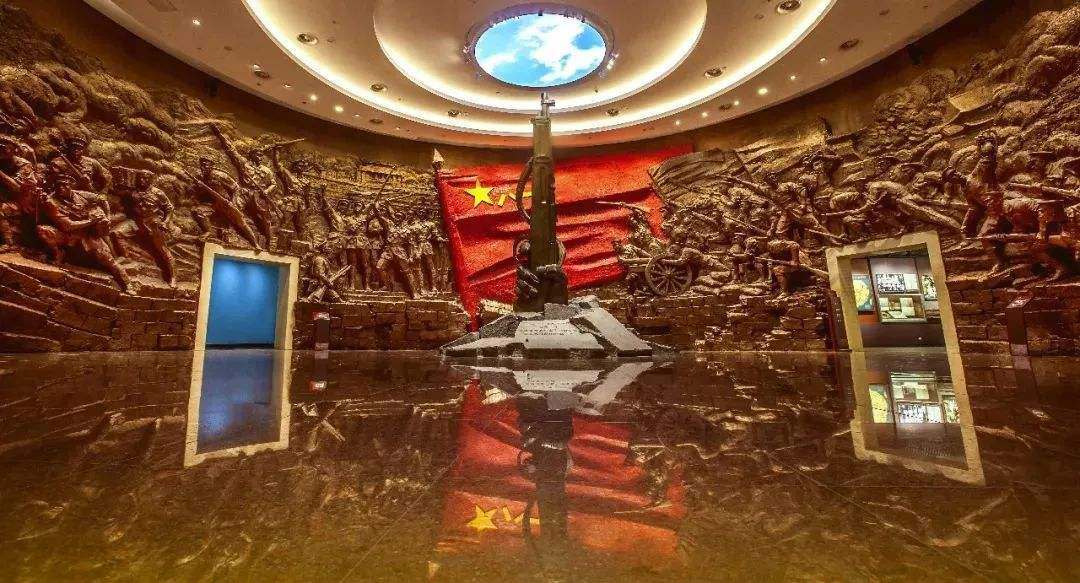
1、八一南昌起义纪念馆:八一南昌起义纪念馆设在原起义总指挥部旧址内,位于南昌市中山路380号的原江西大旅社。该馆是一座回字型的五层大楼,中间为天井,共有96间房。1927 年7月27日,周恩来在江西大旅社召集会议,根据党中央的决议,宣布党的前敌委员会成立,这里便成为南昌起义的总指挥部。该馆是南昌市最早设立的一个专门性纪念馆,1959年10月1日正式对外开放,1961年成为第一全国批重点文物保护单位,同时也是江西省第一批国家级爱国主义教育基地。
The Nanchang Uprising Memorial Hall : The Nanchang Uprising Memorial Hall is located in the old site of the former General Command of the Uprising, and is located at 380 Zhongshan Road in Nanchang City, the former Jiangxi Grand Hostel. The museum is a five-story building with a patio in the middle and 96 rooms. On July 27, 1927, Zhou Enlai convened a meeting at the Jiangxi Grand Hostel and, in accordance with the resolution of the Party Central Committee, announced the establishment of the Party's former enemy committee, which became the general headquarters of the Nanchang Uprising. The museum is the first special memorial established in Nanchang City, officially opened to the public on October 1, 1959, in 1961 became the first national key cultural relics protection units, but also the first batch of national patriotic education base in Jiangxi Province.

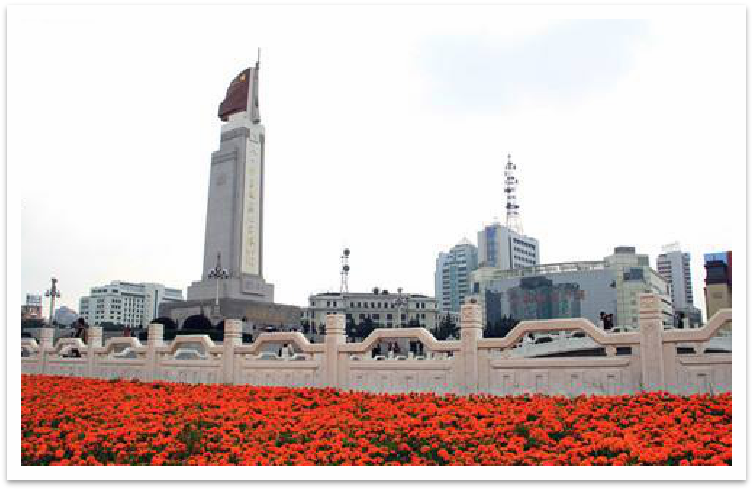
2、八一广场与八一起义纪念塔:八一广场位于南昌市八一大道的核心地段。作为“英雄城”南昌的象征,八一广场一直是南昌乃至江西省政治、经济、文化活动的重要场所。2001年7月,中共南昌市委市人民政府对八一广场进行了重新改造,改造后的八一广场核心区面积由原来5万平方米扩大到7.8万平方米,使其集纪念性、标志性群众性及休闲性为一体。
Eighty-one Square and the 8th A-Ying Memorial Tower: Eighty-one Square is located in the heart of 81st Avenue in Nanchang City. As the symbol of Nanchang, "Hero City", 81 Square has always been an important place for political, economic and cultural activities in Nanchang and Jiangxi Province. In July 2001, the People's Government of Nanchang Municipal Committee of the Communist Party of China (CPC) re-renovated the 81st Square, and the core area of the remodeled 81st Square was expanded from the original 50,000 square meters to 78,000 square meters, making it a monumental, iconic mass and leisure area.
八一广场以“八一”精神为灵魂,以八一起义纪念塔为标志,以历史文化为载体,以市民休闲为目的,处处展示“八一”历史文化。纪念塔前的金水河,寓意军民鱼水情;金水河下,百米长的音乐喷泉伴随着《中国人民解放军进行曲》《走进新时代》等雄壮的乐曲翩翩起舞;“八一”军史浮雕,背衬以江西八个国家重点风景名胜区的山水浮雕,充分体现了江西的地域文化特色;升旗台的南侧用汉白玉镌刻毛泽东手书字体“星星之火,可以燎原”,凸现了八一起义的深刻含义和伟大意义;北侧镌刻着江泽民同志的亲笔题词“军旗升起的地方”,突出显示了南昌在中国革命史的特殊历史地位。
Eighty-one Square to the "81" spirit as the soul, to the eight-in-one memorial tower as the symbol, to the historical culture as a carrier, to the public leisure for the purpose of displaying the "81" historical culture everywhere. The Jinshui River in front of the memorial tower, which implies the water situation of the military and civilian fish, and under the Jinshui River, the 100-meter-long musical fountain dances with the magnificent music of "Chinese the People's Liberation Army", "Into the New Era"; Eighty-one" military history relief, backed by the mountain and water reliefs of eight key national scenic spots in Jiangxi, fully reflects the regional cultural characteristics of Jiangxi.
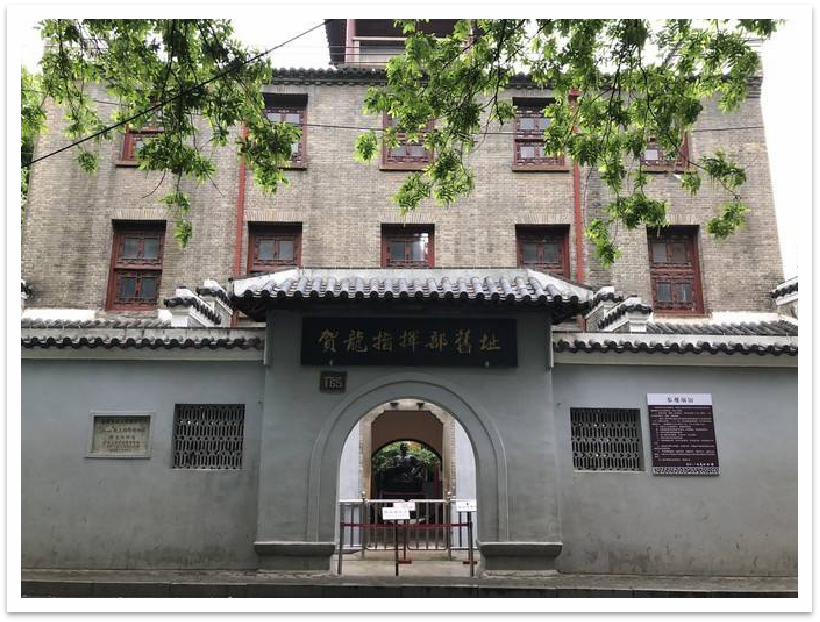
3、贺龙指挥部旧:贺龙指挥部旧址坐落在南昌市子固路165号,原为中华圣公会宏道堂,是一座中西合璧的古建筑。1927 年八一南昌起义时,贺龙率领的国民革命军第二十军指挥部设于此。贺龙、刘伯承等部分起义领导人住在宏道堂后的小楼寓所,并在此举行过多次策划起义行动的重要会议,制定武装起义计划,布置作战任务。大楼前三楼窗口仍留有当年敌方炮弹弹痕,为起义时激战景况的实录。1956年,党和政府对贺龙指挥部旧址进行了修复。旧址小楼有贺龙等起义领导人当年的卧室,军官会议室的复原陈列,大楼大厅还设有《贺龙元帅生平展》,用大量的实物、图片展示了贺龙元帅光辉战斗的一生。贺龙指挥部旧址为第一批全国重点文物保护单位——八一起义指挥部旧址的保护点。
The old site of He Long Command: The old site of He Long Command is located at 165 Zigu Road, Nanchang City, formerly the Chinese Episcopal Church, which is an ancient building of the Chinese-Western Joint. In 1927, when the Nanchang Uprising took place, the 20th Army Command of the National Revolutionary Army, led by He Long, was established here. He Long, Liu Bocheng and other leaders of the uprising lived in the small building apartment behind the Hongdao Hall, and held a number of important meetings here to plan the uprising, to draw up plans for the armed uprising, the deployment of combat tasks. The third-floor window of the building still has enemy shell marks, a recording of the fierce fighting during the uprising. In 1956, the Party and the government repaired the old site of Helong Command. The old site small building has He Long and other uprising leaders of the bedroom, the restoration of the officer's conference room display, the building hall also has "Helong Marshal's life exhibition", with a large number of physical, pictures show Marshal Helong's life of battle. The old site of Helong Command is the protection point of the old site of the first batch of key national cultural relics protection units.
4、叶挺指挥部旧址:叶挺指挥部旧址坐落在南昌市百花洲东湖旁的南昌市第二中学内。南昌起义时,叶挺率领的国民革命军第十一军第二十四师司令部即设在这所学校的一栋两层砖瓦结构的“工”字型楼里。楼上是当时指挥部的办公室、会议室和电话总机房,楼下住着警卫部队。
The old site of Ye Ting Command: The old site of Ye Ting Command is located in Nanchang City, next to the East Lake of The City of Nanchang Second Middle School. During the Nanchang uprising, ye Ting led the Commander of the 24th Division of the National Revolutionary Army, which was located in a two-story brick-and-mortar building in the school. The building was the office, conference room and telephone room of the headquarters at the time, and the security forces lived downstairs.
1927年7月30日下午2时,叶挺在会议室召开了二十四师营以上及师直机关的军官会议,传达了党的起义决定,部署战斗任务。起义胜利后,叶挺任起义军前敌代总指挥兼第十一军军长 ,这里也就成了整编后的第十一军指挥部。解放后,心远中学易名为南昌市第二中学。为了纪念叶挺和“铁军”在南昌起义中的不朽功绩,人民政府修缮了这栋“工”字楼,使其基本上保持了原貌,并于1997年8月正式对外开放。叶挺指挥部旧址为第一批全国重点文物保护单位——八一 起义指挥部旧址的保护点。
On July 30, 1927, at 2 p.m., Ye Ting held a meeting of officers of the 24th Division Battalion and the divisional organs in the conference room to convey the party's uprising decision to deploy combat missions. After the victory of the uprising, Ye Ting served as the former commander-in-chief of the rebel army and the 11th army commander, which also became the 11th Army Command after the integration. After liberation, Xinyuan Middle School changed its name to Nanchang Second Middle School. In honor of Ye Ting and the "Iron Army" in the Nanchang uprising immortal achievements, the People's Government renovated the "work" building, so that it basically maintained its original appearance, and officially opened to the public in August 1997. Ye Ting command site is the first batch of national key cultural relics protection units “81” uprising command site protection point.
5、朱德旧居:该旧居位于南昌市民德路东段花园角2号,是一座砖木结构的两层楼房,前后两进。1926年底,朱德受中共党组织的委派来南昌开展革命活动,主要居住在这里。1927年7月27日,周恩来自鄂抵昌,首先到此与朱德商谈起义大计,并住宿一夜。北伐军总政治部副主任郭沫若也曾在此居住,并撰写了著名的战斗檄文《试看今日之蒋介石》。旧居现已按原貌恢复了朱德卧室及周恩来住过的厅堂。
The Zhu De's old residence :The Zhu De's old residence is located at Garden Corner 2 east of Nanchang Citizen's DeLu, a two-story building with a brick-and-wood structure, two in front and back. At the end of 1926, Zhu De was appointed by the Communist Party of China to carry out revolutionary activities in Nanchang, where he lived mainly. On July 27, 1927, Zhou Enlai arrived in Chang from E, where he first came to discuss the uprising plan with Zhu De and stayed overnight. Guo Moruo, deputy director of the General Political Department of the Northern Expeditionary Army, also lived here and wrote the famous battle essay "Trying Chiang Kai-shek today". The old home has now been restored to The View Jude Bedroom and the Hall where Zhou Enlai lived.
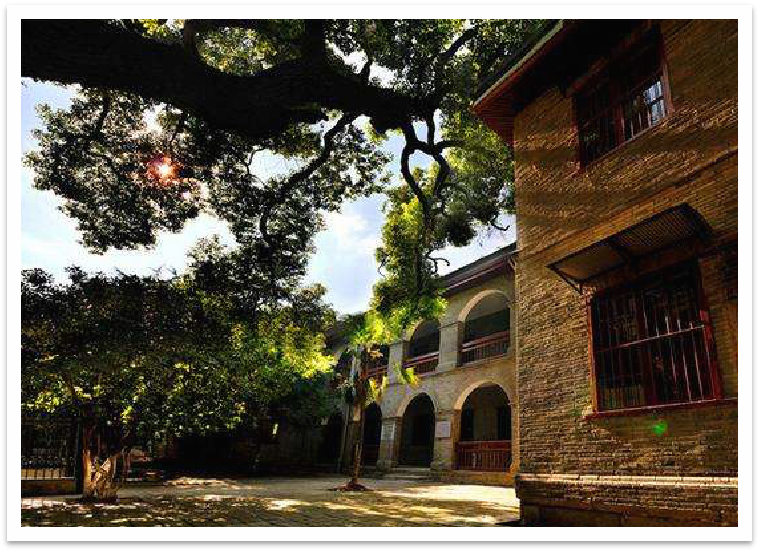
6、国民革命军第三军军官教育团旧址:该旧址位于八一大道58号,清末是训练清军的场所,后改为江西陆军讲武堂,前后三进,共45间。1927年春,朱德在这里创办国民革命军第三军军官教育团并亲任团长,培养了一批革命军事干部,其中一部分参加了南昌起义,对起义的胜利起了重要作用。现已按原貌恢复了朱德办公室、卧室、会议室,陈列了当年的陈设,展示了朱德的革命生平事迹。国民革命军第三军军官教育团旧址为第一批全国重点文物重点保护单位——八一起义指挥部旧址的保护点。
The old site of the Officer Education Corps of the Third Army of the National Revolutionary Army: The old site of the Officer Education Corps of the Third Army of the National Revolutionary Army is located at 58 81st Avenue, and at the end of the Qing Dynasty was the place where the Qing Army was trained, and later changed to the Jiangxi Army Lecture Hall, which was three-forward before and after, with a total of 45 rooms. In the spring of 1927, Zhu De founded the Third Army Officer Education Corps of the National Revolutionary Army and served as the head of the regiment, and trained a group of revolutionary military cadres, some of whom participated in the Nanchang Uprising, which played an important role in the victory of the uprising. Zhu De's office, bedroom and conference room have been restored as usual, displaying the furnishings of the year, showing Zhu De's revolutionary life story. The old site of the Officer Education Corps of the Third Army of the National Revolutionary Army was the protection point of the first batch of key national cultural relics protection units------ The protection point of the old site of the Nanchang Uprising headquarters.

6、国民革命军第三军军官教育团旧址:该旧址位于八一大道58号,清末是训练清军的场所,后改为江西陆军讲武堂,前后三进,共45间。1927年春,朱德在这里创办国民革命军第三军军官教育团并亲任团长,培养了一批革命军事干部,其中一部分参加了南昌起义,对起义的胜利起了重要作用。现已按原貌恢复了朱德办公室、卧室、会议室,陈列了当年的陈设,展示了朱德的革命生平事迹。国民革命军第三军军官教育团旧址为第一批全国重点文物重点保护单位——八一起义指挥部旧址的保护点。
The old site of the Officer Education Corps of the Third Army of the National Revolutionary Army: The old site of the Officer Education Corps of the Third Army of the National Revolutionary Army is located at 58 81st Avenue, and at the end of the Qing Dynasty was the place where the Qing Army was trained, and later changed to the Jiangxi Army Lecture Hall, which was three-forward before and after, with a total of 45 rooms. In the spring of 1927, Zhu De founded the Third Army Officer Education Corps of the National Revolutionary Army and served as the head of the regiment, and trained a group of revolutionary military cadres, some of whom participated in the Nanchang Uprising, which played an important role in the victory of the uprising. Zhu De's office, bedroom and conference room have been restored as usual, displaying the furnishings of the year, showing Zhu De's revolutionary life story. The old site of the Officer Education Corps of the Third Army of the National Revolutionary Army was the protection point of the first batch of key national cultural relics protection units------ The protection point of the old site of the Nanchang Uprising headquarters.