Unit One Forever Friendship
In this unit, students will
1. Talk about friendship.
2. Learn nonverbal social-communication skills: Be Consistent in Communication.
3. Learn verbal social-communication skills: Express Concerns.
Ⅰ.Warm-up Activities
1. Read the following passage, and then retell it to your group members. All the group members will evaluate your retelling by using the assessment sheet in the Appendix.
Courage in Action
By Bill Saunders
A couple of years ago, I witnessed courage that ran chills up and down my spine. At a high school assembly, I had spoken about picking on people and how each of us has the ability to stand up for people instead of putting them down. Afterwards, we had a time when anyone could come out of the bleachers and speak into the microphone. Students could say thank-you to someone who had helped them, and some people came up and did just that. A girl thanked some friends who had helped her through family troubles. A boy spoke of some people who supported him during an emotionally difficult time.
Then a senior girl stood up. She stepped over to the microphone, pointed to the sophomore section and challenged her whole school. “Let’s stop picking on that boy. Sure, he’s different from us, but we are in this thing together. On the inside he’s no different from us and needs our acceptance, love, compassion and approval. He needs a friend. Why do we continually brutalize him and put him down? I’m challenging this entire school to lighten up on him and give him a chance!”
All the time she shared, I had my back to the section where the boy sat, and I had no idea who he was. But obviously, the school knew. I felt almost afraid to look at his section, thinking the boy must be red in the face, wanting to crawl under his seat and hide from the world.
But as I glanced back, I saw a boy smiling from ear to ear. His whole body bounced up and down, and he raised one fist in the air. His body language said, “Thank you, thank you. Keep telling them. You saved my life today!”
from http://www.wowzone.com/courage.htm
2. Game: What sort of person are you?
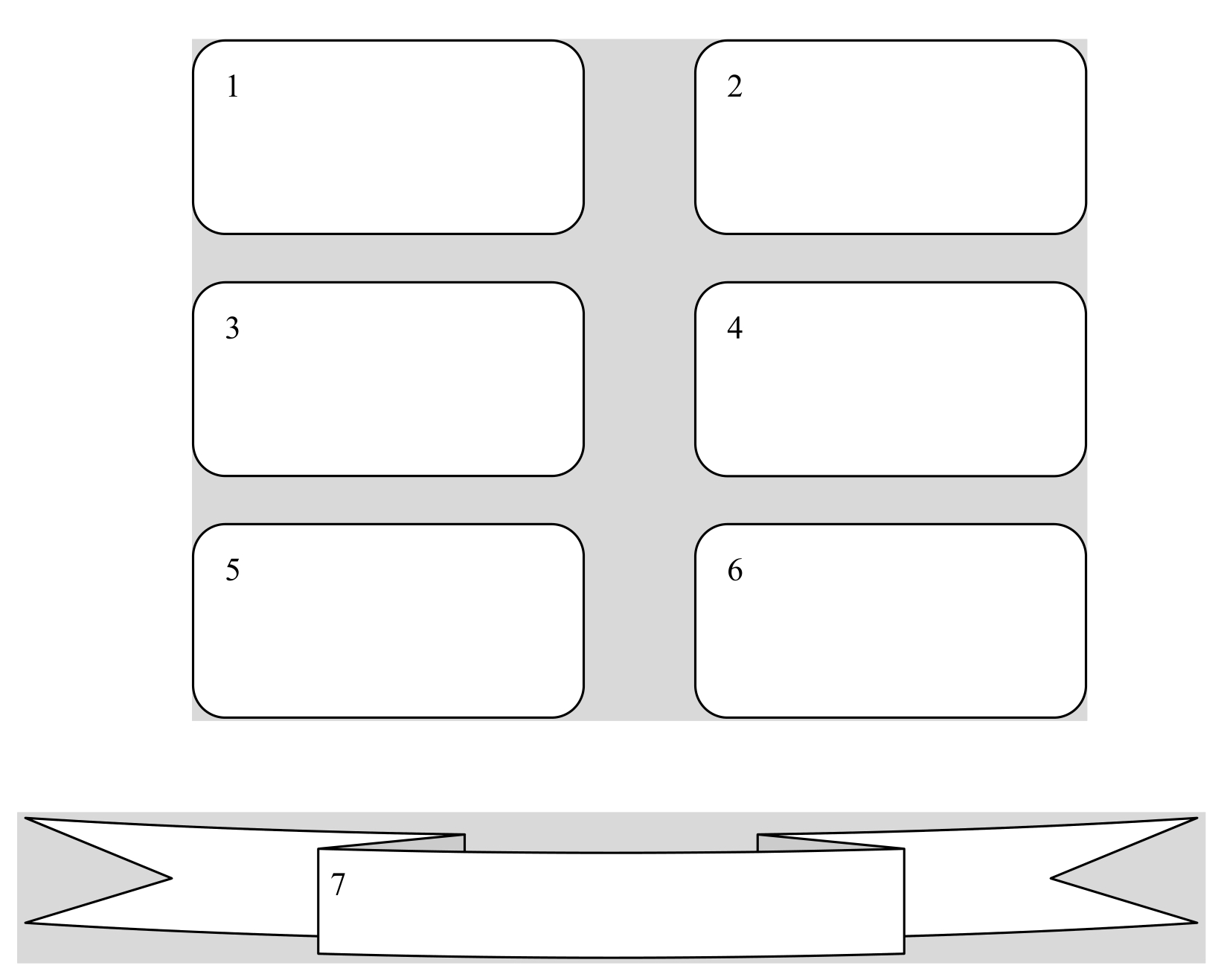
Draw a picture of something/someone important to you in blank 1; write down an important date in blank 2;draw a picture of some achievements you are proud of in blanks 3, something you are good at in blank 4, something you don’t like in blank 5, your future ambition in blank 6. And in blank 7, write down adjectives to describe your own characters. And then, tell all your reasons to your partner for the above.
3. Learn from songs
You will watch an episode of “Toy Story”. Please fill the following blanks with the lyrics you hear, and then talk about the meaning of friendship indicated by the lyrics.
You’ve Got a Friend in Me
You’ve got a friend in me. You’ve got a friend in me
When the road looks 1)__________
And you’re miles and miles
From your nice 2)__________
You just remember what your old pal said
Boy, you’ve got a friend in me. Yeah, you’ve got a friend in me
You’ve got a friend in me. You’ve got a friend in me
If you’ve 3)____________, I’ve got ’em too
There isn’t anything I wouldn’t do for you
We 4)_____________ and can see it through
Cause you’ve got a friend in me. You’ve got a friend in me
Some other folks might be
A little bit 5)__________ than I am
Bigger and stronger too
Maybe
But none of them will 6)____________ you
The way I do, it’s me and you
Boy, and as the years 7)___________
Our friendship will never die
You’re gonna see it’s our 8)________
You’ve got a friend in me. You’ve got a friend in me
from the movie Toy Story 3
Ⅱ.Focused Topic
Forever Friendship
A.Dialogues
Please read the following dialogues and note the italic expressions.
Dialogue 1 Views on Friendship
A: What’s your view on friendship?
B: I think friendship is one of the most important things in life—whatever your status, married or single.
A: I feel the same way.
B: But some people don’t know the real meaning of friendship.
A: So, what’s the real meaning of it?
B: A friend in need is a friend indeed. Do you think so?
A: Yes, I do. What’s your opinion?
A: I think it is only partly true. In my opinion, a real friend should also be able to share your happy moments—without feeling jealous.
B: You are right. I’ve been promoted recently, but one of my good friends just pretended to be happy for my promotion. I could feel that he was actually very unhappy.
A: It only proves that he is not your true friend.
B: Maybe.
A: I haven’t finished my definition of friendship.
B: Well, tell me. I’m all ears.
A: A good friendship is that you accept and forgive faults, understand moods, and don’t feel hurt if a friend doesn’t feel like seeing you.
B: Any more?
A: Honesty is also an essential part of any friendship. You should learn to accept your friends for who they are.
B: You’ve got a point there.
Dialogue 2 Qualities Appreciated in Friends
A: What kind of qualities do you appreciate in friends?
B: I like friends who have something in common with me.
A: What are some of your hobbies?
B: I like most outdoor activities, like hiking, camping, gardening, and swimming.
A: So, you’re health-conscious?
B: I guess so. I also like cooking organic meals.
A: Are you a vegetarian?
B: No, but few of my friends eat meat.
A: Do you exercise a lot?
B: I try to, though sometimes it’s hard to find the time.
A: What do you think about people who smoke?
B: To be honest, I prefer not to be around smokers. The second-hand smoke is bad for me. It makes me cough and makes my clothes and hair smell bad.
Other Useful Expressions
friends with the same taste to count on each other
friends with common interests to exchange something with somebody
hand in hand to get along with somebody
to be friendly to somebody to give somebody a hand
to be familiar to each other to grow up together spiritually
to celebrate each other’s success to have a heart-to-heart talk with somebody
to chat with somebody online to help somebody out
to cheer somebody up to respect others’ feelings
to comfort each other to share happiness and sadness
to contact somebody to show concerns for somebody
Practice:
1. Please think of a good friend and answer the following questions by making a conversation with your partner:
1) What do you do together?
2) What do you talk about?
3) Why do you like him/her?
4) In general, what kind of people do you like to make friends with?
2. Role-play: Student A will interview student B about two of the following topics:
1) Is it common to have friendships across generations? What are the advantages and disadvantages of these types of friendships? Do you have any friends from a different generation?
2) What factors may result in the breakdown of a good friendship?
3) Do you think it is possible to have a best friend of the opposite gender without being involed in a love relationship?
4) Would you like to be friends with your students if you were a teacher?
B.Socio-Communicative Skills
Verbal communication refers to the communication which is carried out in either oral or written form with the use of words. Nonverbal communication refers to the communication through one’s voice quality, facial expressions, gestures, bodily movement, attitudes towards space and time, and so on.
To achieve successful conversations, it is necessary to learn the skills of both the verbal and nonverbal communication.
Non -verbal Skill
Be Consistent!
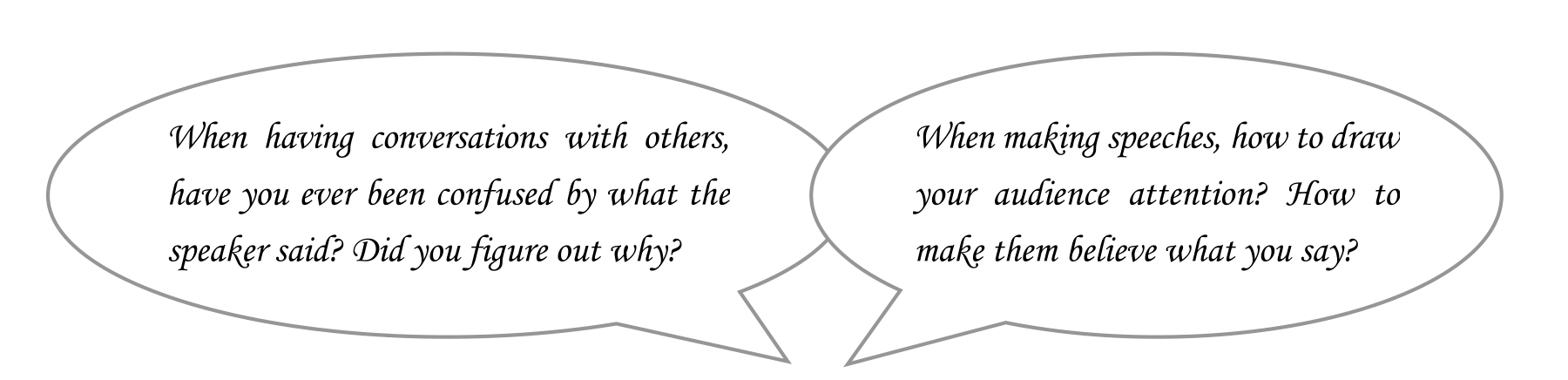
In all of our communication activities, if our messages are inconsistent, the listener may become confused. Inconsistency can also create a lack of trust and undermine the chance to build a good relationship. Consistency in conversations and speeches is like the feature ofunity within a written paragraph, which will be presented by a topic sentence and subsequent closely related sentences.
? When having a conversation which is not a free chatting but about a certain topic, or when presenting a speech, it is better to keep a central idea in mind, which will provide a clear thread of thought during conversation.
? A speaker’s behavior should be consistent with the current context. It is necessary to take into account all of the people and objects in the environment, and his feelings about them, and all of the action taking place in the environment, and the feelings about the actions, and overall feeling of the environment.
? In the process, speaker needs to examine his thoughts and the content of conversations or speeches to assure the communication is developing along the thread of thought. Summarizing what has been mentioned will be helpful to check the consistency.
Practice:
Please prepare a short speech about one of the following topics, and pay attention to the consistency of your speech.
1) My first real friend
2) My best friend
3) On lifelong friendship
4) My personal definition of friendship
Verbal Skill
Expressing Concerns
continued
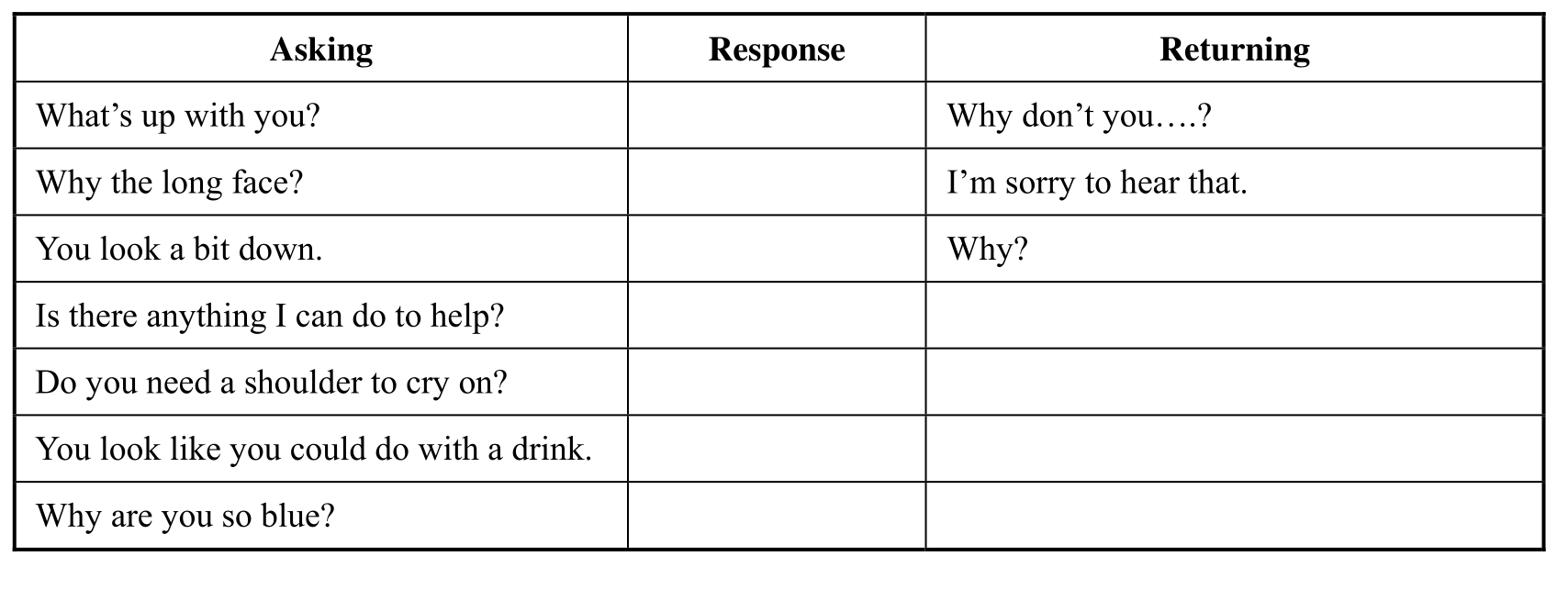
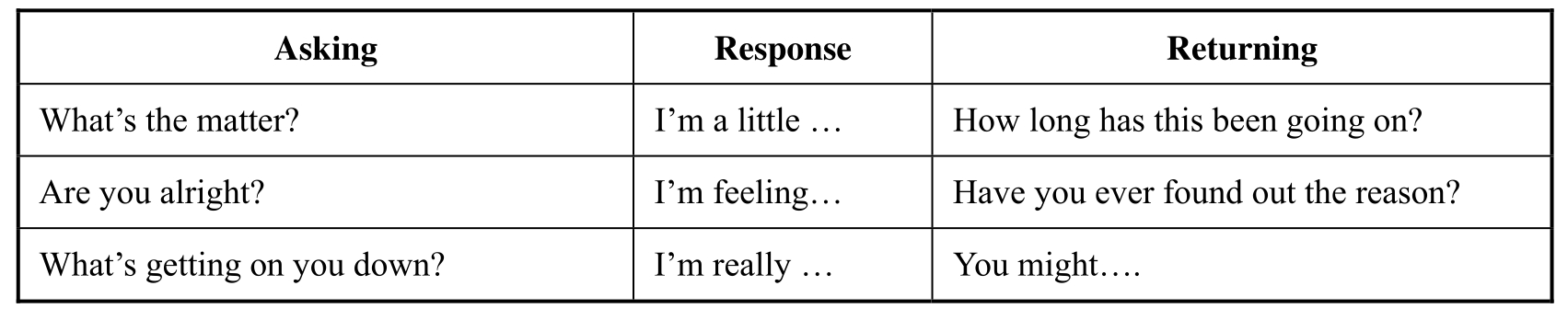
Learn the following conversations and make conversations with your partners based on the situations given below.
1) A: You look a little down. Are you OK?
B: I’m not sure. I’m always really tired, but I sleep a lot.
A: How long has this been going on?
B: About a month. I’m feeling a bit depressed, too.
A: How long have you been here?
B: About six months.
A: Are you doing fun things with friends?
B: No, I don’t feel like going out.
A: Well, you might have culture shock.
B: What’s that?
A: When you live in another culture, it can be a big shock to your system. People get different symptoms. Some people sleep, while some people have insomnia. Some people eat a lot, while some people don’t eat enough.
B: How do you know so much about it?
A: I got it when I moved to Hong Kong. But it went away after a few months.
2) A: Hi, Susan. How are you doing? You aren’t looking very well.
B: Oh, I’m feeling terrible. I’ve got a fever and a really bad headache.
A: I’m sorry to hear that. Why don’t you take some aspirin?
B: I’ve tried that. Thank you, Jack. You are looking very good.
A: Yeah. I joined a health club to keep in shape.
B: Do you exercise every day?
A: Yes. I’ve been jogging for over four months. At first, I ached all over after jogging. It went away a few days later.
B: Maybe I should follow your example.
A: Sure, welcome!
Now, make conversations of expressing concerns based on the following situations by using the expressions above:
1) One of your friends was in a serious car accident. You are very concerned about his/her health. Make a conversation with your friend’s doctor.
2) Your cousin looks depressed for his failure in the English speech contest. Make a conversation to show your concerns.
3) Your neighbour’s dog is missing. He/she is very worried.
4) One of your roommates lost his/her mobile phone.
C.Activities
1. Discussion
How to Heal a Friendship?
It is very common to see people suffering from broken friendship. But the good news is that most friendships can be mended. Do you have the experience of healing friendship? Is it successful or not? Talk to your partner about your experience, and give some advice:
Advice 1: _______________________________________________________________
Advice 2: _______________________________________________________________
Advice 3: _______________________________________________________________
Advice 4: _______________________________________________________________
Advice 5: _______________________________________________________________
Advice 6: _______________________________________________________________
…
2. Read the following poem “On Friendship”, and then, answer questions. You may also ask some questions based on this poem in your group of four or five members, and all the group members will answer your questions.
On Friendship
By Kahlil Gibran
Your friend is your needs answered.
He is your field which you sow with love and reap with thanksgiving.
And he is your board and your fireside.
For you come to him with your hunger and you seek him for peace.
When your friend speaks his mind you fear not the “nay” in your own mind, nor do you withhold the “ay”.
And when he is silent your heart ceases not to listen to his heart;
For without words, in friendship, all thoughts, all desires, all expectations are born and shared, with joy that is unacclaimed.
When you part from your friend, you grieve not;
For that which you love most in him may be clearer in his absence, as the mountain to the climber is clearer from the plain.
And let there be no purpose in friendship save the deepening of the spirit.
For love that seeks aught but the disclosure of its own mystery is not love but a net cast forth: and only the unprofitable is caught.
And let your best be for your friend. If he must know the ebb of your tide, let him knows its flood also.
For what is your friend that you should seek him with hours to kill?
Seek him always with hours to live.
For it is his to fill your need, but you’re your emptiness.
And in the sweetness of friendship let there be laughter, and sharing of pleasures. For in the dew of little things the heart finds its morning and is refreshed.
from http://www.katsandogz.com/onfriends.html
Questions:
1) What is your understanding to the sentence “For without words, in friendship, all thoughts, all desires, all expectations are born and shared, with joy that is unacclaimed.”?
2) Why does the author say there should be no purpose in friendship?
3) What does “the ebb of your tide” refer to? Then, what does “its flood” refer to?
Your question:________________________________________________________________
Group members’ answers:_______________________________________________________
3. Read the following well-known sayings on friendship and try to translate each into Chinese. Then, discuss the impressive ones with your group members about your understanding.
1) A man should keep his friendship in constant repair. —Samuel Johnaon
__________________________________________________________________________
2) Animals are such agreeable friends—they ask no questions, they pass no criticism.
—George Eliot novelist
__________________________________________________________________________
3) Be slow in choosing a friend, slower in changing —Benjamin Franklin
__________________________________________________________________________
4) Betraying a trust is a very quick and painful way to terminate a friendship.
—Ralph Waldo Emerson
__________________________________________________________________________
5) Don’t try to win a friend by presenting gifts. You should instead contribute your sincere love and learn how to win others’ heart through appropriate ways. —Socrates__________________________________________________________________________
6) He that will not allow his friend to share the prize must not expect him to share the danger.
—Aesop
________________________________________________________________
Ⅲ.More Practice
1. Do you know “Friendship Day”? Read the information about Friendship Day which can be found in the appendix, and tell each other in pairs what you are going to do on the next Friendship Day, or what kind of gifts you will give to your friends.
1) History of Friendship Day in US
2) Friendship Day Gift Ideas
2. Give a short summary after reading the following extracted part of a passage, and then list some differences between men and women in regards to friendship. Do you agree with these differences? Why or why not?
Friendship for Guys (No Tears!)
By Jefferey Zaslow
….
Researchers say women’s friendships are face to face: They talk, cry together, share secrets. Men’s friendships are side by side: We play golf. We go to football games. ….
I’ve played poker with the same guys every Thursday night for 18 years. We rarely talk about our lives. We talk about cards, betting, bluffing.
I used to say that my poker buddies don’t even know my kids’ names. But then I wondered if I was exaggerating. So one night I turned to my left at the poker table and casually asked my friend Lance: “Hey Lance, could you name my children?” He shrugged, paused to think, then smiled sheepishly. “I could rename them,” he said.
Dr. Greif isn’t surprised by my story. In his poker game, he says, if a man were to reveal that he lost his job or that his wife left him, the other guys would say, “Gee, dude, that’s too bad. Want us to deal you out this hand?”…
“Our conversations deal with the doing of things rather than the feeling of things,” says Mr. Leonard.
In his research, Dr. Greif found that men generally resist high-maintenance relationships, whether with spouses, girlfriends or male pals. When picking friends, “men don’t want someone who is too needy,” he says. A third of the men in his study said they learned positive things from female friendships, but 25% had a negative impression of women as friends, citing issues such as “cattiness” and “too much drama.” And women are more likely than men to hold grudges toward friends, according to Dr. Greif’s 2009 book, Buddy System.
Studies show that in their late 20s and 30s, women have a harder time staying in touch with old friends. Those are the years when they’re busy starting careers and raising children, so they don’t have time to gather for reunions. Money is tighter, too. But around age 40, women start reconnecting. Before the 1990s, researchers assumed this was because they had more time for friendship in their 40s, as their children became self-sufficient. But now researchers consider this middle-aged focus on friendship to be a life stage; as women plan the next chapter of their lives, they turn to friends for guidance and empathy.
Men, meanwhile, tend to build friendships until about age 30, but there’s often a falloff after that. Among the reasons: Their friendships are more apt to be hurt by geographical moves and differences in career trajectories. Recent studies, however, are now finding that men in their late 40s are turning to what Dr. Grief calls “rusted” friends—longtime pals they knew when they were younger. The Internet is making it easier for them to make contact with one another.
But again, it’s a mistake to judge men’s interactions by assuming we need to be like women. Research shows that men often open up about emotional issues to wives, mothers, sisters and platonic female friends. That’s partly because they assume male friends will be of little help. It may also be due to fears of seeming effeminate or gay. But it’s also an indication that men compartmentalize their needs; they’d rather turn to male friends to momentarily escape from their problems. The new buzzword is “bromance.”…
from http://online.wsj.com/article
3. Games for speaking: Students will be in groups of 6 students. The teacher will give several words to be defined. The student can speak out promptly the definition of the word. If he does it correctly, he wins a score for the group. When the game is over, the group with most scores win.
Ⅳ.Assignment
Making a Plan for a Reunion with Old Friends
The most memorable moment in life is when you meet old friends whom you had lost touch midway in the journey of life. You will be overwhelmed with the feeling of emotional detachment, realizing how much you have been missing him or her all these years. Having them around will remind you of all those golden moments that you spent together.
So, if you would be in charge of organizing a reunion with old friends, how would you make your plan? Write down you plan, and include all the necessary steps you think necessary. Bring your plan to class, and discuss with each other whose plan is the best one.
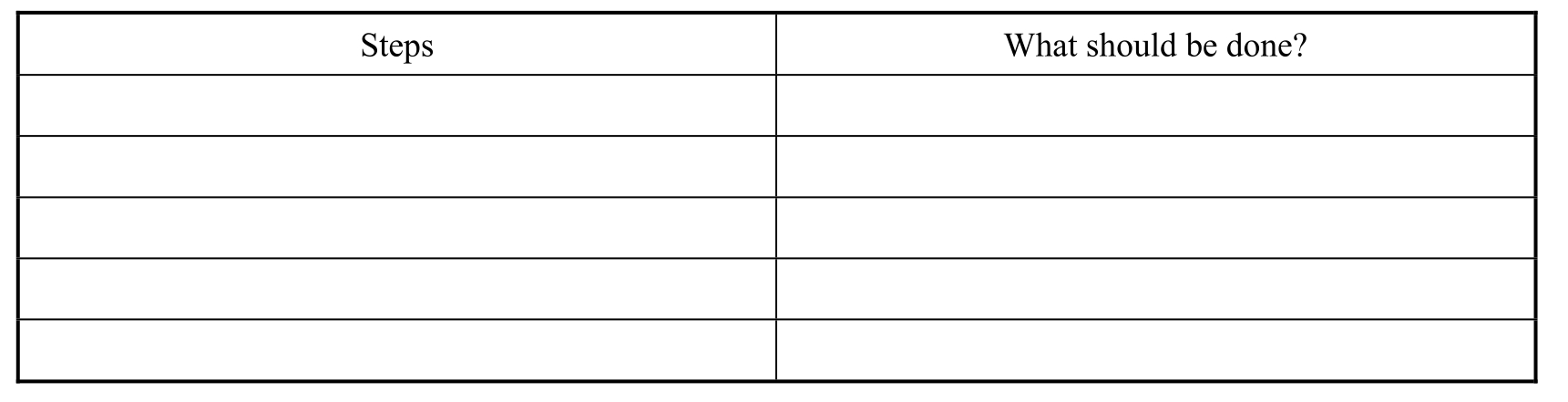
Plan for Reunion