Text A Cirrhosisand Its Complications
Cirrhosis
Cirrhosis(Fig.9-1)is a condition that is defined histopathologically and has a variety of clinical manifestations and complications,some of which can be life-threatening.In the past,it has been thought that cirrhosis was never reversible;however,it has become apparent that when the underlying insult that has caused the cirrhosis has been removed, there can be reversal of fibrosis.This is most apparent with the successful treatment of chronic hepatitis C;however,reversal of fibrosis is also seen in patients with hemochromatosis who have been successfully treated and in patients with alcoholic liver disease who have discontinued alcohol use.
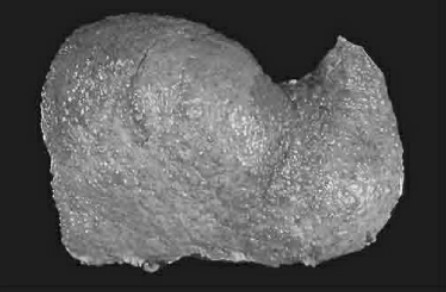
Fig.9-1 Cirrhosis
Clinical features of cirrhosis are the result of pathologic changes and mirror the severity of the liver disease.Most hepatic pathologists provide an assessment of grading and staging when evaluating liver biopsy samples.These grading and staging schemes vary between disease states and have been developed for most conditions,including chronic viral hepatitis,nonalcoholic fatty liver disease,and primary biliary cirrhosis.Advanced fibrosis usually includes bridging fibrosis with nodularity designated as stage 3 and cirrhosis designated as stage 4.
Patients who have cirrhosis have varying degrees of compensated liver function,and clinicians need to differentiate between those who have stable, compensated cirrhosis and those who have decompensated cirrhosis.Patients who have developed complications of their liver disease and have become decompensated should be considered for liver transplantation.Many of the complications of cirrhosis will require specific therapy.Portal hypertension is a significant complicating feature of decompensated cirrhosis and is responsible for the development of ascites and bleeding from esophagogastric varices,two complications that signify decompensated cirrhosis.Loss of hepatocellular function results in jaundice,coagulation disorders,and hypoalbuminemia and contributes to the causes of portosystemic encephalopathy.The complications of cirrhosis are basically the same regardless of the etiology.Nonetheless,it is useful to classify patients by the cause of their liver disease;patients can be divided into broad groups with alcoholic cirrhosis,cirrhosis due to chronic viral hepatitis,biliary cirrhosis,and other less-common causes such as cardiac cirrhosis,cryptogenic cirrhosis,and other miscellaneous causes.
Alcoholic Cirrhosis
Excessive chronic alcohol use can cause several different types of chronic liver disease,including alcoholic fatty liver,alcoholic hepatitis,and alcoholic cirrhosis.Furthermore,use of excessive alcohol can contribute to liver damage in patients with other liver diseases,such as hepatitis C,hemochromatosis,and those patients who have fatty liver disease related to obesity.Chronic alcohol use can produce fibrosis in the absence of accompanying inflammation and/or necrosis.Fibrosis can be centrilobular,pericellular,or periportal.When fibrosis reaches a certain degree,there is disruption of the normal liver architecture and replacement of liver cells by regenerative nodules.In alcoholic cirrhosis,the nodules are usually<3 mm in diameter;this form of cirrhosis is referred to as micronodular.
Pathogenesis
Alcohol is the most commonly used drug in the United States,and more than two-thirds of adults drink alcohol each year.30%have had a binge within the past month,and over 7%of adults regularly consume more than two drinks per day.Unfortunately,more than 14 million adults in the United States meet the diagnostic criteria for alcohol abuse or dependence.In the United States, chronic liver disease is the 10thmost common cause of death in adults,and alcoholic cirrhosis accounts for approximately 40%of deaths due to cirrhosis.
Ethanol is mainly absorbed by the small intestine and,to a lesser degree, through the stomach.Gastric alcohol dehydrogenase(ADH)initiates alcohol metabolism.Three enzyme systems account for metabolism of alcohol in the liver.These include cytosolic ADH,the microsomal enzyme oxidizing system (MEOS),and peroxisomal catalase.The majority of ethanol oxidation occurs via ADH to form acetaldehyde,which is a highly reactive molecule that may have multiple effects.Ultimately,acetaldehyde is metabolized to acetate by aldehyde dehydrogenase(ALDH).Intake of ethanol increases intracellular accumulation of triglycerides by increasing fatty acid uptake and by reducing fatty acid oxidation and lipoprotein secretion.Protein synthesis,glycosylation, and secretion are impaired.Oxidative damage to hepatocyte membranes occurs due to the formation of reactive oxygen species;acetaldehyde is a highly reactive molecule that combines with proteins to form protein-acetaldehyde adducts.These adducts may interfere with specific enzyme activities,including microtubular formation and hepatic protein trafficking.With acetaldehyde-mediated hepatocyte damage,certain reactive oxygen species can result in Kupffer cell activation.As a result,profibrogenic cytokines are produced that initiate and perpetuate stellate cell activation,with the resultant production of excess collagen and extracellular matrix.Connective tissue appears in both periportal and pericentral zones and eventually connects portal triads with central veins forming regenerative nodules.Hepatocyte loss occurs,and with increased collagen production and deposition,together with continuing hepatocyte destruction,the liver contracts and shrinks in size.This process generally takes from years to decades to occur and requires repeated insults.
Clinical Features
The diagnosis of alcoholic liver disease requires an accurate history regarding both amount and duration of alcohol consumption.Patients with alcoholic liver disease can present with nonspecific symptoms such as vague right upper quadrant pain,fever,nausea and vomiting,diarrhea,anorexia, and malaise.Alternatively,they may present with more specific complications of chronic liver disease,including ascites,edema,or upper gastrointestinal (GI)hemorrhage.Many cases present incidentally at the time of autopsy or elective surgery.Other clinical manifestations include the development of jaundice or encephalopathy.The abrupt onset of any of these complications may be the first event prompting the patient to seek medical attention.Other patients may be identified in the course of an evaluation of routine laboratory studies that are found to be abnormal.On physical examination,the liver and spleen may be enlarged,with the liver edge being firm and nodular.Other frequent findings include scleral icterus,palmar erythema,spider angiomas, parotid gland enlargement,digital clubbing,muscle wasting,or the development of edema and ascites.Men may have decreased body hair and gynecomastia as well as testicular atrophy,which may be a consequence of hormonal abnormalities or a direct toxic effect of alcohol on the testes.In women with advanced alcoholic cirrhosis,menstrual irregularities usually occur,and some women may be amenorrheic.These changes are often reversible following cessation of alcohol.
Laboratory Tests
Laboratory tests may be completely normal in patients with early compensated alcoholic cirrhosis.Alternatively,in advanced liver disease,many abnormalities usually are present.Patients may be anemic either from chronic GI blood loss, nutritional deficiencies,or hypersplenism related to portal hypertension,or as a direct suppressive effect of alcohol on the bone marrow.A unique form of hemolytic anemia(with spur cells and acanthocytes)called Zieve syndrome can occur in patients with severe alcoholic hepatitis.Platelet counts are often reduced early in the disease,reflective of portal hypertension with hypersplenism. Serum total bilirubin can be normal or elevated with advanced disease.Direct bilirubin is frequently mildly elevated in patients with a normal total bilirubin, but the abnormality typically progresses as the disease worsens.Prothrombin times are often prolonged and usually do not respond to administration of parenteral vitamin K.Serum sodium levels are usually normal unless patients have ascites and then can be depressed,largely due to ingestion of excess free water.Serum alanine aminotransferases(ALT)are typically elevated, particularly in patients who continue to drink,with aspartate aminotransferase (AST)levels being higher than ALT levels,usually by a2∶1 ratio.
Diagnosis
Patients who have any of the above-mentioned clinical features,physical examination findings,or laboratory studies should be considered to have alcoholic liver disease.The diagnosis,however,requires accurate knowledge that the patient is continuing to use and abuse alcohol.Furthermore,other forms of chronic liver disease(e.g.chronic viral hepatitis,metabolic or autoimmune liver diseases)must be considered or ruled out or if present,an estimate of relative causality along with the alcohol use should be determined. Liver biopsy can be helpful to confirm a diagnosis,but generally when patients present with alcoholic hepatitis and are still drinking,liver biopsy is withheld until abstinence has been maintained for at lest 6 months in order to determine residual,nonreversible disease.In patients who have had complications of cirrhosis and continue to drink,there is a<50%5-year survival.In contrast, in those patients who are able to remain abstinent,the prognosis is significantly improved.In patients with advanced liver disease,the prognosis remain poor, however,in those individuals who are able to remain abstinent,liver transplantation is viable option.
(1,400 words)
 New Words and Phrases
cirrhosis[sɪ'rəʊsɪs]n. 肝硬化,肝硬变
histopathologically[,hɪstəʊpə'θɒlədʒɪkəlɪ]ad. 组织病理学上地
insult[ɪn'sʌlt]n. 损害,危害
hemochromatosis[hiːmə,krəʊmə'təʊsɪs]n. 血色沉着病
biliary['bɪljərɪ]a. 胆汁的
nodularity['nɒdjʊ'lærətɪ]n. 结节状态
varix['veərɪks]n. 静脉曲张
jaundice['dʒɔːndɪs]n. 黄疸
hypoalbuminemia[,haɪpəʊæl,bjuːmɪ'niːmɪə]n. 低白蛋白血症
portosystemic[,pɔːtəʊsɪs'temɪk]a. 门体静脉的
cryptogenic[,krɪptə'dʒenɪk]a. 原因不明的
miscellaneous[,mɪsə'leɪnɪəs]a. 混杂的;各种各样的
centrilobular[sentrɪ'lɒbjʊlə(r)]a. 小叶中心的
periportal[,perɪ'pɔːtəl]a. 门静脉周的
regenerative[rɪ'dʒenəreɪtɪv]a. 新生的,再生的
binge[bɪndʒ]n.&v. 狂欢,狂饮,放纵
ethanol['eθənɒl]n. 乙醇
dehydrogenase[diː'haɪdrədʒəneɪs]n. 脱氢酶
alcohol dehydrogenase(ADH) 醇脱氢酶
microsomal enzyme oxidizing system(MEOS) 微粒体酶氧化系统
peroxisomal['pəksɪ'səʊməl]n. 过氧化物酶病
catalase['kætəleɪs]n. 过氧化氢酶
acetaldehyde[,æsɪ'tældəhaɪd]n. 乙醛
molecule['mɒlɪkjuːl]n. 分子;微粒
acetate['æsɪteɪt]n. 醋酸盐;醋酸纤维
aldehyde dehydrogenase(ALDH) 醛脱氢酶
triglyceride[traɪ'ɡlɪsəraɪd]n. 三酸甘油酯,甘油三酸酯
synthesis['sɪnθɪsɪs]n. 综合体,结合
hepatocyte['hepətəsaɪt]n. 肝(实质)细胞
adduct[ə'dʌkt]v. 使收,使内收n. 加合物
Kupffer cell 库普弗细胞
cytokine['saɪtəkɪn]n. 细胞因子
perpetuate[pə'petjʊeɪt]v. 使永存;维持
stellate['steleɪt]a. 星形的,放射形的
stellate cell 星形细胞
collagen['kɒlədʒən]n. 胶原蛋白,胶原
triad['traɪəd]n. 三联征
vague[veɪɡ]a. 含糊的,不明确的
diarrhea[daɪə'rɪə]n. 腹泻
anorexia[,ænə'reksɪə]n. 食欲减退;厌食
malaise[mæ'leɪz]n. 身体不适
ascites[ə'saɪtiːz]n. 腹水
gastrointestinal(GI)[,ɡæstrəʊɪn'testɪnəl]a. 胃肠的
autopsy['ɔːtəpsɪ]n. 尸体解剖,尸检
sclera['sklɪərə]n. 巩膜
icterus['ɪktərəs]n. 黄染,黄疸
palmar['pælmə]a. 掌的,手掌的
erythema[,erɪ'θiːmə]n. 红斑
angioma[,ændʒɪ'əʊmə]n. 血管瘤
spider angioma 蛛状痣
parotid[pə'rɒtɪd]a. 腮腺的;耳旁的
gland[ɡlænd]n. 腺
digital clubbing 杵状指
gynecomastia[,ɡaɪnɪkəʊ'mæstɪə]a. 男子女性型乳房
amenorrheic[ə,menəʊ'riːk]a. 经闭的
compensate['kɒmpenseɪt]v. 补偿,赔偿
anemic[ə'niːmɪk]a. 贫血的,患贫血症的
hypersplenism[,haɪpə'splenɪzəm]n. 脾功能亢进,脾亢
hemolytic[,hiːmɒʊ'lɪtɪk]a. 溶血的
acanthocyte[ə'kænθəʊsaɪt]n. 棘红细胞
Zieve syndrome 齐维综合征
bilirubin[,bɪlɪ'ruːbɪn]n. 胆红素
prothrombin[prə'θrɒmbɪn]n. 凝血酶原
ingestion[ɪn'dʒestʃən]n. 咽下;吸收,摄取
ALT 丙氨酸氨基转移酶
AST 门冬氨酸氨基转移酶
abstinence['æbstɪnəns]n. 节制;戒酒
viable['vaɪəbl]a. 能生存的;可行的
 Exercises
Ⅰ.Reading Comprehension
A.Answer the following questions.
1.What is the pathogenesis of cirrhosis?
2.What are the complications caused by cirrhosis?
3.Why does the liver contract and shrink in size according to Para.3?
4.What are the clinical manifestations of alcoholic liver disease?
5.How is the patient with alcoholic liver disease diagnosed?
B.Choose the right answer to each question.
1.Clinical features of cirrhosis are the result of__________ and mirror the severity of the liver disease.
A.histopathologic changes B.physiologic changes
C.physiopathologic changes D.pathologic changes
2.Intake of ethanol increases intracellular accumulation of triglycerides by__________ and lipoprotein secretion.
A.reducing fatty acid uptake and by increasing fatty acid oxidation
B.reducing fatty acid uptake and by increasing fatty acid uptake
C.increasing fatty acid oxidation and by reducing fatty acid oxidation
D.increasing fatty acid uptake and by reducing fatty acid oxidation
3.On physical examination,the liver and spleen__________ ,with the liver edge__________ .
A.may be enlarged...being firm and nodular
B.may be normal...being firm and micronodular
C.may be contracted...being soft and nodular
D.may be shrunk...being firm and macronodular
4.Serum ALT are typically elevated,particularly in patients who__________ , with AST levels being__________ ALT levels,usually by a2∶1 ratio.
A.stop to drink...higher than
B.stop to drink...lower than
C.continue to drink...higher than
D.continue to drink...lower than
5.According to Text A,the following types of cirrhosises are mentioned except__________ .
A.portal hypertension B.biliary cirrhosis
C.cardiac cirrhosis D.cryptogenic cirrhosis
Ⅱ.Words and Expressions
A.Fill in the blanks with the words or expressions given below,and change the form where necessary.
decompensate hemochromatosis cirrhosis necrosis
pathogenesis hepatocellular micronodular hepatitis
biliary regenerative synthesis hemorrhage
manifestation metabolism prognosis
1.In patients who have had complications of__________ and continue to drink, there is a<50%5-year survival.
2.A liver disease called primary__________ cirrhosis affects mostly women.
3.It has a higher incidence in postnecrotic cirrhosis and__________ than in Laennec cirrhosis(拉埃奈克/萎缩性门静脉性肝硬化).
4.Because there is so little known about the underlying defect in scleroderma or its__________ ,no specific treatment is available.
5.A liver cancer may have both__________ as well as cholangiolar(胆小管的) differentiation.
6.Liver disorders include jaundice,__________ ,cirrhosis,tumors,vascular obstruction,abscess,and glycogen-storage diseases.
7.Infection inhibits the__________ power of the bone marrow.
8.Growing children should absorb nutrition to strengthen physical function and promote__________ .
9.The damaged chloroplasts require the addition of ATP to fuel protein__________ .
10.Hepatic angiosarcoma(血管肉瘤)is a rare malignant tumor with poor patient__________ .
B.Fill in the blanks with the suitable words or expressions from each group.
Chronic viral hepatitis is a condition where hepatitis B or hepatitis C 1 infects the liver for years.Most patients with 2 will not develop chronic hepatitis and cirrhosis.In contrast,some patients infected with hepatitis B virus and most patients infected with hepatitis C virus develop 3 hepatitis, which,in turn,causes progressive liver damage and leads to cirrhosis,and, sometimes,liver cancers.Inherited disorders result in the accumulation of toxic substances in the liver which lead to tissue damage and 4 .In hemochromatosis,patients inherit a tendency to absorb an excessive amount of iron from food.Over time,iron 5 in different organs throughout the body causes cirrhosis,arthritis,heart muscle damage leading to 6 ,and testicular dysfunction causing loss of sexual drive.Treatment is aimed at preventing 7 to organs by removing iron from the body through bloodletting.In Wilson disease,there is an 8 abnormality in one of the proteins that controls copper in the body.Over time,copper accumulates in the liver,eyes,and brain.Cirrhosis,tremor,psychiatric disturbances and other neurological difficulties occur if the condition is not treated early.Treatment is with oral 9 that increases the amount of copper that is eliminated from the body in the urine.
Primary biliary cirrhosis(PBC)is a liver disease caused by an abnormality of the 10 system that is found predominantly in women.The abnormal immunity in PBC causes chronic inflammation and destruction of the small bile ducts within the liver.The bile ducts are 11 within the liver through which bile travels to the intestine.Bile is a fluid produced by the liver that contains substances required for digestion and 12 of fat in the intestine,as well as other compounds that are waste products,such as the pigment bilirubin. (Bilirubin is produced by the breakdown of 13 from old red blood cells.)In PBC,the destruction of the small bile ducts 14 the normal flow of bile into the intestine.As the 15 continues to destroy more of the bile ducts,it also spreads to destroy nearby liver cells.As the destruction of the hepatocytes proceeds,scar tissue(fibrosis)forms and spreads throughout the areas of destruction.The combined effects of progressive inflammation,scarring,and the toxic effects of 16 waste products culminates in cirrhosis.
Primary sclerosing cholangitis(PSC,原发性硬化性胆管炎)is an uncommon disease found 17 in patients with ulcerative colitis.In PSC,the large bile ducts outside of the liver become inflamed,narrowed,and obstructed. 18 to the flow of bile leads to infections of the bile ducts and jaundice and eventually causes cirrhosis.Autoimmune hepatitis is a 19 disease caused by an abnormality of the immune system that is found more commonly in women. The abnormal immune activity in autoimmune hepatitis causes 20 inflammation and destruction of liver cells,leading ultimately to cirrhosis.
1.A.bacteria B.microorgnisms C.virus D.living things
2.A.hepatitis A B.hepatitis B C.hepatitis C D.viral hepatitis
3.A.chronic B.acute C.viral D.epidemic
4.A.hepatitis B.cirrhosis C.cirrose D.circus
5.A.collection B.accumulation C.getting D.congestion
6.A.heartburn B.heart-block C.heart stroke D.heart failure
7.A.damage B.hurt C.injure D.wound
8.A.inhibited B.inherited C.generic D.genetic
9.A.pharmacy B.preparations C.medication D.agents
10.A.endocrine B.immune C.hepatic duct D.alimentary
11.A.passages B.channels C.pathways D.approaches
12.A.change B.absorption C.reduction D.removement
13.A.hemoglobin B.hemochromatosis C.hemocytolysis D.hemodynamic
14.A.locks B.unlocks C.blocks D.unblocks
15.A.inflammation B.infiltration C.infarction D.infection
16.A.accounting B.accusing C.accumulating D.collecting
17.A.normally B.generally C.usually D.frequently
18.A.Construction B.Constriction C.Obstetrics D.Obstruction
19.A.hepatitis B.liver C.hepatocyte D.livery
20.A.progressive B.moderate C.severe D.mild
Ⅲ.Translation
A.Translate the following sentences into Chinese.
1.Nonetheless,it is useful to classify patients by the cause of their liver disease;patients can be divided into broad groups with alcoholic cirrhosis, cirrhosis due to chronic viral hepatitis,biliary cirrhosis,and other less-common causes such as cardiac cirrhosis,cryptogenic cirrhosis,and other miscellaneous causes.
2.Ethanol is mainly absorbed by the small intestine and,to a lesser degree,through the stomach.Gastric alcohol dehydrogenase(ADH)initiates alcohol metabolism.Three enzyme systems account for metabolism of alcohol in the liver.These include cytosolic ADH,the microsomal enzyme oxidizing system(MEOS),and peroxisomal catalase.
3.The abrupt onset of any of these complications may be the first event prompting the patient to seek medical attention.Other patients may be identified in the course of an evaluation of routine laboratory studies that are found to be abnormal.Other frequent findings include scleral icterus, palmar erythema,spider angiomas,parotid gland enlargement,digital clubbing,muscle wasting,or the development of edema and ascites.
B.Translate the following sentences into English.
1.药物治疗可控制肝硬化的症状。减少饮食中的盐含量可在一定程度上治疗水肿和腹水。使用称为利尿剂的药物以排出过多的体液并防止水肿复发。饮食及药物疗法有助于改善肝硬化引起的肾功能改变。
2.在初始阶段,可使用药物或改变饮食来治疗大多数此类并发症。一旦对这些并发症治疗无效,则可考虑行肝移植。几乎所有的并发症都可通过肝移植得以治愈,然而在许多情况下,精心治疗可减轻肝硬化造成的损害,并可延缓甚至无须进行肝移植。
Ⅳ.Writing
A.Write an abstract of Text A.
B.Write a topic-related and literature-based report on Cirrhosis.