Text A Abortion
Abortion is the loss or failure of early pregnancy in several forms:complete, incomplete,inevitable,missed,septic,and threatened.A complete abortion is the termination of a pregnancy before the age of viability,typically defined as occurring at less than 20 weeks from the first day of the last normal menstrual period or involving a fetus of weight less than 500g.Most complete abortions generally occur before 6 weeks or after 14 weeks of gestation.An incomplete abortion is the spontaneous passage of some,but not all,of the products of conception,associated with uniform pregnancy loss.A pregnancy in which rupture of the membranes and/or cervical dilation takes place during the first half of pregnancy is labeled an inevitable abortion.Uterine contractions typically follow,ending in spontaneous loss of the pregnancy for most patients. A missed abortion is the retention of a failed intrauterine pregnancy for an extended period;however,with ultrasound studies,this can often be detected significantly sooner than it could be on clinical grounds alone.A septic abortion is a variant of an incomplete abortion in which infection of the uterus and its contents has occurred.A threatened abortion is a pregnancy that is at risk for some reason.Most often,this applies to any pregnancy in which vaginal bleeding or uterine cramping takes place but no cervical changes have occurred (Fig.8-1).
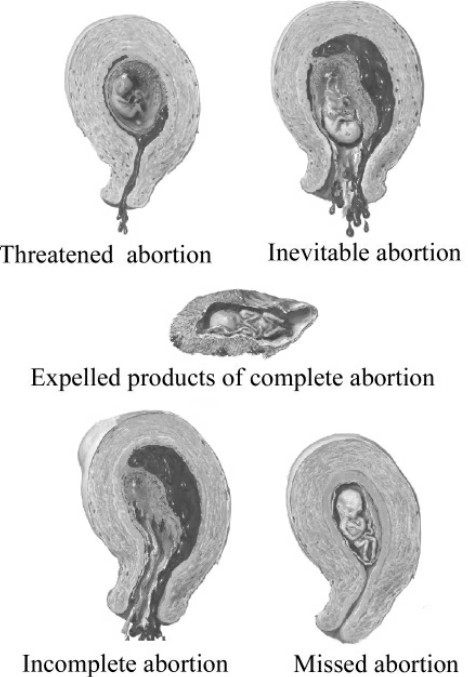
Fig.8-1 Forms of abortion
Etiology and Pathogenesis
1.Endocrine abnormalities—luteal phase defect,thyroid disease.
2.Genetic factors—trisomy,monosomy X,triploidy,and tetraploidy. 3.Reproductive tract abnormalities— abnormality of placentation, intrauterine adhesions(Asherman syndrome),and septate uterus.
4.Infection— mycoplasma hominis,syphilis,toxoplasmosis,possibly chlamydia and herpes.
5.Systemic disease—chronic cardiovascular disease,chronic renal disease, diabetes mellitus,and systemic lupus erythematosus.
6.Environmental factors—alcohol,anesthetic gases,drug use,radiation, smoking,and toxins.
7.Other factors—advanced maternal age,delayed fertilization,and trauma.
Clinical Characteristics
General—vaginal bleeding may be bright red to dark in color.
1.Abdominal cramping—generally rhythmic,accompanied by pelvic or low back pressure.
2.Passage of tissue—complete and incomplete abortion.
3.Cervical dilation—typical of all types of abortion except missed and threatened.
4.Cervical dilation with tissue visible at the cervical os—diagnostic of either incomplete or inevitable abortion.
Missed abortion—decreased or minimal uterine growth early in pregnancy.
1.Vaginal bleeding that changes to a dark-brown discharge that continues.
2.Loss of early symptoms of pregnancy,such as breast fullness or morning sickness.
3.Disseminated intravascular coagulopathy(DIC)can occur when an intrauterine fetal demise in the second trimester has been retained beyond 6 weeks after the death of the fetus(rare).
Septic abortion—severe hemorrhage(vaginal).
1.Midline lower abdominal pain.
2.Uterine and perimetric tenderness.
3.Bacteremia.
4.Septic shock.
5.Renal failure.
Threatened abortion—implantation bleeding.
1.Cervical polyps,cervicitis.
2.Other causes of lower abdominal discomfort(e.g.urinary tract infection,constipation).
Diagnostic Approaches
Diagnostic procedures.If significant cervical dilation is identified by speculum and bimanual examination or if tissue is seen at the cervix,the diagnosis of inevitable or incomplete abortion is established.
Laboratory.Administer a pregnancy test(if pregnancy has not been confirmed).If serial determinations of quantitativeβ-human chorionic gonadotropin(β-h CG)do not show at least a 66%increase every 48 hours,the outlook for the pregnancy is poor.Perform complete blood count(if blood loss has been excessive).Serial determinations of serumβ-h CG may be used to confirm pregnancy loss but are not required for diagnosis.
Imaging.Ultrasonography of the uterus may be used to confirm loss of intrauterine contents,the absence of a fetal pole,or failure to grow.
Management and Therapy
Nonpharmacologic specific measures.When there is a complete abortion, immediate considerations include control of bleeding,prevention of infection, pain relief(if needed),and emotional support,ensuring that all the products of the conception have been expelled from the uterus controls bleeding. Although most patients with an incomplete or inevitable abortion spontaneously pass the remaining tissue(complete abortion),bleeding,cramping,and the risk of infection associated with expectant management generally require surgical evacuation.If retained tissue is present or cannot be ruled out, curettage must be performed promptly.When a missed abortion is diagnosed, evacuation of the uterus can be accomplished either through dilation and evacuation or through medical therapies such as prostaglandin suppositories or mifepristone(RU-486),based on the stage of the pregnancy and other considerations.Septic abortion requires immediate and aggressive management. Broad-spectrum parenteral antibiotics,fluid therapy,and prompt evacuation of the uterus are indicated.When the diagnosis of threatened abortion is made, intervention should be minimal,even when bleeding is accompanied by low abdominal pain and cramping.If there is no evidence of cervical change,the patient can be reassured and encouraged to continue normal activities.If significant pain or bleeding persists,especially bleeding leading to hemodynamic alterations,evacuation of the uterus should be carried out.
Drug(s)of choice.To hasten the expulsion of tissue and reduce bleeding—oxytocin 10to20 units/L intravenous injection(IV)fluids or methylergonovine maleate 0.2 mg intramuscular injection(IM)may be used.
Septic abortion—aggressive fluid therapy,antibiotic therapy(ampicillin 1 to 2 g IV followed by 500 mg IV every 4 to 6 hours,ampicillin/sulbactam1.5 to 3 g IV every 6 hours,or clindamycin 600 mg IV or IM every 6 hours and gentamicin 80mg IM every 8 hours).
Expected Outcome
The risk of pregnancy loss subsequent to a spontaneous abortion increases slightly,although much of this increase may be due to selection for those with factors that preclude successful pregnancy.For those with an inevitable abortion who do not spontaneously lose the pregnancy,infection or bleeding often ensue,requiring evacuation of the uterus.Missed abortions may spontaneously abort,progressing through incomplete to complete stages,or they may be evacuated.After the pregnancy has terminated(spontaneous abortion or surgical evacuation of products of conception),normal menses return in 4 to 6 weeks.With aggressive antibiotic treatment and prompt evacuation of the uterus,the outcome should be good for patients with a septic abortion.Among patients with a threatened abortion,one half go on to lose the pregnancy in a spontaneous abortion(The risk of failure is greater in those who bleed for 3 or more days).For those who carry the fetus to viability there is a greater risk for preterm delivery and low fetal birth weight and a higher incidence of perinatal mortality.There does not,however,appear to be a higher incidence of congenital malformations in these newborns.
(1,074 words)
New Words and Phrases
abortion[ə'bɔːʃən]n. 流产
septic['septɪk]a. 脓毒性的
viability[,vaɪə'bɪlɪtɪ]n. 生存力
menstrual['menstrʊəl]a. 月经的
gestation[dʒes'teɪʃən]n. 妊娠
conception[kən'sepʃən]n. 受孕
rupture['rʌptʃə]n. 破裂;疝v.(使)破裂;(使)发疝气
uterine['juːtərɪn]a. 子宫的
intrauterine[,ɪntrə'juːtərɪn]a. 子宫内的
vaginal[və'dʒaɪnəl]a. 阴道的
cramp[kræmp]v.&n.(腹部)绞痛,痉挛
cervical['sзːvɪkəl]a. 子宫颈的
endocrine['endəʊkraɪn]a. 内分泌的;激素的n. 内分泌(腺);激素
luteal['luːtɪəl]a. 黄体的
thyroid['θaɪrɒɪd]a. 甲状腺的n. 甲状腺
monosomy['mɔːnəʊ,səʊmɪ]n. 单(染色)体,单体(染色体)生物
triploidy['trɪplɒɪdɪ]n. 三倍性
tetraploidy['tetrəplɒɪdɪ]n. 四倍性(染色体)
placentation[,plæsən'teɪʃən]n. 胎盘形成
adhesion[əd'hiːʒən]n. 附着
septate['septeɪt]a. 有隔的;分隔的
uterus['juːtərəs]n. 子宫
mycoplasma[,maɪkəʊ'plæzmə]n. 支原体
mycoplasma hominis 人型支原体
syphilis['sɪfɪlɪs]n. 梅毒
toxoplasmosis[,tɒksəʊplæz'məʊsɪs]n. 弓形体病
chlamydia[klə'mɪdɪə]n. 衣原体
herpes['hзːpiːz]n. 疱疹
lupus['luːpəs]n. 狼疮
lupus erythematosus['erɪ,θiːmə'təʊsəs] 红斑狼疮
anesthetic[,ænɪs'θetɪk]a. 麻醉的n. 麻醉;麻醉剂
fertilization[,fзːtɪlaɪ'zeɪʃən]n. 受精
trauma['trɔːmə]n. 外伤,伤口
abdominal[æb'dɒmɪnəl]a. 腹部的
cervical os['sзːvɪkəlɒs] 子宫颈口
disseminate[dɪ'semɪneɪt]v. 散播
coagulopathy[kəʊ,æɡjʊ'lɔːpəθɪ]n. 凝血病,凝血障碍
disseminated intravascular coagulopathy(DIC)弥散性血管内凝血
perimetric[,perɪ'metrɪk]a. 子宫外膜的
bacteremia[bæktə'riːmɪə]n. 菌血症
polyp['pɒlɪp]n. 息肉
cervicitis[,sзːvɪ'saɪtɪs]n. 子宫颈炎
urinary['jʊərɪnərɪ]a. 泌尿的;泌尿系统的
constipation[kɒnstɪ'peɪʃən]n. 便秘
speculum['spekjʊləm]n. 窥器,扩张器
cervix['sзːvɪks]n. 子宫颈
gonadotropin[,ɡɒnədə'trɒpɪn]n. 促性腺激素
ultrasonography[,ʌltrəsə'nɒɡrəfɪ]n. 超声波检查法
nonpharmacologic['nɒn,fɑːməkəʊ'lɒdʒɪk]a. 非药理学的
evacuation[ɪ,vækjʊ'eɪʃən]n. 清除;清宫
curettage[kjʊə'retɪdʒ]n. 刮宫术
prostaglandin[,prɒstə'ɡlændɪŋ]n. 前列腺素
suppository[sə'pɒzɪtərɪ]n. 栓剂
mifepristone[,mɪfɪ'prɪstəʊn]n. 米非司酮
broad-spectrum['brɔːd'spektrəm]a. 光谱的
oxytocin[ɒksɪ'təʊsɪn]n. 缩宫素(催产素)
methylergonovine maleate 甲基马来酸麦角新碱
[,meθəl,зːɡəʊ'nəʊviːn mæ'liːt]
ampicillin[,æmpɪ'sɪlɪn]n. 氨苄西林(氨苄青霉素)
sulbactam[səl'bæktəm]n. 舒巴坦(青霉烷砜)
clindamycin[,klɪndə'maɪsɪn]n. 克林霉素
gentamicin[,dʒentə'maɪsɪn]n. 庆大霉素
menses['mensiːz]n. 月经
preterm[priː'təːm]n. 早产
perinatal[,perɪ'neɪtəl]a. 出生前后的,围产的
congenital[kən'dʒenɪtəl]a. 天生的,先天的
malformation[,mælfɔː'meɪʃən]n. 畸形
 Exercises
Ⅰ.Reading Comprehension
A.Answer the following questions.
1.What are the clinical manifestations in the loss or failure of early pregnancy?
2.Can you briefly list the etiology and pathogenesis of abortion?
3.Is cervical dilation one of the typical clinical characteristics of all types of abortion?
4.How should the diagnosis and therapy of septic abortion be made including choice of drugs?
5.What symptoms make prompt evacuation of the uterus associated with medical therapies required?
B.Decide whether the following statements are True or False.
1.For all patients when rupture of the membranes and/or cervical dilation takes place during the first half of pregnancy which is typically followed by uterine contractions spontaneous loss of the pregnancy may occur.
2.Some chronic diseases may directly or indirectly affect pregnancy,and even bring about abortion.
3.In clinical diagnosis,severe vaginal bleeding and infection of the uterus are the most important characteristics of septic abortion.
4.Ultrasonography of the uterus are usually be used to confirm inevitable or incomplete abortion.
5.When a missed abortion is diagnosed,evacuation of the uterus must be accomplished through dilation and evacuation and medical therapies.
Ⅱ.Words and Expressions
A.Fill in the blanks with the words or expressions given below,and change the form where necessary.
pregnancy cramp uterine evacuation endocrine
viability perinatal mifepristone congenital oxytocin
septic hemorrhage cervix abort abdominal
1.The potent oxytocic(催产的)effect of prostaglandins(前列腺素)has been used to induce__________ and labor in women.
2.__________ pain after child birth is caused by the contraction of the uterus.
3.20 weeks is considered the age of__________ ,which is the estimated minimum age in weeks that a fetus'growth of physical systems will have allowed it to survive in the external environment.
4.During childbirth,contractions of the uterus will dilate the__________ up to 10 cm in diameter to allow the child to pass through.
5.In medicine,the process of__________ is referred to as fertilization;in lay terms,it is more commonly known as“conception.”
6.The outermost layer of cells of the blastocyst(囊胚)attaches the fertilized ovum to the__________ wall and serves as a nutritive pathway for the embryo.
7.Dilation and__________ (also sometimes called dilation and extraction)is a method of abortion as well as a therapeutic procedure used after miscarriage to prevent infection.
8.__________ after delivery which is a major cause of maternal morbidity worldwide is the loss of greater than 500 ml of blood following vaginal delivery,or 1,000ml of blood following cesarean section.
9.The__________ period starts at the 20thto 28thweek of gestation and ends 1 to 4 weeks after birth.
10.__________ after the initial stages of pregnancy is called round ligament pain (圆韧带)which occurs because the muscles under your uterus expand and grow in order to support the weight of your uterus and baby as it grows.
B.Fill in the blanks with the suitable words or expressions from each group.
Abortion is the termination of a pregnancy by the 1 or expulsion from the uterus of a fetus or embryo,resulting in or caused by its 2 .An abortion can occur 3 due to complications during pregnancy or can be induced.The term abortion most commonly refers to the induced abortion of a human pregnancy,while spontaneous abortions are usually termed 4 .
Spontaneous abortion is the expulsion of an 5 due to accidental trauma or natural causes before approximately the 22ndweek of gestation.The most common cause of spontaneous abortion during the first trimester is chromosomal 6 of the embryo/fetus,accounting for at least 50%of sampled 7 pregnancy losses.Other 8 include vascular disease(such as lupus),diabetes,other hormonal problems,infection,and abnormalities of the 9 .The risk of spontaneous abortion 10 sharply after the 10thweek from the last menstrual period(LMP).
Approximately 205 million pregnancies occur each year worldwide.Over a third are unintended and about a fifth end in 11 abortion.A pregnancy can be intentionally aborted in several ways.The manner selected often depends upon the 12 age of the embryo or fetus,which increases in size as the 13 progresses.
Reasons for procuring induced abortions are typically characterized as either therapeutic or elective.An abortion is medically referred to as a 14 abortion when it is performed to preserve the gravida's(pregnant female) 15 or mental health,to 16 apregnancy where indications are that the child will have a significantly increased chance of 17 morbidity or mortality,or to selectively reduce the number of fetuses to lessen health risks associated with 18 pregnancy.An abortion is referred to as an elective or voluntary abortion when it is performed at the request of the woman for 19 reasons. Confusion sometimes arises over the term“ 20 ”because“elective surgery”generally refers to all scheduled surgery,whether medically necessary or not.
1.A.removal B.cramp C.adhesion D.hemorrhage
2.A.death B.rupture C.effacement D.conception
3.A.habitually B.incompletely C.completely D.spontaneously
4.A.early abortion B.failure C.miscarriages D.late abortion
5.A.excess tissue B.reproductive tract C.placentation D.embryo or fetus
6.A.replication B.abnormalities C.segregation D.inactivation
7.A.normal B.third trimester C.second trimester D.first trimester
8.A.manifestations B.diseases C.causes D.characteristics
9.A.fetal heart rate B.uterus C.fundal height D.fetal movement
10.A.decreases B.increases C.rises D.suspends
11.A.induced B.inevitable C.threatened D.missed
12.A.postnatal B.gestational C.perinatal D.gynecological
13.A.evacuation B.labor C.pregnancy D.abortion
14.A.premature B.congenital C.therapeutic D.spontaneous
15.A.physical B.generative C.reproductive D.psychological
16.A.forbid B.terminate C.protect D.prevent
17.A.uterine B.endocrine C.anesthetic D.premature
18.A.monocyesis B.postterm C.high-risk D.multiple
19.A.unidentifiable B.medical C.predictive D.non-medical
20.A.survival B.therapy C.elective D.pregnant
Ⅲ.Translation
A.Translate the following sentences into Chinese.
1.A complete abortion is the termination of a pregnancy before the age of viability, typically defined as occurring at less than20 weeks from the first day of the last normal menstrual period or involving a fetus of weight less than500 g.
2.Although most patients with an incomplete or inevitable abortion spontaneously pass the remaining tissue(complete abortion),bleeding,cramping,and the risk of infection associated with expectant management generally require surgical evacuation.If retained tissue is present or cannot be ruled out,curettage must be performed promptly.
3.For those who carry the fetus to viability there is a greater risk for preterm delivery and low fetal birth weight and a higher incidence of perinatal mortality.There does not,however,appear to be a higher incidence of congenital malformations in these newborns.
B.Translate the following sentences into English.
1.超声波检查(sonography)和羊膜穿刺术(amniocentesis)使父母能在分娩前知道胎儿的性别。但是这项技术的发展却导致了性别选择性流产,或基于胎儿性别的终止妊娠。女性胎儿的选择性终止妊娠最常见。
2.有时,胚胎不在子宫而是在其中一侧卵巢(ovary)或输卵管(fallopian tube)内发育,任何一例此类患者都会最终出现异位妊娠(ectopic gestation)或宫外妊娠(extra-uterine gestation)。这几乎必致胎儿死亡,此外还经常严重危及母亲安全。
Ⅳ.Writing
A.Write an abstract of Text A.
B.Write a topic-related and literature-based report on Abortion.