Text A Memory Functionand Amnesic Disorder
Definition
Human memory operates over a wide time range,from seconds to decades and with quantities of information ranging from a single word to a lifetime's experience.Each neural system that achieves this monumental dynamic range has its own brain localization(Fig.6-1,6-2).
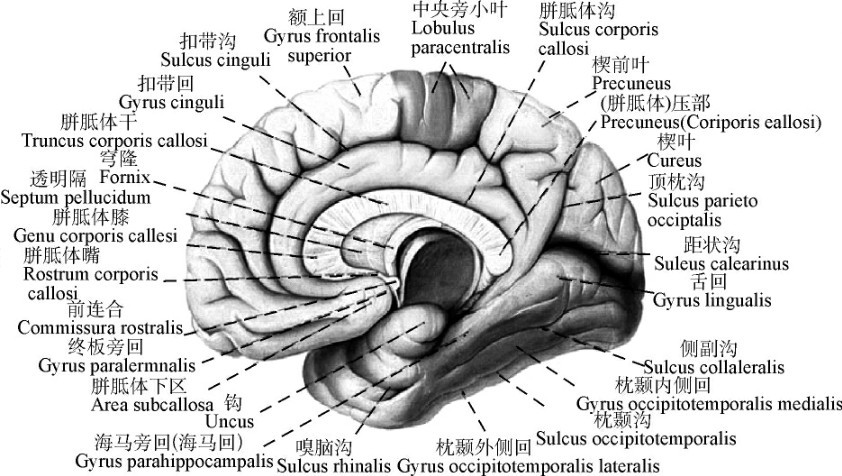
Fig.6-1 Medial surface of the cerebral hemisphere
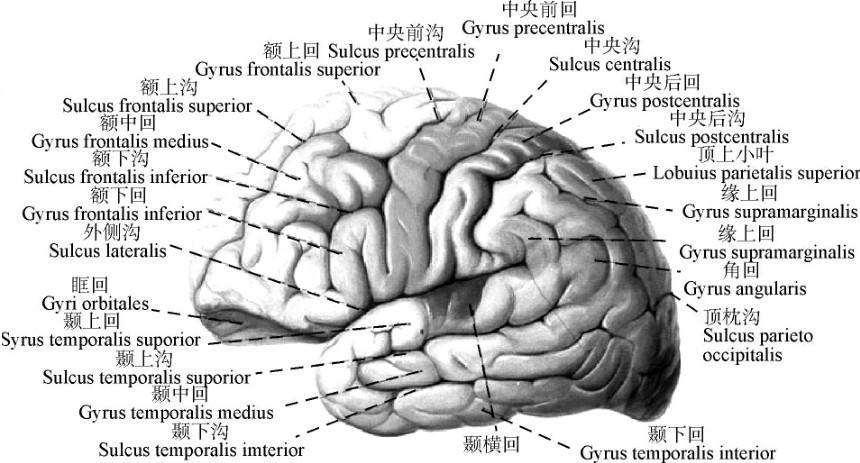
Fig.6-2 Lateral surface of the cerebral hemisphere
Declarative memory describes the type of learning and retrieval of facts and information that occur with conscious attention and intent;examples include remembering conversations,events,and intentions.Declarative memory includes semantic and episodic components.Semantic memory refers to the brain's storehouse of knowledge,words,and facts.Episodic memory refers to learning and recall of specific events.Retention of information for more than a few seconds,in the face of exposure to additional facts,details,or events, requires declarative episodic memory to store and organize information suitable for later recall.It is this declarative,episodic memory system that is assessed as“memory”in the clinical setting.Anterograde amnesia is the clinical manifestation of disturbances in declarative episodic memory.“Anterograde”refers to the failure to learn and hence recall new information on an ongoing basis.Most disorders of memory also exhibit retrograde amnesia,a disturbance of the ability to retrieve information from the past.
Immediate recall of information with zero delay and zero intervening information is a very short-term declarative memory function.Immediate memory is capable of storing an image of an auditory message in exact form, but only a small amount and for a short period.The fidelity of immediate memory recall accuracy drops off dramatically over seconds,particularly if intervening sensory stimuli attract attention.A comparable system exists in the visual modality in that the memory acts like a photograph that fades rapidly.From a clinical perspective,immediate memory is separate from declarative episodic memory.Immediate recall is generally used as a marker of attention and alertness and not memory per se.Loss of immediate recall is not usually indicative of memory loss.
Pathobiology
The hippocampal formations are the anatomic structures of importance for the declarative episodic memory system.The principal input to the hippocampus comes through the entorhinal cortex from multimodal association areas in the frontal,parietal,and temporal neocortex.A second important input is a cholinergic pathway that originates in the septum of the medial-orbital frontal lobe.There are two principal output circuits of the hippocampal formations. One is via the subiculum back to multimodal association areas.The other hippocampal efferent pathway projects via the fornix to the mammillary bodies.The projection from the mammillary bodies passes through the medial thalamus to the ventral anterior nucleus of the thalamus,then to the posterior cingulate,and then back to the entorhinal cortex.The hippocampal circuit is believed to facilitate the formation of memory in association neocortices.The hippocampus does not store a particular learned fact,but rather it enables the appropriate region in a multimodal association cortical region to do so.
Lesions in one hippocampal formation will not generally have as devastating an impact on episodic memory as bilateral lesions will.However,in older people who may have subclinical bilateral hippocampal pathology,a unilateral lesion,particularly in the dominant hemisphere,may produce dense anterograde amnesia.Lesions in the columns of the fornix,mammillary bodies, and medial thalamus have also been linked to anterograde amnesia.
Clinical Manifestations
Patients with anterograde amnesia have poor or no recollection of events, conversations,or observations.Family members report that patients repeat themselves in conversation or re-ask the same questions over the course of a few minutes to hours.Patients will generally forget important events and conversations,even when they were fully engaged in them.They will lose track of the date and the time of day.They will forget appointments,even with reminders.Generally,patients with anterograde amnesia will fail to encode most events and happenings around them.The consequences of such memory failure are usually more evident to family and acquaintances of patients with the disorder than they are to the patients themselves.Anosognosia(lack of awareness)for the deficit of anterograde amnesia is very common,though not universal.Patients who most vehemently complain of memory loss are often suffering from depression rather than focal cognitive dysfunction.
Because some degree of forgetting is ubiquitous in human experience,it is challenging to distinguish between“everyday”forgetting and forgetting that is pathologic.All adults occasionally misplace important items,overlook an appointment,or forget some part of a conversation.In cognitively normal individuals,distraction,preoccupation,inattention,exhaustion,sleep deprivation,or other major life stressors inevitably produce some instances of excess forgetting.Pathologic forgetting as a result of a brain disorder produces a much greater degree of forgetting than occurs in the course of normal daily life,but there is no formulaic description of the boundary at which normal forgetting ends and pathologic forgetting begins.
Diagnosis
The diagnosis of anterograde amnesia begins with the complaint of memory impairment from the patient or from someone close to the patient. Testing of memory can be performed at the bedside in alert patients.The patient is asked to learn three or four words and recall them after 1 or 2 minutes.A patient with severe anterograde amnesia will recall none or at most one of the words,whereas individuals with normal memory can recall all of the words or all but one.
In patients with questionable memory difficulties,assessment by an experienced neuropsychologist is often a necessary part of the evaluation. Standardized tests of memory have greater precision and reliability and involve the use of lengthier material to be remembered and a longer delay between learning and recall.
Determining the Cause
Alzheimer disease is the most common disorder in which anterograde amnesia occurs.In Alzheimer disease,anterograde amnesia is usually the dominant cognitive symptom,particularly early in the illness.Hippocampal atrophy is common.Anterograde amnesia also occurs in other dementing illnesses,such as vascular dementia and dementia with Lewy bodies.
Strokes can damage regions involved in episodic memory.Occlusion of the medial temporal branch of the posterior cerebral artery causes infarction of the hippocampus.Infarction in the territory of penetrating branches of the tip of the basilar artery causes bilateral medial thalamic infarcts.
Anterograde amnesia may be a major residual deficit after herpes simplex encephalitis.Herpes simplex encephalitis has a predilection to damage structures at the base of the cerebral hemispheres;frequently,the temporal lobes are severely damaged.Korsakoff syndrome,the residual of the encephalopathy of thiamine deficiency,is characterized by profound anterograde amnesia. Hemorrhagic necrosis of the mammillary bodies occurs in Korsakoff syndrome. Survivors of closed head injuries may have anterograde amnesia because the medial temporal lobes are vulnerable to trauma as a result of their close proximity to the temporal bone.Survivors of an episode of anoxic-ischemic encephalopathy may also have dense anterograde amnesia.The pyramidal neurons of the CA1(Cornu Ammonis 1)region of the hippocampus are particularly vulnerable to hypoxic injury.
The syndrome of transient global amnesia involves anterograde amnesia, but the duration of the amnesia is a matter of 6 to 12 hours rather than the weeks or months in post-traumatic amnesia or the permanent deficits in Alzheimer disease or Korsakoff syndrome.Transient global amnesia generally affects middle-aged or elderly individuals.Its cause is not known,although it is not usually due to typical cerebrovascular disease or epilepsy.Electroencephalography is typically not specifically abnormal,but diffusion-weighed MRI often shows distinctive abnormalities of the hippocampus a day or more after the onset of transient global amnesia.
(1,236 words)
New words and phrases
retrieval[rɪ'triːvəl]n. 检索
retention[rɪ'tenʃən]n. 记忆力
anterograde['æntrəʊɡreɪd]a. 顺行的
amnesia[æm'niːzjə]n. 健忘症
auditory['ɔːdɪtərɪ]a. 听觉的
fidelity[fɪ'delɪtɪ]n. 准确,精确;保真度
modality[məʊ'dælətɪ]n. 感觉体(如视觉、味觉)
pathobiology[,pæθəbaɪ'ɒlədʒɪ]n. 病理学
hippocampal[,hɪpə'kæmpəl]a. 海马的
anatomic[,ænə'tɒmɪk]a. 解剖学上的
entorhinal cortex 内嗅(区)皮质
frontal['frʌntəl]a. 额的
parietal[pə'raɪɪtəl]n. 顶骨a. 顶骨的
cholinergic[,kəʊlɪ'nзːdʒɪk]a. 胆碱能的;类胆碱能的
frontal lobe 大脑额叶
subiculum[sə'bɪkjuːlən]n. (脑)下脚
fornix['fɔːnɪks]n. 穹隆
mammillary['mæmɪlərɪ]a. 乳头的
thalamus['θæləməs]n. 丘脑
ventral['ventrəl]a. 腹侧的
anterior[æn'tɪərɪə]a. 前面的
nucleus['njuːklɪəs]n. 细胞核
posterior[pɒ'stɪərɪə]a. 较后的
cingulate['sɪŋɡjʊlɪt]a. 有色带的
bilateral[,baɪ'lætərəl]a. 双边的
pathology[pə'θɒlədʒɪ]n. 病理学
encode[en'kəʊd]v. 编码
anosognosia[æn,əʊsəʊ'nəʊʒə]n. 病感失认(症)
focal['fəʊkəl]a. 病灶的,局灶的
Alzheimer disease['æltzhaɪməz dɪ'ziːz] 阿尔茨海默病
atrophy['ætrəfɪ]n.&v. 萎缩(症)
vascular['væskjʊlə]a. 血管的
dementia[dɪ'menɪə]n. 痴呆症
Dementia with Lewy Bodies 路易氏体失智症
cerebral['serɪbrəl]a. 大脑的
temporal['tempərəl]a. 颞的
basilar['bæsɪlə]a. 颅骨底部的
herpes simplex encephalitis 单纯疱疹脑炎
Korsakoff syndrome 科萨科夫综合征
encephalopathy[en,sefə'lɒpəθɪ]n. 脑病变
thiamine['θaɪəmiːn]n. 硫胺,维生素B1
hemorrhagic['hemərædʒɪk]a. 出血的
pyramidal[pɪ'ræmɪdəl]a. 锥体的
carbonic anhydrase 碳酸酐酶
transient['trænzɪənt]a. 瞬变的
epilepsy['epɪlepsɪ]n. 癫
electroencephalography[ɪ'lektrəʊen,sefə'lɒɡrəfɪ]n. 脑电描记术
diffusion[dɪ'fjuːʒən]n. 扩散
 Exercises
Ⅰ.Reading Comprehension
A.Answer the following questions.
1.How do you define the declarative memory?
2.What features can be concluded in immediate memory?
3.Can you tell the most obvious difference of retrograde amnesia from anterograde amnesia?
4.What are the two important inputs to the hippocampus?
5.Which disease does anterograde amnesia occur in?
B.Decide whether the following statements are True or False.
1.Immediate memory is capable of storing an image of an visual message in exact form,but only a small amount and for a short period.
2.The hippocampus stores a particular learned fact partially,and enables the appropriate region in a multimodal association cortical region to do so.
3.Patients with anterograde amnesia can not recollect the events,conversations,or observations.
4.Standardized tests of memory,including lengthier material to be remembered and a longer delay between learning and recall are used to diagnose anterograde amnesia
5.The syndrome of transient global amnesia involves anterograde amnesia, but is a matter of the weeks or months rather than 6 to 12 hours in post-traumatic amnesia or the permanent deficits in Alzheimer disease or Korsakoff syndrome.
Ⅱ.Words and Expressions
A.Fill in the blanks with the words or expressions given below,and change the form where necessary.
hippocampus occlusion neocortex infarction temporal
retrograde amnesia semantic atrophy encephalopathy
immediate anterograde cerebral episodic declarative
1.__________ memory is your memory for facts,like the Spanish word for dog.
2.__________ memory is a kind of memory for events that occurred in a particular place at a particular time.
3.This course is an investigation to distinguish episodic memory,which is memory of personal events,from__________ memory,which is general knowledge for meaningful information independent of time and place.
4.__________ memory holds the information for less than 1 second,and it either forgets them or passes them on to short-term memory.
5.Many of these new brain cells are found in the__________ ,a structure used to remember events,people,and places.
6.They found that new neurons help move older memories out of the hippocampus and into long-term storage in the__________ .
7.Accordingly,he has both__________ and retrograde amnesia:he cannot form new factual memories and he cannot recall old ones.
8.__________ is the most common cause of secondary intracerebral hemorrhage.
9.The frontal and__________ lobes,which govern speech—no dedicated writing center is hardwired in the brain—may also figure in.
10.If you don't exercise your muscles,they weaken and__________ .
B.Fill in the blanks with the suitable words or expressions from each group.
Anterograde amnesia is a loss of the ability to create new memories after the event that caused the 1 ,leading to a partial or complete inability to recall the recent past,while long-term memories from before the event remain intact.This is in contrast to 2 amnesia,where memories created prior to the event are lost.
This disorder is usually acquired in one of a few ways:one cause is 3 drugs,such as midazolam(咪达唑仑),flunitrazepam(氟硝西泮),which are known to have powerful amnesic effects.Another cause is a 4 injury,in which damage is usually done to the 5 or surrounding cortices.It can be caused by shock or an 6 disorder.Illness can also cause anterograde amnesia if it causes encephalitis(脑炎),which is the 7 of brain tissue.For example,herpes simplex virus type I,when left untreated for over 96 hours, may lead to permanent damage in 8 regions and a permanently reduced or eliminated ability to encode new explicit memory(also known as 9 memory),which consists of two main subdivisions: 10 memory and semantic memory.If the damage due to 11 is over a certain threshold, encoding new episodic and/or semantic memory becomes impossible for the patient,leading to 12 amnesia.Patients suffering from anterograde amnesia may have either episodic,semantic,or both types of 13 memory impaired for events after the trauma that caused the amnesia.This suggests memory consolidation for different types of memory takes place in different regions of the 14 .Despite this,current knowledge on human memory is still decades away from the ability to“map out”the wiring of a human brain to discover which parts of which lobe are responsible for the various episodic and 15 knowledge within a person's memory.
Amnesia is seen in patients who have parts of their brain known to be involved in memory circuits 16 lobe,the most notable of which is known as the 17 memory system.Patients with 18 originating in the MTL may have either side or both structures removed(there is one structure per hemisphere).In addition,patients with 19 who undergo surgery will often sustain damage to these structures.Damage to any part of this system results in amnesic syndromes.This is why people who suffer from strokes have a chance
of developing 20 deficits that result in anterograde amnesia,since strokes can involve the temporal lobe and the temporal cortex,and the temporal cortex houses the hippocampus.
1.A.depressive syndrome B.elusionosis C.amnesia D.hallucinosis
2.A.psychogenic B.retrograde C.dissociative D.lacunar
3.A.chlordiazepoxide B.benzene C.hypnotic D.benzodiazepine
4.A.frontal lobe B.traumatic brain C.nerve D.acquired brain
5.A.medial temporal lobe B.hippocampus C.frontal lobe D.cerebral cortex
6.A.physical B.behavioral C.functional D.emotional
7.A.inflammation B.hypersensitivity C.vasculitis D.infection
8.A.hypothalamus B.hippocampal C.cerebellum D.pallium
9.A.declarative B.procedural C.retrospective D.prospective
10.A.explicit B.visual C.episodic D.procedural
11.A.epilepsy B.dementia C.hydrocephalus D.encephalitis
12.A.retrograde B.anterograde C.dissociative D.transient global
13.A.sensory B.implicit C.explicit D.retrospective
14.A.body B.brain C.lobe D.memory
15.A.immediate B.semantic C.declarative D.explicit
16.A.frontal B.parietal C.occipital D.medial temporal
17.A.stroke B.Alzheimer disease C.seizures D.encephalitis
18.A.removing B.removed C.to remove D.being removed
19.A.inflammation B.amnesia C.tumors D.abscesses
20.A.perceptive B.residual C.attentional D.cognitive
Ⅲ.Translation
A.Translate the following sentences into Chinese.
1.Immediate recall of information with zero delay and zero intervening information is a very short-term declarative memory function.Immediate memory is capable of storing an image of an auditory message in exact form,but only a small amount and for a short period.
2.Pathologic forgetting as a result of a brain disorder produces a much greater degree of forgetting than occurs in the course of normal daily life,but there is no formulaic description of the boundary at which normal forgetting ends and pathologic forgetting begins.
3.The syndrome of transient global amnesia involves anterograde amnesia, but the duration of the amnesia is a matter of 6 to 12 hours rather than the weeks or months in post-traumatic amnesia or the permanent deficits in Alzheimer disease or Korsakoff syndrome.
B.Translate the following sentences into English.
1.失语症是脑卒中后的主要语言障碍。它通常是由于左侧大脑半球损伤造成的理解和运用语言符号系统进行表达的能力受损所致,并伴有身体右侧运动功能减弱或偏瘫。
2.随着各种新型影像学技术在中枢神经系统应用中的不断发展,短暂性全面遗忘症的本质已获得深入的了解。在以前,该病症因其呈一过性特点而难以被确定。
Ⅳ.Writing
A.Write an abstract of Text A.
B.Write a topic-related and literature-based report on Amnesia.