Accounting information systems (AIS) collect and process data from transactions and events, organize them in useful reports and communicate results to decision makers. The five fundamental principles of accounting information systems are: |
A. Control Principle
B. Relevance Principle
C. Compatibility Principle
D. Flexibility Principle
E. Cost-Benefit Principle |
刘萍
目录
-
1 第一章 Accountign in Business 企业会计
-
1.1 Importance of Accounting
-
1.2 Fundamentals of Accounting
-
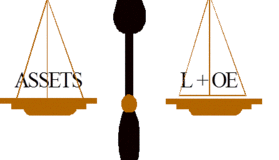
1.3 Transactions Analysis and the Accounting Equation
-
1.4 Finacial Statements
-
-
2 第二章 Analysis and Recording 经济业务分析与记录
-
2.1 Analyzing and recording process
-
2.2 Analyzing and processingtransactions
-
2.3 Trial balance
-
2.4 Demonstration Problem
-
-
3 第三章Adjusting Accounts and Preparing Financial Statements 账户调整与会计报表编制
-
3.1 Timing and reporting
-
3.2 Adjusting accounts
-
3.3 Preparing financialstatements
-
3.4 Demonstration Problem
-
-
4 第四章Completing the Accounting Cycle 完整会计循环
-
4.1 Work sheet as a tool
-
4.2 Closing process
-
4.3 Accounting cycles
-
4.4 Classified balance sheet
-
4.5 Demonstration Problem
-
-
5 第五章Accounting for Merchandising Operations 主要经营活动会计
-
5.1 Merchandising activities
-
5.2 Accounting for merchandise purchases
-
5.3 Accounting for merchandise sales
-
5.4 Completing the accounting cycles
-
5.5 Financial statement formats
-
5.6 Demonstration Problem
-
-
6 第六章Merchandise Inventories and Cost of goods Sold 存货与销售成本
-
6.1 Inventory basis
-
6.2 Inventory costing under aperpetual system
-
6.3 Valuing inventory at LCM
-
6.4 Demonstration Problem
-
-
7 第七章Accounting Information Systems 会计信息系统
-
7.1 Fundamental system principles
-
7.2 Special journal in accounting
-
7.3 Technology-based accountingsystem
-
7.4 Demonstration Problem
-
-
8 第八章Cash and Internal control 货币资金及其内部控制
-
8.1 Internal control
-
8.2 Control of cash
-
8.3 Banking activities ascontrol
-
8.4 Demonstration Problem
-
-
9 第九章Receivables 应收款项
-
9.1 Accounting receivables
-
9.2 Notes receivables
-
9.3 Disposal ofreceivables
-
9.4 Demonstration Problem
-
-
10 第十章Plant Assets, Natural Resources, and Intangibles 固定资产、自然资源与无形资产
-
10.1 SECTION 1-PLANT ASSETS:Cost determination
-
10.2 Depreciation
-
10.3 Additional expenditures
-
10.4 Disposal of plant assets
-
10.5 SECTION 2-NATURAL RECOURCES
-
10.6 SECTION 3-INTANGIBLESASSETS
-
-
11 第十一章Current Liabilities and payroll accounting 流动负债和工资核算
-
11.1 Characteristics of liabilities
-
11.2 Known liabilities
-
11.3 Estimated liabilities
-
11.4 Contingent liabilities
-
-
12 第十二章long-term liabilities 长期负债
-
12.1 Basic of bonds
-
12.2 Bonds issuance
-
12.3 Bonds retirement
-
12.4 Long-term bonds payable
-
-
13 第十三章Investments and international operation 投资与国际经营
-
13.1 Basics of investments
-
13.2 Reporting of non-influentialinvestments
-
13.3 Reporting ofinfluential investments
-
-
14 第十四章Accounting for Corporations 公司会计
-
14.1 Corporate form of organization
-
14.2 Common stock
-
14.3 Dividends
-
14.4 Preferred stock
-
14.5 Treasury stock
-
14.6 Reporting of equity
-
Fundamental system principles
上一节
下一节

