
Unit 9 Chinese Food
Section One Pre-reading Activities
Watch the video clip and answerthe following questions.
Questions:
1. What do you think of the old man’s profession? Are there anyhints in the movie clip?
2. What’s his suggestion for cooking fish on the phone?
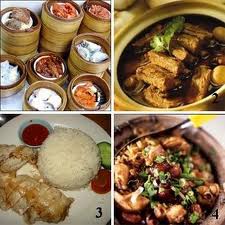
1. A variety of foods most commonlyeaten in China
l In general, riceis the major food source for people from rice farming areas in southern
l Noodles aresymbolic of long life and good health according to Chinese tradition. They comedry or fresh in a variety of sizes, shapes and textures and are often served insoups or fried as toppings.
l Tofu is another popular product often used as a meator cheese substitute. It is a soy-based product which is highly nutritious,inexpensive and versatile. It has a high protein/fat ratio.
2. Different regional styles of Chinesecuisine
A number of different styles contribute to Chinese cuisine, but perhaps thebest known and most influential are Sichuancuisine, Shandong cuisine, Jiangsucuisine and Guangdong(Cantonese) cuisine.These styles are distinctive from one another due to factors such as availableresources, climate, geography, history, cooking techniques and lifestyles.
3. Cooking techniques of Chinese cuisine
Braising and stewing, baking, scalding, and wrapping, etc.
Basic methods of preservation such as drying, salting, pickling andfermentation.
Thisarticle, which is written by a foreigner, provides us with a foreignperspective to examine our culture, though on a seemingly trivial aspect — ourfood. But all elements of a culture are actually of equal significance, so anyof them can serve as a stand we set our first step on. If you haven’t startedyour journey to discover your own culture, then let yourself be pushed by thisarticle and take it as your first step. At the end of this journey, you mayeither love your culture more, or less, but one thing is sure, that yourfeeling toward your culture will be more real and will be based upon a muchbroadened view.

