材料化学13级双语

刘志明 教授

目录

  • 1 第一章 绪论
    • 1.1 Historical Perspective
    • 1.2 Materials Science and Engineering
    • 1.3 Why  Study  Materials Chemistry?
    • 1.4 Materials and Its Components
    • 1.5 Classification of Materials
    • 1.6 Materials Science and Materials Chemistry
    • 1.7 Research Field of Materials Chemistry
    • 1.8 Development of materials
    • 1.9 Composition, Structure and Performance of Materials
    • 1.10 Performance of Materials
  • 2 第二章  固体相图化学
    • 2.1 Phase Changes of Solids, Liquids and Gases
    • 2.2 Differences between the Three States of Matter
    • 2.3 The Close Packed Solid
    • 2.4 Phase relations between individual solids
      • 2.4.1 Phase Diagram and Phase Chemistry
    • 2.5 One-component system单元系相图
    • 2.6 Binary system phase diagram 二元系相图—固溶体相图、合金相图
      • 2.6.1 Binary fully soluble phase diagram二元匀晶相图
      • 2.6.2 Eutectic Phase Diagram, Eutectoid Phase Diagram二元共晶、共析相图
      • 2.6.3 Peritectic Phase Diagram & Peritectoid Phase Diagram包晶和包析相图
      • 2.6.4 Stable Compound or Intermetallic Compound  形成稳定化合物或中间相的二元相图
      • 2.6.5 Basic Rules of  Binary System  二元相图的一些基本规律
    • 2.7 Ternary Phase Diagram 三元系相图
      • 2.7.1 三元相图的表示方法
      • 2.7.2 三元系平衡相的定量法则
      • 2.7.3 三元匀晶相图
      • 2.7.4 三元共晶相图
      • 2.7.5 Summary of ternary phase diagram
  • 3 第三章 固体结构测定
    • 3.1 Scientific determination of the structure of solids
    • 3.2 Bragg’s Equation
    • 3.3 Miller Indices
    • 3.4 Ewald and Reciprocal Lattice
    • 3.5 Energy Band Models
    • 3.6 Solid Structure Conventions and protocols
  • 4 Chapter 4 Defects in Solids
    • 4.1 Three kinds of Defects
      • 4.1.1 Types of point defects expected in a homogeneous
      • 4.1.2 The point defect in heterogeneous solids
      • 4.1.3 The line defect
      • 4.1.4 The Volume Defect
    • 4.2 Mathematic and equations of the points
      • 4.2.1 The Plane Net
    • 4.3 Non-stoichiometric solids
    • 4.4 Defect equation symbolism
    • 4.5 Some applications for defect chemistry
      • 4.5.1 Phosphors
      • 4.5.2 Defect equilibria and their energy
      • 4.5.3 Defect equilibria in various type of compounds
      • 4.5.4 Defect concentrations in MXs Compounds
  • 5 Mechanisms and Reactions in the Solid State
    • 5.1 Phase changes
    • 5.2 The role of phase boundaries in solid state reactions
    • 5.3 Reaction rate processes in solids
    • 5.4 Defining heterogeneous nucleation process
    • 5.5 Phase changes of solid state
    • 5.6 Fick’s Laws of Diffusion— Kinetics Equation of Diffusion
      • 5.6.1 Fick’s First Law
      • 5.6.2 Fick’s Second Law
      • 5.6.3 Driving force of Diffusion
    • 5.7 Diffusion Mechanism
      • 5.7.1 The Tarnishing Reaction
      • 5.7.2 Kirchendall Effect
      • 5.7.3 Types of diffusion reactions
    • 5.8 硅酸盐固相反应
      • 5.8.1 固相反应机理
      • 5.8.2 固相反应动力学
      • 5.8.3 影响固相反应的因素
    • 5.9 硅酸盐固相烧结
      • 5.9.1 烧结过程和机理
      • 5.9.2 烧结动力学
      • 5.9.3 影响固相烧结的因素
  • 6 Particles and Particle Technology
    • 6.1 Sequences in particle growth
    • 6.2 粒子径与粒度分布
      • 6.2.1 粒子径的表示方法
      • 6.2.2 粒度分布
      • 6.2.3 平均粒子径
      • 6.2.4 新建课程目录
    • 6.3 Particle size
    • 6.4 Measuring particle distributions
    • 6.5 Analysis of PD parameters
    • 6.6 Types of log normal particle distributions
    • 6.7 粒子形态
      • 6.7.1 形状指数
      • 6.7.2 形状系数
      • 6.7.3 粒子的比表面积
    • 6.8 粉体的密度与孔隙率
      • 6.8.1 粉体的密度
      • 6.8.2 粉体孔隙率
    • 6.9 Methods of measuring particle distributions
      • 6.9.1 Optical-The microscope-visual counting particles
  • 7 Growth of Crystals
    • 7.1 Methods of growth of crystals
    • 7.2 Furnace construction
      • 7.2.1 Elements of furnace design
    • 7.3 Steps in growing a single crystal
    • 7.4 Czochralski growth of single crystals
      • 7.4.1 Czochralski crystal growth parameters
      • 7.4.2 Operation of the Czohralski apparatus
      • 7.4.3 Defects produced in the growing crystal as a function of growth conditions
    • 7.5 The Bridge-Stockbarger Method for Crystal Growth
    • 7.6 Zone melting as a means for forming single crystals
    • 7.7 Zone refining
    • 7.8 The Vernuil method of crystal growth
  • 8 Plasma Chemistry
    • 8.1 等离子化学
      • 8.1.1 等离子体
      • 8.1.2 Plasma空间的各种现象—碰撞、激发、电离、复合、附着、离脱扩散和迁移
      • 8.1.3 低温等离子体的发生与放电特性
      • 8.1.4 等离子体化学的特征
      • 8.1.5 等离子体化学的应用—气—固相反应
      • 8.1.6 等离子体检测
    • 8.2 光化学
Classification of Materials

1.5  Classification of Materials

Materials can be devided into five categories listed as follows,

--Metals

--Inorganic nonmetalmaterials

--Polymer

--Composites

--Advanced Materials

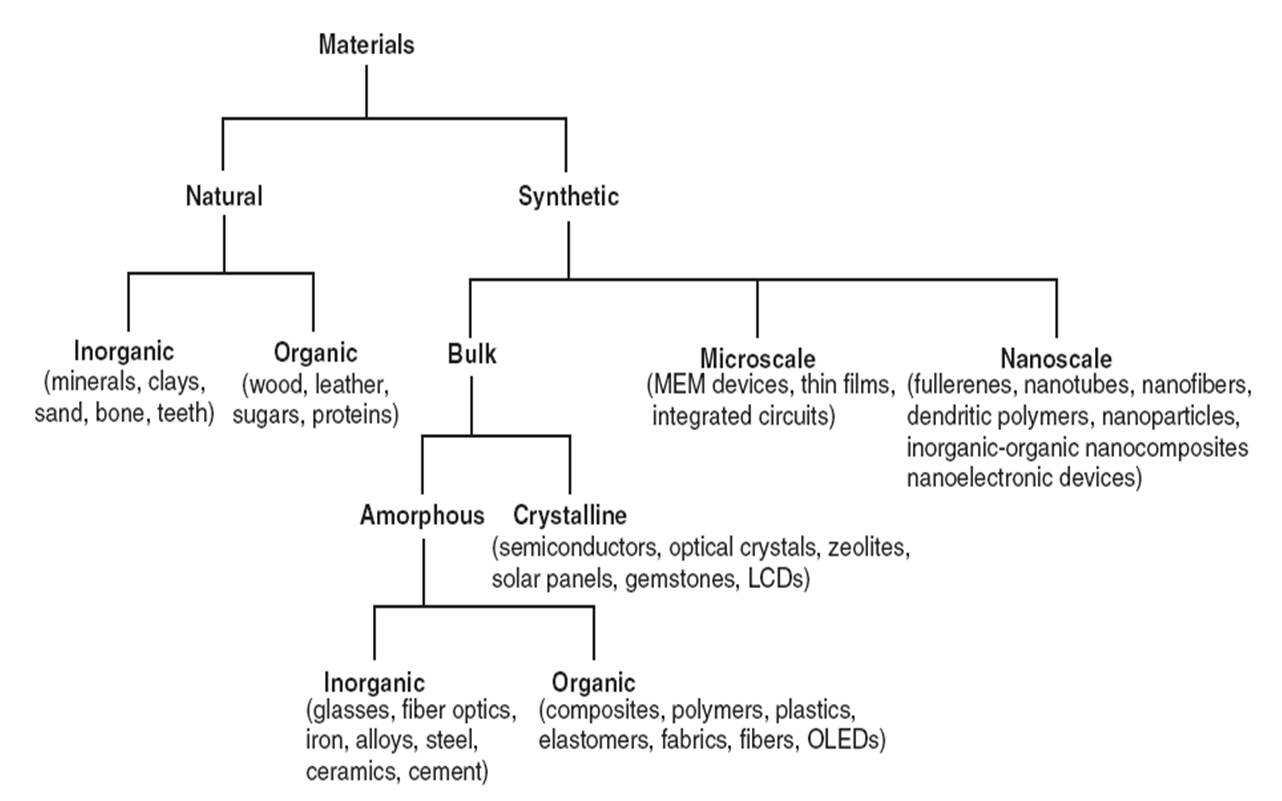
Classification scheme (See the fig.1) for the various types of materials according to the source. 
1.5.1 Metals

¡Metallic materials are normally combinations of metallic elements.They have large numbers of nonlocalized electrons; that is, these electronicsare not bound to particular atoms. Many properties of metals are directlyattributable to those electrons. Metals are extremely good conductors of electricity and heat are not transparent to visible light; a polished metalsurface has a lustrous appearance. Furthermore, metals are quite strong, yetdeformable, which accounts for their extensive use in structural applications. 

¡金属材料是以元素周期表中金属元素为主要成分的材料。包括:

A. 黑色金属(Black metal):生铁(含碳量>2%),钢(含碳量0.04%~2%),工业纯铁(含碳量<0.04%);

B. 有色金属(Coloredmetal):重金属(如,铜、铅、锌、镍),轻金属(如,铝、镁、钛),贵金属(如,金、银、铂),稀有金属(如,钨、钼、钽、铌、铀、钛、钍、铟及稀土金属)

C. 特殊金属材料:非晶态金属,高强高模铝锂合金,形状记忆合金,超导合金等。

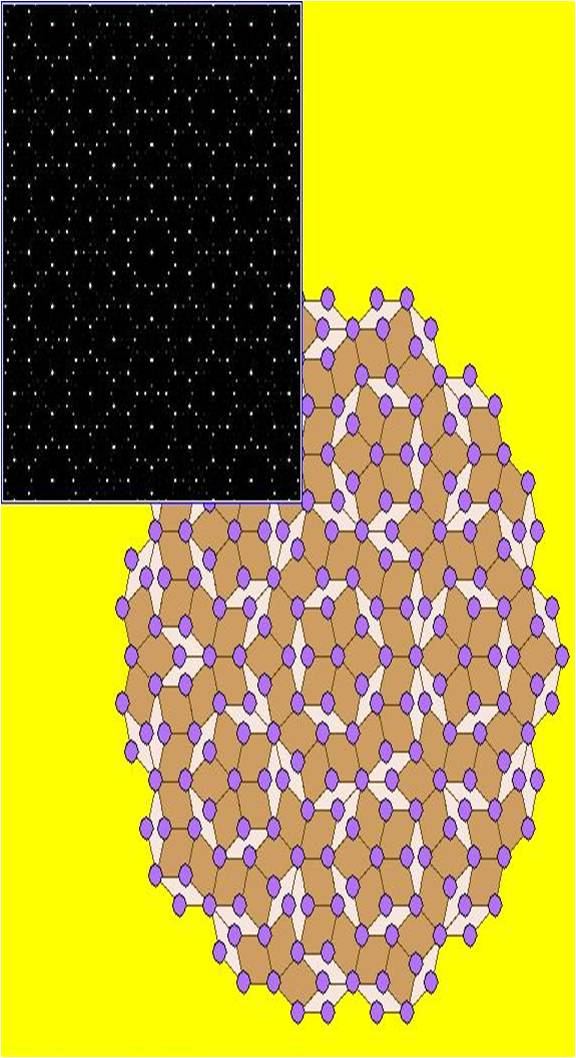
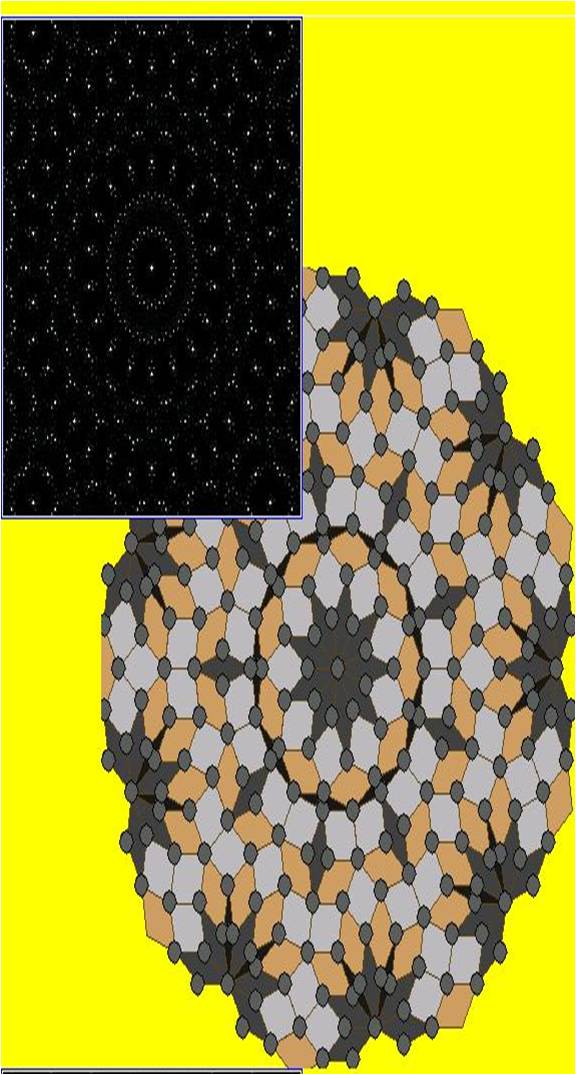
30年来金属材料科学发展十分迅速,相继出现了金属玻璃(非晶态)、准晶quasicrystal)、微晶、低维合金、定向共晶合金以及纳米晶体等一系列新材料。

几种准晶的照片:
1.5.2 Inorganic nonmetallic Materials

        无机非金属材料

无机非金属材料包括范围极广,for example, single crystal silicondiamondceramic。主要分为硅酸盐材料(玻璃,陶瓷,耐火材料,搪瓷材料)和新型无机非金属材料(特种陶瓷或先进陶瓷)。其中,陶瓷材料是一种多晶结构的材料,是通过对粉体原料的成型和烧结过程而得到的。作为非金属材料的陶瓷具有耐高温、耐腐蚀、高强度(抗压)、高硬度和绝缘等良好性能。

1.5.3 Polymers (Macromolecular Compounds)  

高分子材料

¡Polymers include the familiar plastic, fibre and rubber materials. Sometimes, adhesive and coatings are also referred as polymers. Many of them are organic compounds that are chemically based on carbon, hydrogen, and othernonmetallic elements; furthermore, they have very large molecular structures.These materials typically have low densities and may be extremely flexible.

¡在工程技术应用上的合成材料中,塑料是最大吨位的一类材料。橡胶,涂料,粘合剂是另一类工程材料。近几年已经出现了一些耐高温的合成聚合物材料如聚酚氧、聚硅氧烷、聚酰亚胺等。

1.5.4 Composites 复合材料

复合材料(Composite Materials)是由两种或两种以上不同物理、化学性质的以微观或宏观的形式复合而组成的多相材料。简言之,即是由两种或两种以上异质、异形、异性的材料复合而成的新型材料。一般由基体单元与增强体或功能组元所组成。复合材料可经设计,即通过对原材料的选择,各组分分布的设计和工艺条件的保证等,使原组分材料优点互补,因而呈现了出色的综合性能。

¡A number of composite materials have been engineered that consist of more thanone material type. Fiberglass is a familiar example, in which glass fibers are embedded within a polymeric material. A composite is designated to display a combination of the best characteristics of each of the component materials. Fiberglass acquires strength from the glass and flexibility from the polymer. Many of the recent material developments have involved composite materials.

材料的复合化是材料发展的必然趋势之一,古代就出现了原始型的复合材料,如用草茎和泥土作建筑材料;砂石和水泥基体复合的混凝土也有很长历史。19世纪末复合材料开始进入工业化生产。20世纪60年代由于高新技术的发展,对材料的性能要求日益提高,单质材料很难满足性能的综合要求和高指标要求,复合材料因具有可设计性的特点受到各发达国家的重视,开发出了许多性能优良的先进复合材料,各种基础性研究也得到发展。 

复合材料按用途可分为结构复合材料和功能复合材料。目前结构复合材料占绝大多数,而功能材料有广阔的发展前途。结构复合材料基本上由增强体和基体组成。增强体承担结构使用中的各种载荷,基体则起到粘接增强体予以赋形并传递应力和增韧的作用。常用的基体有高分子化合物,也有少量金属、陶瓷、水泥和碳(石墨)。

基体分类时见图1.1


对于木质及非木质人造板,都属于聚合物基复合材料。木材属于天然高分子材料。 

聚合物基复合材料是目前复合材料的主要品种,其产量远远超过其他基体的复合材料。习惯上常把橡胶基复合材料划入橡胶材料中,所以聚合物基体一般仅指热固性(树酯)聚合物和热塑性聚合物。实验中所用脲醛树酯、酚醛树酯和异氰酸酯树酯均属于热固性树酯。

多相复合材料已成为当前材料研究的重要对象。 

最近发展了一种所谓梯度功能复合材料,即一面是具有结构作用的金属材料,再逐层地深入无机化合物,使另一面具有一些特殊的功能。如SiC-Si3N4梯度复合材料,其性能较纯粹的SiC陶瓷具有大幅度提高。

1.5.5 Advanced Materials 高级材料

¡Materialsthat are utilized in high-technology (or high-tech) applications are sometimestermed advanced materials. By high technology we mean a device orproduct that operates or functions using relatively intricate and sophisticatedprinciples; examples include electronic equipment (VCRs, CD players, etc.), biomaterials,computers fiber-opticsystems, spacecraft, aircraft, and militaryrocketry. These advanced materials are typicallyeither traditional materials whose properties have been enhanced or newlydeveloped, high-performance materials. Furthermore, they may be of all materialtypes (e.g., metals, ceramics, polymers), and are normally relativelyexpensive. In subsequent chapters are discussed the properties and applicationsof a number of advanced materials—for example, materials that are used forlasers, integrated circuits, magnetic information storage, liquid crystaldisplays (LCDs), fiber optics, and the thermal protection system for the SpaceShuttle Orbiter. 

Functional Materials 功能材料

是指具有能适应外界条件而改变自身性能的材料,如磁性材料、发光材料、记忆材料、光导材料和超导材料等。 

目前人们已研制出100多种记忆材料。此外,像感光树酯,它的特殊本领是在光的作用下聚合成为不溶物或分解成可溶物。

从应用或用途来看,材料又可分为信息材料、能源材料、生物材料、航空航天材料、电子材料、建筑材料、包装材料、电工电器材料、机械材料、农用材料、日用品及办公用品材料等。