Text explanations Supplementary reading materials
Paragraphs 1-3
Paragraphs 4-9
Paragraphs 10-15
Paragraphs 16-19
Things you need to know more…
1. Security tools in the modern society
a. What is a dead-bolt lock?
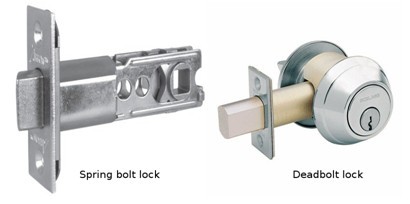
A dead bolt, dead lock or deadbolt is a locking that cannot be opened except by rotating the lock cylinder. This makes it more secure than a spring bolt lock, which uses a spring to hold the bolt in place. It is easier for someone to 'pick' a spring bolt lock – to open it without a key. A deadbolt is often used along with a spring-bolt lock on an entry door to a building.
Adapted from: http://en.wikipedia.org/wiki/Dead_bolt
These websites have interesting information about the history of locks:
http://www.locks.ru/germ/informat/schlagehistory.htm
http://londonlocksmiths.com/history-of-locks.html
b. What is a patio?
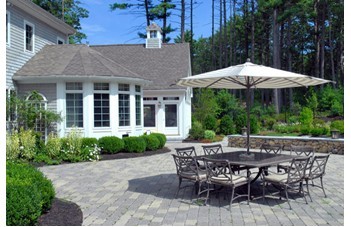
A patio is a paved area between the house and the garden which can be used for relaxing or eating outdoors inwarm weather.
c. How does a domestic electronic
alarm system work?
Most alarm systems consist of one or more sensors to detect intruders, and an alerting device to indicate the intrusion. Usually, they have a central control unit, the "brain" of the system, it reads sensor inputs, tracks arm/disarm status, and signals intrusions. Owners turn the alorm on or off by using a keypad and passcode. Sensors can detect intruders by a variety of methods, such as monitoring doors and windows for opening, or by monitoring unoccupied interiors for motions, sound, vibration, or other disturbances.
Alerting devices are bells, sirens, and/or flashing lights. They warn the occupants of intrusion, and can scare off burglars.
Security alarms are often coupled with a monitoring service. If an alarm goes off, operators at the monitoring station see the signal and take action by contacting property owners, notifying police, or sending private security forces.
Adapted from: http://en.wikipedia.org/wiki/Burglar_alarm
d. What is a rape whistle?
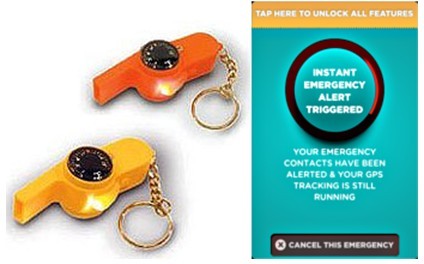
A rape whistle, or personal alarm, is an extremely loud whistle that some women carry with them in case they are attacked when walking alone, especially at night. The loud noise (up to 130 Decibels) has two purposes; it is loud enough to be painful for the attacker and it can warn other people nearby who will come to help her. The name is used to market the whistle to women, but the same whistles are sold to men as 'safety whistles' for use in hiking and other outdoor pursuits where someone can be lost or hurt and need to call help. Nowadays, many people use a personal safety app on their mobile phone for these purposes.
To read more on this, visit these websites:
http://rapewhistle.net/
http://www.techhive.com/article/2057930/5-personal-safety-apps-that-watch-your-back.html
Please also see section 3c
e. What are access cards?
Access cards are electronic cards that are used like 'keys' to allow people to enter or leave buildings through doors or gates with an electronic lock. Many businesses and public buildings use these systems nowadays.
f. Why does the writer call the USA 'The
land of the Free'?
This name comes from some words in the national anthem of the United States, written by Francis Scott Key in 1814. This song, “The Star Spangled banner”, is about a battle between British and American forces in 1812.
The star spangled banner is a name for the American flag, and the last two lines of the song say:
“And the star-spangled banner in triumph shall wave
O'er the land of the free and the home of the brave!”
Adapted from:
http://en.wikipedia.org/wiki/The_Star-Spangled_Banner
g. How has airport security changed since 9/11?
There were nine main changes to airport security after 9/11, making it much more time-consuming for passengers:
1. Specific ID required; ID name must match name on ticket
2. Shoes must be removed at checkpoints.
3. All baggage, carry-on and checked, must be screened.
4. No liquids (above 100ml ounces) allowed through checkpoints.
5. Laptops etc. must be pulled from luggage.
6. Jackets, outwear must be removed.
7. Body scan machine screening.
8. Enhanced pat-downs.
9. No more non-ticketed visitors allowed at airline gates.
Today, due to the long wait at security, many airlines recommend an early airport arrival; “Customers with checked baggage should arrive 2 hours before flight departure.”
Adapted from:
http://www.farecompare.com/ask-rick/9-ways-security-has-changed-since-911/


2. Gun manufacturing
a. How many people own guns in othercountries?
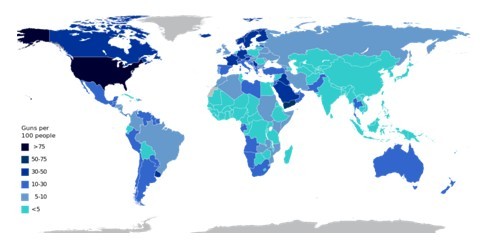
Map of civilian guns per capita by country according to the “Small Arms Survey 2007”.
The United States owns more guns per resident,
at around 0.89, than any other nation in the world. The U.S. has over 50% more firearms per capita than the next two highest nations, Serbia and Yemen at about 0.55 and three times as many as major European countries such as France and Germany.
Retrieved from:
http://en.wikipedia.org/wiki/Number_of_guns_per_capita_by_country
b. Why do so many Americans own guns?
This can be explained by looking at the history of the USA.
Firstly, in the early years of the European settlement and expansion in America, hunting was an important source of food for most of the settlers, so owning and being able to use a gun was an important skill for every man. This hunting tradition is still very strong in America today.
Secondly, in the British colonies of America before the revolution, every man had to serve in a citizen's militia because there was no full-time army. This militia protected the people from attacks by foreign armies or hostile Native Americans. Each man had to provide his own weapons and ammunition. But as the people became more and more unhappy with British rule, the Government tried (unsuccessfully) to disarm the militias and prevent the sale of gunpowder. This was seen as tyranny by the people and forever afterwards, Americans have
regarded
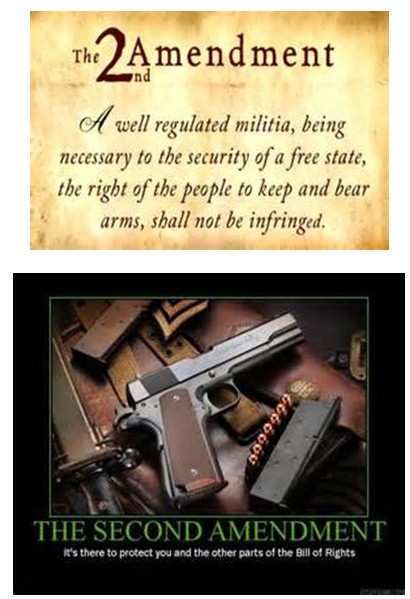
the right to own guns as a fundamental safeguard of the citizen's rights against a tyrannical government. In fact, the second amendment to the US constitution (1789) guarantees to citizens the right to own guns. In most states, only people with a criminal record or severe mental illness are not allowed to own guns.
Gun laws are a very controversial, political issue in the US. There are two opposing groups
Gun Contol activists want to restrict the types of guns that can be bought and reduce their availability to the general public.
Gun Rights activists do not want the government to impose any more restrictions on the ownership of guns.
Adapted from:
http://en.wikipedia.org/wiki/Gun_politics_in_the_United_States
3. Some notes on cultural references
a. What is irony?
Irony is very difficult to define and has a number of quite separate meanings, but two sentences from “The Land of theLock” provide very good examples of situational irony or cosmicirony.
This is a kind of irony where the actions we take have a completely different result than what we intended – often the opposite result.
For a more detailed discussion of irony,see here:
http://grammar.about.com/od/rhetoricstyle/a/ironyobserve.htm
b. What is a suburb?
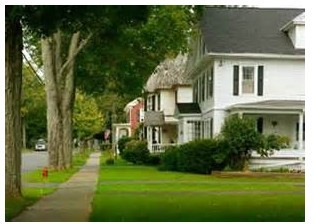
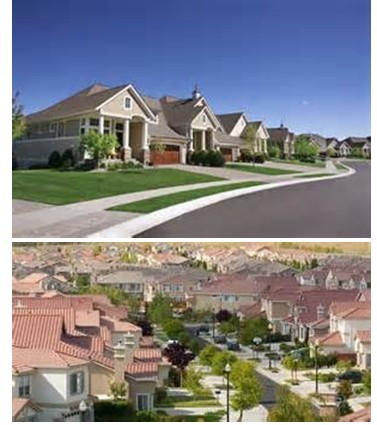
A suburb is a residential area or a mixed use area. In some countries, a suburb exists as part of a city but in America and other countries it is often a separate community within commuting distance of a city. Most suburbs have lower population densities than inner city neighborhoods. Suburban houses in America are usually detached, with a garden and are occupied by only one family. They usually have a higher percentage of white families and a lower percentage of ethnic minorities, though this situation is changing. The suburbs are seen as a place where middle class Americans prefer to raise their children because they feel the suburbs are safer and quieter than the city.
Adapted from:
http://en.wikipedia.org/wiki/Suburb
c.What are suburban housewives?
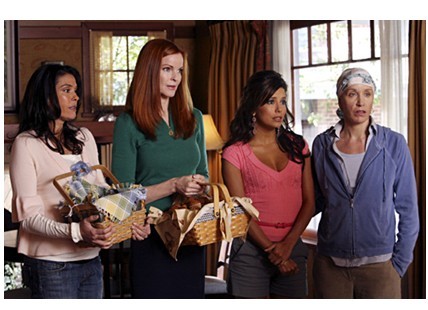
This is a cultural stereotype. The typical suburban housewife in America is seen as a middle class white woman who stays at home to raise the children (or works only part time) while her husband commutes to a job in the city. Like most stereotypes, it is often inaccurate.
The TV comedy series “Desperate Housewives” plays on this stereotype.
In reading one, the author uses the example of suburban housewives carrying rape whistles to emphasise that even people in very safe neghbourhoods feel threatened by violence.

4. Suburbs and country areas
a. How is suburban life like?
The goodlife in suburb of McMansions
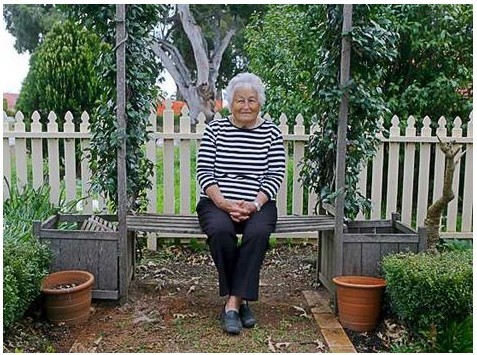
"I was always rich, because I always loved living here" ... Daisy Ardley, 82, who has lived in Kellyville since 1947.
Photo: Brendan Esposito
The only thing residents say is invisible about booming Kellyville these days is its public transport, writes Steve Meacham.
THEY felt like pioneers, says Colleen Murphy - though it was only nine years ago. "We were one of the first subdivisions. We were still pretty much surrounded by farmland then. Now that's all gone."
There were no decent shops, no supermarket, no choice of school. People did not even recognise the name of their suburb. But for the Murphys - Colleen, Brett and their sons Luke, 11, and Sean, 9, now joined by a daughter, Aislinn, 4 - Kellyville offered a unique opportunity to build their perfect home - "a four-bedroom, double garaged normal house" - and still have money to enjoy life.
Of course, there were drawbacks. "When you said you lived in Kellyville no one knew where you were talking about. It was the invisible suburb. Now you say Kellyville and people do know where it is. Possibly because of the publicity about McMansions."
Ah, the McMansion factor. In just five years the once invisible suburb has achieved a notoriety among certain self-appointed sophisticates as a crucible of crass taste. Its very name has become synonymous with the modern urge to build the biggest home on the smallest block.
Perhaps we should blame Homeworld, "the largest display village in the world". TV ads beg us to come to Samantha Riley Drive, Kellyville, to inspect the latest display homes "from over 30 of Sydney's finest builders". It is a successful formula. This is the second Homeworld in Kellyville. The original is now an estate named after Elizabeth Macarthur, the colonial matriarch.
Few Sydney suburbs have gone though a greater metamorphosis. But Daisy Ardley, 82, remembers it 60 years ago, when it was The Pleasant Village (the title of her first book on Kellyville, published in 1993 before rampant development required a second book, And The Village Grew, this year).
When Daisy and her late husband Len bought their two hectare plot in 1947, bandicoots, frill-necked lizards and quail were commonplace among the orchards, vegetable gardens and dairy farms. It was still a rural outpost, a loose-knit community once known, aptly, as There and Nowhere, then Irish Town, and finally Kellyville - so named in 1884 after Henry Kelly, former convict turned colonial landowner.
At first, Daisy and her baby Valerie - the first offour daughters - lived in a tent while Len built "a 14-foot [4.2-metre]long" garage. That became their makeshift home until they were able to afford a proper house. Today neither garage nor house exists. Both were knocked down when Len died in 1995. Daisy sold most of the land to developers and built herself a modern home, though she ordered what she thinks may be the last picket fence in Kellyville.
Retrieved from:
5. Upper-middle-class in the modern society
The upper middle class is a sociological concept referring to the social group constituted by higher-status members of the middle class. This is in contrast to the term "lower middle class", which is used for the group at the opposite end of the middle class stratum, and to the broader term "middle class". There is considerable debate as to how the upper middle class might be defined. According to sociologist Max Weber the upper middle class consists of well-educated professionals with graduate degrees and comfortable incomes.
The American upper middle class is defined similarly using income, education and occupation as the predominant indicators. In the United States, the upper middle class is defined as consisting mostly of white-collar professionals who not only have above-average personal incomes and advanced educational degrees but also a higher degree of autonomy in their work. The main occupational tasks of upper-middle-class individuals tend to center on conceptualizing,consulting, and instruction.
Retrieved from:
http://en.wikipedia.org/wiki/Upper_middle_class
a. Why is the cashmere sweater so expensive?
Cashmere
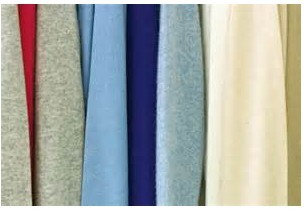
Cashmere comes from the under-coat of goats that inhabit the Gobi Desert, which is located in Northern China and Mongolia. The goats have a tough outer fur coat and soft, fine hair underneath (the wool that is used in cashmere) in order to protect the animals from harsh cold.
Good Quality Cashmere
Good quality cashmere generally has longer fibers and pills less easily. A good quality cashmere has a very soft texture and holds its shape when stretched. A hefty yet light fabric is indicative of a quality cashmere.
Poor Quality Cashmere
Poor quality cashmere is rough and is composed of shorter fibers. The sweater also will be thin, loose, shapeless, and limp.
Expense
Cashmereis very expensive because the harsh climate of the Gobi desert makes it difficult to farm high numbers of goats. The fleece is also collected and spunon hand-operated machines. Oftent, the sweaters are pieced together by hand as well.
Retrieved from: