Text Explanations and Supplementary Readings
Paragraph 1
Paragraphs 2~3
Paragraphs 4~5
Paragraphs 6~7
Paragraphs 8~13
Paragraphs 14~23
Things you need to know more about the reading text.
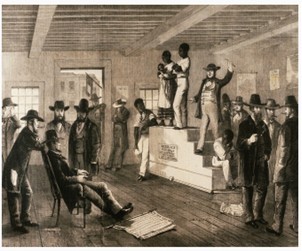
1.Slavery in the United States
Q: How did the slavery of African people begin in America?
Twenty African slaves were brought to America in 1619 to help grow crops such as tobacco and the slave trade grew rapidly over the next two centuries. By the end of the American civil war, when slavery was finally abolished, there were nearly 4 million African-American slaves. Slavery was particularly important for the cotton industry in the Southern states of the US and at one time around a third of the people living in the Southern states were African-American slaves.
Q: What was the Abolition Movement about?
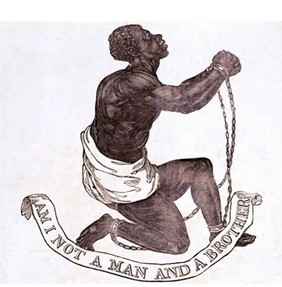
From the 1830s to the 1860s, a movement to abolish slavery in America gained strength in the northern United States, led by free blacks such as Frederick Douglass and white supporters such as William Lloyd Garrison, founder of the radical newspaper The Liberator, and Harriet Beecher Stowe, who published the bestselling antislavery novel “Uncle Tom’s Cabin” (1852).
Q: How did slavery end?
Growing tensions between the slave-owning Southern states and the antislavery Northern states eventually led to a civil war. With the vistory of the Northern states, slavery became illegal everywhere in the US. However, slavery's legacy of racism and discrimination against black people continued well into the 20th Century and race is still a divisive issue in America today.
See this article for more information about slavery.
2.The Civil War
Q: What was the Civil War about?
The Civil War was a fight to preserve the Union of the United States of America. From the beginning of the United States there were disagreements about how much power the central government should have and how much power each state should have to decide about things like taxation, trade tariffs, defence and, of course,
slavery.Over time the economic interests of the Northern manufacturing states clashed with those of the Southern agricultural states, for whom slavery was an essential cource of labour. These arguments became more and more bitter until, when Abraham Lincoln became President of the United States, eleven Southern states broke off from the union and formed the Confederate States of America. Abraham Lincoln was known to be stongly against slavery. This led to a war that lasted from 1861 to 1865 and in which over 600,000 soldiers were killed.
Q: What was the result of the Civil War?
The Civil War was a key event in the history of the United States. The individual states after years of reconstruction would end up joined together in a stronger union. Most importantly, the war officially ended slavery.
See this article for more information about the American Civil War.
http://americanhistory.about.com/od/civilwarmenu/a/civiloverview_2.htm

3.The Underground Railroad
Q: What was the Underground Railroad?
"The Underground Railroad" was the name given to a secret system of escape routes,safe houses and people that helped slaves who had escaped from slavery in the southern states of the US to reach Canada, where slavery was against the law and they could be free.
See this article for more information about the underground railroad.
http://www.history.com/topics/black-history/underground-railroad

4.The Civil Rights Movement
Q: What was the Civil Rights Movement mainly about?
The civil rights movement was a struggle by African Americans in the mid-1950s to late 1960s to achieve civil rights equal to those of whites, including equal opportunity in employment, housing, and education, as well as the right to vote, the right of equal access to public facilities, and the right to be free of racial discrimination.
Q: When was the birth of the Civil Rights Movement?
On December 1, 1955, Rosa Parks was arrested in Montgomery, Alabama, for refusing to give up her seat on a city bus to a white man. Because she was a well-respected and dignified figure in the community, her arrest was finally enough to persuade African Americans that they could no longer tolerate racially discriminatory laws. They decided to boycott the city buses as a response to this outrage. Their resolve was inspired by the words of the Reverend Martin Luther King Jr. "We are here this evening," King declared to the packed church, "to say to those who have mistreated us so long that we are tired—tired of being segregated and humiliated; tired of being kicked about by the brutal feet of oppression." He went on to make a case for peace and nonviolence. By December 1956, the city was forced to desegregate its buses.
Q: What was the nonviolent movement about?
The Montgomery bus boycott became a turning point because it gained media attention for the civil rights cause, and it brought King to the fore as a leader. King would go on to head the southern Christian leadership conference (SCLC), which was formed in 1957, and to guide the civil rights movement itself. The boycott also marked the end of reliance on litigation as the major tactic for gaining civil rights for African Americans. From this point on the movement also engaged in nonviolent direct action, a technique of civil disobedience that had been used before by pacifists, by labour movements, and by Mohandas K. Gandhi in the struggle to secure India's freedom from Great Britain. This type of protest worked in part by seeking to create a sense of shame in the opponent.
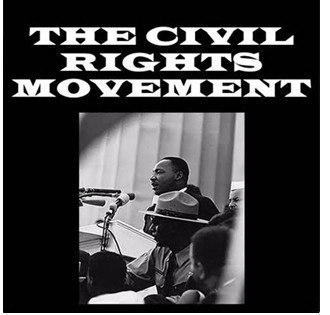
On August 28, 1963, the civil rights movement reached a high point of public visibility when it held the March on Washington. Hundreds of thousands of people—an estimated 20 to 30 percent of them white—gathered in front of the Lincoln Memorial in Washington, D.C., to urge Congress and the federal government to support desegregation and voting rights. During this occasion, King gave his famous "I Have a Dream" speech. Throughout this period of nonviolent protest, the civil rights movement continued to suffer the effects of white violence and King himself was assassinated by a white man in 1968.
Despite these problems, the civil rights movement forever changed the face of U.S. law and politics. It led to legislation - the civil rights act of 1964 and the voting rights act of 1965 - that gave greater protection to the rights of minorities. It also greatly changed the role of the judiciary in U.S. government, as the Supreme Court became more active in its defence of individual rights, often in response to litigation and demonstrations initiated by those in the movement.
See this article for more information about the civil rights movement.
http://www.encyclopedia.com/topic/Civil_Rights_Movement.aspx
5. Twelve Years a Slave
Q. What is 12 years a slave about?
The book 'Twelve Years a Slave' (1853) is a memoir and slave narrative by Solomon Northup, a black man who was born free in New York. It details his kidnapping in Washington, D.C. and subsequent sale into slavery. After having been kept in bondage for 12 years in Louisiana by various masters, Northup was able to write to friends and family in New York, who were in turn able to secure his release. Northup's account provides extensive details on the slave markets in Washington, D.C. and New Orleans and describes at length cotton and sugar cultivation on major plantations in Louisiana.
The memoir has been adapted and produced as the 1984 PBS television movie Solomon Northup's Odyssey and the Oscar-winning film 12 Years a Slave.
Adapted from: http://www.digplanet.com/wiki/Twelve_Years_a_Slave

6.Josiah Henson and Uncle Tom’s Cabin
Q: Who was Josiah Henson?
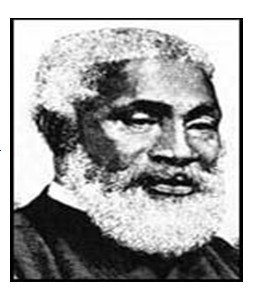
Josiah Henson was born a slave on 15th June 1789 in Charles County, Maryland. He was sold three times before he reached the age of eighteen. By 1830, Henson had saved up $350 to purchase his freedom. After giving his master the money he was told that the price had increased to $1,000. Cheated of his money, Henson decided to escape with his wife and four children. After reaching Canada, Henson formed a community where he taught other ex-slaves how to be successful farmers. His life story, The Life of Josiah Henson (1849) was read by Harriet Beecher Stowe and inspired her best-selling novel, Uncle Tom's Cabin.
Retrieved from:
http://spartacus-educational.com/USAShenson.htm
Q: What is the book Uncle Tom’s Cabin about?
Harriet Beecher Stowe's best known novel, Uncle Tom's Cabin (1852), changed forever how Americans viewed slavery, the system that treated people as property. It demanded that the United States deliver on the promise of freedom and equality, galvanized the abolition movement and contributed to the outbreak of the Civil War. Using the stories Josiah Henson and other former slaves, Stowe created a novel in which the main character and his family suffer the injustices and hardships of slavery.
See this article for more information about Harriet Beecher Stowe and Uncle Tom's Cabin.

7.Shakespeare and Romeo and Juliet
Q: What do we know about Shakespeare?
William Shakespeare (1564 to 1616) was born in Stratford-upon-Avon in Warwickshire. He was a prolific poet and playwright, very successful during his life and still regarded as the greatest English playwright.
See this article for more information about William Shakespeare.
http://www.bbc.co.uk/history/people/william_shakespeare
Q: What was Romeo and Juliet about?
Romeo and Juliet is a play set in Italy and is about the secret and tragic love between two young people from noble families that are enemies. Romeo and Juliet has always been one of Shakespeare's most popular plays. It has been adapted to opera, ballet, television productions, and movies.
See this article for more information about Romeo and Juliet.


8.Declaration of Independence
Q: What is the Declaration of Independence?
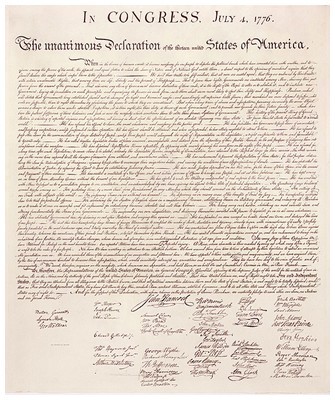
The Declaration of Independence was a pivotal document in the founding of the United States of America. It was adopted by representatives of all thirteen colonies, in Philadelphia, Pennsylvania, on July 4, 1776.
Written by Thomas Jefferson between June 11 and June 28, 1776, the Declaration of Independence was an open letter to George III, King of Great Britain, stating that the thirteen American colonies considered themselves free from British rule. The Declaration established that rather than rebellious colonies, the United States were now a new and separate nation that fought to be free of its foreign repression. The Declaration enumerated the reasons for colonial dissatisfaction, a list of grievances against the King, in order to justify before the world the breaking of ties between the colonies and the mother country.
But more than that, the Declaration of Independence espoused a relatively new philosophy: that governments are institutions established with the consent of the governed, not the divine rule of kings. Philosophers such as John Locke had proposed this principle, and the writers of the Declaration established it as the basis of their new nation, stating that all men had equal rights and privileges under the law, among those "life, liberty, and the pursuit of happiness."
Adapted from:
http://www.answers.com/Q/What_was_the_Declaration_of_Independence
9.Moses
Q: Who was Moses?
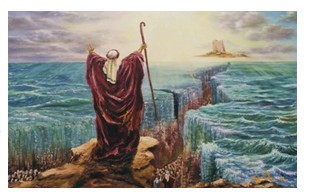
Moses is a person in Abrahamic religions. He was a religious leader, lawgiver, and prophet according to the Hebrew Bible. Generally, he is also seen as the author of the Torah. He is often called Moshe Rabbenu in Hebrew (Hebrew: מֹשֶׁה רַבֵּנוּ, Lit. "Moses our Teacher/Rabbi") and seen as the most important prophet in Judaism. Christianity, Islam, the Bahá'í Faith, and the Rastafari, also see him as an important prophet. Moses has also been an important symbol in American history, from the first settlers up until the present. This is because Moses led his people out of slavery in Egypt to a new 'Promised Land' in Israel. So he is often perceived in the west as a champion of slaves and oppressed people.
See this article for more information about Moses.
10.Jesus Christ
Q: What do we know about Jesus Christ?
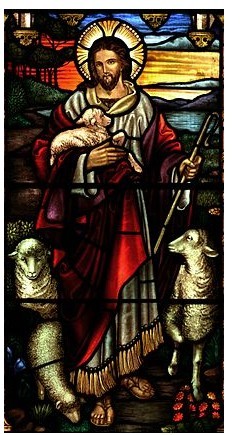
Jesus (/ˈdʒiːzəs/6–4 BC to 30–33 AD), also referred to as Jesus of Nazareth, is the central figure of Christianity, whom the teachings of most Christian denominations hold to be the Son of God. Christianity regards Jesus as the awaited Messiah of the Old Testament and refers to him as Jesus Christ, a name that is also used in non-Christian contexts.
See this article for more information about Jesus.
11. Puns
Q: What is a pun?
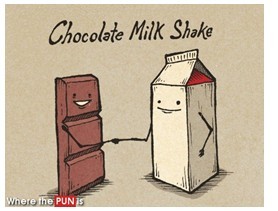
A pun is a joke that plays with words. It can be based on different meanings of the same word or on different words that sound alike. A person who enjoys making puns is called a punster.
Examples:
A double pun based on different meanings of “flies' (verb and noun) and 'like' (preposition and verb)
“ Time flies like an arrow. Fruit flies like a banana”
A pun based on different words that sound alike.
“Why is six afraid of seven? Because seven eight nine” ('eight' sounds like 'ate')
12. Social protest
a. What is the marching for Civil Rights about?
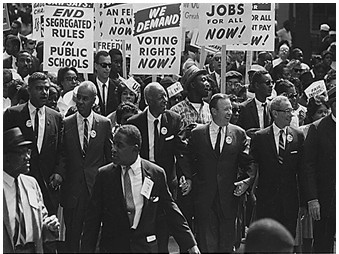
The March on Washington for Jobs and Freedom took place in Washington, D.C., on August 28, 1963. Attended by some 250,000 people, it was the largest demonstration ever seen in the nation's capital, and one of the first to have extensive television coverage.
Background
1963 was noted for racial unrest and civil rights demonstrations. Nationwide outrage was sparked by media coverage of police actions in Birmingham, Alabama, where attack dogs and fire hoses were turned against protestors, many of whom were in their early teens or younger. Martin Luther King, Jr., was arrested and jailed during these protests, writing his famous "Letter From Birmingham City Jail," which advocates civil disobedience against unjust laws. Dozens ofadditional demonstrations took place across the country, from California to NewYork, culminating in the March on Washington. President Kennedybacked a Civil Rights Act, which was stalled in Congress by the summer.
Coalition
The March on Washington represented a coalition of several civil rights organizations, all of which generally had different approaches and different agendas. The "Big Six" organizers were James Farmer, of the Congress of Racial Equality (CORE); Martin Luther King, Jr., of the Southern Christian Leadership Conference (SCLC); John Lewis, of the Student Nonviolent Coordinating Committee (SNCC); A. Philip Randolph, of the Brotherhood of Sleeping Car Porters; Roy Wilkins, of the National Association for the Advancement of Colored People (NAACP); and Whitney Young, Jr., of the National Urban League.
The stated demands of the march were the passage of meaningful civil rights legislation; the elimination of racial segregation in public schools;protection for demonstrators against police brutality; a major public-works program to provide jobs; the passage of a law prohibiting racial discriminationin public and private hiring; a $2 an hour minimum wage; and self-government for the District of Columbia, which had a black majority.
Opposition
President Kennedy originally discouraged the march, for fear that it might make the legislature vote against civil rights laws in reaction to a perceived threat.Once it became clear that the march would go on, however, he supported it.
While various labor unions supported the march, the AFL-CIO remained neutral.
Outright opposition came from two sides. White supremacist groups, including the Ku Klux Klan, were obviously not in favor of any event supporting racial equality. On the other hand, the march was also condemned by some civil rights activists who felt it presented an inaccurate, sanitized pageant of racial harmony; Malcolm X called it the "Farce on Washington," and members of the Nation ofIslam who attended the march faced a temporary suspension.
The March on Washington
Nobody was sure how many people would turn up for the demonstration in Washington,D.C. Some travelling from the South were harrassed and threatened. But on August 28, 1963, an estimated quarter of a million people—about a quarter of whom were white—marched from the Washington Monument to the Lincoln Memorial,in what turned out to be both a protest and a communal celebration. The heavy police presence turned out to be unnecessary, as the march was noted for its civility and peacefulness. The march was extensively covered by the media, with live international television coverage.
The event included musical performances by Marian Anderson; Joan Baez; Bob Dylan;Mahalia Jackson; Peter, Paul, and Mary; and Josh White. Charlton Heston—representing a contingent of artists, including Harry Belafonte, Marlon Brando, Diahann Carroll, Ossie Davis, Sammy Davis Jr., Lena Horne, Paul Newman,and Sidney Poitier—read a speech by James Baldwin.
The speakers included all of the "Big Six" civil-rights leaders (James Farmer, who was imprisoned in Louisiana at the time, had his speech read by Floyd McKissick); Catholic, Protestant, and Jewish religious leaders; and labor leader Walter Reuther. The one female speaker was Josephine Baker, who introduced several "Negro Women Fighters for Freedom," including RosaParks.
Noteworthy Speeches
The two most noteworthy speeches came from John Lewis and Martin Luther King, Jr.
Lewis represented the Student Nonviolent Coordinating Committee, a younger, moreradical group than King's. The speech he planned to give, circulated beforehand, was objected to by other participants; it called Kennedy's civilrights bill "too little, too late," asked "which side is the federal government on?" and declared that they would march "through the Heart of Dixie, the way Sherman did" and "burn Jim Crow to the ground—nonviolently." In the end, he agreed to tone down the more inflammatory portions of his speech, but even the revised version was the most controversial of the day, stating:
The revolution is at hand, and we must free ourselves of the chains of political and economic slavery. The nonviolent revolution is saying, "We will not wait for the courts to act, for we have been waiting hundreds of years. We will not wait for the President, nor the Justice Department, nor Congress, but we will take matters into our own hands,and create a great source of power, outside of any national structure that could and would assure us victory." For those who have said, "Be patientand wait!" we must say, "Patience is a dirty and nasty word." We cannot be patient, we do not want to be free gradually, we want our freedom,and we want it now. We cannot depend on any political party, for the Democratsand the Republicans have betrayed the basic principles of the Declaration of Independence.
Martin Luther King, Jr.
King's speech remains one of the most famous speeches in American history. He started with prepared remarks, saying he was there to "cash a check" for"Life, Liberty and the pursuit of Happiness," while warning fellow protesters not to "allow our creative protest to degenerate into physical violence. Again and again, we must rise to the majestic heights of meeting physical force with soul force." But then he departed from his script,shifting into the "I have a dream" theme he'd used on prior occasions, drawing on both "the American dream" and religious themes,speaking of an America where his children "will not be judged by the color of their skin but by the content of their character." He followed this with an exhortation to "let freedom ring" across the nation, and concluded with:
And when this happens, when we allow freedom to ring, when we let it ring from every village and every hamlet, from every state and every city, we will be able to speed up that day when all of God's children, black men and white men,Jews and Gentiles, Protestants and Catholics, will be able to join hands and sing in the words of the old Negro spiritual, "Free at last, free at last.Thank God Almighty, we are free at last."
Retrieved from:
http://www.infoplease.com/spot/marchonwashington.html#ixzz3Ae87xe19
b. What is Civil Defense drills about?
Civil Defense Drills and Fear of Communism
Civil Defense drills at school were a common occurrence from 1959 to 1961. I attended a public school in a suburb of Buffalo, New York, and my school periodically held civil defense drills, much the same as fire drills. I was in first and second grades during that time period and it seemed perfectly normal and logical to carry out these drills. Looking back from the vantage point of 2011,the entire activity seems surreal. Loud sirens would sound and we would all file out into the corridors to sit “Indian style,” facing the walls. In those days teachers were not concerned about being politically correct regarding Native Americans, so they always reminded us to sit “Indian style.”
Somehow, sitting cross-legged facing the wall was supposed to protect us from a nuclear attack from the Soviet Union, which could theoretically happen at any moment. I don’t remember feeling any fear or apprehension; it was just part of going to school and being herded around from one activity to another. A civil defense drill could take place after a social studies lesson, and be followed by reading “See Spot Run” for the umpteenth time.
The general awareness and fear of the spread of Communism was genuine and pervasive. While I don’t remember hearing much discussion about Communism at home, concern was in the air. It was generally regarded as obvious that the Soviet Union was plotting to attack innocent Americans, and that this attack might occur at any place and time.
There must have been extensive reporting about the lack of human rights and freedoms in the Soviet Union. Although I don’t remember hearing any particular report or classroom instruction, I remember going home from school one day and writing a letter to Premier Khrushchev, urging him to let people leave the Soviet Union. I was only six years old at the time, but was horrified that people could not leave the country freely. This does not reflect an international background on my part–I had not yet travelled outside the US. I have a clear memory of giving this letter to my mother to mail, and of being very angry that people could be virtual prisoners of the Soviet Union.
The intense disdain and anxiety people felt regarding Communism at that time cannot be overstated. It was an era before people worried about sexual predators or kidnappings, so we were allowed to play outside freely and we roamed the neighbourhood. There were about ten of us that played together regularly, and of course there were spats. In a heated argument the ultimate insult was to call someone a “pinko.” No one wanted to be thought of as a nasty commie! Once that insult was hurled out there was little hope of patching things up, at least not right away. I don’t remember any insults based on race or sexual preference at that time–our era was marked by the deep-seated dread of Communism, and the nuclear showdown between Russia and the United States that we all feared could happen at any time.
Retrieved from:
http://americansremember.com/?page_id=108
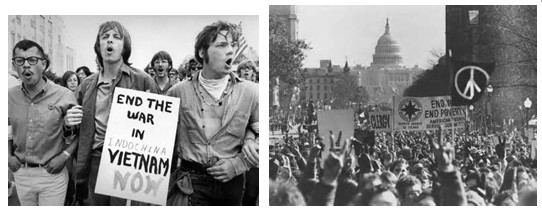
c. What do we know about the protest of the Vietnam War?
Protests against the Vietnam War
Protests against the Vietnam War did not start when America declared her open involvement in the war in 1964. America rallied to the call of the commander-in-chief and after the Gulf of Tonkin incident it became very apparent that few would raise protests against the decision to militarily support South Vietnam. America had been through nearly twenty years of the Cold War and they were told by the government that what was happening in South Vietnam would happen elsewhere (the Domino Theory) unless America used her military might to stop it. Involvement in the Vietnam War was very much sold as a patriotic venture so few were prepared to protest. If there was to be a political protest, it never became apparent in Congress where the entire House voted to support Johnson and only two Senators voted against US involvement.
The first protests came in October 1965 when the draft was increased. In February 1965, it had only been 3,000 a month but in October it was increased to 33,000 a month. Those who had the necessary ‘pull’ had the opportunity to ‘draft-dodge’ – but this was not a luxury open to many poor working class young men. Tearing up or burning your draft paper became a common occurrence and was seen to be the first of the protests against the Vietnam War. The most famous person to do this was the world heavyweight-boxing champion Muhammad Ali. He was punished by having his boxing title taken away from him. However, his very public stance brought a more worldwide dimension to the problem America was experiencing with the draft.
The war had been sold to the US public as one where a sophisticated and ultra wealthy super-power would have few problems defeating a Third World nation that North Vietnam seemed to represent. The protests against the war started to pick up when body bags started to return to America in increasing numbers. The war that had been sold to the US public as one where victory was guaranteed was in reality taking many young lives. In May 1968, 562 US troops were killed in one week alone. Coupled with these casualty figures were stories that eventually came out about atrocities committed by US troops against the very people they were meant to be defending and supporting. The most infamous was the My Lai massacre. This event actually highlighted to the US public the enormous strain frontline troops were experiencing on a daily basis against a supposedly inferior enemy. 1968 seems to be the key year for protests. To some, especially the young, America was not only sacrificing her male youth but the government was also sanctioning the death of children not only in South Vietnam but also in the North with the blanket bombing raids that were occurring on almost a daily basis. One cry of the protesters particularly hurt President Johnson:
“Hey! Hey! LBJ! How many kids did you kill today?”
However, it would be wrong to assume that everyone protested against the American involvement in South Vietnam. While there were those who were vociferous in their condemnation of US policy in South Vietnam, a Gallup poll held in 1968 showed that 46% of Americans approved of Johnson’s handling of the war while 50% believed that it was essential to combat the expansion of communism in Southeast Asia.
International coverage of the protests showed that as the years moved on the protests got larger and more vocal. In March 1966, 50,000 anti-war protesters took part in a rally in one of America’s most famous cities – New York. With a population that ran into millions, it could be argued that they represented a very small minority of the city. In 1967, 100,000 took part in a protest rally in Washington DC. In 1971, 300,000 took part in an anti-war demonstration in the same city. This particular protest involved many veterans from the war. When they publicly threw away their medals and medal ribbons, many in America were shocked that those who had worn the uniform of the US military had come to think that the only way ahead was to discard the very things that had been issued to them to represent their bravery – their medals. Many veterans used the opportunity to throw their medals on the steps of the Capitol building.
The late Sixties and early Seventies were a curious mixture of cultures and this clearly came across in America at a time when the Vietnam War was at its height. The hippy movement preached love not war. Many young men and women claimed that they wanted to ‘drop out’ of society. All of this clashed with any concept that involved doing the ‘right thing’ for your nation. The world’s media also played into this. US television could bring into the homes of all US citizens what the war was actually like. The Vietnam War was the first to actually receive such broadcasts and they clearly had a marked influence on the American population as a whole. It is said that two images in particular did a great deal to turn US opinion with regards to was in Vietnam. The first was film of children running away from their village having been burned by napalm and the second was the summary execution of a Vietcong suspect by a South Vietnamese police chief on the streets of Saigon in 1968. These images were published internationally and could do nothing to help the US government’s cause, especially when it became known that the napalm attack was a mistake against the wrong village. It seemed to the protesters to summarise exactly why America should not be in South Vietnam. If the result of any protest was to undermine what the American government was seeking to achieve it was the one that took place at Kent State University, Ohio, in 1970.
MLA Citation/Reference
"Protests against the Vietnam War". HistoryLearningSite.co.uk. 2008. Web.
Retrieved from:
http://www.historylearningsite.co.uk/protests_vietnam_war.htm