Text Explanations and Supplementary Readings
Paragraphs 1~2
Paragraphs 3~17
Paragraphs 18~21
Paragraphs 22~39
1.O.Henry (1862 - 1910)
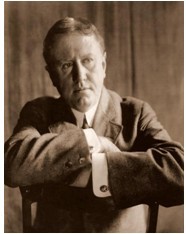
O. Henry was the pen name of the American writer William Sydney Porter. He is most famous for his short stories, which often had a 'twist' – a surprise - in the ending. He had a very interesting life, working in many different jobs – a pharmacist, a ranch worker, a bank clerk, a publisher and a reporter. He even spent time in prison for embezzling money from the bank. The O Henry Award is a prize for the best short story published in America or Canada each year. For more information on his life and writing, see these websites:
http://www.encyclopedia.com/topic/O_Henry.aspx
http://www.online-literature.com/o_henry/
2.English Nicknames
In the story 'The Last Leaf' the two women's names are Susan and Joanna, but they call each other Sue and Johnsy. These are English nicknames (or pet names). A nickname can be given as a sign of affection but can also be given as a joke or even to ridicule a person. Sometimes (as in the case of 'Sue' or Susie' for 'Susan) it is just a shorter form of the real name. Sometimes it refers to the person's appearance. For example, a very tall man may be called 'Lofty' by his friends – lofty means high, or tall. Other nicknames may be given because of some aspect of that person's character or speech. A famous example of this is the American President George W. Bush. His nickname is 'Dubya' because he has a Texas accent and so that is how he pronounces his middle initial (W) – the standard pronunciation for that letter is 'double-you'.
For more information about nicknames, see these websites:
http://en.wikipedia.org/wiki/Nickname
http://www.trivia-library.com/b/9-animal-nicknames-of-famous-people.htm

3.Eighth Street
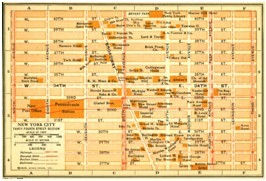
Many, but not all, New York streets are named according to a system in which roads running North to South are called avenues and roads running East to West are called streets. This makes it very easy to find your way around in the city.
4.Pneumonia
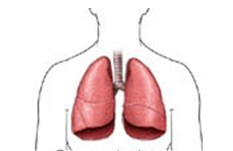
Pneumonia is an infection of the lungs that can cause difficulty in breathing. Before the development of modern antibiotics pneumonia was a very serious, often fatal, illness. Nowadays it can be cured in just a few days, but at the time when 'The Last Leaf' was written, someone with pneumonia was very likely to die from this illness. For more information on pneumonia, visit this website:
5.The Bay of Naples
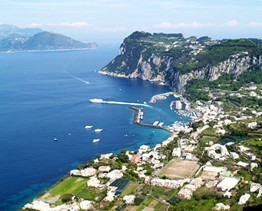
The Bay of Naples, or Gulf of Naples, is a very beautiful and very famous bay in Italy. It has attracted artists for centuries because of the beautiful views. For more information on the Bay of Naples see this website: http://www.roughguides.com/destinations/europe/italy/campania/bay-naples/
6.Gin
Gin is a clear, strong alcoholic drink (atleast 37.5% ABV) flavoured with juniper berries. In the story 'The Last Leaf' the fact thatOld Behrman drinks gin would be understood by the readers of that time to showthat he was a poor man, and probably an alcoholic. In the UK and America, gin was seen as a poorman's drink.
For more information on gin and the historyof gin, see this website:

7.Port wine
Port is a strong 'fortified' wine from Oporto, in Portugal. It tastes different from other wines because brandy is added to the wine during fermentation and this means the sweet and fruity taste of the grapes is stronger than in other wines. This made it very popular in Britain and popular with women. Hot port with lemon was a common traditional remedy for a cold or chest infection.
For more information, see this website:

8.Ivy
In Europe and America, many older buildings – and some newer ones too – have ivy growing on the walls. The plant may make the building more beautiful and may also protect the building from damage by severe weather, environmental pollution or more parasitic plants. However ivy can itself cause damage to buildings if not carefully controlled. As we saw in unit one, the 'Ivy League' Colleges in America got their name from the ivy plants that grow on their walls.
For more information, see this website:
http://www.english-heritage.org.uk/publications/ivy-on-walls/

9.Sin
In Chrisian belief, sin is doing orthinking anything that is against Christ's commandments to love God and to love our neighbour. In the story'The Last Leaf' Sue believes that she has sinned by wanting to die. Shebelieves life is a gift from God and should be accepted gratefully even whenlife is difficult. To wish to die islike throwing that gift away, not valuing it, so Sue thinks she has sinned.
For more information, see this website:
http://en.wikipedia.org/wiki/Sin
7 Deadly sins
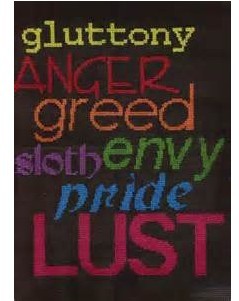
Christiand believe that seven sins are themost serious sins, and these are called the seven 'deadly' sins. For a simple explanation of these sins, andwhy they are seen as the most serious ones, see this website: