Text Explanations and Supplementary Readings
Paragraphs 1~3
Paragraphs 4~6
Paragraphs 7~9
Paragraphs 10~15
Things you need to know more about the reading text.
1.E.B.White
Q: Who is E.B.White?
E. B. White (1899-1985) was the American author of the
children's classics Charlotte's Web, Stuart Little, and The Trumpet of the Swan, among other books.
See these articles for more information about his life and works.
http://en.wikipedia.org/wiki/E._B._White
http://www.scholastic.com/teachers/contributor/e-b-white
Q: What is the New Yorker about?
The New Yorker is an American magazine of reportage,commentary,criticism, essays,fiction,satire,cartoons,and poetry.
See this article for more information about the New Yorker.
http://en.wikipedia.org/wiki/The_New_Yorker

2.The Fahrenheit scale and the Celsius scale
Q: What is Fahrenheit?
Fahrenheit (symbol °F) is a temperature scale invented in 1714 by Danial Gabrial Fahrenheit, the inventor of the mercury thermometer. It is defined by two fixed points: the temperature at which water freezes into ice ( defined as 32 degrees), and the boiling point of water ( defined as 212 degrees)at sea level and standard atmospheric pressure. By the end of the 20th century, most countries used the Celsius scale, rather than the Fahrenheit scale, but it is still widely used by ordinary people in the USA.
See these articles for more information about the Fahrenheit and Celsius
temperature scales.
http://en.wikipedia.org/wiki/Fahrenheit
http://www.ericpinder.com/html/fahrenheit.html
3.No rest for the wicked
Q: Where does the old saying come from?
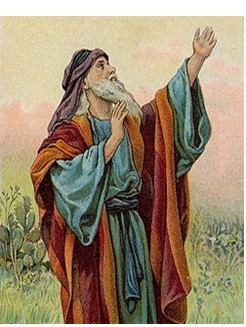
"No rest for the wicked" (or "No peace to the wicked") is a phrase from the Book of Isaiah, which is in the Hebrew Scriptures and the Christian Bible. Isaiah was a prophet who is thought to have lived about 700 years BCE. He is famous in the Jewish, Christian and Islamic religions.
Isaiah 48:22 " 'There is no peace,' says the Lord, 'for the wicked.' "
Isaiah 57:20 "But the wicked are like the troubled sea, when it cannot rest, whose waters cast up mire and dirt."
Isaiah 57:21 "There is no peace," says my God, "to the wicked."
See these articles for more information about Isaiah and the
Book of Isaiah.
http://en.wikipedia.org/wiki/Isaiah
http://en.wikipedia.org/wiki/Book_of_Isaiah
4. The Ivy League
Q: What is the Ivy League?
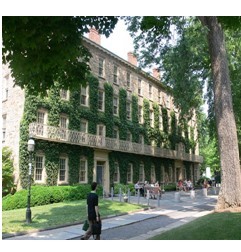
The Ivy League is a group of eight famous old colleges and universities inthe Northeastern United States. They arecalled “the Ivy League” because older, historic buildings are often coveredwith ivy, a climbing plant. They areconsidered to be places of academic excellence, with tough selection criteriaand are often accused of socialelitism. The UK equivalent is called theRussell Group of universities.
Q: What arethe eight Ivy League institutions?
The eight institutions are BrownUniversity, Columbia University, Cornell University, Dartmouth College, HarvardUniversity, Princeton University, the University of
Pennsylvania, and YaleUniversity.
See thesearticles for more information about the Ivy League
and The Russell Group
http://en.wikipedia.org/wiki/Ivy_League
http://www.ehow.com/info_7931222_list-ivy-league-universities.html
5.Buying insurance
Q: What is the criteria for choosing an insurance provider?
People face many choices when buying insurance policies. They commonly choose an insurance provider based on several criteria. Some of the most important of these include:
1) the financial stability of the insurance company.
2) the price of policies.
3) details of coverage and service.
Q: What are the main categories of insurance.
People seeking to buy insurance often use the services of an insurance agent or broker to assist in their purchase. Most insurance falls into four main categories, according to what it covers:
1) property and casualty,
2) life,
3) health and disability,
4) old-age and unemployment.
Adapted from Teacher’s Manual of New College English
Integrated Course, 2013:7a.
6.Major-medical policy and IRA
Q: What is a major-medical policy?
A major medical insurance policy is a type of medical insurance policy, which is designed to cover policyholders for a broad range of medical issues.
It generally refers to policies that provide coverage for most health-related expenses that can be incurred, but may not cover every medical expense.
See this article for more information about major-medical insurance.
http://insurance.lovetoknow.com/What_Is_the_Definition_of_Major_Medical_Insurance
Q: What is Obamacare?
Obamacare is the Patient Protection and Affordable Care Act (PPACA) of 2010, which is a US law that reforms both the healthcare and health insurance industries in America.
See this article for more information about Obamacare.
http://obamacarefacts.com/obamacare-facts.php
Q: What is the difference between health care in China and in the US?
See this article for more information about the different systems in the two countries
http://www.personal.psu.edu/zqf5007/blogs/sam/health-care-in-china-and-united-state.html
Q: What is an IRA?
IRA means an Individual Retirement Account, which is a form of "individual retirement plan", provided by many financial institutions, that provides tax advantages
for retirement savings in the United States.
See this article for more information about IRAs
http://en.wikipedia.org/wiki/Individual_retirement_account

7.Metaphor
Q: What is metaphor?
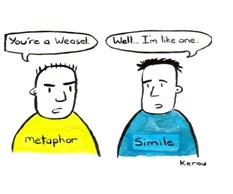
Metaphor is a figure of speech that describes a subject by asserting that it is, on some point of comparison, the same as another otherwise unrelated object. It is a figure of speech comparing two unlike things without using either "like" or "as". It is not to be mistaken with a simile which does use "like" or "as" in comparisons. Metaphor is a type of analogy and is closely related to other rhetorical figures of speech that achieve their effects via association, comparison or resemblance including allegory, hyperbole, and simile.
Q: Is there any typical example of metaphor
One of the most prominent examples of a metaphor in English literature is the All the world's a stage monologue from As You Like It:
All the world's a stage,
And all the men and women merely players;
They have their exits and their entrances;
—William Shakespeare, As You Like It,
Extracted from http://en.wikipedia.org/wiki/Metaphor
Classic board game
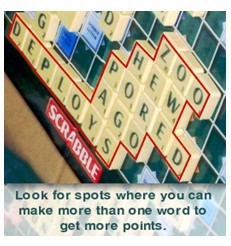
Q: What is Scrabble?
Scrabble is a board, word game which two, three or four players can play. It is played on a board which consists of a grid of 15×15 squares, which includes some colored squares that double and triple alphabet and word scores. Tiles of alphabets, which have different points, need to be placed on the board to make words so as to earn maximum points possible. Scrabble rules are fairly simple and straightforward, and all Scrabble words should be from the English dictionary. Scrabble… fun, brainy, and highly addictive!
http://www.buzzle.com/articles/scrabble-rules.html
Food and beverage on the western dining table
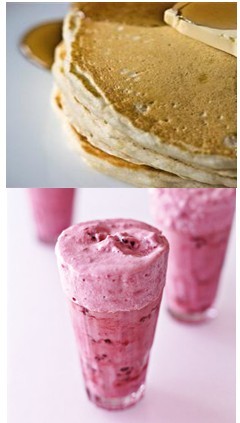
Q: How do people make pancakes?
In a large bowl, sift together the flour, baking powder, salt and sugar. Make a well in the center and pour in the milk, egg and melted butter; mix until smooth.
Heat a lightly oiled griddle or frying pan over medium high heat. Pour or scoop the batter onto the griddle, using approximately 1/4 cup for each pancake. Brown on both sides and serve hot.
Retrieved from: http://allrecipes.com/Recipe/Good-Old-Fashioned-Pancakes/
Q: What is a “shake”?
It is an informal way to say ‘milk shake’, a frothy drink made of cold milk, flavoring, and usually ice cream, shaken together or blended in a mixer.
8.American farm life
Q: What is modern farm life like?
Modern farming is much more intensive than traditional farming. It uses high-technology equipment and is less labour-intensive than traditional style, 'family' farming. For this reason it is often called 'factory farming'. This style of factory farming has attracted a lot of controversy and criticism from environmentalists and animal welfare groups, who say it is inhumane, because of the poor conditions under which the animals live, and polluting, or in some cases even poisoning, the land. The supporters of factory farming argue that it is the only efficient way to produce enough food for the growing world population. This debate has made farming an intensely political issue in most western countries and the introduction of GM (genetic modification) technology has created an even fiercer controversy.
See these articles for more information about farming.
http://www.wisegeek.com/what-is-modern-farm-life-like.htm
http://www.wisegeek.com/what-is-the-most-common-farm-machinery.htm
http://en.wikipedia.org/wiki/Organic_farming
http://en.wikipedia.org/wiki/Intensive_animal_farming
http://www.sustainabletable.org/268/biodiversity

9.Freelancing
Q: What is a freelancer?
A freelance worker, or freelancer, is a person who operates as an independent contractor. They offer their services to companies but do not have a permanent or long-term contract with any one company. This allows the worker to have a more flexible working life and to avoid being dependent on only one employer. It also allows many people to work from home, so they can more easily combine their working life with their family commitments. This kind of work pattern is seen most often in creative professions such as writing, design, advertising and illustration. However, it is also becoming more common nowadays in administrative and office jobs.
See these articles for more information about freelancing.
http://en.wikipedia.org/wiki/Freelancer
http://www.ehow.com/about_4597571_freelancing.html

10.Mortgage Payment
Q: What is a Mortgage?
A mortgage is a loan that people take in order to buy a house or other real estate. The loan is usually repaid monthly over a number of years. For most people, this is the largest loan they will ever have.
Q: What does mortgage payment include?
A monthly mortgage payment includes at least two parts: an amount that goes toward the principal of the loan (the money you've borrowed) and a second amount that goes toward interest (the cost of borrowing the money).
Retrieved from:
http://www.homeloanlearningcenter.com/MortgageBasics/WhatsinaMortgagePayment.htm

11.Lake Monsters
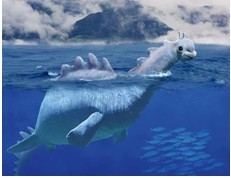
Q: What is a lake monster?
People in many different countries have claimed to see "monsters" of various sorts in lakes and rivers. These animals unknown to science are collectively called "lake monsters". Perhaps the most famous lake monster is 'Nessie' the Monster claimed to inhabit Loch Ness, in Scotland. Lake monsters have never been proved to exist, but they have been proved to increase tourism income to many of the lakes where they have been sighted.
See these articles for more information about lake monsters.
http://www.newanimal.org/lake-monsters.htm
12.Dog Racing
Q: What is dog racing?
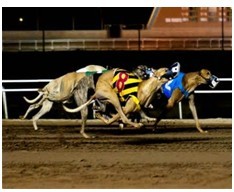
Dog racing is a sport in which trained greyhounds chase a mechanical lure, typically an artificial bone, which is called a hare. The winner of the race is the dog whose nose first reaches the winning line. People gamble on dog racing in a similar way to horse racing. In the past, dog racing was very popular among the urban poor in Britain and America - as dogs are much cheaper to own and train than horses.
See these articles for more information about dog racing.