-
1 Ingredients ...
-
2 Quotes from&...
-
3 文章Top 10&n...
Ingredients
A wide variety of material choices allows Chinese food to provide many possibilities for Chinese chefs to be more creative. These include various grains, vegetables and the meat of different animals.
The Chinese also use poultry(家禽), eggs and milk. Poultry includes chicken, duck, goose, turkey, pigeon, quail(鹌鹑), and pheasant(野鸡). Seafood and freshwater fish – hairtail(带鱼), salmon, squid(鱿鱼), sea cucumber, oyster(牡蛎), black carp(黑鲤), catfish(鲶鱼), grass carp(草鱼), variegated carp(七彩锦鲤,鲢鳙), shrimp, prawn(对虾,明虾), crab, and turtle – are also used in Chinese food.
Vegetables are also cooked, such as eggplant, bean, turnip(芜菁,大头菜,香大头), potato and pepper(辣椒,胡椒). Dried pork and dried fish are also often used in Chinese cooking. Drying vegetables is a way to store produce(名词:农产品) to use in winter. More importantly, it has a special taste different from fresh vegetables.
Cooking Methods
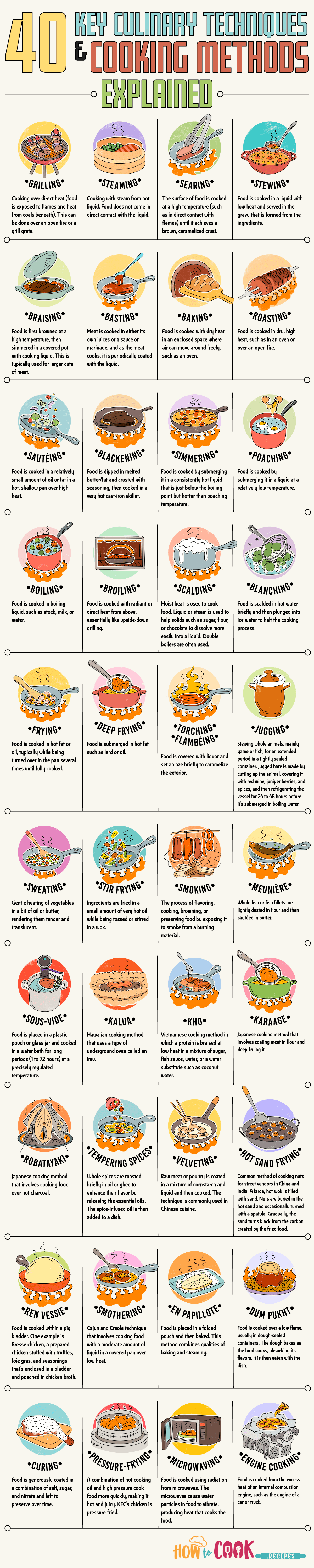
Chinese people have around 40 ways to cook. Let's take a look at a few major of the methods of cooking.
炒(chǎo)
Stir frying is the most common cooking method. First, the Chinese cut raw ingredients into small pieces, heat oil in a pot, then add their ingredients to the hot oil. Many Chinese chefs add spices, salt and MSG (味精, 谷氨酸钠,Monosodium Glutamate). Before plating the food, chefs add some starch(淀粉) to bind stir-fried pieces of food to the sauce in the pot.
炝(qiàng)
This means cutting ingredients into slices, and pouring them into boiling water for a short time. For this method, chefs add spices after draining the water.
煮(zhǔ)
This entails boiling food in a mixture of water and various spices.
煎(jiān)
This means putting food on the bottom of a pot with a little oil and heating the food to golden-brown.
炸(zhá)
This is frequently used in Chinese cuisine. Half a pot of oil is heated to a very high temperature and food is cooked in the hot oil. In most cases, spices have been added to the food before frying.
涮(shuàn)
It means cutting food into thin slices, briefly boiling water and dipping the food into the sauce to eat. The popular hot pot dish is typical combined with the cooking skills of 涮(shuàn).
Branches of Chinese Cuisine
Chinese cuisine is divided into eight major branches: Lu Cuisine, Chuan Cuisine, Su Cuisine, Yue Cuisine, Zhe Cuisine, Min cuisine, Xiang Cuisine and Hui Cuisine.
All eight branches stress the nutrition and the artistic beauty of Chinese dishes.

