Part II
Cardiovascular and Respiratory Function
In part I of the book,we learned how skeletal muscle contracts in response to neural signaling andhow the body produces energy through metabolism to fuel its movement. We alsoexamined hormonal control of metabolism, of body fluid and electrolyte balance,and of caloric intake. Finally, we looked at how energy expenditure is measuredand the causes of fatigue, soreness, and cramps. Part II focuses on how thecardiovascular and respiratory systems provide oxygen and fuel to the activemuscles, how they rid the body of carbon dioxide and metabolic wastes, and howthese systems respond in concert to exercise. In chapter 6, The CardiovascularSystem and Its Control," we look at the structure and function of thecardiovascular system: the heart, blood vessels, and blood. In chapter 7,“The Respiratory Systemand Its Regulation," we examine the mechanics and regulation of breathing,the process of gas exchange in the lungs and at the muscles, and the transportationof oxygen and carbon dioxide in the blood. We also see how this system regulatesthe body's pH within a very narrow range. In chapter 8, ' Cardiorespiratory Responsesto Acute Exercise," we concentrate on the cardiovascular and respiratorychanges that occur in response to an acute bout of exercise.
Chapter 6
The CardiovascularSystem and Its Control
Heart:Blood Flow Through the Heart,Myocardium
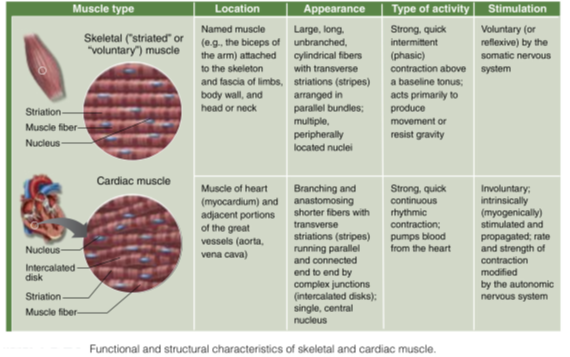
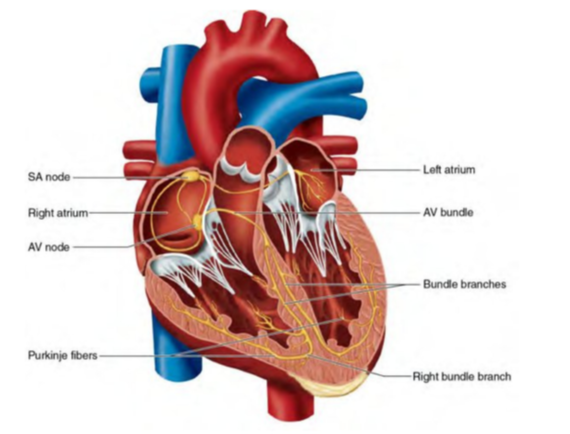
Cardiac ConductionSystem
Extrinsic Control of Heart
Although theheart initiates its own electrical impulses (intrinsic control),both the heartrate and force of contraction can be altered. Under normal conditions, this isaccomplished primarily through three extrinsic systems: The vascular system contains a series of vessels thattransport blood from the heart to the tissues and back: the arteries,arterioles, capillaries, venules, and veins.
System Blood Pressure
Blood pressure is the pressure exerted by the blood onthe arterial walls. It is expressed by two numbers: the systolic blood pressure(SBP) and the diastolic blood pressure (DBP).The higher number is the SBP; itrepresents the highest pressure in the artery that occurs during ventricularsystole. Ventricular contraction pushes the blood through the arteries withtremendous force, and that force exerts high pressure on the arterial walls.The lower number is the DBP and represents the lowest pressure in the artery,corresponding to ventricular diastole when the ventricle is filling.
GeneralHemodynamics、Distribution of Blood
Distribution of blood to the various body tissues variesconsiderably depending on the immediate needs of a specific tissue comparedwith those of other areas of the body. As a general rule, the mostmetabolically active tissues receive the greatest blood supply. At rest undernormal conditions, the liver and kidneys combine to receive approximately halfof the cardiac output, while resting skeletal muscles receive only about 15% to20%.
During exercise, blood is redirected to the areas whereit is needed most. During heavy endurance exercise, contracting muscles mayreceive up to 80% or more of the blood flow, and flow to the liver and kidneysdecreases. This redistribution, along with increases in cardiac output (to bediscussed in chapter 8), allows up to 25 times more blood flow to activemuscles
Bloodisdistributedthroughoutthebodybasedprimarilyonthemetabolicneedsof theindividualtissues.Themostactivetissuesreceivethehighestbloodflows.
Skeletalmusclenormallyreceivesabout15%ofthecardiacoutputatrest.Thiscan increaseto80%ormoreduringheavyenduranceexercise.
Redistributionofbloodflowiscontrolledlocallybythereleaseofdilatorsfromeither thetissue(metabolicregulation)ortheendotheliumofthebloodvessel (endothelium--mediateddilation).Athirdtypeofintrinsiccontrolinvolvesthe responseofthearterioletopressure.Decreasedarteriolarpressurecausesvasodilation, husincreasingbloodflowtothearea,whileincreasedpressurecauseslocal constriction.
Extrinsicneuralcontrolofbloodflowdistributionisaccomplishedbythe sympatheticnervoussystem,primarilythroughvasoconstrictionofsmallarteriesandarterioles.
Bloodpressureismaintainedundernormalconditionsbyreflexeswithintheautonomicsystem,includingbaroreflexes,chemoreflexes, andmechanoreflexes.
Bloodreturnstotheheartthroughtheveins,assistedbyvalveswithintheveins,the musclepump,andchangesinrespiratorypressure.
Blood:Red Blood Cells、Blood Viscosity、Blood Volumeand Composition
The totalvolume of blood in the body varies considerably with an individual's size, bodycomposition, and state of training. Larger blood volumes are associated withgreater lean body mass and higher levels of endurance training. The bloodvolume of people of average body size and normal physical activity generallyranges from 5 to 6 L in men and 4 to 5L in women.
Blood servesmany diverse purposes in regulating normal body function. The three functionsof primary importance to exercise and sport are
transportation,
temperature regulation, and
acid-base (pH) balance.
Figure 6.15 (a) The composition ofwhole blood, illustrating the plasma volume (fluid portion) and the cellularvolume (red cell, white cell, and platelets) after the blood sample has beencentrifuged to separate its components. (b) A centrifuge.
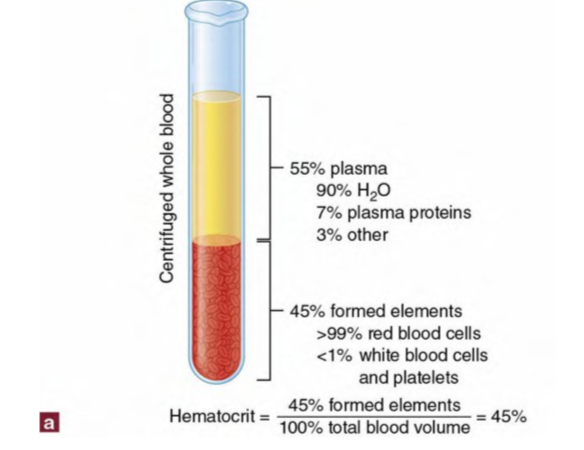
Blood is about 55% to 60% plasmaand 40% to 45% formed elements. Red blood cells compose about 99% of the formedelements.
The hematocrit is the ratio of theformed elements in the blood (red cells, white cells, and platelets) to thetotal blood volume. An average hematocrit for adult men is 42% and for adultwomen is 38%.
Oxygen is transported primarily bybinding to the hemoglobin in red blood cells. During endurance training,athletes respond with both a higher red cell volume (RCV) and an expandedplasma volume (PV). Since the PV increase is higher than the RCV increase, thehematocrit in these athletes tends to be somewhat lower than that of sedentaryindividuals.
As blood viscosity increases, sodoes resistance to flow. Increasing the number of red blood cells is advantageousto aerobic performance but only up to the point (a hematocrit approaching 60%)where viscosity limits flow.
In Closing
In this chapter, we reviewed thestructure and function of the cardiovascular system. We learned how blood flowand blood pressure are regulated to meet the body's needs, and explored therole of the cardiovascular system in transporting and delivering oxygen andnutrients to the body's cells while clearing away metabolic wastes, includingcarbon dioxide. Knowing how substances are moved within the body, we now lookmore closely at the transport of oxygen and carbon dioxide. In the nextchapter, we explore the role of the respiratory system in delivering oxygen to,and removing carbon dioxide from, the cells of the body.
Study Questions
Describe the structure of the heart, the pattern of bloodflow through the valves and chambers of the heart, how the heart as a muscle issupplied with blood, and what happens when the resting heart must suddenlysupply an exercising body.
What events take place that allow the heart to contract,and how is heart rate controlled?
What is the difference between systole and diastole, andhow do they relate to SBP and DBP?
What is the relationship between pressure, flow, andresistance?
How is blood flow to the various regions of the bodycontrolled?
Describe the three important mechanisms for returningblood back to the heart when someone is exercising in an upright position.
Describe the primary functions of blood.

