第五式 摇头摆尾去心火
一、第五式动作分解 Step-by-Step Description of Routine 5
动作一:接上式。身体重心左移:右脚向右开步站立,两腿膝关节自然伸直;同时,两掌上托与胸同高时,两臂内旋,两掌继续上托至头上方,肘关节微屈,掌心向上,指尖相对;自视前方(图35)。
Movement 1:(Continue from the previous routine)Move the body weight leftward.Move the right foot to the right,and stand straight,with the feet apart.Raise the hands,and turn the arms inward when they are chest—high.Continue lifting the hands to above the head,with the elbows slightly bent,palms up,and the fingers pointing to each other.Look straight ahead[Fig.35].
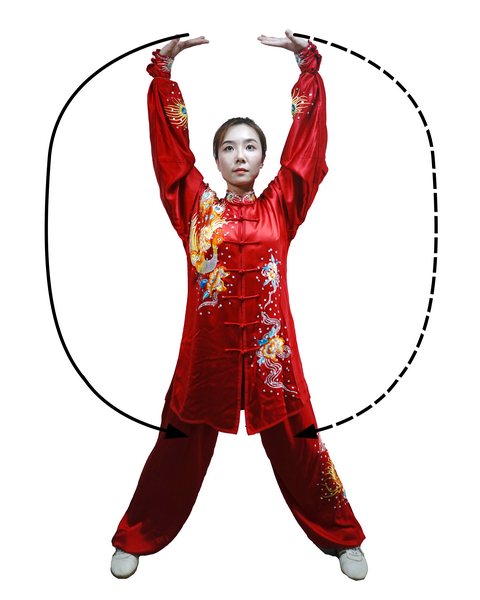
图35 Fig.35
动作二:上动不停。两腿徐缓屈膝半蹲成马步;同时,两臂向两侧下落,两掌扶于膝关节上方,肘关节微屈,小指侧向前;目视前方(图36 )。
Movement 2:(Continue)Slowly bend the knees to assume a horse stance.Let the arms hang down the sides so that the hands press the knee joints,with the elbows bent and the outside of the little fingers facing outward.Look straight ahead[Fig.36].
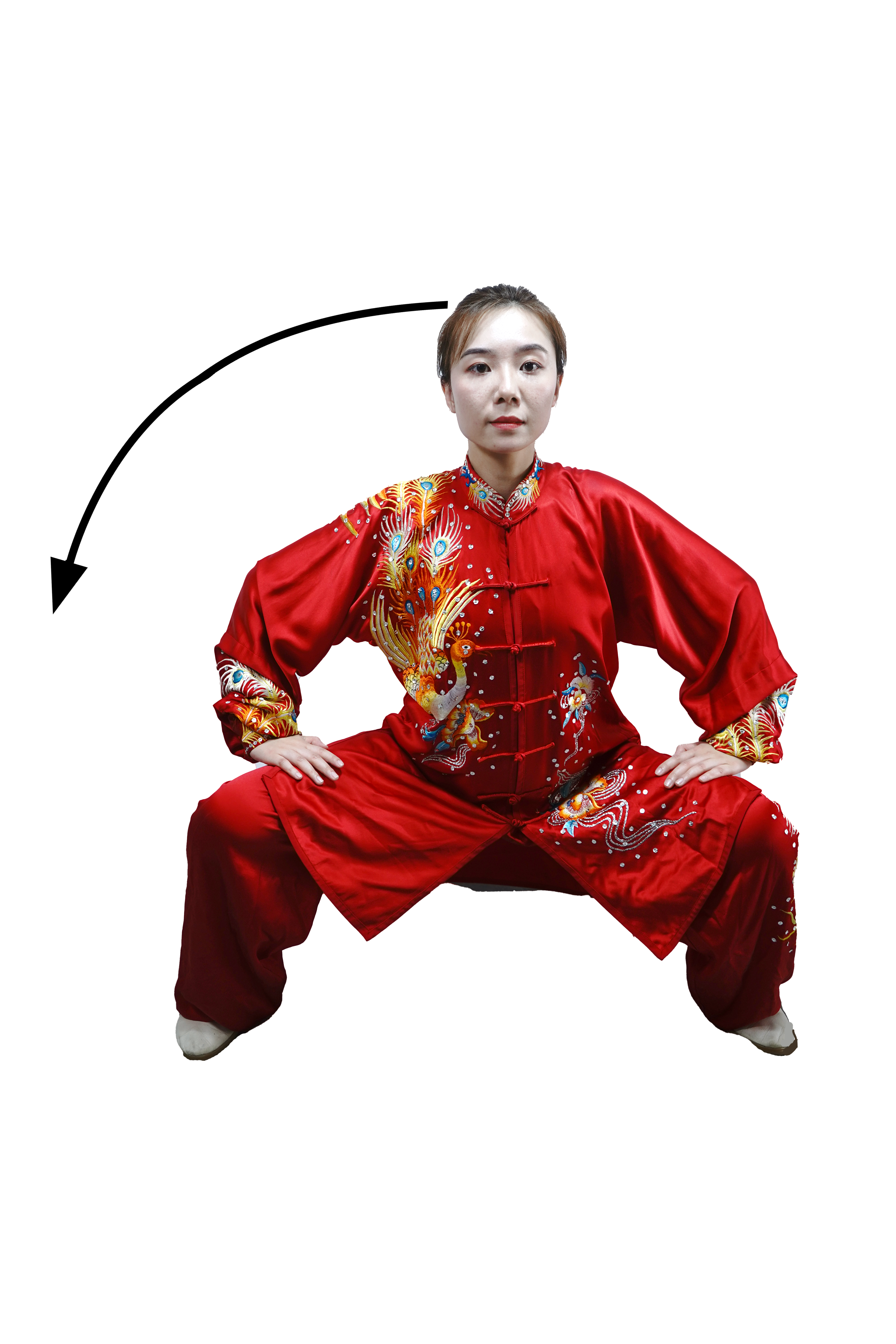
图36 Fig.36
动作三:身体重心向,上稍升起,而后右移;上体先向右倾,随之俯身;目视右脚(图37 )。
Movement 3:Raise the body weight slightly, move it to the right,and tilt the upper body to the right and forward.Fix the gaze on the right foot【Fig.37].

图37 Fig.37
动作四:上动不停。身体重心左移;同时,上体由右向前、向左旋转;目视右脚(图38)。
Movement 4:(Continue)Shift the body weight to the left.Meanwhile,move the upper body forward,and then turn to the left.Look at the right foot[Fig.38].
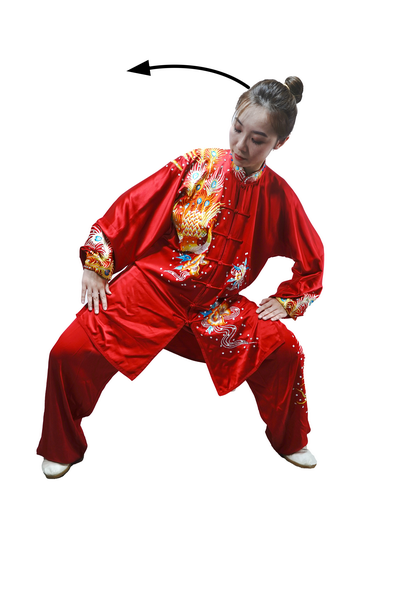
图38 Fig.38
动作五:身体重心右移,成马步;同时,头向后摇,上体立起,随之下颏微收;目视前方(图39 )。
Movement 5:Shift the body weight to the right to assume a horse stance.Move the head backwards,straighten the upper body, pull in the chin,and look straight ahead[Fig.39].
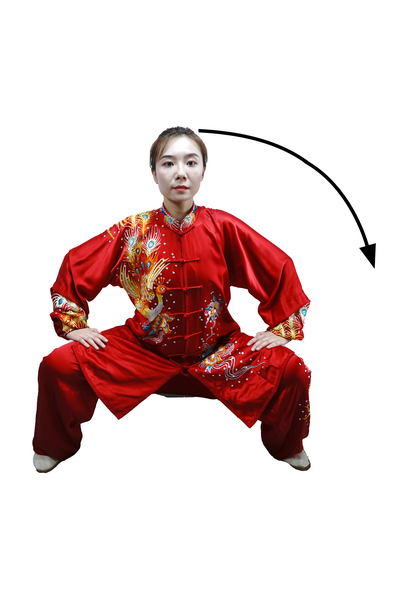
图39 Fig.39
动作六至八:同动作三至动作五,惟左右相反(图40、图41、图42 )
Movement 6-8:Movements 6-8 are the same as movements 3-5,but in the reverse direction[Figs.40—42].
本式一左一右为1遍,共做3遍。
The routine should be repeated three times each,to the left and right.
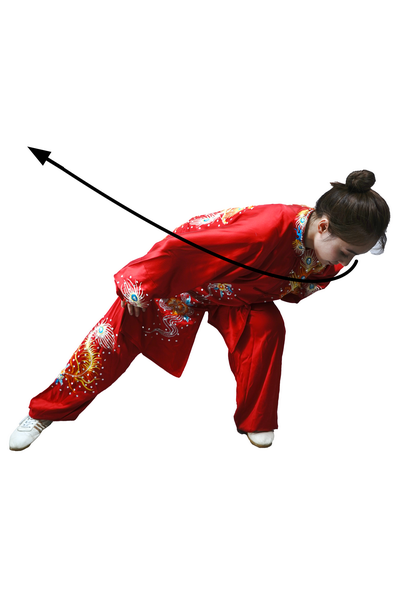
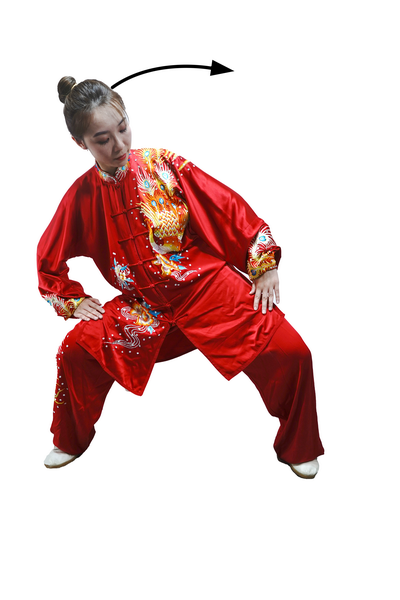
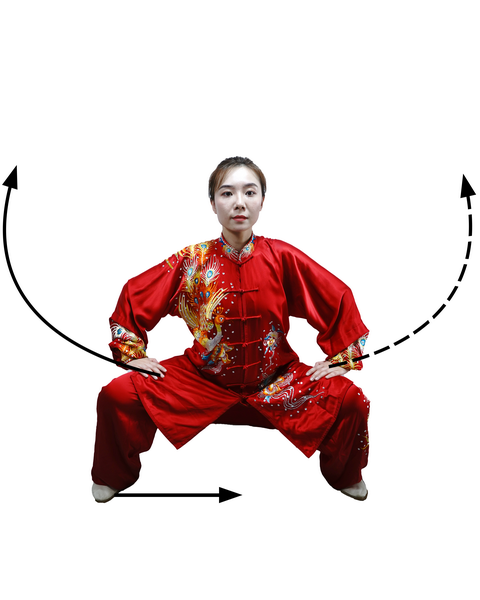
图40 Fig.40 图41 Fig.41 图42 Fig.42
做完3遍后,身体重心左移,右脚回收成开步站立,与肩同宽;同时,两掌向外经两侧上举,掌心相对;目视前方(图43 )。随后松腰沉髋,身体重心缓缓下降。两腿膝关节微屈;同时屈肘,两掌经面前下按至腹前,掌心向下,指尖相对;目视前方(图44 )。
Finally,shift the body weight to the left,and withdraw the right foot to stand upright,with the feet shoulder-width apart.Raise the arms from the sides to above the head,with the palms facing each other.Look straight ahead[Fig.43].Bend the knees slightly to lower the body weight slowly,with the waist relaxed and the hips down.At the same time,bend the elbows and press the hands down past the face to a position in front of the abdomen,with the fingers pointing to each other.Look straight ahead[Fig.44].
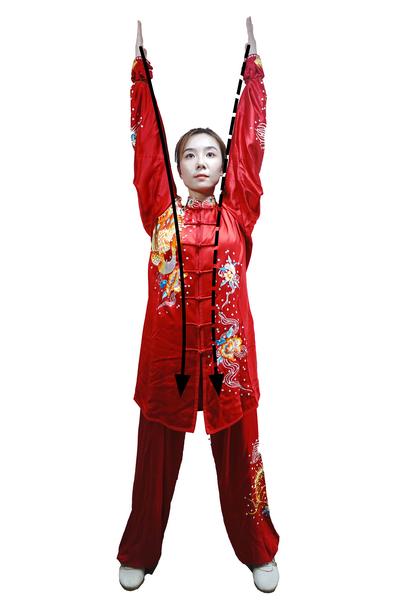
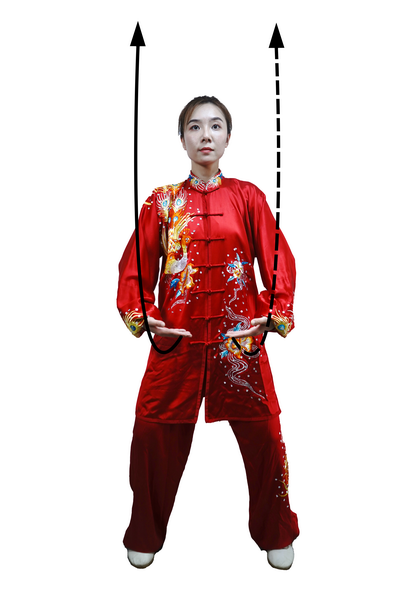
图43 Fig.43 图44 Fig.44
二、动作要点 Key points
马步下蹲要收髋敛臀,上体中正。
Tuck in the buttocks and tips,and keep the upper body straight when assuming the horse stance.
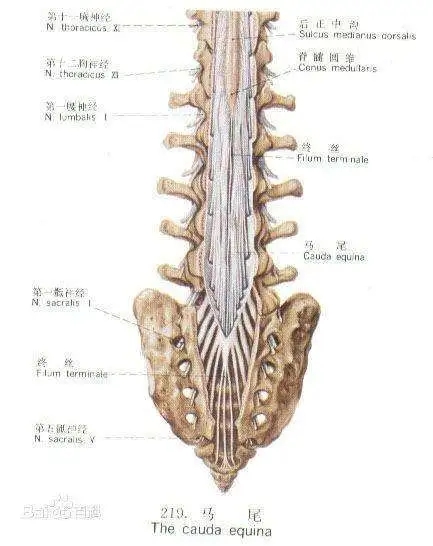
摇转时,颈部与尾闾对拉伸长,好似两个轴在相对运转,速度应柔和缓慢,动作圆活连贯。
When swinging the upper body,the neck and the buttocks should be stretched away from each other slowly and gently,and in a round and flowing manner.
年老或体弱者要注意动作幅度,不可强求。
Aged and weak practitioners should perform the rooutine at a suitable speed,without any excessive strength applied.
三、易犯错误 Common mistakes
摇转时颈部僵直,尾闾摇动不圆活,幅度太小。
Neck stiff and buttocks not turned enough when swinging the upper body.
前倾过大,使整个上身随之摆动。
Upper body tilted too much, leading it to sway from side to side.
四、纠正方法 Corrections
上体侧倾与向下俯身时,下颏不要有意内收或上仰,颈椎部肌肉尽量放松伸长。
When tilting the upper body forward and to the sides, don't pull in the chin or tilt it upward, so that the spine and related muscles can be relaxed and extended to the maximum.
加大尾闾摆动幅度,应上体左倾尾闾右摆,上体前俯尾闾向后划圆,头不低于水平,使尾闾与颈部对拉拔长,加大旋转幅度。
Increase the swing of the buttocks to the right while the upper body tilts to the left. Tilt the upper body forward and the buttocks back. Keep the head above level, so that the stretch between the neck and the buttocks can be fully extended for a wider swing.
五、功理与作用 Functions and effects
心火,即心热火旺的病症,属阳热内盛的病机。通过两腿下蹲,摆动尾闾,可刺激脊柱、督脉等;通过摇头,可刺激大椎穴,从而达到疏经泄热的作用,有助于去除心火。
Such internal stress as that related to the heart can be eliminated by squatting down and swinging the buttocks to stimulate the spine and the Dumai meridian, which runs along it.Swinging the head stimulates such points as Dazhui at the nape of the neck, thus helping to regulate the inner energy circulationand get rid of internal stress.
在摇头摆尾过程中,脊柱腰段、颈段大幅度侧屈、环转及回旋,可使整个脊柱的头颈段、腰腹及臀、股部肌群参与收缩,既增加了颈、腰、髋的关节灵活性,也增强了这些部位的肌力。During the swing, the waist and neck sections of the spine are tucked in, tilted and turned, which involves the muscle groups around the neck, waist,abdomen, buttocks and hips.The swing also increases the flexibility of the related joints and develops the muscles in those areas.