


Starter

Individual cells in our body are constantly being replaced as they wear out (磨损), a process that continues throughout our lifetime. We can even observe this frequent regeneration (再生) in one of our organs: our skin. In fact, we shed (使脱落) our entire outer layer of skin every two to four weeks. In recent years, scientists have successfully grown a range of small-scale human organs which are used to study human organ function and structure at a level that was impossible before.
How will lab-grown organs one day transform our lives? Discuss your response with your classmates. You and your classmates may have different responses.
Text
Growing New Organs
Alexandra Morris
1 More than 120,000 people in the United States are waiting for a lifesaving organ transplant at any given time, yet less than one-quarter of these patients can receive transplants. The gap between the number of patients who need an organ and the number of organs available to be transplanted continues to widen. Meanwhile, the costs are fatal. Each day, 22 people die while waiting for a transplant. Organ shortages have increasingly become a public health crisis.
Growing Organs in the Lab
2 But what if there were a way to engineer an organ using a patient’s own cells? The good news is that some patients today are living healthy lives with bladders, urethras, and vaginas that were grown inside a laboratory. In 2001, a research team from Wake Forest University, led by Dr. Anthony Atala became the first group to successfully transplant lab-grown human bladders into patients using the patients’ own cells.
3 Seven children and young adults from ages 4 to 19 who had poor bladder function received the transplants.
4 To create the bladders, scientists took a small piece of the diseased bladder tissue (roughly half the size of a postage stamp), gently took apart the cells, and grew the cells outside the body. The researchers used a device called bioreactor, where the cells could grow and multiply to create the functional organ. The process took approximately two months. The organs were then transplanted into the patients.
5 Five years later, Atala and his team announced the seven patients who had received the lab-grown bladders showed no signs of complications. The transplants had been a success.
Three-Dimensional Printing
6 Many scientists believe the real future of organ generation lies in three-dimensional printing. Three-dimensional objects begin as a digital file. Successive layers of material (in this case, human cells) are printed, or laid down. This “bio-ink” is layered onto a base material such as a gel or a sugar. Once the organ has been printed, it is placed in a bioreactor before being transplanted into a patient.
7 Three-dimensional printing has produced bones, ears, windpipes, jawbones, and blood vessels. But researchers around the world are setting their sights even higher: bioprinting a solid organ. First on their wish list? A kidney. Kidneys are one of the most challenging organs to develop, but they have the greatest potential for saving lives.
The Cutting Edge of Medicine
8 Human life expectancy has doubled over the past 150 years. As humanity ages, we face new and unforeseen medical challenges. But technology has transformed the practice of medicine, helping doctors deliver cheaper, faster, and more efficient care to patients. Cutting-edge advances in research and technology allow for patient care that once seemed impossible. (441 words)
New Words

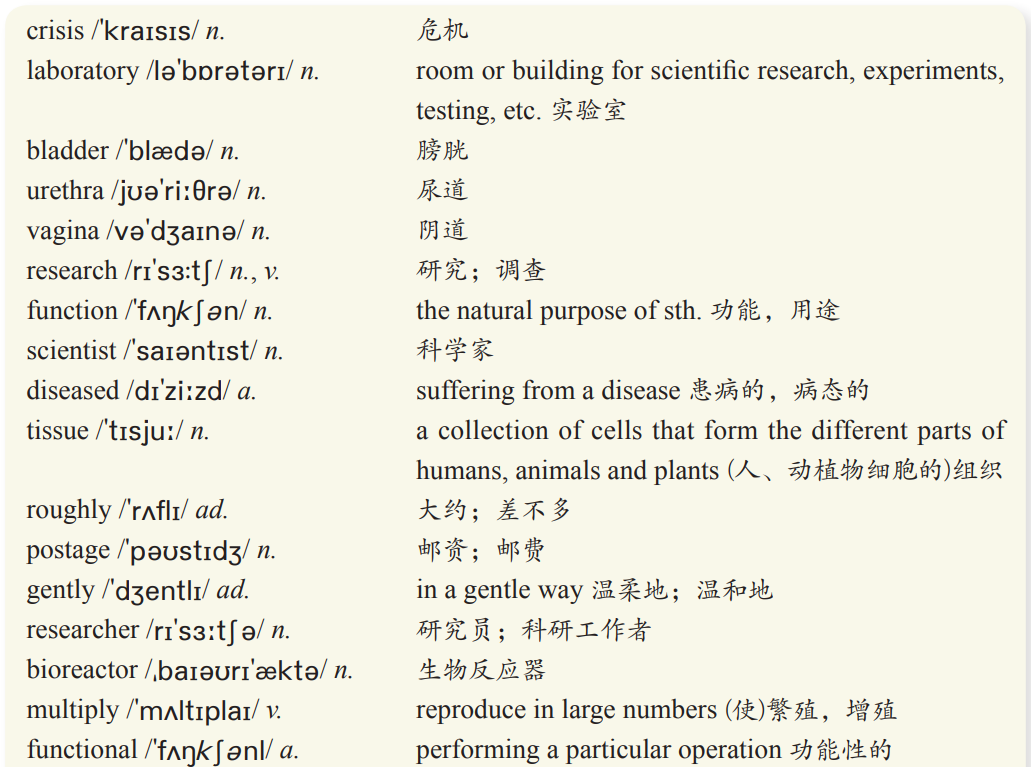


Phrases & Expressions
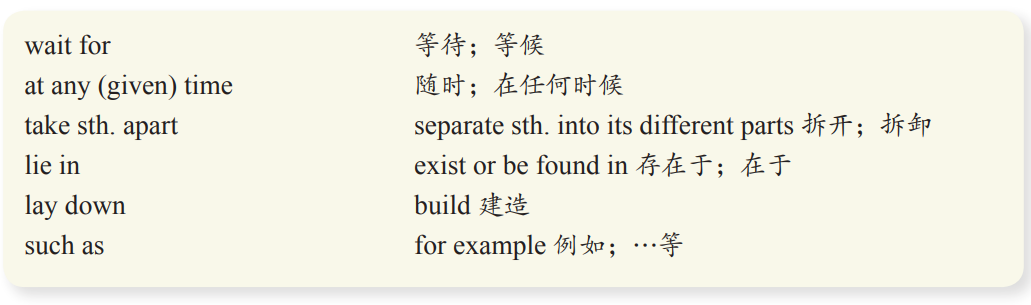
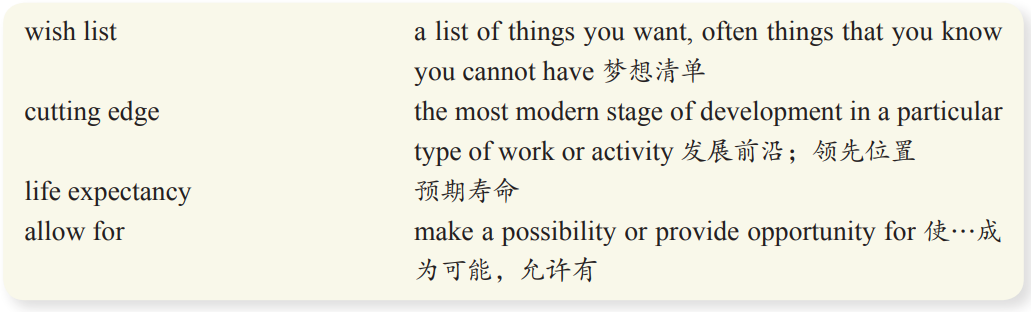
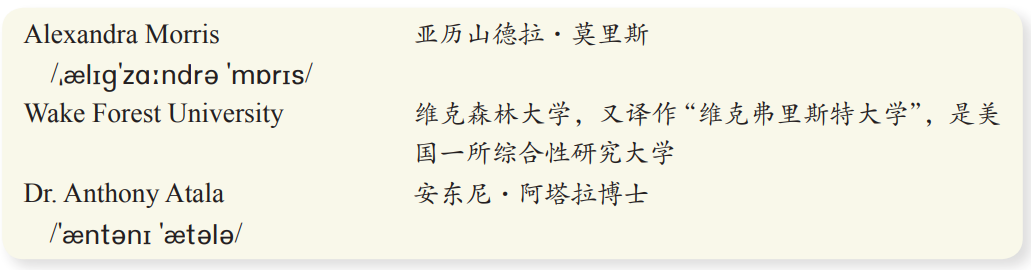
Proper Names
Notes on the Text
1. More than 120,000 people in the United States are waiting for a lifesaving organ transplant at any given time, yet less than one-quarter of these patients can receive transplants. 每时每刻,全美12万多人在等待拯救生命的器官移植,然而这些人中,只有不足四分之一能够得到移植。
2. Each day, 22 people die while waiting for a transplant. 每天有22人在等待中死去。句中while waiting for a transplant是while they were waiting for a transplant的省略形式,这种省略要求主句与从句的主语一致。
3. But what if there were a way to engineer an organ using a patient’s own cells? 但是,如果能利用病人自己的细胞制造器官,那将会怎样?engineer在句中用作动词,意为“设计,制造”。
4. To create the bladders, scientists took a small piece of the diseased bladder tissue (roughly half the size of a postage stamp), gently took apart the cells, and grew the cells outside the body. 为了培植膀胱,科学家们提取一小片有病变的膀胱组织 (大约半张邮票大小 ),轻柔地将细胞组织剥离,在体外培育细胞。句中,To create the bladders... 是不定式,用作目的状语。
5. The researchers used a device called bioreactor, where the cells could grow and multiply to create the functional organ. 研究者们使用一种叫“生物反应器”的装置,在此装置内细胞生长和繁殖,以生成功能正常的器官。
6. Once the organ has been printed, it is placed in a bioreactor before being transplanted into a patient. 器官打印出来之后,就被放置在生物反应器内,然后移植到病人体内。句中,连接词once意为“一…就 ;一旦…就”。
7. First on their wish list? 梦想清单上的第一名?这句是省略句。完整的句子是:What is first on their wish list?
8. But technology has transformed the practice of medicine, helping doctors deliver cheaper, faster, and more efficient care to patients. 但是,科技彻底改变了医疗实践,使得医生能为病人提供更加廉价、迅速和高效的关怀。句中,helping doctors deliver... 是现在分词短语作状语,表示谓语动词transform所发生的方式。
Exercises
Understanding the Text
1.Answer the following questions.
1.Can people who need an organ transplant all receive it in the US?
2.What public health crisis is the US having now?
3.What did Dr. Anthony Atala and his research team achieve in 2001?
4.Who benefited from Dr. Anthony Atala and his research team’s work in 2001?
5.What did the scientists do in order to generate a lab-grown human bladder?
6.How long did it take to grow a functional bladder outside human body?
7.Did the patients who received the lab-grown bladders have complications?
8.In scientists’ point of view, what is the real future of organ generation?
9.What has three-dimensional printing produced so far?
10.What solid organ do researchers wish to bioprint first? Why?
11.Over the years in human history, what has transformed the practice of medicine?
2.Topics for Discussion.
1.On average, 22 Americans die every day because a needed organ is unavailable. Can 3D printing end the shortage of organs?
2.Organs grown outside the body has transformed the practice of medicine. Is it possible that one day encouraging the regrowth of organ within the body could also become possible?
Reading Analysis
3.The organization of the text is very clear: The first paragraph serves as an introduction; it is followed by facts grouped under three subheadings (副标题). Now read the text again and complete the following table.
Now retell the main idea of the passage, using the information in the table you have completed.
Vocabulary
4.Fill in the blanks with the words given below. Change the forms where necessary.

5.Fill in the blanks with the expressions given below. Change the forms where necessary.

Structure
6.Complete the following sentences by translating the Chinese in brackets into English.
Model:

Model:

Translation
7.Translate the following sentences into English.
8.Translate the following sentences into Chinese, paying attention to the underlined words.

