The Language for Asking For and Giving Reasons
1.You are going to listen to an instructor explaining the language necessary for
asking for and giving reasons. Listen carefully and fill in the blanks with the
missing words.
2.Now raise as many questions as possible in class and see whether there are
answers to them. Try to use the language picked up in Ex. 1.
Asking For and Giving Reasons
3.Listen to the following conversation twice and fill in the blanks with the
missing words. Getting to know the words and expressions in the box
below first might be helpful.
Now listen to the conversation again and answer the following questions.
4.Listen to the following conversation twice and then complete the passage according to what you’ve heard. Getting to know the words and expression in the box below first might be helpful.
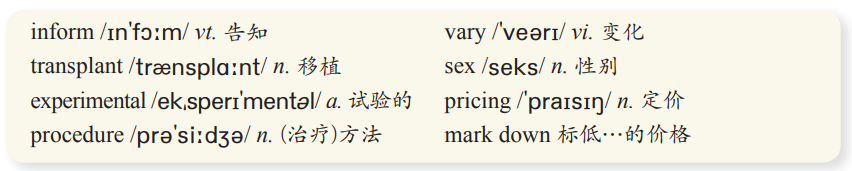
Now listen to the conversation again and provide the missing parts below. After that, act it out in class.
5.Examine something about the world from different perspectives and then raise a complex question in class to initiate a discussion. Try to use the language you have just picked up.
6.Watch a video clip and fill in the missing words. Then tell why it is important to grow human organs. Getting to know the words and expressions in the box below first might be helpful.

Listening Practice
7.Listen to people speaking and decide what can be inferred from the conversations.
8.Listen to the following short dialogues and choose the appropriate answers.
9.Listen to the following conversation twice and decide whether the statements about it are true (T) or false (F).
10.Listen to the following talk twice and fill in the blanks with the missing words.
11.Listen to the talk again and then answer the following questions orally.
1.Why do complicated body structures exist, according to scientists?
2.Why is the theory of evolution acceptable to most scientists?
3.Why do scientists study fossil remains?
4.What do these fossils show?
5.What is the theory of evolution?
12.Discuss the topic printed below in bold with your classmates. Try to participate in the discussion from different perspectives with the help of the expressions provided around it.