


Starter
You may have some idea of what you want to be after you graduate from college. What factors would you consider when you make career decisions? Try to make a list below.

Now read the following passage and try to explain what career awareness is.
Text
What Is Career Awareness?
Beth Hendricks

1 Remember when you were a child, with all of the future laid out before you? What did you want to be? Maybe it was something lofty like an astronaut or a rocket scientist. Perhaps you were considering the teaching profession, nursing, or entering the military. Whatever it was, you had some idea of what you wanted to be when you grew up, but possibly not a full understanding of what it would take to get you there.
2 Career awareness is simply an understanding of the various possibilities for long-term employment and the knowledge necessary to begin work in a career field and progress in that job. While you may be able to name a dozen or more possible career paths for yourself or a friend, there are thousands of jobs available to a willing workforce.
3 Career awareness doesn’t simply fall in your lap; it requires a bit of time and research to develop a greater understanding of all the options potentially available to you. Your research into career awareness should answer some basic questions:
◆ What are the daily activities and responsibilities of the job?
◆ What type of qualifications will you be expected to have?
◆ What are the work environments and conditions like?
◆ Where are these jobs located?
◆ What does the future look like for this career or industry?
◆ What type of financial potential does this career path hold for you?
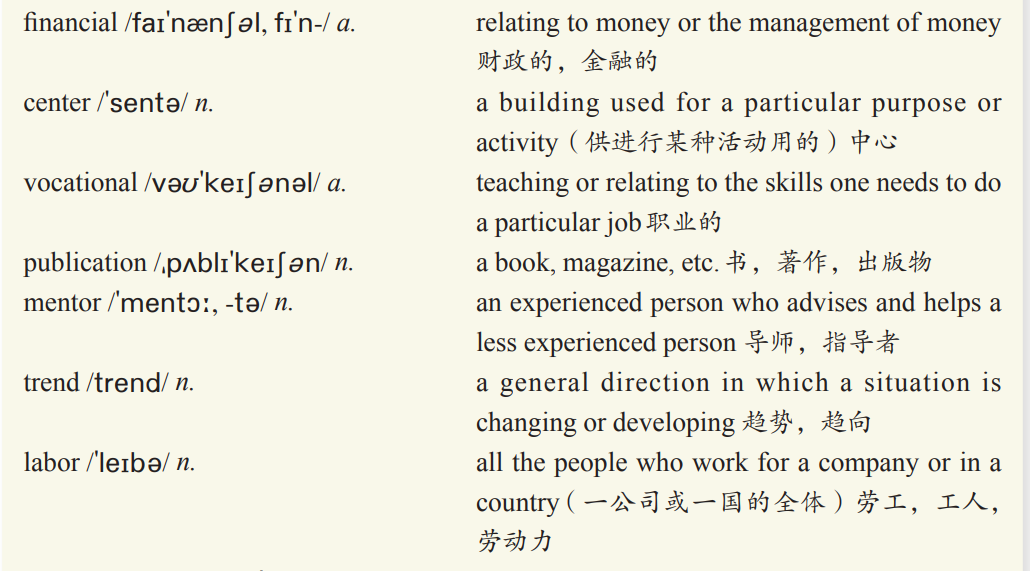
4 Career centers, vocational schools, community colleges, industry publications, and a host of online resources can help you learn more about various career options. Consider finding a career mentor, talking with people working in fields of interest, attending a career day, job shadowing someone in a particular field, checking books out of your local library, and conducting Internet searches to learn more about all the choices available to you.
5 Next, it’s important to develop a greater understanding of career trends and the labor market. For example, discovering that a particular industry is expected to be obsolete in 10 years may help you in electing not to pursue it as a career. Also, take a look at demographic data such as the age of a population, which can create job opportunities, and things like changes in technology, which can open the door for new possibilities. Since this data is always changing, staying on top of it regularly can assist your career awareness efforts.
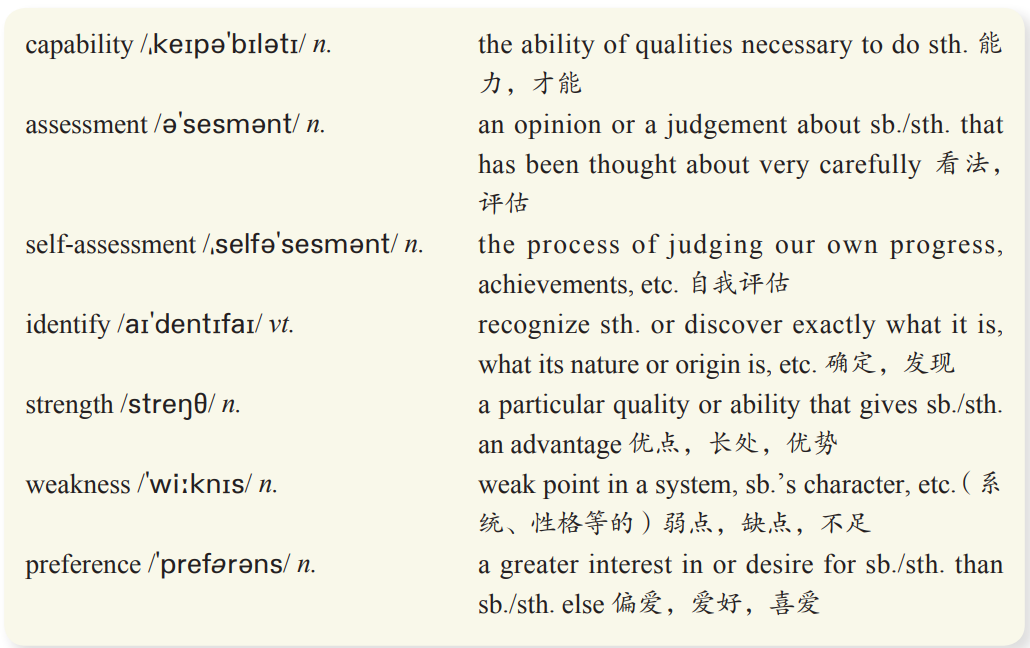
6 You also need to be prepared to answer questions about yourself and your capabilities such as your skills, talents and interests. Self-assessments can help you identify your own strengths, weaknesses and preferences and match you to appropriate career industries.
(436 words)
New Words



Phrases and Expressions

Proper Name

Notes on the Text
1. Remember when you were a child, with all of the future laid out before you? 还记得孩提时代吗?所有的未来在你面前铺开。本句中“with + 名词 + 过去分词”的复合结构作状语,过去分词和前面的名词在逻辑上是动宾关系。又如:I sat in my room for a few minutes with my eyes fixed on the ceiling. 我在房间里坐了一会儿,眼睛盯着天花板。| He lay on the bed with the bedroom door shut. 他躺在床上,卧室的门关着。
2. Whatever it was, you had some idea of what you wanted to be when you grew up, but possibly not a full understanding of what it would take to get you there. 无论怀有何种理想,对于长大以后要从事的职业,你所有的只是一些想法,而对于如何实现理想,恐怕你当时并不完全了解。本句中,whatever引导的是让步状语从句,相当于no matter what it is;而what you wanted to be when you grew up和what it would take to get you there都是介词of后的宾语从句。
3. Career awareness is simply an understanding of the various possibilities for long-term employment and the knowledge necessary to begin work in a career field and progress in that job. 简而言之,职业意识指的是了解长期就业的多种可能性和在一个职业领域起步与发展所需的知识。necessary to begin work in a career field and progress in that job是knowledge的后置定语。
4. While you may be able to name a dozen or more possible career paths for yourself or a friend, there are thousands of jobs available to a willing workforce. 虽然你或许能够为你自己或你的朋友指出十几条甚至更多可能的职业道路,但是对于所有有工作意愿的劳动力而言,可以选择的工作有成千上万种。本句中连词while引导让步状语从句,相当于though或although。又如:While the work was difficult, it was interesting. 虽然这工作很困难,却很有意思。| While I understand what you mean, I can’t agree with you. 虽然我理解你的意思,但还是不同意你的看法。available to a willing workforce作jobs的后置定语。
5. What are the work environments and conditions like? 工作环境和工作条件如何?句型“What is sb./sth. like?”用于询问某人/某物是什么样的。又如:What’s their house like inside? 他们的房子里面是什么样子的?
6. What does the future look like for this career or industry? 这份职业或所在行业的发展前景如何?句型“What does sb./sth. look like?”用于询问某人/某物看起来是什么样的。又如:What does he look like? 他的长相怎么样? Try it on. Let’s see what it looks like on you. 穿上试试,看看穿在你身上样子如何。
7. Also, take a look at demographic data such as the age of a population, which can create job opportunities, and things like changes in technology, which can open the door for new possibilities. 同时,还要关注人口统计数据,比如某一地区人口的年龄,以及诸如技术革新之类的情况,前者能给你带来工作机会,后者能创造新的可能性。本句中的两个which引导的都是非限定性定语从句,对先行词起补充说明作用,与主句之间用逗号分开。又如:These apple trees, which I planted three years ago, have not borne any fruit. 这些苹果树是我3年前栽的,现在还没有结过果实。Peter, whom you met in London, is now back in Paris. 彼得现在回巴黎了,你在伦敦见过他。
Exercises
Understanding the Text
1.Answer the following questions.
①What did you have some idea of when you were a child? What didn’t you fully understand?
②What is career awareness in a simple sense?
③What are you required to do to develop a greater sense of career awareness?
④What would you consider in your career awareness research?
⑤How can you learn more about various career options?
⑥Why is it important to develop a greater understanding of career trends?
⑦Why is it important to develop a greater understanding of labor market?
⑧Why do you need to make self-assessments?
2.Topics for discussion.
①What are your strengths, weaknesses and preferences? What career industries do you think you are best matched to?
②Will you pursue a career you are interested in or a career with high financial rewards? Why?
3.Provide the missing information in the following chart. While doing this exercise, try to pay attention to the main idea and supporting details in each paragraph of the text.
Vocabulary
4.Fill in the blanks with the words given below. Change the forms where necessary.

5.Fill in the blanks with the expressions given below. Change the forms where necessary.

6.Combine the two sentences into one according to the model.
Model:

1. How did I choose my first friends in college? I also make some mistakes in it.
2. What had happened that day? She was greatly surprised at it.
3. What should be done the next? They can agree on it.
4. What type of financial potential does this career path hold for me? I want to learn more about it.
5. How many career options are potentially available to you? Career awareness requires a bit of research into it.
6. Will he lose his job? He is always worried about it.
7.Rewrite the following sentences according to the model.
Model:

1. I am willing to help, but I do not have much time available.
2. I tried hard, but I couldn’t work out the answer.
3. He had many failures, but he succeeded in cultivating (培育) high-yield hybrid rice (杂交稻) in the end.
4. She was in poor health, but she continued to carry out her duties.
5. He joined the company last year, but he is senior to me already.
6. He had had little formal education, but he could read and write well.
Translation
8.Translate the following sentences into English.
9.Translate the following sentences into Chinese, paying attention to the underlined words.
1. The concept of an Internet of Things has been around for years, and it is just starting to become reality. (Unit 2A, Book 1)
2. When I was a child, as happens with young boys, there were cuts and bumps and scrapes that always felt better when tended by you. (Unit 3A, Book 1)
3. Exercise helps us lose weight, become more attractive, or keep shape as we get older.
4. When they guess wrong, they guess again.
5. You must learn what you know, what you don’t know, and what to do about it.6. In 2015, he met John, and they became good friends.
6. In 2015, he met John, and they became good friends.

