
单元测试
上一节
力类型填空题: Match each picture (1-10) with the correct force type from the list below.
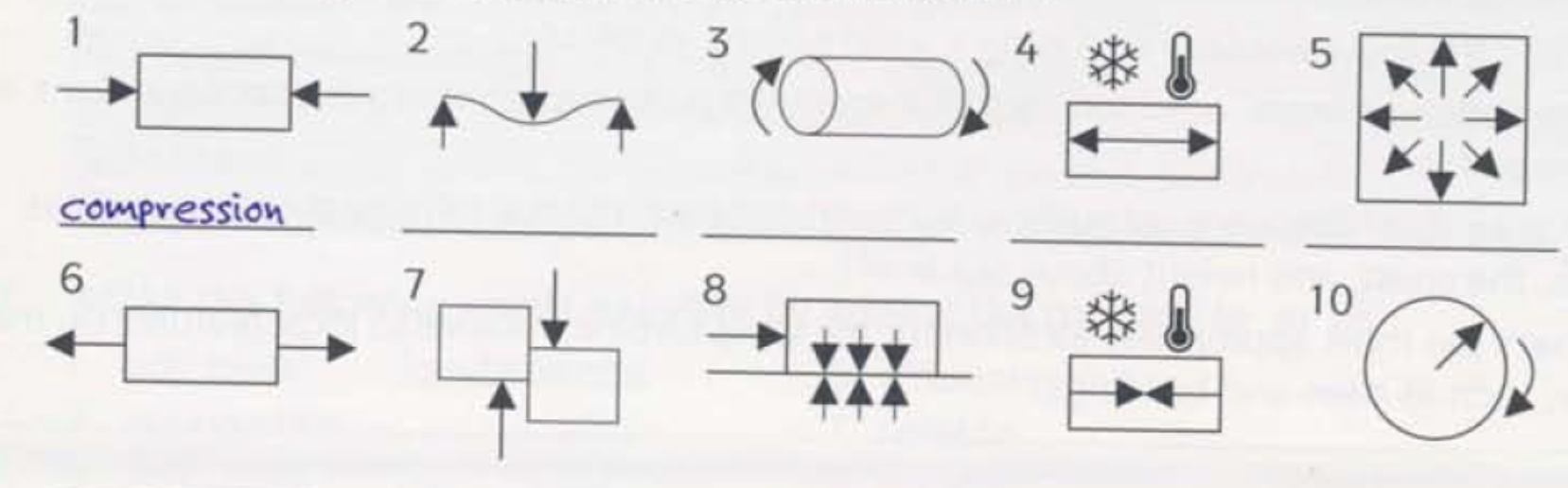 Force Types:
A. Bending
B. Centrifugal Force
C. Compression
D. Contraction
E. Expansion
F. Friction
G. Pressure
H. Shear
I. Tension
J. Torsion/Torque
Key:
C (Compression)
A (Bending)
J (Torsion/Torque)
E (Expansion)
G (Pressure) - Note: While 5 shows outward forces, it’s more indicative of pressure exerted in all directions from a central point.
I (Tension)
H (Shear)
F (Friction) - Note: The upward triangles represent the normal force, and the horizontal arrow with friction indicated by the surface suggests frictional resistance to sliding.
D (Contraction)
B (Centrifugal Force)
二、拓展问题:
1. 为什么图4和图9的受力类型相同?
两者均因温度变化(热胀冷缩)导致物体内部产生拉伸力。
2. 剪切(Shear)与压缩(Compression)有何区别?
剪切是平行反向力导致物体内部层间滑动(如剪刀剪纸),压缩是相向力导致物体体积缩小(如压弹簧)。
三、实际应用举例
桥梁设计:需同时考虑弯曲(车辆载荷)、压缩(桥墩承重)、剪切(连接件受力)。
螺栓连接:螺栓受拉伸(紧固时)和剪切(横向力作用时)。

