
David Henry Hwang
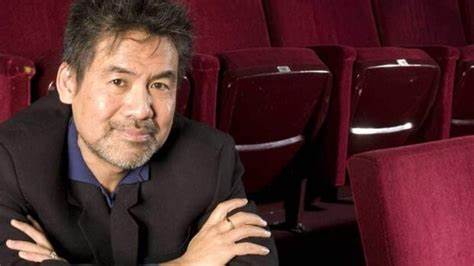
David Henry Hwang's M. Butterfly (1988) is a groundbreaking play that deconstructs stereotypes of race, gender, and colonialism through the lens of a tragic love story. Inspired by Giacomo Puccini's opera Madama Butterfly and based on a true story, the play explores themes of Orientalism, power dynamics, and identity. Here’s an in-depth look at M. Butterfly:
Plot Summary
The play tells the story of René Gallimard, a French diplomat, and Song Liling, a Chinese opera singer whom Gallimard believes to be a woman. Their relationship unfolds over two decades, during which Gallimard remains unaware that Song is actually a man and a spy for the Chinese government. The play culminates in Gallimard's realization of the truth, leading to his emotional and psychological unraveling.
Key Themes
1. Orientalism and Stereotypes
The play critiques Western stereotypes of Asian people, particularly the submissive, exoticized "Butterfly" archetype popularized by Madama Butterfly.
Hwang challenges the notion that the East is feminine, passive, and subordinate to the masculine, dominant West.
2. Gender and Sexuality
M. Butterfly explores the fluidity of gender and sexuality, questioning rigid binaries and societal expectations.
Song's ability to deceive Gallimard for so long highlights the performative nature of gender and the power of illusion.
3. Power and Colonialism
The relationship between Gallimard and Song serves as a metaphor for the power dynamics between the West and the East.
Gallimard's fantasy of dominance is ultimately undermined, revealing the fragility of colonialist ideologies.
4. Identity and Perception
The play examines how identity is constructed and perceived, both by oneself and by others.
Gallimard's inability to see Song's true identity reflects his own delusions and the cultural blind spots of Western imperialism.
5. Love and Betrayal
At its core, M. Butterfly is a tragic love story, exploring the complexities of love, trust, and betrayal.
Gallimard's love for Song is intertwined with his fantasies and insecurities, making their relationship both poignant and destructive.
Structure and Style
Nonlinear Narrative: The play moves back and forth in time, blending scenes from Gallimard's trial, his memories, and moments of direct address to the audience.
Metatheatricality: Hwang incorporates elements of theater and opera, blurring the lines between reality and performance.
Minimalist Staging: The play often uses sparse sets and symbolic props, emphasizing the themes of illusion and perception.
Characters
1. René Gallimard
A French diplomat who embodies Western arrogance and naivety.
His obsession with the "Butterfly" archetype blinds him to the reality of his relationship with Song.
2. Song Liling
A Chinese opera singer and spy who manipulates Gallimard while maintaining her own agency and complexity.
Song's character challenges stereotypes and subverts expectations, embodying both strength and vulnerability.
3. Helga Gallimard
René's wife, who represents the traditional Western woman and contrasts with his idealized vision of Song.
4. Comrade Chin
A Chinese official who oversees Song's espionage activities, adding a layer of political intrigue to the story.
Literary and Cultural Significance
Deconstruction of Madama Butterfly: Hwang reinterprets Puccini's opera, turning its Orientalist tropes on their head and exposing their problematic nature.
Feminist and Queer Perspectives: The play challenges traditional gender roles and explores the fluidity of identity, making it a landmark work in feminist and queer studies.
Postcolonial Critique: M. Butterfly is a powerful critique of Western imperialism and the cultural fantasies it perpetuates.
Awards and Legacy
Tony Award: M. Butterfly won the Tony Award for Best Play in 1988, cementing Hwang's reputation as a leading voice in American theater.
Influence: The play has inspired countless discussions about race, gender, and power, and remains a staple of modern drama.
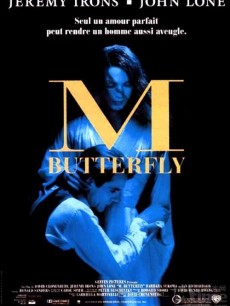
Adaptations: M. Butterfly has been adapted into a film (1993) and continues to be performed worldwide, resonating with new generations of audiences.
Notable Quotes
"Only a man knows how a woman is supposed to act." – Song Liling
"The West thinks of itself as masculine—big guns, big industry, big money—so the East is feminine—weak, delicate, poor... but good at art, and full of inscrutable wisdom—the feminine mystique." – Song Liling
Criticism and Controversy
Some critics argue that the play reinforces stereotypes even as it critiques them, particularly in its portrayal of Asian characters.
Others have questioned the plausibility of Gallimard's prolonged ignorance of Song's true identity.
Conclusion
David Henry Hwang's M. Butterfly is a masterful exploration of identity, power, and perception. By deconstructing the Orientalist fantasies of Madama Butterfly, Hwang creates a provocative and deeply moving work that challenges audiences to rethink their assumptions about race, gender, and love. The play remains a timeless and essential piece of contemporary theater.

