American Chinese literature
Notable Authors and Works:
Maxine Hong Kingston: The Woman Warrior (1976), China Men (1980)
Amy Tan: The Joy Luck Club (1989)
Frank Chin: Donald Duk (1991)
Jhumpa Lahiri (though primarily Indian American, her work intersects with broader Asian American themes): Interpreter of Maladies (1999)
Ocean Vuong: On Earth We’re Briefly Gorgeous (2019)
Lisa See: Shanghai Girls (2009)
Ha Jin: Waiting (1999)
American Chinese literature, or Chinese American literature, is a rich and diverse body of work that explores the experiences, identities, and histories of Chinese immigrants and their descendants in the United States. It reflects the intersection of Chinese cultural heritage and American societal contexts, often addressing themes of migration, identity, assimilation, and cultural conflict. Here are some key features of Chinese American literature:
1. Dual Identity & Cultural Hybridity
Explores the tension and fusion between Chinese heritage and American identity.
Characters often navigate between two cultures, struggling with questions of belonging and self-definition.
2. Immigration & Diaspora
Central themes include the immigrant experience, displacement, and the challenges of adapting to a new country.
Stories often reflect the historical waves of Chinese immigration, such as the Gold Rush era, the building of the Transcontinental Railroad, and the Exclusion Act era.
3. Intergenerational Conflict
Highlights the generational divide between immigrants and their American-born children.
Older generations often cling to traditional values, while younger generations grapple with assimilation and cultural preservation.
4. Historical Trauma & Memory
Addresses the legacy of historical events, such as the Chinese Exclusion Act (1882), anti-Chinese racism, and the internment of Chinese Americans during WWII.
Many works reclaim lost or suppressed histories, giving voice to marginalized experiences.
5. Family & Community
Family dynamics are a recurring theme, often emphasizing the sacrifices of parents and the pressures on children to succeed.
Community ties, both within Chinatowns and broader Chinese American networks, are also explored.
6. Gender & Feminism
Examines the roles and expectations of women in traditional Chinese culture and their evolution in America.
Many works challenge patriarchal norms and highlight the struggles and resilience of Chinese American women.
7. Language & Bilingualism
Incorporates Chinese languages (e.g., Cantonese, Mandarin) or code-switching between English and Chinese.
Language often serves as a marker of cultural identity and generational differences.
8. Mythology & Folklore
Draws on Chinese myths, legends, and folklore to enrich narratives and explore cultural roots.
Authors like Maxine Hong Kingston reinterpret traditional stories to address contemporary issues.
9. Racism & Stereotypes
Confronts racial discrimination and stereotypes, such as the "perpetual foreigner" or the "model minority" myth.
Works often critique systemic racism and the marginalization of Chinese Americans.
10. Assimilation & Resistance
Explores the pressures to assimilate into American society while resisting the erasure of cultural heritage.
Characters often grapple with balancing cultural preservation and integration.
11. Food & Cultural Symbols
Food is frequently used as a symbol of cultural identity and connection to heritage.
Other cultural symbols, such as clothing, rituals, and festivals, also play significant roles.
12. Multigenerational Narratives
Many works span multiple generations, tracing the evolution of Chinese American identity over time.
These narratives often highlight the enduring impact of history on present-day lives.
13. Experimental & Diverse Forms
Includes a wide range of genres, from memoirs and novels to poetry and graphic novels.
Authors experiment with form and structure to reflect the complexity of their experiences.
14. Transnationalism
Explores connections between the U.S. and China, reflecting the global nature of the Chinese diaspora.
Themes of transnational identity and the fluidity of borders are common.
15. Resilience & Empowerment
Despite challenges, many works emphasize resilience, survival, and the empowerment of Chinese American voices.
Authors often celebrate cultural pride and the contributions of Chinese Americans to U.S. society.
Maxine Hong Kingston
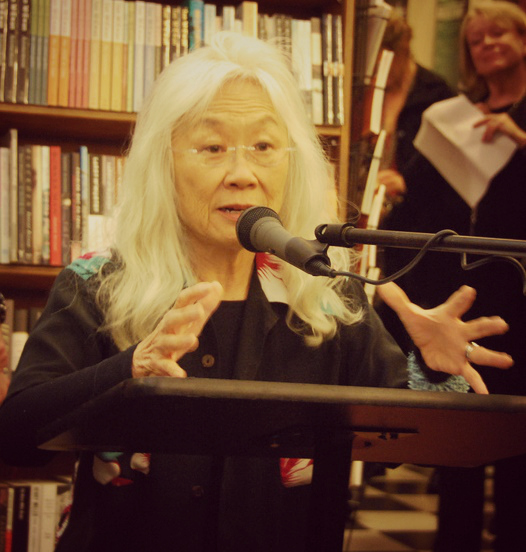
Maxine Hong Kingston's The Woman Warrior: Memoirs of a Girlhood Among Ghosts (1976) is a groundbreaking work that blends memoir, folklore, fiction, and cultural critique. It is one of the most influential texts in Chinese American literature and feminist writing. The book explores themes of identity, gender, family, and the immigrant experience through a series of interconnected stories. Here’s an in-depth look at the key aspects of The Woman Warrior:
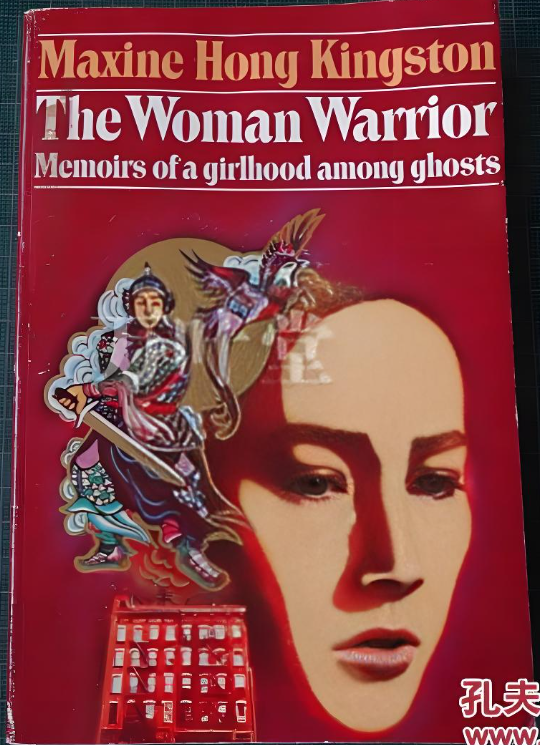
Structure and Style
Hybrid Genre: The book defies traditional categorization, blending autobiography, myth, and fiction. Kingston calls it a "memoir," but it is highly imaginative and nonlinear.
Nonlinear Narrative: The stories move fluidly between past and present, China and America, and reality and myth, reflecting the fragmented nature of memory and identity.
Key Themes
1. Gender and Feminism
The book critiques the patriarchal traditions of Chinese culture and explores the struggles of women to assert their voices and identities.
Kingston contrasts the limited roles assigned to women in traditional Chinese society with her own aspirations for independence and self-expression.
2. Cultural Conflict and Dual Identity
Kingston grapples with her dual identity as a Chinese American, navigating the expectations of her Chinese heritage and the realities of growing up in America.
The tension between her parents' traditional values and her own Americanized perspective is a recurring theme.
3. Silence and Voice
Silence is a powerful motif in the book, representing the suppression of women's voices in both Chinese and American contexts.
Kingston seeks to break this silence by telling her own story and reclaiming the stories of the women in her family.
4. Myth and Reality
Kingston interweaves Chinese myths and folktales, such as the story of Fa Mu Lan (the woman warrior), with her own family history and personal experiences.
These myths serve as a lens through which she examines her own life and the lives of the women around her.
5. Ghosts
The concept of "ghosts" is central to the book, symbolizing the lingering presence of the past, cultural dislocation, and the "otherness" of being Chinese in America.
Ghosts can be literal (spirits) or metaphorical (cultural differences, racism, or the unknown).
Key Stories and Characters
1. "No Name Woman"
The opening chapter tells the story of Kingston's unnamed aunt, who became pregnant out of wedlock and was ostracized by her village.
This story explores themes of shame, silence, and the oppression of women in traditional Chinese society.
2. "White Tigers"
Kingston retells the legend of Fa Mu Lan, a female warrior who disguises herself as a man to lead an army and avenge her family.
This story serves as a metaphor for Kingston's own struggles to overcome gender barriers and assert her strength and independence.
3. "Shaman"
This chapter focuses on Kingston's mother, Brave Orchid, and her experiences as a doctor in China before immigrating to America.
It highlights the resilience and resourcefulness of Chinese women, as well as the cultural dislocation experienced by immigrants.
4. "At the Western Palace"
This chapter recounts the story of Brave Orchid's sister, Moon Orchid, who struggles to adapt to life in America after being reunited with her family.
It explores themes of cultural displacement and the clash between traditional and modern values.
5. "A Song for a Barbarian Reed Pipe"
The final chapter focuses on Kingston's own childhood and her struggles with silence, communication, and self-expression.
It culminates in her finding her voice as a writer and storyteller.
Literary Significance
Feminist Icon: The Woman Warrior is celebrated for its feminist perspective and its exploration of women's roles in both Chinese and American societies.
Cultural Bridge: The book has been instrumental in bringing Chinese American experiences to a broader audience, fostering cross-cultural understanding.
Innovative Form: Kingston's blending of genres and her use of myth and memory have influenced countless writers and expanded the possibilities of autobiographical writing.
Criticism and Controversy
Some critics, particularly within the Chinese American community, have accused Kingston of misrepresenting Chinese culture and catering to Western stereotypes.
Others argue that her work is too individualistic and does not fully represent the diversity of Chinese American experiences.

