
Thomas Jefferson: A Profile
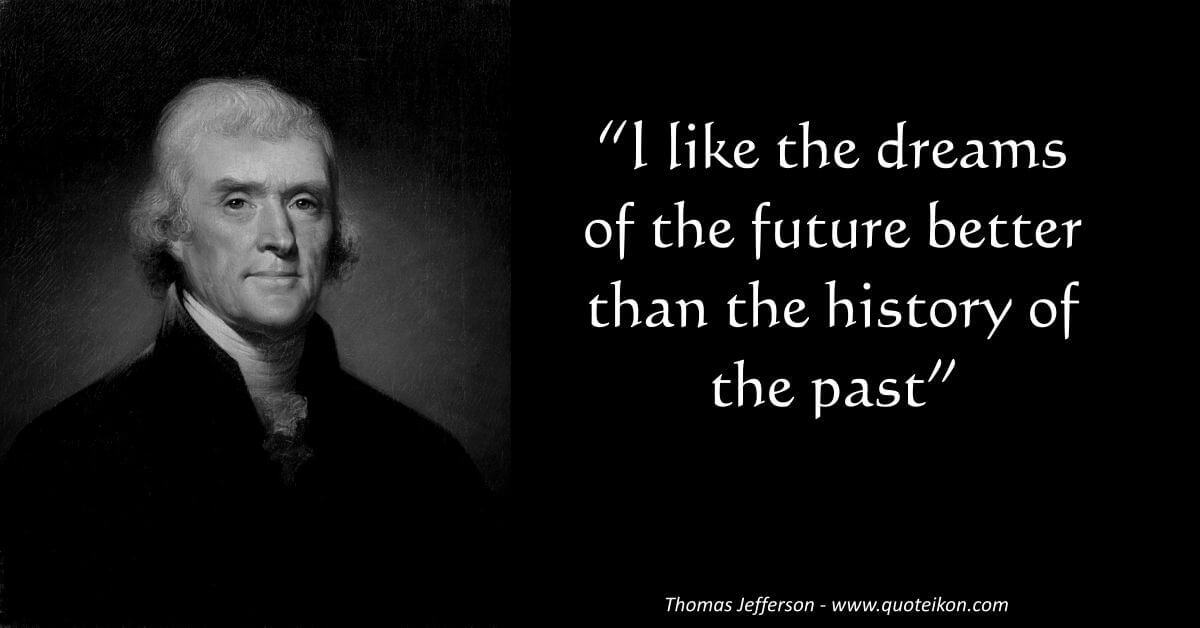
Name: Thomas Jefferson
Birth: April 13, 1743, Shadwell, Virginia, USA
Death: July 4, 1826, Charlottesville, Virginia, USA
Nationality: American
Occupation: Founding Father, Statesman, Diplomat, Architect, Writer
Known For: Principal author of the Declaration of Independence, third U.S. President, founder of the University of Virginia
Early Life and Education:
Thomas Jefferson was born into a wealthy plantation family in Virginia. He received a classical education, studying Latin, Greek, and philosophy. He attended the College of William & Mary, where he developed a lifelong passion for learning and intellectual pursuits. Jefferson was deeply influenced by Enlightenment thinkers, such as John Locke and Montesquieu, whose ideas shaped his political philosophy.
Political Career and Contributions:
Declaration of Independence:
Jefferson is best known for drafting the Declaration of Independence (1776), which articulated the colonies' reasons for seeking independence from Britain. The document's famous preamble, with its emphasis on "life, liberty, and the pursuit of happiness," remains a cornerstone of American ideals.
Governor of Virginia:
Jefferson served as the second Governor of Virginia (1779-1781) during the American Revolution, where he worked to reform the state's legal and educational systems.
U.S. Minister to France:
As the U.S. Minister to France (1785-1789), Jefferson played a key role in strengthening Franco-American relations and was influenced by French revolutionary ideas.
Secretary of State:
Under President George Washington, Jefferson served as the first U.S. Secretary of State (1790-1793), where he clashed with Alexander Hamilton over the direction of the young nation's economic and foreign policies.
Third U.S. President:
Jefferson was elected the third President of the United States (1801-1809). His presidency is noted for the Louisiana Purchase (1803), which doubled the size of the United States, and the Lewis and Clark Expedition, which explored the new territory.
Founding the University of Virginia:
After his presidency, Jefferson founded the University of Virginia (1819), which he designed as a center for secular education and intellectual freedom.
Writing and Intellectual Contributions:
Political Philosophy:
Jefferson's writings, including the Declaration of Independence and his Notes on the State of Virginia (1785), reflect his commitment to individual rights, democracy, and the separation of church and state.
Correspondence:
Jefferson was a prolific letter writer, and his correspondence with figures like John Adams, James Madison, and others provides valuable insights into his thoughts on politics, philosophy, and society.
Architectural Design:
Jefferson was also an accomplished architect, designing his home, Monticello, and the University of Virginia's campus. His architectural work reflects his neoclassical tastes and Enlightenment ideals.
Personal Life and Legacy:
Jefferson's personal life was complex and controversial. He owned slaves, including Sally Hemings, with whom he is believed to have had a long-term relationship and several children. Despite his advocacy for liberty and equality, his legacy is marred by the contradiction between his ideals and his actions regarding slavery.
Influence on American Literature and Culture:
Foundational Texts:
The Declaration of Independence is one of the most important documents in American literature and history, embodying the nation's founding principles.
Political Thought:
Jefferson's ideas on democracy, individual rights, and limited government have had a profound impact on American political thought and continue to influence debates on governance and liberty.
Cultural Impact:
Jefferson's contributions to architecture, education, and political philosophy have left a lasting legacy on American culture. His home, Monticello, and the University of Virginia are UNESCO World Heritage Sites.
Honors and Recognition:
Jefferson's portrait appears on the U.S. nickel and the two-dollar bill.
The Jefferson Memorial in Washington, D.C., honors his contributions to the nation.
His writings and architectural designs continue to be studied and celebrated for their intellectual and aesthetic value.
Conclusion:
Thomas Jefferson is a central figure in American history and literature, known for his intellectual brilliance, political leadership, and contributions to the nation's founding principles. For Chinese students of American literature, studying Jefferson offers valuable insights into the Enlightenment ideals that shaped the United States, as well as the complexities and contradictions of its early history. His life and works continue to inspire and inform, making him an essential figure in the study of American history and literature.
*******************************************************************************************************
【纪录片/PBS】托马斯·杰斐逊 [英语英字]_哔哩哔哩_bilibili
(02:57:14)

