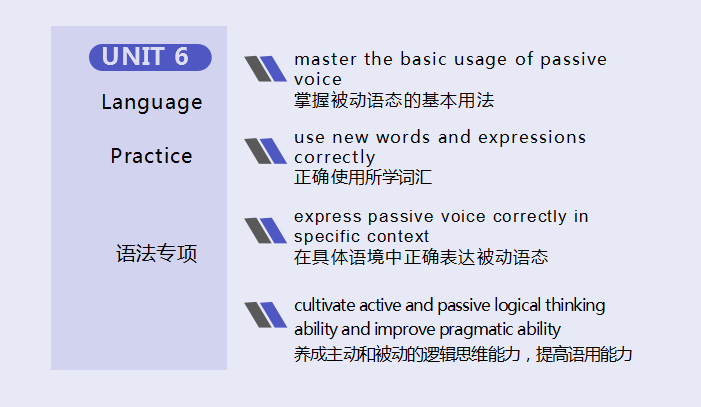
Grammar 语法内容
1. 概念理解:
英语的语态共有两种:主动语态(active voice)和被动语态(passive voice)。主动语态表示主语是动作的执行者,被动语态表示主语是动作的承受者。被动语态是动词的一种特殊形式,一般来说,只有需要动作对象的及物动词才有被动语态。被动语态(Passive voice)是动词的一种形式,用以说明主语与谓语动词之间的关系。汉语往往用"被""受""给"等被动词来表示被动意义 。
2. 构成:
被动语态由“be动词+及物动词的过去分词”构成。被动语态的时态变化只改变be的形式,过去分词部分不变。疑问式和否定式的变化也如此。
3. 十种时态的被动形式:
时 态 | 现在
| 过去
| 将来
| 过去将来
|
一般
| am/is/are
done
| was/were
done
| will/shall
be done
| would/should
be done
|
进行
| am/is/are
being done
| was/were
being done
|
|
|
完成
| has/have
been done
| had
been done
| will/shall
have been done
| would/should
have been done
|
1)一般现在时
主动语态:do
被动语态:am is are done
We clean the classroom every day. 我们每天打扫教室。
The classroom is cleaned by us every day. 教室每天都由我们打扫。
2)一般过去时
主动语态:did
被动语态:was were done
We cleaned the classroom yesterday. 昨天我们打扫了教室。
The classroom was cleaned by us yesterday. 昨天教室被我们打扫了。
3)一般将来时
主动语态:will shall do
被动语态:will shall be done
We will clean the classroom soon. 我们很快要打扫教室。
The classroom will be cleaned soon. 教室很快要被打扫了。
4)一般过去将来时
主动语态:would do
被动语态:would be done
We told him that we would clean the classroom soon. 我们告诉他我们马上就打扫教室。
We told him that the classroom would be cleaned soon. 我们告诉他教室很快就会被打扫的。
5)现在进行时
主动语态:am is are doing
被动语态:am is are being done
We are cleaning the classroom now. 我们现在正在打扫教室。
The classroom is being cleaned now. 教室现在正在被打扫。
6)过去进行时
主动语态:was were doing
被动语态:was were being done
We were cleaning the classroom this time yesterday. 昨天这个时候我们在打扫教室。
The classroom was being cleaned this time yesterday. 昨天这个时候教室正在被打扫。
7)现在完成时
主动语态:has have done
被动语态:has have been done
The classroom looks tidy. We have cleaned it. 教室看起来很整洁。我们已经打扫了。
The classroom looks tidy. It has been cleaned. 教室看起来很整洁。它已经被打扫了。
8)过去完成时
主动语态:had done
被动语态:had been done
The classroom looked tidy. We had cleaned it. 教室看起来很整洁。我们已经打扫过了。
The classroom looked tidy. It had been cleaned. 教室看起来很整洁。它已经被打扫过了。
9)将来完成时
主动语态:will shall have done
被动语态:will shall have been done
We will have cleaned the classroom by five o'clock. 我们将在五点之前打扫完教室。
The classroom will have been cleaned by five o'clock. 教室将在五点以前打扫完。
10)过去将来完成时
主动语态:would have done
被动语态:would have been done
I said we would have cleaned the classroom by 500. 我说我们将在五点之前打扫完教室。
I said the classroom would have been cleaned by 500. 我说教室将在五点以前打扫完。
4. 用法:
英语中,大多数情况下用主动语态比较简练、有力。但是,被动语态也有其特殊的用途,它也是表达思想、描述事物的需要。
1). 不知道或不必说出动作的执行者
How is this word pronounced 这个单词怎么发音?
After war, everything had been destroyed. 战争结束后,一切都被毁坏了。
2). 强调动作的承受者
If you break the school rules, you will be punished. 如果你违反校规,你将受到惩罚。(强调you)
A new Hope School will be opened in our village. 我们家乡将开办一所新的希望学校。(强调a new Hope School)
3). 动作的执行者不是人而是无生命的事物
The bridge was washed away by the flood. 桥被洪水冲走了。
5. 不能用被动语态的几种情况:
1)所有的不及物动词或不及物动词词组不能用于被动语态。
2)表示状态的谓语动词,如:last、hold、benefit、contain、equal、fit等。
3)表示归属的动词,如have、own、belong to等。
4)表示"希望、意图"的动词,如:wish、want、hope、like、love、hate等。
5)宾语是反身代词或相互代词时谓语动词用主动语态,不能用被动语态。