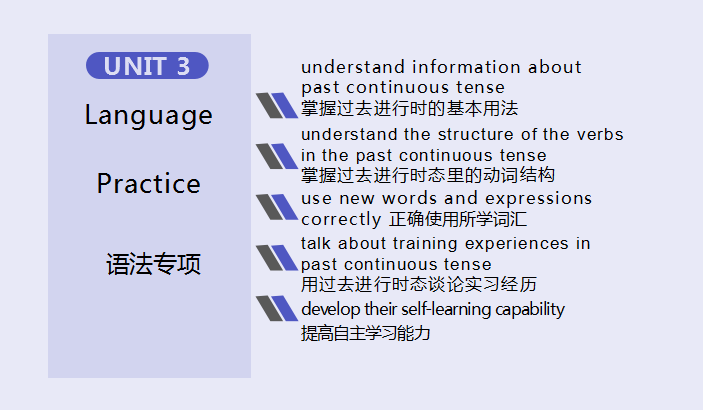
Grammar 语法内容
Past Continuous Tense 过去进行时态,这是我们经常接触到的一种时态,表示过去某一时刻或过去某一阶段正在进行的动作。
Definition 定义
过去进行时表示过去某一时刻或过去某一阶段正在进行的动作。动作发生的时间是过去的某个具体时刻或某段时间,动作是进行着的状态。
e.g. Mary was waiting for a bus at 9 yesterday morning.
玛丽昨天早上九点在等公交车。
She was reading books from 7 to 8 last night.
昨天晚上七点到八点她在读书。
Structure 结构
助动词be的过去式+现在分词,也就是was/ were+doing。
肯定句的结构:主语+was/ were+doing+其他
e.g. It was raining when we left school. 我们离开学校的时候正在下雨。
否定句的结构:主语+was/ were not+doing+其他
e.g. They were not reporting to the manager.他们没有向经理汇报。
一般疑问句的结构:Was/ Were not+主语+doing+其他?
e.g. Was he talking with the training teacher? 他是在和实训老师说话吗?
Usage 用法
过去进行时表示过去某段时间内持续进行的动作或事情。
1. 常用的时间状语:this morning/ afternoon/ evening,last night/ winter/ year,all day yesterday/last Sunday...
e.g. What were you doing this morning? 今天早上你在做什么?
e.g. She was writing a book about China last year.
去年她正在写一本有关中国的书。
e.g. What was he researching all day last Sunday?
上周日他一整天都在研究什么?
2. 常用的时间状语:when/ while引导的从句...
e.g. I was living in my aunt's house when I was having the internship in the hotel.
饭店实习时,我住在姑妈家里。
e.g. My pen dropped on the ground when I was walking in the park.
我在公园散步的时候,我的钢笔掉到地上了。
e.g. He was cleaning his car while I was cooking.
他擦车时我在做饭。
3. 两者都强调过去发生的事,前者强调动作在持续或未完成,后者往往表示某一动作已经完成。
e.g. I saw you while you were speaking to the teacher.
你和老师说话的时候,我看见你了。
有的时间状语既可用于过去进行时,也可以用于一般过去时,但含义不同。
e.g. He was writing a letter to his friend last night.
他昨晚一直给朋友写信。(信不一定写完)
e.g. He wrote a letter to her friend last night.
他昨晚给朋友写了封信。(信写完了)