-
1 课文
-
2 单词短语
-
3 词汇PPT
-
4 课后练习
Jiaozi: The Taste of Home
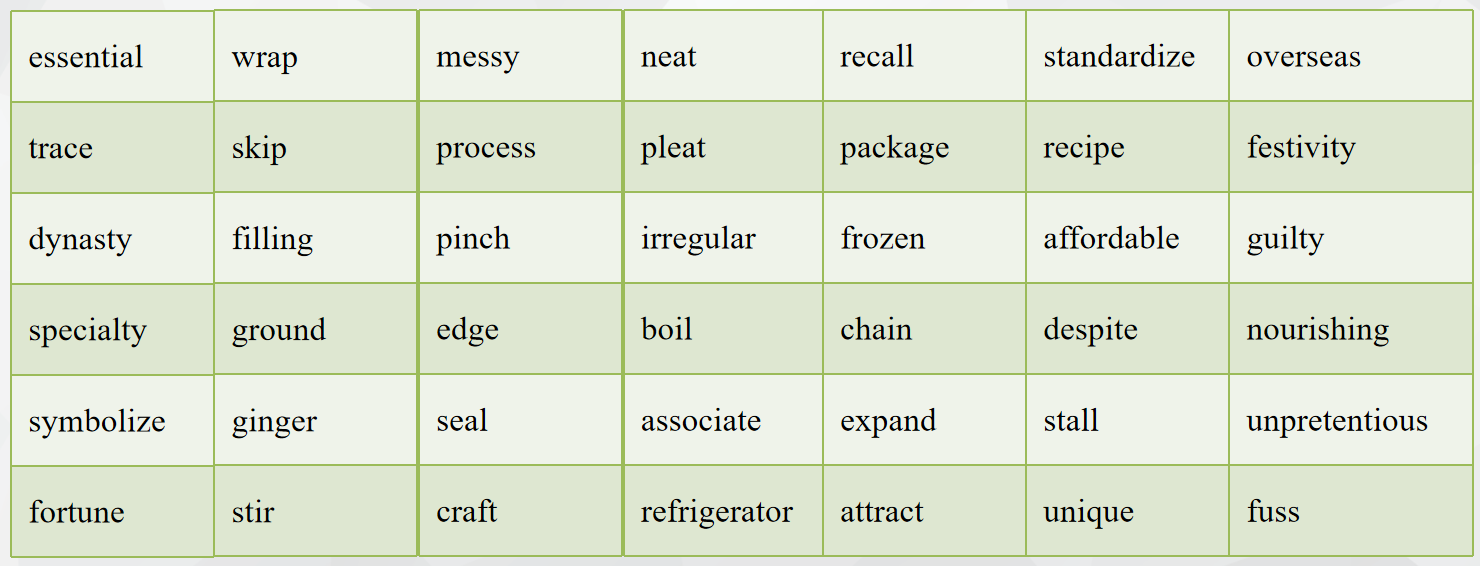
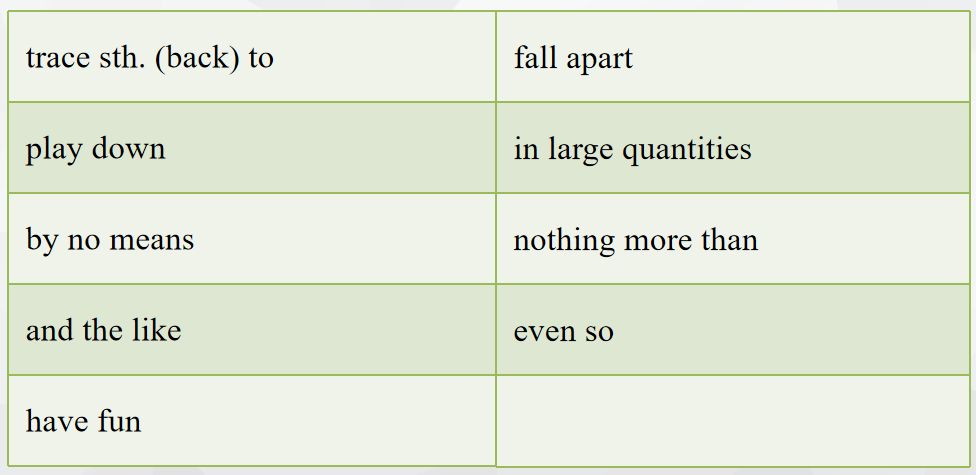
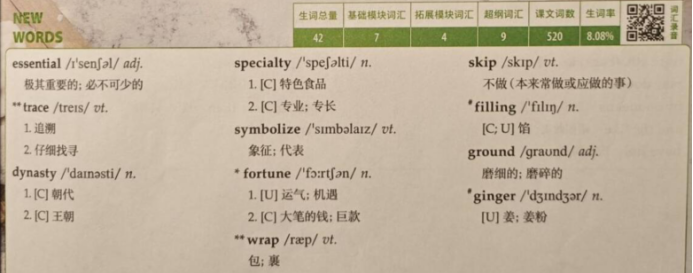
1 For most Chinese families, jiaozi, or Chinese dumplings, are an essential part of the celebration of Chinese New Year, and this tradition can likely be traced back to the Ming Dynasty.
2 However, to simply describe dumplings as a Chinese New Year specialty that symbolizes fortune and prosperity is to play down the dish's popularity. Dumplings are actually eaten throughout the year, especially in the northern parts of the country. Popular as they are, these half-moon-shaped dumplings are by no means quick to make.
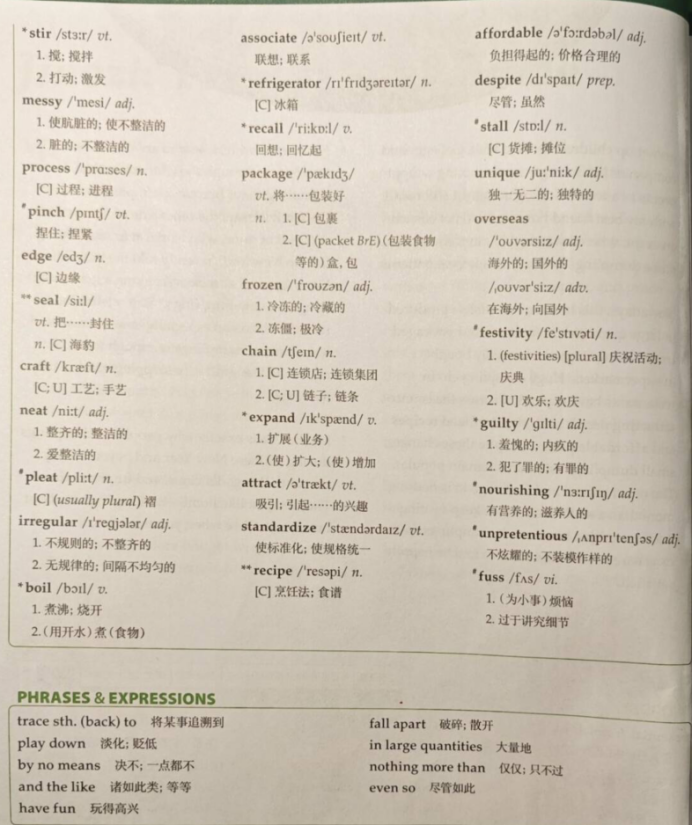
3 In my family, dumpling making, or "dumpling wrapping" as it's called in Chinese, has always been a joyful weekend project. My mom sometimes skips store-bought wrappers and makes them by hand herself. My dad, the better cook, prepares the filling. He cuts vegetables into fine pieces, mixes them with ground meat, adds some ginger and the like, and stirs them hard. When I was a kid, I was only allowed to participate in wrapping the dumplings, a less messy process. I was told to put the right amount of filling into a wrapper, and pinch the edge to seal it. My parents have somehow never mastered the craft of shaping dumplings into a perfect half-moon shape and sealing them with neat pleats. But both seem to have fun making those irregular-shaped dumplings, which somehow manage to never fall apart in the boiling pot.
4 Maybe because of the fun of having everybody involved, dumplings are often associated with family. It is not uncommon for parents to make a lot of dumplings and store them in the refrigerator for the occasions when their grown-up children come to visit. Colleges and companies like to organize dumpling wrapping events as a team bonding activity. I still recall with my best friend how we first met at such an event, where I watched in amazement as she made dumplings with extremely neat patterns.
5 Nowadays, this home-made dish is produced in large quantities in factories and packaged frozen dumplings can be easily bought in supermarkets. Huge dumpling chain restaurants have expanded across the country, attracting people with standardized recipes and affordable prices. Despite these changes, small dumpling restaurants remain popular. The one my mom and I often go to is nothing more than a stall. Even so, we keep visiting it for its unique home-made dumplings. We can share two different dishes and be happily satisfied.
6 For overseas Chinese who are used to studying or working through the Chinese festival season, dumplings have become an important link to the festivities on the other side of the earth. A friend of mine, who works at an accounting firm in New York, recently told me that Chinese New Year for her means "cooking supermarket-bought frozen dumplings." The celebration usually falls on an especially busy time at work, but a plate of dumplings is enough to make my friend less guilty for skipping most of the festivities.
7 Maybe this is exactly why people eat dumplings during Chinese New Year and beyond. They are nourishing, delicious, and unpretentious. They are just like home—nothing to fuss about but always there when you need it.