
-
1 文化与商务背景
-
2 语言知识学习
-
3 Text I ...
-
4 Text I ...
-
5 Text I ...
-
6 Text I ...
-
7 Text I ...
1. 作业回顾:The history of English Language
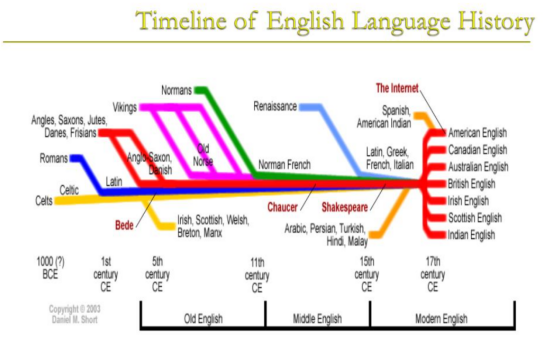
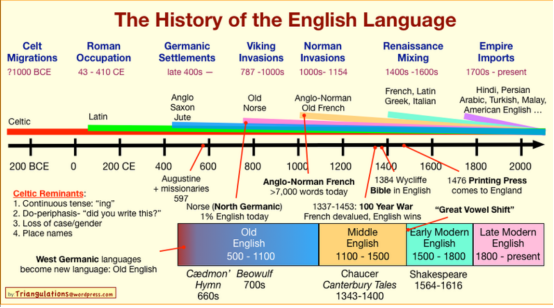
2. Group discussion
Directions: Discuss with your partner about the following questions, and then submit your answer in the following test. You will get the reference answer after your submission.
What is language barrier? What problems may langauge and cultural barriers cause in a multilingual workforce?
New words and expressions in Text I
Directions: This words list can be a reference material helpful for your self-study on the Text I. It is suggested to go over the vocabularies in the following file and the vocabulary list on page 6-9 first, and then start your reading.
同学们合理安排时间,在本节线上课时内完成TEXT I 文章的所有学习内容,完成章节里的相关讨论任务和测试,时间截至后无法作答。全部内容将于12点后开放,学生们可以自行反复学习。建议同学们提高学习效率,按照一定的阅读速度在规定时间内完成正片课文的学习和相关任务。如果效果不好,可以在12点后自行安排复习。
同时,大家要做好学习笔记,整理好语言知识、文化知识、商务知识等方面的问题,为线下课堂做好准备。线下课堂将提问和讨论文章中的内容,答疑解惑。
1. Skimming Reading
Directions: Read the text quickly and decide whether the following statements are true (T) or false (F). Submit your answer in the following test. You will get the reference answer once you submit it.
(1) Though the rules of genders in English are easier than those in some languages, its rules concerning grammar, spelling and pronunciation are much more irregular and difficult to follow.
(2) Germany and Japan were defeated by the English-speaking Americans and Englishmen because their prime ministers had some trouble in negotiating in English in 1940.
(3) Not only the French, but people from other countries such as Poland and Germany, feel the urgency of defending the encroachment of English.
(4) It is unnecessary for the Brits to learn any other foreign language because English is so widely used.
(5) TV and radio, although being criticized for removing differences on a global scale, may in an opposite way extend the lifespan of some languages spoken by minority groups in small areas.
2. Reading for General Ideas
Directions: Read the text again and try to analyze the main idea of each part. The structure as well as the heading for Part I are given below. You should work out the heading for the rest parts of the text. Submit your answer in the following test. You will get the reference answer once you submit it.
Thesis statement: English has become a global language, but the triumph is dubious.
Heading for Part I (Para. 1): Introduction of the topic: the triumph of English as a global language
Heading for Part II (Para. 2-7):
Heading for Part III (Para. 8-12):
Heading for Part IV (Para. 13):
Text I--Part I 学习
1. Language and Cultural Points
1) Some 380m people speak it as their first language and perhaps two-thirds as many again as their second.
Some: adv. You can use some in front of a number to indicate that it is approximate. 大约
e.g I have kept both a cat and a dog for some 30 years. 我养猫和狗大约有三十年了。
as many again (as): twice as many as, double the quantity / number of
比 ... 多一倍(加倍; 是 ... 多一倍)
E.g. He has as many apples again as you do.
This bag of rice weighs as much again as that one.half as many again (as): the same in addition to half that amount
多出一半,一倍半
This year’s production is as much again as last year’s.
The city has as many parks again as it had ten years ago.
The company has as many employees again as it had five years ago.
As many again as you can imagine, the problem is more complicated than it seems.
完成以下练习
Sentence structure analysis: ...........two-thirds as many again as their second.
本句使用了省略(Ellipsis)语法现象,补充完整为: two-thirds speak it as many again as their second language. 因为前一句已经出现过,所以为了避免语言冗余而省略。
Search online about the list of the most spoken languages worldwide in 2024, and check about the updated data of total number of English speakers. Please list the top 5 of the most spoken language worldwide and the total number of English speakers in the following discussion task.
Reference reading material:: How Many People Speak English?
2) in some sense: = in a sense; in a certain sense 在某种意义上说
e.g In some sense, you could say that the aterpillar dies. 从某种意义上来说,你也可以说,毛毛虫死了。
3)be exposed to : exposure (n.) 暴露,接触
e.g Too much exposure to TV is not good for your health/eyesight. 看太多电视对你的视力不好。
4) more or less: “或多或少”
5) be proficient in: = be skilled in; be competent in 精通于:在某个领域或技能上有高水平的掌握和熟练运用。proficiency (n.)
6) You’ll see it on posters in Côte d’Ivoire, you’ll hear it in pop songs in Tokyo, you’ll read it in official documents in Phnom Penh. Deutsche Welle broadcasts in it.
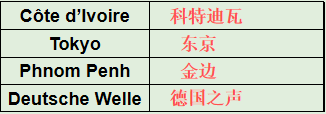
科特迪瓦共和国:(The Republic of Côte d'Ivoire, La République de Côte d'Ivoire ),简称科特迪瓦(Côte d'Ivoire),科特迪瓦在法语的意思是“象牙海岸”,应该国政府要求,中华人民共和国用音译名为科特迪瓦。联合国自1985年12月31日起使用此音译名。是西非国家,与加纳、利比里亚、几内亚、马里和布基纳法索相邻。海岸线长约500公里,国土面积322463平方公里,首都亚穆苏克罗,人口2700万(2022年) [25],全国有69个民族,分为4大族系:阿肯族系约占42%,曼迪族系约占27%,沃尔特族系约占16%,克鲁族系约占15%。
金边:是柬埔寨的首都,柬埔寨最大城市,为柬埔寨政治、经济、文化、交通、贸易、宗教与各方面中心。金边面积375平方公里,人口约200万(2006年)。坐落在湄公河与洞里萨河之间的三角洲地带。
德国之声(德语:Deutsche Welle):是德国的公法性国际化媒体,拥有来自60多个国家的1500多位工作人员,制作广播、电视以及因特网的资讯服务于全球。德国之声坐落在波恩和柏林,以29种语言播出广播节目,以德语、英语和西班牙语播出电视节目,是德国广播联盟(ARD)的成员。
7) It is the medium of expression in cabinet meetins in Bolivia.
“Cabinet meeting”指的是政府内阁成员定期或不定期举行的会议。内阁会议通常由国家或政府的高级官员组成,如部长、国务卿等,他们共同讨论和制定政策、决策,并为国家元首(如总统或总理)提供咨询和建议。
8) Truly, the tongue spoken back in the 1300s only by the “low people” of England has come a long way. It is now the global language.
low people: people of the lower class, those who were at the bottom of the society
low people" of England: After the Norman Conquest in the 11th century, Norman French became the language of the court and of official life until the end of the 14th century. During these 300 or more years English remained the language of the common people. When the 14th-century vernacular revival came, dominated by Chaucer and Wycliffe, English was restored to its old place as the speech of all classes.
come a long way: make much progress
Sentence structure analysis: What is the main structure of the sentence?
2. Group discussion
Directions: Discuss with your group members and try to answer the following question based on Part I.
(Para. 1)
Why is English called the global language?
Please post your idea in the following discussion area. You should organize your own words based on what you've got from the group discussion. And then check out others' opinion and give comment to some which you realy agree with.
Text I--Part II 学习 (Para. 2-7)
1. Language and Cultural Points
1) How come? Not because English is easy. (Para.2)
how come: 为什么;怎么会…(那样),其后接陈述句 表示suprise的语气。
2) But the verbs tend to be irregular, the grammar bizarre and the match between spelling and pronunciation a nightmare. (Para.2)
Sentence structure analysis: Can you analyze what kind of sentence structure the underlined part uses? What would be the normal way or clearer way of expressing this sentence? (You can refer back to the sentence you've analyzed in para.1)
3) English is now so widely spoken in so many places that umpteen versions have evolved, some so peculiar that even "native" speakers may have trouble understanding each other. (Para.2)
so ... that ...“如此...以至于...”
翻译技巧:翻译此句时,应该注意不能把so...that...翻译出来,不符合中文表达习惯,应该翻译为:现在英语在许多地方被广泛使用,由此衍生出许多版本。有些版本非常奇特,甚至连以英语为“母语“的人也难以理解。
e.g. I'm so busy that I can't spare time to enjoy myself. 我太忙了,都腾不出时间好好玩。
4) As a language with many origins — Romance, Germanic, Norse, Celtic and so on — English was bound to be a mess. (Para.3)
bound adj.
be bound for: travelling, or ready to travel to a particular place 正旅行去(某地);准备前往(某地)
e.g. This ship is bound for Italy.
be bound to do/be sth: certain or likely to happen, to do or to be sth 一定会;很可能会
e.g. It was bound to happen sooner or later.
It's bound to be sunny again tomorrow.
5) But its elasticity makes it messier, as well as stronger. (Para.3)
elasticity:n. = flexibility, adaptability 弹性
e.g. It is called the elasticity of demand. 这就是所谓的需求弹性。
e.g. Daily facial exercises help to retain the skin's elasticity. 每日的面部运动有助于保持皮肤弹性。
messier: There are many varieties of English, differences among them in pronunciation, vocabulary, grammar and so on, which can be very confusing sometimes.
stronger: English can be used in many fields and so it becomes a lingua franca, and enjoys a dominant status.
paraphrase: It absorbs words from other languages and accepts created ones, thus a much larger vocabulary than many languages. In its history, it accepts, both in spoken and written form, influences from other languages, religion, law and science.
6)When it comes to new words, English puts up few barriers to entry. (Para.3)
when it comes to... in terms of, with regard to, regarding ”关于...,说到...,当提到....“
e.g. The majority of these employees have no voice, especially when it comes to their own safety. 这些员工中的大多数没有发言权,特别是当涉及到他们自己的安全时。
barrier n. a problem, rule or situation that prevents sb from doing sth, or that makes sth impossible 障碍物,屏障;界线
e.g. I realized I had to surmount the language barrier. 我认识到我必须得克服语言障碍。
put up/set up/remove barrier 放置/设置/移除障碍
barrier to entry :
背景解释: In theories of competition in economics, barriers to entry are obstacles that make it difficult to enter a given market. The term can refer to hindrances a firm faces in trying to enter a market or industry — such as government regulations and patents, or a large, established firm taking advantage of economies of scale, or those an individual faces in trying to gain entrance to a profession — such as education or licensing requirements. Because barriers to entry protect incumbent firms and restrict competition in a market, they can contribute to distortional prices. The existence of monopolies or market power is often aided by barriers to entry. 在经济学的竞争理论中,进入壁垒是指使进入特定市场变得困难的障碍。这个词可以指一个公司在试图进入一个市场或行业时面临的障碍,比如政府法规和专利,或者一个大型的、成熟的公司利用规模经济的优势,或者个人在试图进入一个行业时面临的障碍,比如教育或执照要求。由于进入壁垒保护了现有企业,限制了市场竞争,它们可能导致价格扭曲。垄断或市场力量的存在往往是由进入壁垒促成的。
e.g. We realized the main barrier to entry is going to be scale. 我们意识到,规模是敲开市场的主要壁垒。
It also helped minimise the barrier to entry for new developers. 这也有助于降低新开发人员入门的门槛。
Firms in Korea, Malaysia and Thailand are more. productive than firms in India, in part because of lower trade restrictions and administrative barriers to entry. 韩国、马来西亚和泰国的公司则更多。生产效率比印度公司高,部分原因是贸易限制和进入的行政壁垒较低。
用法: adj. + barrier to entry: non-tariff, huge, low, remaining,regulatory, new, stiff, substantial, formidable, successful,legal, principal, effective
barrier to entry + prep.: to, into, from, against
7)Every year publishers bring out new dictionaries listing neologisms galore. (Para.3)
neologisms galore:大量的新词
neologism n. (fomal) a new word or expression, or a new meaning of a word
galore adj. (informal, only after n.) in large quantities
e.g. You'll be able to win prizes galore. 你将会赢得很多奖品。
There will be games and prizes galore. 将有很多游戏和奖品。
8)The past decade, for instance, has produced not just a host of Internettery, computerese and phonebabble (“browsers”, “downloading”, “texting” and so on) but quantities of teenspeak (“fave”, “fit”, “pants”, “phat”, “sad”). (Para.3)
Internettery n. Internet language. For example, Internet emoticons, as a type of Internet language, are frequently used in the computer mediated communication of Japanese. A lot of abbreviated terms used in online chat are also good examples
lol: laughing out loud rolf: rolling on the roof laughing
g2g: got to go ttyl: talk to you later
ttys: talk to you soon
computerese n. language used by those in the business of manufacturing, selling, servicing, or using electronic computers, characterized by many abbreviations and acronyms, excessive use of technical jargon, and, frequently, lack of concern for traditional spelling and grammar
phonebabble n. the language used on smartphones
phonebabble n. the language used on smartphones
teenspeak n. a dialect of the English language used by teenagers (normally between the ages of 13 and 18, though there has recently been a leap in speakers). This form of speech includes an overuse of words such as “like” and “umm”. There is debate over whether small words such as “what” and “so” should be added, but as for now it is only the two previous words that can be easily linked to this dialect.
paraphrase: In the past ten years, for example, there arose a large number of words and expressions about the Internet, computer technologies and smartphones, as well as those spoken by teenagers.
9)English-speakers have not always been so Angst-free about this laisser-faire attitude to their language. (Para.4)
Angst n. (also angst) a feeling of anxiety or apprehension
e.g. Perhaps it was no more than "teen angst". 或者也许那仅仅只是“青春期焦虑”。
e.g. Education keeps Germany in a perpetual state of angst. 教育问题使德国担忧不断。
-free adj. combines with nouns to form adjectives that indicate that something does not have the thing mentioned, or has only a little of it (= free-of-n.) 表示“不含.....的”
e.g. salt-free diet = free-of-salt diet 不含盐的
charge-free service = free-of-charge service 免费服务
laisser-faire attitude: leave-it-alone attitude 放任态度
Paraphrase: People who speak English have not always been so free of anxiety about the leave-it-alone attitude towards their language.
10)In the 18th century three writers — Joseph Addison (who founded The Spectator), Daniel Defoe (who wrote Robinson Crusoe) and Jonathan Swift (Gulliver’s Travels) — wanted to see a
committee set up to regulate the language. (Para.4)
see sth done/see sb doing or do
see the building destroyed
see an old man walking across the street
see an old man walk across the street
regulate v.
(1) to control sth by means of rules (用规则条例)约束,控制,管理
e.g. It is up to the regulating authority to put the measures into effect. 应该由管理部门落实这些措施。
(2) to control the speed, pressure, temperature, etc. in a machine or system 调节,控制(速度、压力、温度等)
e.g. This valve regulates the flow of water. 这个阀门调节水流。
three writers

11)Fortunately, the principles of free trade triumphed. (Para.5)
triumph
(1) vi. get the upper hand; succeed
e.g. She learn to triumph over her disability. 她学会了战胜她自身的不足。
Justice triumphs in the end. 正义终将得胜。
(2) n. a great success, achievement or victory
e.g. The winning team returned home in triumph.球队凯旋而归。
12) have little to do with: to have no connection with
e.g. People’s health reflects influences like lifestyles that have little to do with medical care.
13) have everything/little/nothing to do with: 与……有关/与……关系不大/与……无关
14) It thus began its rise as a global language.(Para.6)
thus adv.
(1) in this way/manner; like this 以此方式;如此;这样
e.g. He thus avoided a pack of journalists eager to question him. 他就这样避开了一群急于向他提问的记者。
(2) as a result of sth just mentioned; because of this (=hence, consequently) 因此;从而;所以
e.g. We do not own the building. Thus, it would be impossible for us to make any major changes to it. 我们不是这栋楼房的房主,因此不能对它进行大改动。
(3) to this degree, point or extent, so 到如此程度
e.g. Even thus much of truth would save me! 只消这小小的一点真诚就可以挽救我!
My favorite class I've had here thus far was last year. 到目前为止,我最喜欢的课是去年上的。
(4) as an example
e.g. The judge expressed it thus: “Our obligation is to discover the truth.” 法官这样表述:“我们的义务是发现真相。”
15) That could be seen not just by the use of English in Britain's colonies, but also by its usefulness much farther afield. (Para.7)
colony. n. 殖民地
colonial: adj. 殖民的 n. 殖民地居民
colonialism n. 殖民主义
colonialist n. 殖民主义者 adj. 殖民主义的
colonize v. 开拓殖民地
colonization n. 殖民化
colonist n. 殖民地开拓者
not just/only ... but also ...: 不仅...而且....
far / farther/ further afield: far away from home; to or in places that are not near 远离家乡;去远处;在远方
e.g. You can hire a car if you want to explore further afield.
假如你想逛更远的地方,可以租辆汽车。
e.g. Journalists came from as far afield as China.
新闻记者来自中国等遥远的地方。
Sentence analysis: "That" represents the last sentence in the previous paragraph --- "its rise as a global language".
16) But however accommodating English might be, the real reason for the latter day triumph of English is the triumph of the English-speaking United States as a world power. (Para.7)
accommodate vt.
(1) ~ to sth, ~ sth/yourself to sth: ( formal ) to change your behaviour so that you can deal with a new situation better 顺应,适应(新情况)
e.g. I needed to accommodate to the new schedule. 我需要适应新的时间表。
(2) to provide enough space for sb/sth 容纳;为…提供空间
e.g. Over 70 minutes of music can be accommodated on one CD. 一张激光唱片可以容纳70多分钟的音乐。
(3) to provide sb with a room or place to sleep, live or sit 为(某人)提供住宿(或膳宿、座位等)
e.g. The hotel can accommodate up to 500 guests. 这家旅馆可供500位旅客住宿。
accommodating adj.willing to do what sb else wants or requests, willing to please 乐于助人的;与人方便的
e.g. Some companies followed with a more accommodating approach. 一些公司采取了更加灵活变通的做法。
latter adj. coming or happening near the end of a process, activity, series, life, etc.
synonym: former
e.g. We'll go in the latter half of the year.
Sentence structure analysis: What is the main structure of the sentence? 这句话的主干部分是什么?
补充分析:“however accommodating English might be” 部分是一个让步状语从句,使用了部分倒装结构(inversion)。
正常的语序应该是 “English might be however accommodating”,这里将 “however + 形容词(accommodating)” 提前,把情态动词 “might” 提到了主语 “English” 之前,构成了部分倒装,用来强调 “不管英语多么具有包容性” 这一含义。后面 “the real reason for the latter day triumph of English is the triumph of the English-speaking United States as a world power” 这部分是正常语序的陈述句。这种倒装结构使句子更加正式,同时也突出了英语的包容性与美国作为世界强国的胜利之间的对比。
17) Therein lies a huge source of friction. (Para.7)
therein adv. in or into that place, time or thing 在那里;在其中
e.g. she would have taken it calmly, and found pleasures therein. 她只会泰然处之,而且还要从中找到乐趣。
therein lies... (idiom) used to emphasize the result or consequence of a particular situation 那一点就是;那方面便是;…就在那里
e.g. He works extremely hard and therein lies the key to his success. 他工作极其努力,这就是他成功的关键。
Therein lies the danger for the euro. 欧元面临着危险。
Therein lies the greatest danger. 最大的危险就在于此。
friction n. disagreement or a lack of friendship among people who have different opinions about sth 争执;分歧;不和
e.g. There are conflicts and frictions that have still to be resolved. 仍有待解决的冲突和摩擦。
paraphrase: This is the cause of a great deal of disagreement and conflict.
2. Group discussion
Directions: Discuss with your group members and try to answer the following question based on Part II. (Para. 2——7)
Which of the following is NOT the reason why English has become a global language?
3.Reading Comprehension
Summary
Part 2 Main Content:
(1) Widespread Use and Diversity of English: English is widely used worldwide, evolving into many versions. Some are so distinct that even "native" speakers may struggle to understand each other. The extensive use of English has led to diverse versions, which is both an advantage and a source of complexity.
(2) Characteristics of the English Language : English originates from multiple sources, including Romance, Germanic, Norse, and Celtic. This diversity makes English both chaotic and powerful. Its openness allows for the constant absorption of new vocabulary, enhancing its adaptability and vitality.
(3) Openness of English: English readily accepts new words. Each year, numerous new words, including internet, computer, mobile phone, and teenage slang, are added to dictionaries. The historical and cultural diversity of English makes it unique, influencing its development and use.
(4) Historical Attempts to Standardize Language: In the 18th century, three writers — Joseph Addison, Daniel Defoe, and Jonathan Swift — proposed setting up a committee to regulate English, but it didn’t materialize.
(5) Globalization of English: The widespread use of English is closely related to British colonial expansion and the rise of the United States. The success of English is due not only to its flexibility but also to the economic and political power of English - speaking countries. The globalization of English is closely linked to both its linguistic features and the economic and political strength of the countries behind it.
Deeper Meanings:
(1) Language and Culture: The diversity and openness of English reflect the diversity and inclusiveness of the cultures behind it. The success of English is not only due to its linguistic characteristics but also to the economic and political strength of the countries behind it.
(2) Language Evolution: Language evolution is a dynamic process influenced by social, cultural, and political factors. The evolution of English shows how language adapts to social changes.
(3) Language and Power: Language use and dissemination are closely related to the power and influence of the countries behind them. The globalization of English is the result of British colonial expansion and the rise of the United States, reflecting the soft power of these countries.
Text I--Part III 学习 (Para. 8-12)
1. Language and Cultural Points
1) And in many countries the all-engulfing advance of English threatens to damage or destroy much local culture. (Para. 8)
engulf
1) vt. to surround or to cover sb/sth completely 包围;吞没;淹没
e.g. He was engulfed by a crowd of reporters. 他被一群记者团团围住。
e.g. The vehicle was engulfed in flames. 汽车被大火吞没。
2) vt. to affect sb/sth very strongly 严重影响
e.g. Fear engulfed her. 她陷入深深的恐惧之中。
all-engulfing 吞没一切的;全部吞没
sth. threaten to do (坏事)可能发生,将要发生
e.g. The fighting is threatening to turn into full-scale war. 这场战斗有可能会演变为全面的战争。
2) This is sometimes lamented even in England itself, for though the language that now sweeps the world is called English, the culture carried with it is American. (Para. 8)
lament v. to feel or express great sadness or disappointment about sb/sth 对…感到悲痛;痛惜;对…表示失望
e.g. Ken began to lament the death of his only son. 肯为他独生子的去世开始感到悲痛。
After thinking about the following two questions, paraphrase it and put your answer in the following task:
What does "This" represent?
What is the meaning of "for" in the sentence?
3) Brits: British people
4) regret doing/to do
a) regret to do表示很遗憾地做某事(事情还没有做),其后要接不定式;能这样用的不定式不多,主要是 to say, to tell, to inform等,
b) regret doing表示后悔或遗憾做过某事(为已经做过的的事情感到遗憾),其后通常接动名词,
5) at the start of: =at the beginning of
e.g. Just as at the start of a software development project, we have multiple methods to accomplish our goals. 正如在软件开发项目的开始,我们有多种方法来完成我们的目标。
6) Ever since the revolution in 1789, they have aspired to see their language achieve a sort of universal status, and by the end of the 19th century, with France established as a colonial power second only to Britain and its language accepted as the lingua franca of diplomacy, they seemed to be on their way to reaching their goal. (Para. 10)
aspire to sth. / to do sth.: to have a strong desire to achieve or to become sth(such as a particular career or level of success) 渴望(成就);有志(成为)(aspirtaion n.)
e.g. She aspired to a scientific career. 她有志于科学事业。
e.g. He aspired to be their next leader. 他渴望成为他们的下一届领导人。
a sort of: = a kind of 从某种程度上来说;从....上来说
Sentence structure analysis: .....by the end of the 19th century, with France established as a colonial power second only to Britain and its language accepted as the lingua franca of diplomacy, they seemed to be on their way to reaching their goal.
The main structure of the sentence is: ...... they seemed to be on their way to reaching their goal.
Question: What is the grammatical function of "with France established as a colonial power second only to Britain and its language accepted as the lingua franca of diplomacy"?
7) As the 20th century drew on, however, and English continued to encroach, French was driven on to the defensive. (Para. 10)
Paraphrase: As the 20th century was approaching, and English kept on expanding beyond limits, French was put in a cornered position, having to fight for protection.
8) French-speakers are far from alone. (Para. 11)
far from alone: not alone 并不孤单;绝非个例
e.g. If you aren't sure, you are far from alone in your confusion.
如果你不知道答案,那么对此困惑的还远远不止你一个人。
e.g. They are far from alone. 他们并不孤单。
9) A law went into effect in Poland last year obliging all companies selling or advertising foreign products to use Polish in their advertisements, labelling and instructions. (Para. 11)
go into effect : (a law or a rule) to become effective 生效
e.g. The law is to go into effect in December of next year. 该法案将于明年12月生效。
e.g. The contract will go into effect as soon as it is signed. 这项合同一经签署即开始生效。
oblige
a) [ T + obj + to infinitive ] to force someone to do something, or to make it necessary for someone to do something 责成;强迫,迫使
e.g. The law obliges companies to pay decent wages to their employees.
法律强制公司向其雇员支付适当的工资。
b) [ I or T ] to please or help someone, especially by doing something they have asked you to do (尤指按别人要求的去做以)讨好,帮助,为…效劳
e.g. We needed a guide and he was only too happy to oblige.
我们需要一个向导,而他很乐意帮忙。
10) In India some people see English as an oppressive legacy of colonialism that should be exterminated. (Para. 12)
Paraphrase: (India was once regarded as the Jewel in the Crown of the British Empire). People in India would think the English language reminds them of the period of colonialism, which should be wiped out.
11) For the Indians, the pain felt at the encroachments of English may be tempered by the pleasure of seeing their own words enriching the invading tongue.....(Para. 12)
be tempered by: to be made less severe or extreme by
e.g. Criticism of politicians must be tempered by recognition of political reality.
see sb. doing sth. : 看到某人正在做某事
Sentence structure analysis: What is the main structure?
12) But for many peoples the triumph of English is the defeat, if not outright destruction, of their own language. (Para. 12)
if not
(1) perhaps; indicating possibility of being more remarkable (greater or better or sooner) than 如果不,如果没有
e.g. She understood his meaning, if not his words, and took his advice.
她即便不懂他的语言,也明白了他的意思,并且接受了他的建议。
(2)otherwise 否则
e.g. Return the book in time. If not, you will be fined. 按时把书还回来。否则,你将被罚款。
Paraphrase: But for many peoples, the success or the wide spread of English means the defeat, perhaps even a complete extinction, of their own language.
13) Of the world’s 6,000 or 7,000 languages, a couple go out of business each week. (Para. 12)
go out of business: to go bankrupt 歇业;倒闭
e.g. Thousands of firms could go out of business. 数千家商号可能倒闭。
a couple: a couple (of the world’s 6,000 or 7,000 languages)
2.Reading Comprehension
Part 3 Summary
Main Content
(1) Advantages of English as a global language: As a global lingua franca, English enables people from different countries to communicate and conduct business. However, languages are not just media for communication; they are also repositories of culture and identity. In many countries, the widespread dissemination of English poses a threat to the damage or destruction of local cultures. Although this language is called English, the culture it carries is American culture.
(2) Multiple functions of language: English is not merely a tool for communication; it is also a carrier of culture and identity. While the extensive use of English has facilitated international communication, it also poses a threat to local cultures.
(3) Globalization of English and cultural diversity: The globalization of English is not only related to its linguistic characteristics but is more closely associated with the economic and political strength of the countries behind it. The widespread use of English is inseparable from the colonial expansion of Britain and the rise of the United States.
(4) Influence of English on local cultures: The extensive use of English has had a profound impact on local languages and cultures. In some countries, English has even become an official language or a second language, leading to a gradual decline in the status of local languages in fields such as education, media, and government.
(5) Attitudes of different countries towards English: Different countries have diverse attitudes towards English. The British are relatively tolerant of the changes in English, while the French are concerned about the intrusion of English. The French have always hoped that French could become a commonly used language, but with the continuous expansion of English, French has gradually been in a defensive position.
(6) Language protection measures: Some countries have taken measures to protect local languages. For example, Poland passed a law last year requiring all companies selling or advertising foreign products to use Polish. Even Germany, as an economic and political powerhouse in Europe, feels the need to resist the spread of Denglisch.
(7) Colonial legacy of English: In India, some people regard English as an oppressive legacy of colonialism and hope to eradicate it. However, for Indians, it may also bring some comfort to see that their own vocabulary has enriched the English language.
(8) Disappearance of languages: There are 6,000 to 7,000 languages in the world, and several languages stop being used every week. The victory of English means the failure, and even the complete destruction, of the languages of many ethnic groups.
Main Views
(1) Dual role of English: English serves both as a tool for communication and as a carrier of culture and identity. While its extensive use has promoted international communication, it also poses a threat to local cultures.
(2) Globalization of English: The globalization of English is not only related to its linguistic features but is more closely linked to the economic and political strength of the countries behind it. The widespread use of English is inseparable from the colonial expansion of Britain and the rise of the United States.
(3) Protection and resistance of languages: Different countries have different attitudes towards English, and some countries have taken measures to protect local languages to prevent the intrusion of English.
(4) Disappearance of languages: The extensive use of English has led to the disappearance of many local languages, which poses a serious threat to global linguistic diversity.
Deep Meanings
(1) Relationship between language and culture: The extensive use of English not only promotes international communication but also poses a threat to local cultures. Language is a carrier of culture, and the globalization of English may lead to the marginalization and disappearance of local cultures.
(2) Power of language: The globalization of English reflects the economic and political strength of the countries behind it. The use and dissemination of a language are often closely related to the power and influence of the country behind it.
(3) Evolution of language: The evolution of language is a dynamic process influenced by various factors such as society, culture, and politics. The evolution process of English demonstrates how a language adapts to social changes.
(4) Disappearance of languages: The disappearance of languages is not only a loss of the languages themselves but also a loss of culture. Protecting local languages and cultures is an important task for maintaining global cultural diversity.
Text I--Part IV 学习 (Para. 13)
1. Language and Cultural Points
1) Television and radio, both blamed for homogenisation, may, paradoxically, prolong the life of some by narrow-casting in minority tongues.
homogenisation / homogenization n. 一体化
homogenise/homogenize
v. If something is homogenized, it is changed so that all its parts are similar or the same, especially in a way that is undesirable. 使相同,使雷同
e.g. Even Brussels bureaucrats can’t homogenize national cultures and tastes.
即使是布鲁塞尔的官僚们也不能把各国的文化和口味都统一起来。
paradoxically adv. 自相矛盾地;似是而非地
paradoxical adj.
paradox n.
(1) a person, thing or situation that has two opposite features and therefore seems strange 矛盾的人(或事物、情况)
e.g. He was a paradox—a loner who loved to chat to strangers.
他真是个矛盾人物,生性孤僻却又喜欢和陌生人闲聊。
(2) a statement containing two opposite ideas that make it seem impossible or unlikely, although it is probably true; the use of this in writing 似非而是的隽语;悖论
e.g. It's a work full of paradox and ambiguity. 这部作品充满了似非而是及模棱两可之处。
narrow-casting n. radio or television transmission aimed at a narrowly defined area or audience (as paying subscribers) 窄播,窄带广播
2) And though manylanguages may die, more people may also be able to speakseveral languages: multilingualism, a commonplace among the least educated peoples of Africa, is now the norm among Dutch, Scandinavians and, increasingly, almost everyoneelse.
Sentence structure analysis: What is the grammatical function of the underlined part in the sentence?
Question: Do you know how many languages are there in Africa approximately?
Background informaiton: 1500 to 2000, since it is hard to determine whether a language is a dialect of another. People from some countries share one mother tongue, while many within one country speak several languages.
3) But then who's for Esperanto? Not the staff of The Economist, that's for sure.
Sentence Analysis: Here is a touch of humour from the article writer, who will of course write in English instead of Esperanto. "The staff of The Economist" serves as his final example to show the widespread and status of the English language.

