目录

  • Week1 Orientation
    • ● Introduction
  • U1 R&D
    • ● Week1 L1 Sources of funding
      • ● self assessment
    • ● Week2 L2 Measuring & comparing R&D activity
      • ● self assessment
    • ● Week3 L3 Time planning
      • ● self assessment
    • ● Week4 L4 Project management
      • ● self assessment
    • ● Week5 L5 Idea generating&testing
      • ● self assessment
  • Unit2 Design&Testing
    • ● Week6 L1 Design criteria&trends
      • ● self assessment
    • ● Week7 L2 Trilemma&compromise
      • ● self assessment
    • ● Week8 L3 Value engineering
      • ● self assessment
    • ● Week9 L4 Product testing
      • ● self assessment
    • ● Team projectII
  • Unit3 Safety, Maintenance, and Quality Control
    • ● Week10 L1 Accident&Report
      • ● self assessment
    • ● Week11 L2 Safety& Prevention
      • ● self assessment
    • ● Week12 L3 Quality Control Method 1
      • ● self assessment
    • ● Week13 L4 Quality Control Method 2
      • ● self assessment
  • Week14 Team Project Presentation
  • Week15&16 Spoken test
    • ● Topic options
Week9 L4 Product testing

Learning Objectives

  1. What is playtesting?

  2. Types of playtesing

  3. What is performance testing?

  4. Why is performance testing voluntary but necessary?

  5. How to performance-test a product?

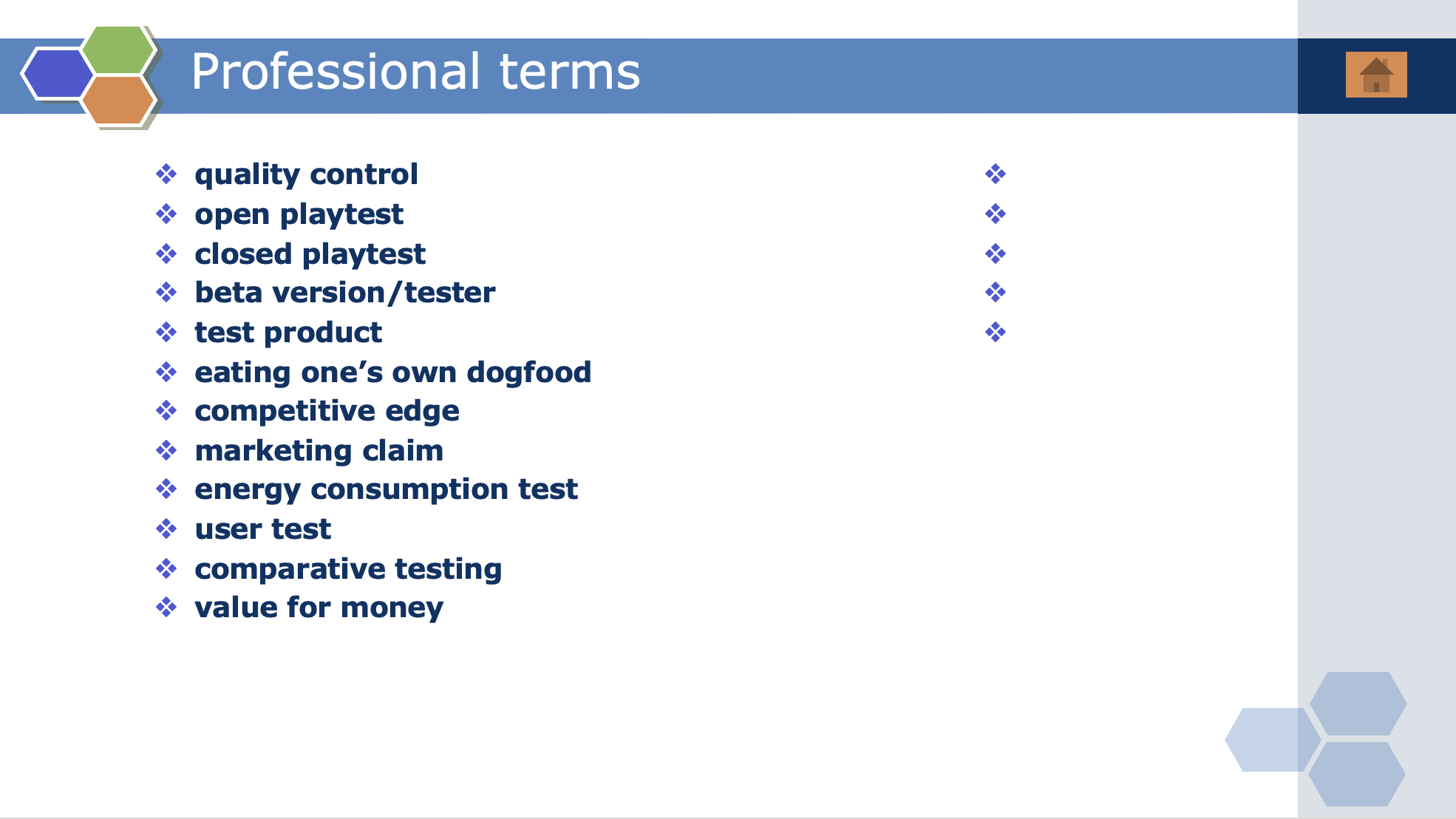
Technical Terms
Text

Teaching Slide

Supplement Exercise

Watch the video about Tips to conduct an open playtest (12 mins) and think about the following questions.

1. What are 2 major challenges a game designer would face?

2. What are the rules to test? Offer some necessary details.

3. Who should be tested with, the designer themselves, hardcore players or people who like game but don’t devote themselves in it? Explain why?

2. watch the video clip to learn about how the material ---vibram(used on the bottom of the shoe)has been tested.