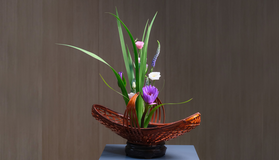
中国插花的韵味与意境之美
中国插花艺术,宛如一颗璀璨的明珠,在历史的长河中熠熠生辉,其源远流长的发展历程承载着丰富的文化内涵,而中国特色植物在插花中的运用更是赋予了这门艺术独特的魅力,寓意深远且丰富多样。
一、中国插花历史源远流长
中国插花艺术的历史可追溯至上古时期,最初源于人们对自然的敬畏与崇拜,人们将鲜花采摘下来用于祭祀活动,以表达对神灵和祖先的敬意。这便是中国插花艺术的雏形,虽然此时的插花形式较为简单朴素,但却蕴含着人类与自然最初的情感连接。
随着时间的推移,到了春秋战国时期,插花艺术逐渐从祭祀仪式中脱离出来,开始进入人们的日常生活。在这个文化繁荣的时代,文人雅士们对花卉产生了浓厚的兴趣,他们将插花作为一种装饰艺术,用于美化居住环境和陶冶情操。此时的插花风格更加注重自然之美,追求花卉的原汁原味,体现了一种简约而高雅的审美情趣。
秦汉时期,国家的统一和经济的繁荣为插花艺术的发展提供了更为有利的条件。宫廷中开始盛行插花,其形式和规模都有了较大的提升。不仅花卉的种类更加丰富多样,而且插花的器具也变得更加精美华丽。同时,插花艺术开始受到外来文化的影响,融入了一些西域和中亚地区的元素,使其风格更加多元化。
到了唐宋时期,中国插花艺术达到了鼎盛阶段。这一时期,社会文化高度发达,诗词、绘画、书法等艺术形式与插花艺术相互交融,相得益彰。文人墨客们纷纷以花为主题进行创作,留下了许多脍炙人口的诗词佳作和绘画珍品。在插花风格上,注重意境的营造,强调花材的搭配和构图的美感,追求一种 “虽由人作,宛自天开” 的艺术境界。此时还出现了许多专门的插花著作,如宋代张翊的《花经》和明代袁宏道的《瓶史》等,这些著作对插花的理论和技巧进行了系统的总结和阐述,为后世插花艺术的发展奠定了坚实的基础。
明清时期,插花艺术在民间得到了广泛的普及和发展。各种插花流派纷纷涌现,如江南的 “苏派”、“扬派”,北方的 “京派” 等,它们各具特色,在花材选择、构图形式和表现手法上都有所不同。同时,随着商品经济的发展,插花艺术也逐渐走向商业化,出现了一些专门从事插花制作和销售的店铺。这一时期的插花作品更加注重实用性和装饰性,常常用于室内装饰、宴会布置等场合。
近现代以来,虽然中国插花艺术经历了一段时期的低谷,但随着人们对传统文化的重视和回归,以及国际文化交流的日益频繁,中国插花艺术又迎来了新的发展机遇。现代的插花艺术家们在继承传统的基础上,不断创新和发展,将现代的审美观念和艺术手法融入到插花创作中,使中国插花艺术呈现出更加丰富多彩的面貌。
二、中国特色植物寓意丰富
在中国插花艺术中,植物不仅仅是一种装饰材料,更是承载着丰富文化寓意的象征符号。每种植物都因其独特的形态、习性和文化背景而被赋予了特定的含义,这些寓意深刻而美好,为插花作品增添了无尽的韵味和内涵。
例如,梅花在中国文化中象征着坚韧不拔、不屈不挠的精神品质。它在严寒的冬季独自绽放,不畏风霜雨雪,因此被人们视为高洁、坚强的象征。在插花作品中,梅花常常被用来表达一种坚韧不拔的意志和对美好未来的坚定信念。
牡丹则是富贵、繁荣的象征。其花朵硕大、色泽艳丽,形态雍容华贵,自古以来就深受人们的喜爱。在古代,牡丹常被种植在皇家园林和富贵人家的庭院中,寓意着荣华富贵、吉祥如意。在插花创作中,牡丹常作为主花材,搭配其他花卉,营造出一种富丽堂皇、繁荣昌盛的氛围。
竹子在中国文化中具有独特的地位,它象征着正直、谦逊、坚韧和高洁。竹子中空外直,节节向上,寓意着人们应该保持内心的正直和谦逊,不断进取,追求更高的精神境界。在插花作品中,竹子常常被用来作为线条材料,以其简洁流畅的线条美感为作品增添一份清新雅致的气息,同时也传递出一种积极向上的精神力量。
荷花,又称莲花,被视为纯洁、高尚的象征。它生长在淤泥之中,却能开出美丽洁白的花朵,“出淤泥而不染,濯清涟而不妖”,这种高洁的品质深受人们的赞赏。在佛教文化中,荷花更是被视为神圣的象征,代表着清净、超脱和涅槃。在插花作品中,荷花常被用于表现一种清新脱俗、宁静致远的意境。
菊花在中国文化中有着丰富的寓意,它象征着高洁、长寿和吉祥。菊花在秋季盛开,此时百花凋零,唯有菊花傲霜挺立,因此被人们赋予了坚韧不拔、不畏严寒的品质。同时,菊花的花期较长,也寓意着长寿。在古代,人们常常在重阳节赏菊、饮菊花酒,以祈求健康长寿。在插花创作中,菊花可以根据不同的品种和颜色,搭配出各种不同的风格,既可以表现出清新淡雅的气质,也可以展现出热烈奔放的情感。
除了以上几种常见的植物外,中国还有许多特色植物在插花中具有独特的寓意和价值。如松树象征着长寿、坚强和不屈不挠的精神;兰花象征着高雅、纯洁和谦逊;桃花象征着爱情、美好和幸福;桂花象征着吉祥、美好和团圆等等。这些植物的寓意丰富了插花作品的文化内涵,使人们在欣赏插花艺术的同时,也能感受到中国传统文化的博大精深。
中国插花艺术以其源远流长的历史和丰富多样的文化内涵,成为了中国传统文化宝库中的一颗璀璨明珠。它不仅是一种美的艺术形式,更是一种传递情感、表达思想和弘扬文化的重要载体。通过对中国插花历史的了解和对中国特色植物寓意的认识,我们能够更好地欣赏和理解这门古老而又充满活力的艺术,从中汲取丰富的精神营养,让中国插花艺术在现代社会中绽放出更加绚丽的光彩。
The Charm and Artistic Conception Beauty of Chinese Flower Arrangement Chinese flower arrangement art, just like a brilliant pearl, shines brightly in the long river of history. Its long and profound development process carries rich cultural connotations, and the use of plants with Chinese characteristics in flower arrangement endows this art with unique charm, profound and diverse implications. I. Chinese Flower Arrangement Has a Long History The history of Chinese flower arrangement art can be traced back to ancient times. It originally stemmed from people's awe and worship of nature. People picked fresh flowers for sacrificial activities to express their respect for gods and ancestors. This was the embryonic form of Chinese flower arrangement art. Although the flower arrangement forms at that time were relatively simple and plain, they contained the initial emotional connection between humans and nature. With the passage of time, during the Spring and Autumn Period and the Warring States Period, flower arrangement art gradually separated from sacrificial rituals and began to enter people's daily lives. In this era of cultural prosperity, literati and refined scholars developed a strong interest in flowers. They regarded flower arrangement as a decorative art to beautify the living environment and cultivate their sentiment. The flower arrangement style at this time paid more attention to the beauty of nature, pursued the original flavor of flowers, and reflected a simple and elegant aesthetic taste. During the Qin and Han Dynasties, the unification of the country and the prosperity of the economy provided more favorable conditions for the development of flower arrangement art. Flower arrangement became prevalent in the imperial court, and its forms and scales were greatly improved. Not only were there more diverse types of flowers, but the flower arrangement utensils also became more exquisite and gorgeous. Meanwhile, flower arrangement art began to be influenced by foreign cultures and incorporated some elements from the Western Regions and Central Asia, making its style more diversified. In the Tang and Song Dynasties, Chinese flower arrangement art reached its peak. During this period, social culture was highly developed, and art forms such as poetry, painting, and calligraphy interacted and complemented each other with flower arrangement art. Literati and poets created works with flowers as the theme one after another, leaving behind many well-known excellent poems and precious painting treasures. In terms of flower arrangement style, emphasis was placed on creating artistic conception, stressing the combination of flower materials and the beauty of composition, and pursuing an artistic realm of "though made by man, it seems as if created by nature". Many specialized flower arrangement works also emerged at this time, such as "The Classic of Flowers" by Zhang Yi in the Song Dynasty and "The History of Vases" by Yuan Hongdao in the Ming Dynasty. These works systematically summarized and elaborated on the theories and techniques of flower arrangement, laying a solid foundation for the development of flower arrangement art in later generations. During the Ming and Qing Dynasties, flower arrangement art was widely popularized and developed among the people. Various flower arrangement schools emerged one after another, such as the "Su School" and "Yang School" in the Jiangnan region, and the "Beijing School" in the north. They each had their own characteristics and differed in flower material selection, composition forms, and expression techniques. Meanwhile, with the development of the commodity economy, flower arrangement art gradually became commercialized, and some shops specializing in flower arrangement production and sales appeared. The flower arrangement works in this period paid more attention to practicality and decorativeness and were often used in occasions such as interior decoration and banquet arrangements. Since modern times, although Chinese flower arrangement art has experienced a trough for a period of time, with people's increasing attention to and return to traditional culture, as well as the increasingly frequent international cultural exchanges, Chinese flower arrangement art has ushered in new development opportunities. Modern flower arrangement artists, on the basis of inheriting traditions, have continuously innovated and developed, integrating modern aesthetic concepts and artistic techniques into flower arrangement creations, making Chinese flower arrangement art present a more colorful appearance. II. Plants with Chinese Characteristics Have Rich Implications In Chinese flower arrangement art, plants are not only decorative materials but also symbolic symbols carrying rich cultural implications. Each plant is endowed with specific meanings due to its unique form, habits, and cultural background. These implications are profound and beautiful, adding endless charm and connotations to flower arrangement works. For example, the plum blossom symbolizes the spiritual qualities of perseverance and indomitability in Chinese culture. It blooms alone in the cold winter, not fearing wind, frost, rain, or snow, so it is regarded as a symbol of nobility and strength. In flower arrangement works, the plum blossom is often used to express a firm will of perseverance and a firm belief in a bright future. The peony is a symbol of wealth and prosperity. Its flowers are large, brightly colored, and graceful in appearance. It has been deeply loved by people since ancient times. In ancient times, peonies were often planted in imperial gardens and the courtyards of wealthy families, symbolizing honor, wealth, good fortune, and everything going well. In flower arrangement creations, the peony is often used as the main flower material, paired with other flowers to create a magnificent and prosperous atmosphere. Bamboo has a unique position in Chinese culture. It symbolizes integrity, modesty, perseverance, and nobility. Bamboo is hollow on the inside and straight on the outside, with joints growing upward, implying that people should maintain inner integrity and modesty and keep forging ahead in pursuit of a higher spiritual realm. In flower arrangement works, bamboo is often used as a linear material. With its simple and smooth linear beauty, it adds a fresh and elegant touch to the works and also conveys a positive and upward spiritual force. The lotus, also known as the water lily, is regarded as a symbol of purity and nobility. It grows in the mud but can bloom beautiful and white flowers. "It emerges unstained from the mud and remains clean and pure despite being washed by the clear water." This noble quality is deeply appreciated by people. In Buddhist culture, the lotus is regarded as a sacred symbol, representing purity, detachment, and nirvana. In flower arrangement works, the lotus is often used to express a fresh and refined artistic conception of tranquility and reaching for the distance. The chrysanthemum has rich implications in Chinese culture. It symbolizes nobility, longevity, and good fortune. The chrysanthemum blooms in autumn when all other flowers wither. Only the chrysanthemum stands firm against the frost, so people endow it with the quality of perseverance and fearlessness of the cold. Meanwhile, the chrysanthemum has a relatively long flowering period, which also implies longevity. In ancient times, people often enjoyed chrysanthemums and drank chrysanthemum wine on the Double Ninth Festival to pray for good health and longevity. In flower arrangement creations, chrysanthemums can be combined in various styles according to different varieties and colors, which can show both a fresh and elegant temperament and a passionate and unrestrained emotion. Besides the above common plants, there are many other characteristic plants in China that have unique implications and values in flower arrangement. For example, the pine symbolizes longevity, strength, and indomitability; the orchid symbolizes elegance, purity, and modesty; the peach blossom symbolizes love, beauty, and happiness; the osmanthus symbolizes good fortune, beauty, and reunion, etc. The implications of these plants enrich the cultural connotations of flower arrangement works, enabling people to feel the profoundness and extensiveness of Chinese traditional culture while appreciating flower arrangement art. Chinese flower arrangement art, with its long history and rich and diverse cultural connotations, has become a brilliant pearl in the treasure house of Chinese traditional culture. It is not only an art form of beauty but also an important carrier for conveying emotions, expressing thoughts, and promoting culture. Through understanding the history of Chinese flower arrangement and recognizing the implications of plants with Chinese characteristics, we can better appreciate and understand this ancient yet vibrant art, draw rich spiritual nourishment from it, and let Chinese flower arrangement art shine more brightly in modern society.

