
目录

  • 1 Introduction to Basics 绪论
    • 1.1 Engineering Economics Decisions 基本概念
    • 1.2 Course Framework 课程内容
  • 2 Cost & Revenue 成本与收益
    • 2.1 Cost Concepts 成本的概念
    • 2.2 Life Cycle Cost 全生命期成本
      • 2.2.1 Capital Investment 建设总投资
      • 2.2.2 Total Cost & Expense 全成本费用
      • 2.2.3 Asset Depreciation & Amortization 资产折旧与摊销
    • 2.3 Revenue & Profit & Tax 收益、利润与税金
  • 3 Time Value of Money 资金的时间价值
    • 3.1 Basic Concepts 资金时间价值的概念
    • 3.2 Interest Rate 利率
    • 3.3 Project Cash Flow 项目现金流量
    • 3.4 Economic Equivalence and Calculation 资金等值计算
  • 4 Economic Appraisal Indexes 方案经济评价指标
    • 4.1 NPW/NFW/AEW 净现值类指标
    • 4.2 Rate of Return 收益率指标
    • 4.3 Payback Period 投资回收期
    • 4.4 Investment Types 投资类型
  • 5 Economic Appraisal of Multiple Alternatives 多方案经济比选
    • 5.1 Multiple Alternatives 方案的关系类型
    • 5.2 Comparison of MEA 互斥方案的比选
    • 5.3 Capital Budgeting 资本预算方法
  • 6 Financial Evaluation of Projects 项目财务评价
    • 6.1 Introduction 财务评价的主要内容
    • 6.2 Financial Statement 财务报表及其编制
    • 6.3 Financial Evaluation before Financing 融资前财务评价
    • 6.4 Financial Analysis after Financing 融资后财务评价
  • 7 National Economic Evaluation项目国民经济评价
    • 7.1 Benefit-Cost Ratio Analysis费用效益分析
    • 7.2 Economic Benefits & Economic Costs经济效益和经济费用
    • 7.3 National Economic Evaluation Method国民经济评价方法
  • 8 Risk and Uncertainty Analysis项目不确定性与风险评价
    • 8.1 Risk and Uncertainty不确定性与风险的概念
    • 8.2 Breakeven Analysis 盈亏平衡分析
    • 8.3 Sensitivity Analysis 敏感性分析
    • 8.4 Probabilistic Analysis 概率分析
    • 8.5 Decision Tree 决策树方法
  • 9 Asset Replacement 设备更新分析
    • 9.1 Economic Life 设备经济寿命
    • 9.2 Equipment Selection Decision 设备的选型比较
    • 9.3 Real Time Replacement Decision 即时更新决策
    • 9.4 Deferred Time Replacement Decision 延时更新决策
    • 9.5 After-tax Replacement Analysis 税后更新分析
Revenue & Profit & Tax 收益、利润与税金

Operating Revenue (营业收入)

Revenue (based on sales) from the core business

Revenue = Sales Volume × Price of Goods/Services

Price of Goods/Services: A balance of supply and demand, which may fluctuate to respond short term and long-term changes in supply and demand.

Sales Volume: The amount of units that are sold of a product or service, which needs to be estimated in terms of the market volume.

Revenue from the other business (other income) 

Lease of property or equipment

Gain on disposal and release of working capital


Net Revenue (Gross Profit, 净收入)

The Cost of Goods Sold (COGS), i.e., manufacture cost, is decreased first from operating revenue.

The Operating Expense (Sales, General and Administrative, SG&A), secondly, is decreased from contribution margin.


Tax
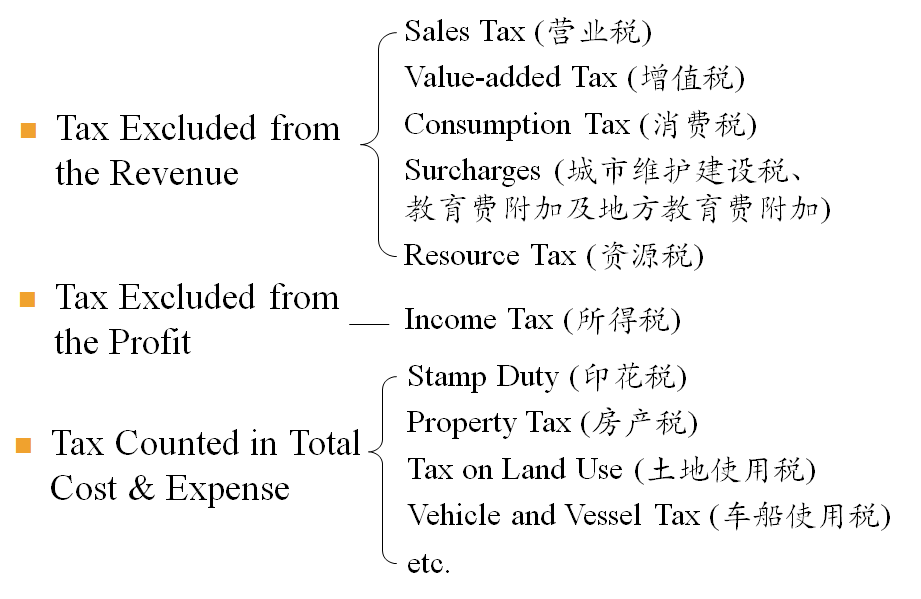
Income Tax (所得税)

Tax levied on taxable income, which is a function of operating revenues minus all allowable deductions. 

Taxable Income: Net Revenue


In the actual commercial rule, the income tax will be zero and the loss (negative net revenue) can be used to offset the revenue in 5 years.

In the economic analysis, the income tax will be negative, that is, it is treated as an income of the firm.

Income Tax Rate

Marginal Tax Rate

The rate applied to the last dollar of income earned.

It usually is a ladder increase with the increase of taxable income.

Effective (Average) Tax Rate

The average rate paid for total income.


Gain or Loss on Disposal

The gain (loss) on sale is the fair market value minus its book value at the time point of disposal.

Gains tax: Tax on gains


Net Profit (Profit after Tax, 税后净利润) 

Net Profit = Gross Profit (Net Revenue) – Income Tax