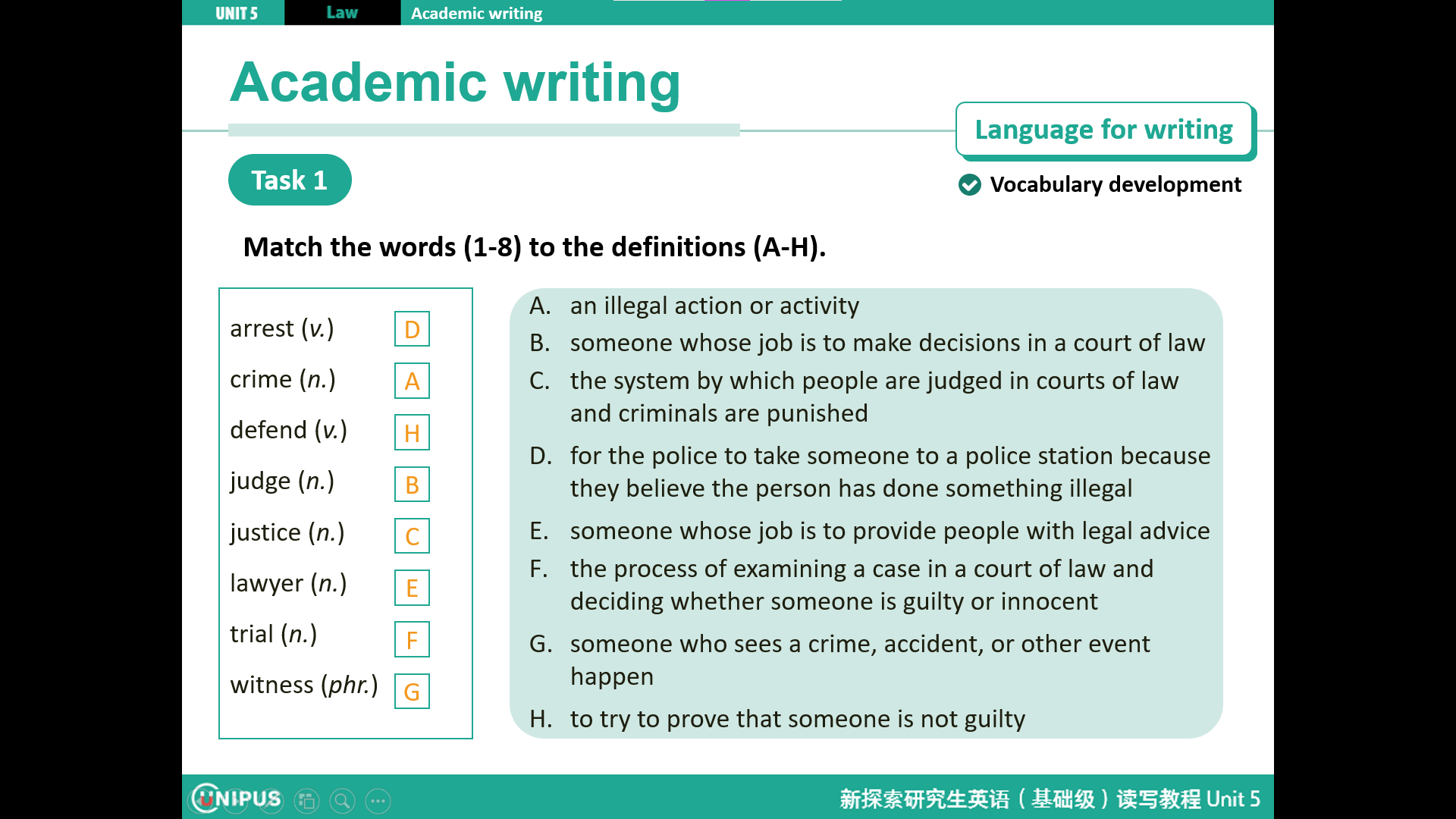
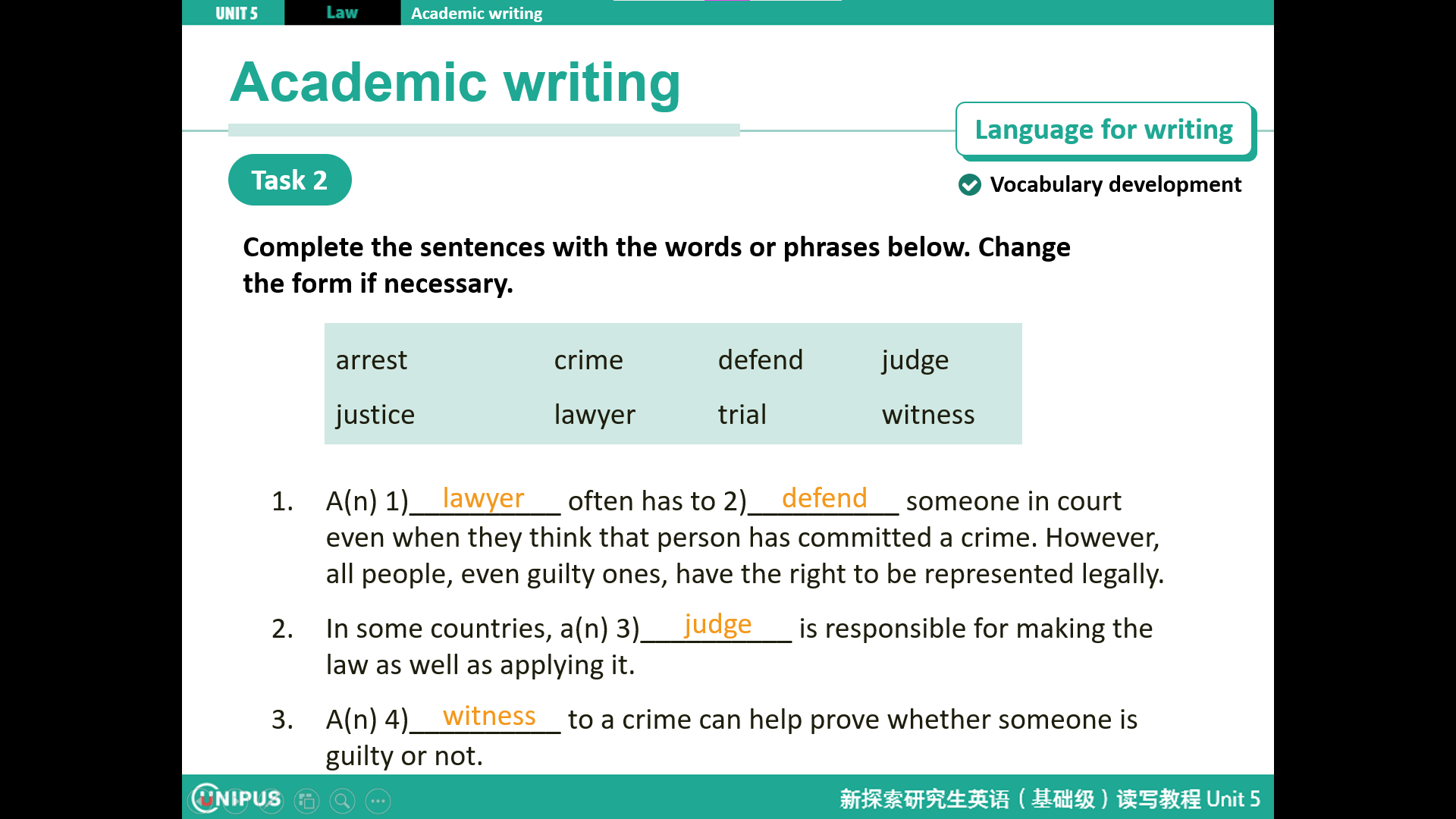
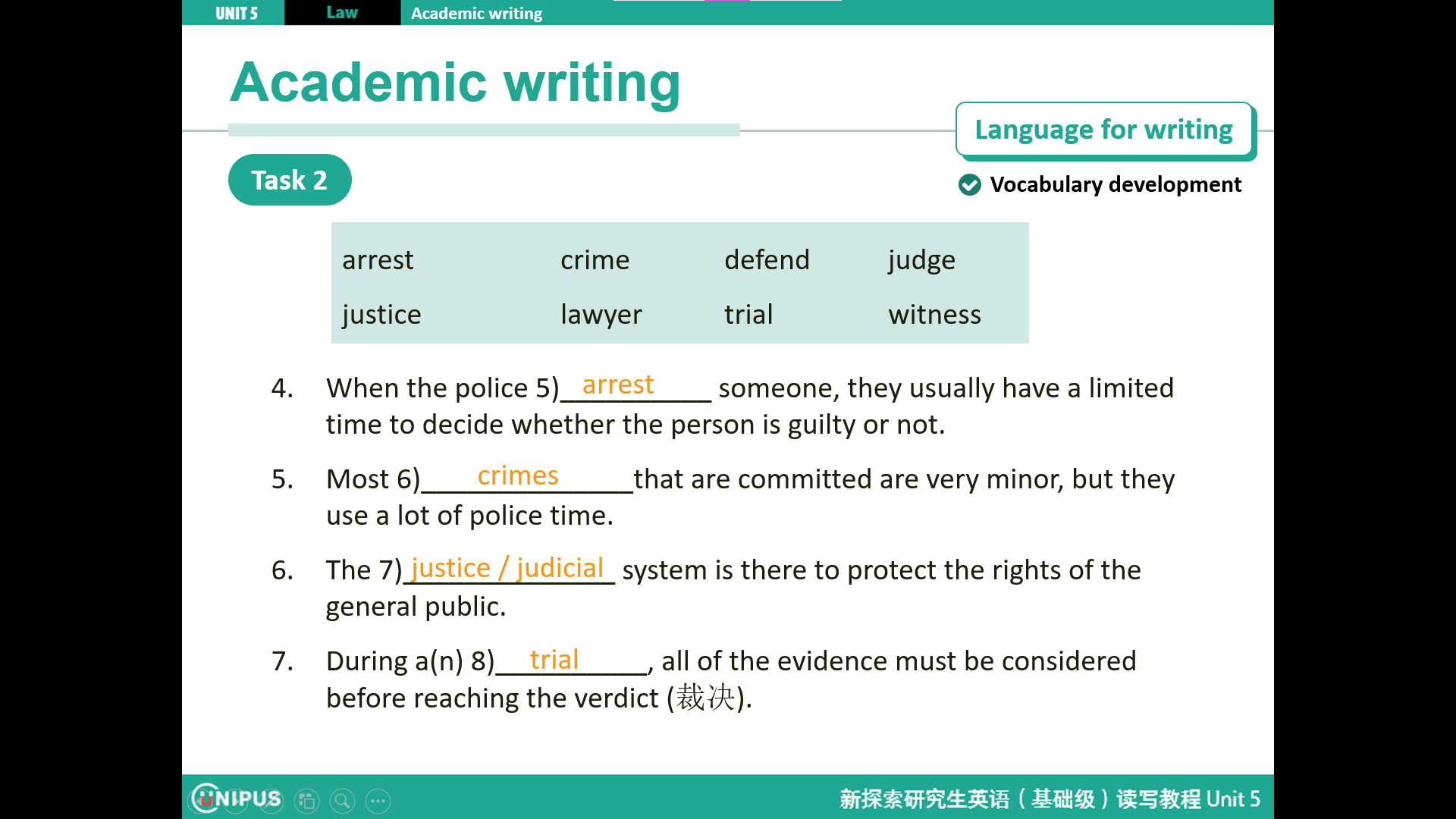
Specialized vocabulary: legal terms
Every field of study has its own language. Specialized vocabulary refers to the words and phrases used regularly in a given subject area. For example, in the student model essay, the writer uses the following legal terms: crime, judge, lawyer, defend, law, illegal.
To comprehend writings or talks on a specific subject, you must have a good command of the special terms relating to that subject.
In the workplace, unethical behaviors can be classified into different levels of severity.
Less serious unethical behaviors include:
• Office Supplies Pilfering: Employees taking home pens, notepads, or other small office supplies for personal use. For example, an employee might regularly take printer paper to use at home for personal printing needs. This behavior may seem minor, but it accumulates and can increase company costs over time.
• Excessive Personal Use of Company Resources: Such as spending excessive work hours on personal phone calls, using the company's internet for non-work-related shopping or streaming, or making personal long-distance calls on the company phone. For instance, an employee who spends hours each week on personal social media during work hours, reducing their productivity and wasting company bandwidth.
• Taking Credit for Others' Work: When a team member presents an idea or the results of a project as their own, without acknowledging the contributions of their colleagues. In a marketing team, one person might claim sole credit for a successful campaign that was actually the result of the efforts of several team members.
More serious unethical behaviors that can cause significant harm to the company and society are:
• Bribery and Corruption: This could involve a salesperson offering bribes to clients or government officials to secure business deals. For example, in the construction industry, a company representative might offer bribes to local government officials to obtain building permits or win contracts, which not only gives an unfair advantage but also undermines the integrity of the bidding process and can lead to substandard or illegal construction.
• Embezzlement: When an employee, usually in a position of financial responsibility, misappropriates company funds for personal gain. A company accountant might siphon off small amounts of money over time into a personal account, thinking it won't be noticed. But as the amounts accumulate, it can cause serious financial distress to the company, potentially leading to layoffs or even bankruptcy if the losses are significant enough.
• Data Theft and Breach of Confidentiality: If an employee steals sensitive company data, such as customer information or trade secrets, and sells it to competitors. In the technology sector, an employee with access to a company's new product designs might leak them to a rival firm, which can lead to lost market share, damage to the company's reputation for innovation, and potential legal battles.
Read the following response to the writing prompt, and discuss the pros and cons.
In today's workplaces, the issue of unethical behavior among colleagues is not uncommon. Some may think it's wiser to keep quiet to protect their job and stay out of trouble. But actually, it's really important to speak up or even report such behavior.
Keeping silent lets unethical things grow and spread, which will create a bad work environment. It breaks the trust among team members and can do great harm to the company's fame and profit. For example, if people know a company allows unethical behavior, customers will leave, and the brand will get a bad name. Also, staying silent might make an employee an unwitting helper, especially if the behavior is against the law.
If no one had bothered to deal with the unethical behavior before, the company could have gotten into more serious problems, with its reputation badly damaged and its business in a really tough spot.
Though speaking out has risks, like the possibility of being picked on by others, many companies now have measures to protect those who report problems. Workers should first talk to the colleague in a private and friendly way. If that doesn't work, it's necessary to bring the matter to a supervisor or the right person in the company. Keeping records of the unethical behavior and what has been done to solve it is very important for protection.
In short, dealing with unethical behavior is hard but necessary. The well-being of the organization and our sense of right and wrong ask us to break the silence and do something about the bad behavior at work.