Objectives:
understand the difference and connection between ethics and law;
expand the vocabulary related to morality and law;
practice reading skills: scanning and summarizing
Task 1 Read the new words and expressions in the video, pause and take notes if necessary.
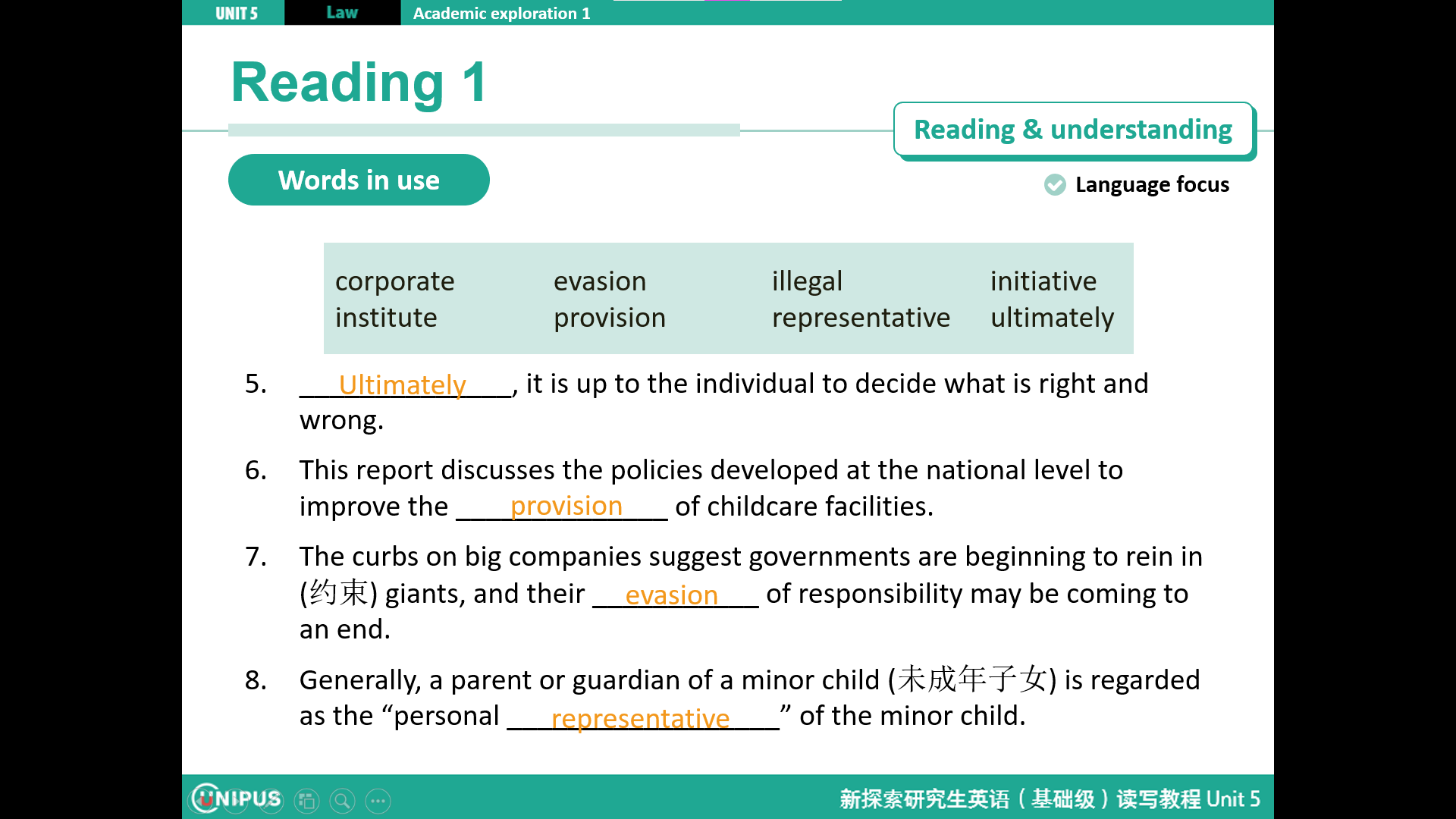
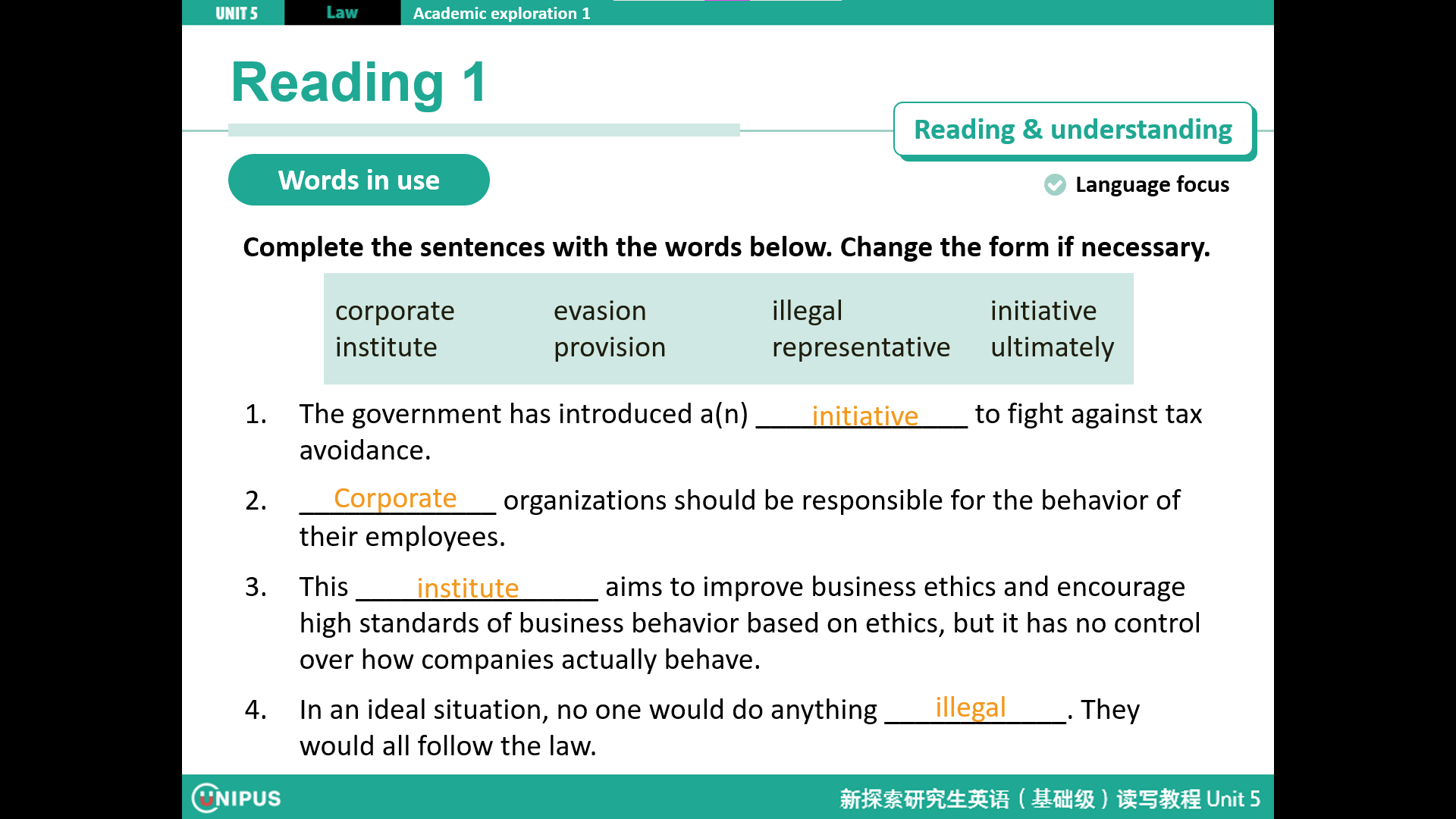
Task 2 Words in use: translate the sentences into Chinese.
Task 3 Translate the phrases generated from the text into English.
legal institutes 2. written rules and regulations 3. keep the social order 4. maintain peace and justice 5. enforce a punishment 6. ethical principes 7. ethical codes 8. break the law 9. legal obligations
Text 1 It's legal, but is it ethical?
Task 1 listen and read the text aloud following the recording. You may pause the video and check its translation if necessary.
Task 2 Analysis of the text
Text structure
Part 1 An introduction to the topic: the difference between law and ethics
Part 2 The definition of law and ethics and the key differences between the two
Part 3 A conclusion: law and ethics are different; the fine line between the two can transcend if necessary.
Language points
1) There have been many scandals involving companies paying what is believed to be an unfair amount of tax. (Para. 5)
There have been many examples, where corporate organizations earning billions of dollars have actually paid very little tax. (Para. 5)
There be句型,第一句用 involving sth.的动名词结构作定语,修饰many scandals;第二句用where引导的定语从句,具体解释说明了主句中的many examples。本段中作者多次使用了there be句型,这是学术英语写作中一个语体特征。
2) If they had paid all their taxes, more services could have been provided for the wider society. (Para. 6)
此句为假设过去情况的虚拟条件句(unreal conditionals in the past),谓语动词体现了虚拟语气,即if条件从句中的谓语动词使用了过去完成时had done,主句谓语动词使用了could have been,用来对过去情况作假设,表示与过去事实相反的条件和结果。
3.translation
3.Reading Skill:Scanning a text