英语课程与教学论-2024秋

鲍秀梅,曾必好,叶潇潇

目录

  • 1 Course introduction
    • 1.1 Course introduction
    • 1.2 Your expectation
    • 1.3 Getting started
  • 2 Unit 1 language and language learning
    • 2.1 Course PPT
    • 2.2 Views of language
    • 2.3 Behaviorist theory- video checking
    • 2.4 Constructivist theory and socio-contructivist theory
    • 2.5 Audiolingual method and cognitive method
    • 2.6 Summary of Unit 1
    • 2.7 单元测验
  • 3 Unit 2 Communicative Teaching Approaches and Methods
    • 3.1 For preview and review: course PPT
    • 3.2 Autonomous study: development of language teaching methods
    • 3.3 Development of language teaching methods
    • 3.4 Communicative competence
    • 3.5 For autonomous study: principles of CLT and the teaching of language skills
    • 3.6 Communicative activities
    • 3.7 Task, exercise, exercise-task
    • 3.8 For review and consolidation: PPP and TBL
    • 3.9 Extra reading: about TBLT
    • 3.10 Summary of Unit 2
    • 3.11 单元测验
  • 4 Unit 3 The national English Curriculum
    • 4.1 For preview and review: Course PPT
    • 4.2 For autonomous study: 核心素养
    • 4.3 Extra reading: 新老课程标准对比解读
    • 4.4 Summary of Unit 3
    • 4.5 单元测验
  • 5 Unit 4 Lesson plan
    • 5.1 For review: course PPT
    • 5.2 For autonomous study: lesson plan
    • 5.3 For consolidation: sample lesson plans
    • 5.4 Sample mini lesson and lesson design
    • 5.5 Summary of Unit 4
    • 5.6 单元测验
  • 6 Unit 5 Classroom management
    • 6.1 course PPT
    • 6.2 autonomous learning
    • 6.3 Students' presentation--- how to deal with errors
    • 6.4 Summary of Unit 5
    • 6.5 单元测验
  • 7 Unit 6 Teaching pronunciation
    • 7.1 course PPT
    • 7.2 Principles for teaching pronunciation
    • 7.3 Design tasks for teaching pronunciation
    • 7.4 Summary of Unit 6
    • 7.5 单元测验
  • 8 Unit 7 Teaching grammar
    • 8.1 course PPT
    • 8.2 Grammar presentation method
    • 8.3 Grammar practice
    • 8.4 Students' presentation-grammar mini lesson
    • 8.5 Summary of Unit 7
    • 8.6 单元测验
  • 9 Unit 8 Teaching vocabulary
    • 9.1 course PPT
    • 9.2 Teaching procedure of a vocabulary lesson
    • 9.3 Students' presentation of teaching vocabulary
    • 9.4 Summary of Unit 8
    • 9.5 单元测验
  • 10 Unit 9 Teaching listening
    • 10.1 course PPT
    • 10.2 Pre-learning: Introduction to listening
    • 10.3 Pre-learning: What do we listen to in everyday life?
    • 10.4 Pre-learning: Characteristics of the listening process
    • 10.5 Teaching procedures
    • 10.6 Summary of Unit 9
    • 10.7 单元测验
  • 11 Unit 10 Teaching speakIng
    • 11.1 course PPT
    • 11.2 characteristics of spoken language
    • 11.3 features of successful speaking activities
    • 11.4 Type of speaking activities
    • 11.5 课后讨论
    • 11.6 Summary of Unit 10
    • 11.7 单元测验
  • 12 Unit 11 Teaching reading
    • 12.1 course PPT
    • 12.2 Three models
    • 12.3 pre-reading activities
    • 12.4 while-reading and post-reading
    • 12.5 课后讨论
    • 12.6 Summary of Unit 11
    • 12.7 单元测验
  • 13 问卷调查
For autonomous study: principles of CLT and the teaching of language skills

Dear students, for Section 2.2.4 and Section 2.2.5 of your textbook, please study them with the aid of the recorded lectures.  This part is for your autonomous study. Your learning will be calculated as part of final score.

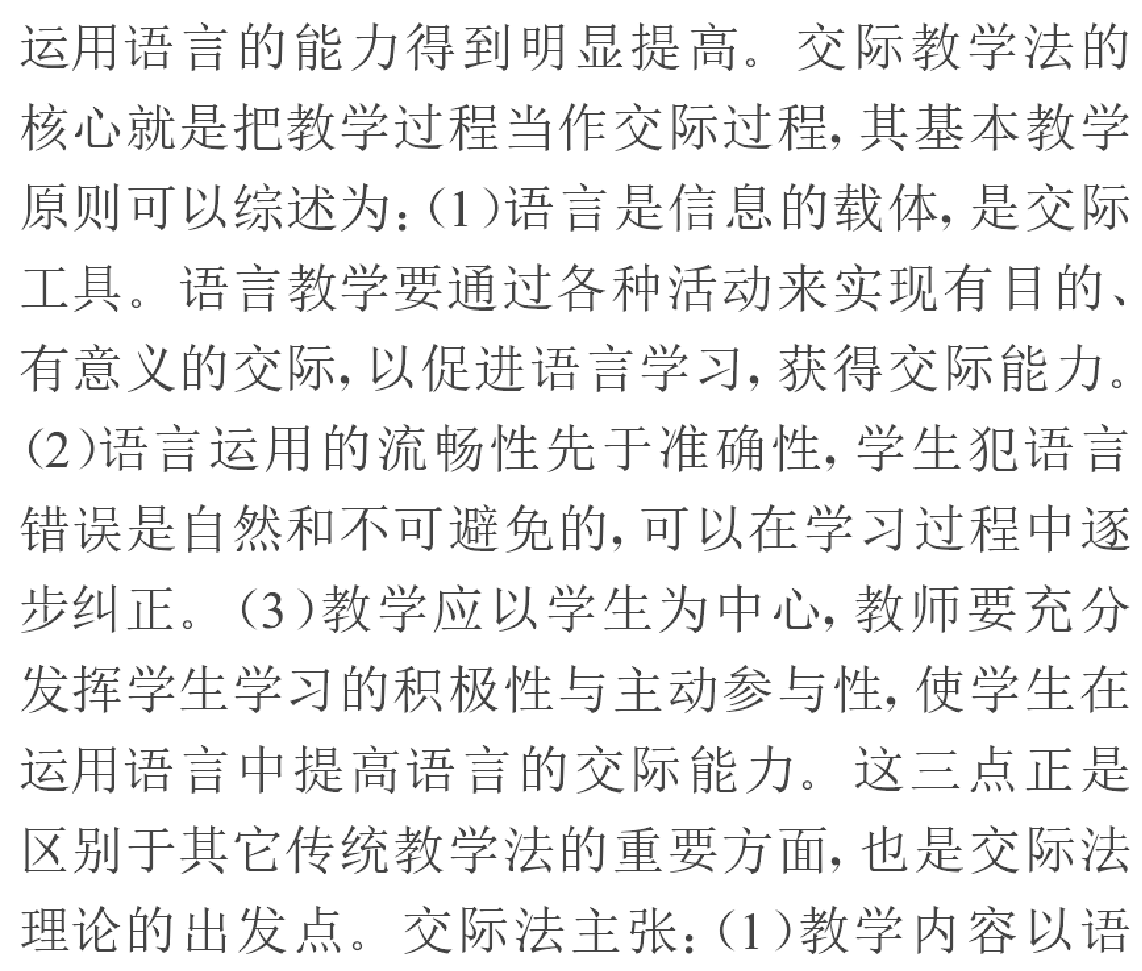
1. Section 2.4 Principles of Communicative  Language Teaching

  • Communication principle

Design activities that involve real communication

  • Task principle

Design activities in which language is used for carrying out meaningful tasks

  • Meaningfulness principle

Input language that is meaningful to the learner
2. Section 2.5 CLT and the teaching of language skills
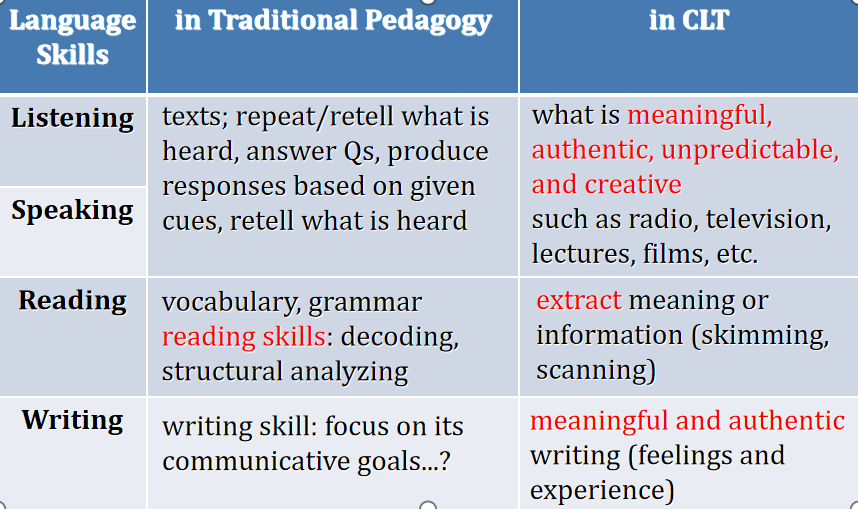

  • CLT has not replaced the previous approaches or methodologies. It has only expanded the areas: language content, learning process, and product.

  • CLT requires a higher level of communicative competence on the part of the teacher. Teachers have to develop a wider range of skills beyond the presentation and explanation of grammatical structures.

  • In a communicative classroom, a great deal of time is spent on managing learning, setting up activities, organizing resources, guiding students in pair/group work.


This is the recorded lecture:


3. Please finish the exercise after learning this section: