
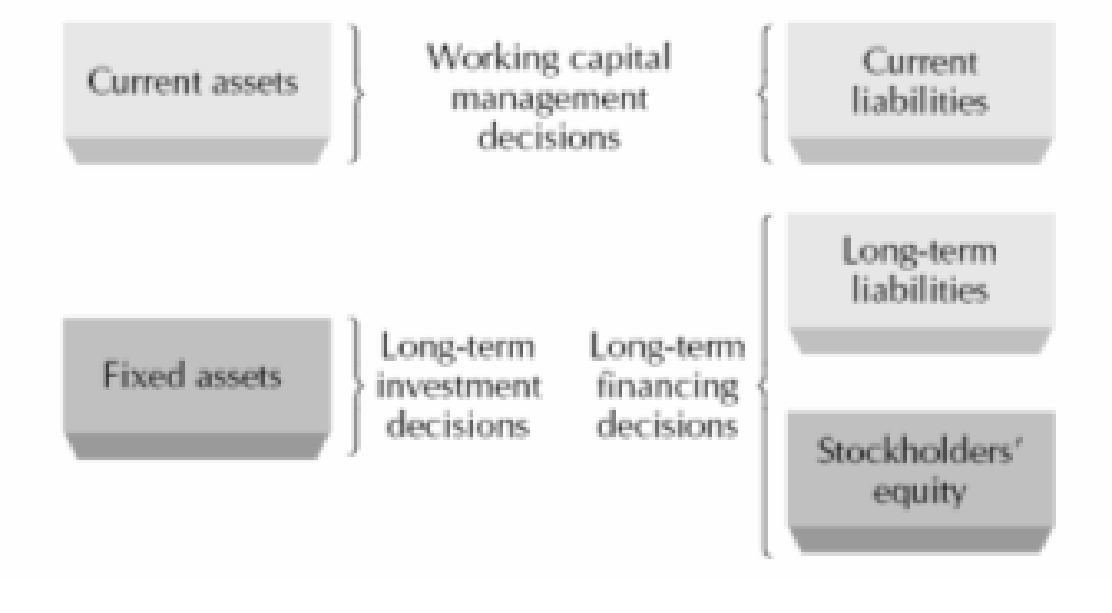
1.2 Financial Management Decision
Three major types of financial decisions:
Long-term investment decisions
Long-term financing decisions
Working Capital Management Decisions
1.2.1 Long-term investment decisions
-Involving buying, holding, reducing, replacing, selling, and managing assets
-Investment principle: return should be greater than the hurdle rate
-What is hurdle rate?
1.2.2 Long-term financing decisions
-Involve the acquisition of funds needed to support long-term investment----capital structure;
-Obtain the needed funds either internally or externally;
-Internally generated funds: retained earnings, dividend policy;
-Externally raised funds: incurring debts, offering stocks;
-Financial mix should maximize the value of the investments and match the financing to the assets being financed.
1.2.3 Working Capital Management Decisions
-Decisions involves a firm’s short- term assets and liabilities.
-How much of a firm’s total assets should the firm hold in each type of current asset such as cash, marketable securities, and inventory?
-How much credit should the firm grant to customers?
-How should the firm obtain needed short-term financing?
Financial management decisions
1.3 Risk–Return Tradeoff
Risk aversion: investors should expect a higher return for taking on higher levels of risk

