-
1 Article
-
2 Words and&nb...
-
3 Notes on&nbs...



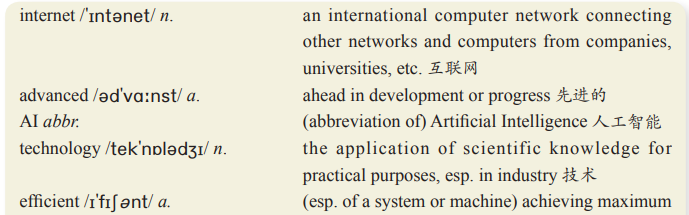
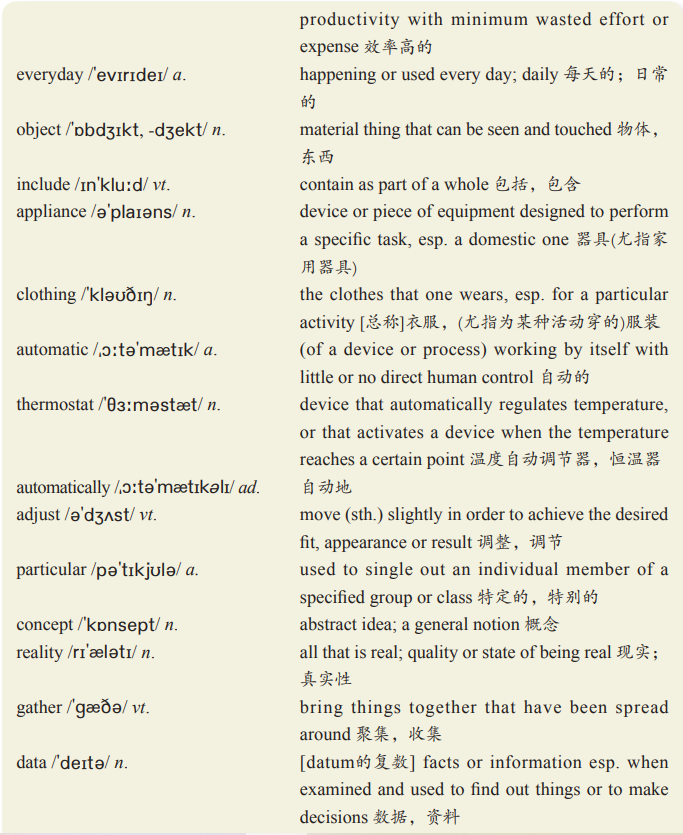
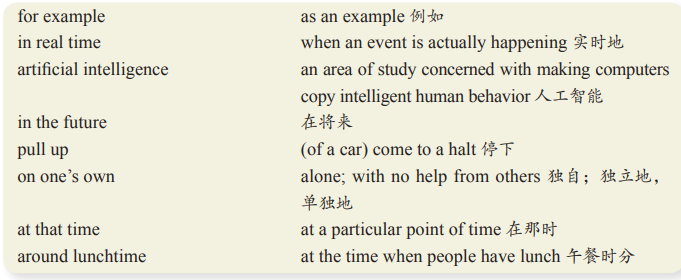
1 Once advanced AI technology gets fast enough and efficient enough, people could start to see everyday objects get smarter, including kitchen appliances, cars, and even clothing. The automatic thermostat on the wall, for example, automatically adjusts a home’s temperature after learning when the people in the particular home want it warm or cool.
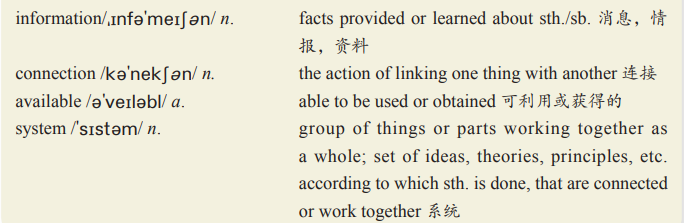
2 The concept of an Internet of Things has been around for years, and it is just starting to become reality. It is the idea that the objects people own and use every day will gather data and then share that information through connections to the cloud or to other objects. The more information gets shared, the more data will be available to AI systems, and the smarter they will get.

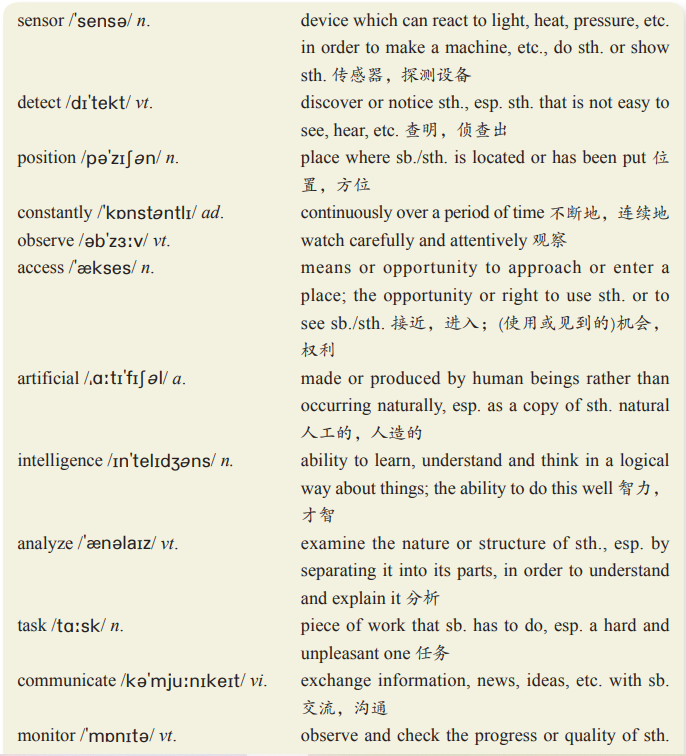
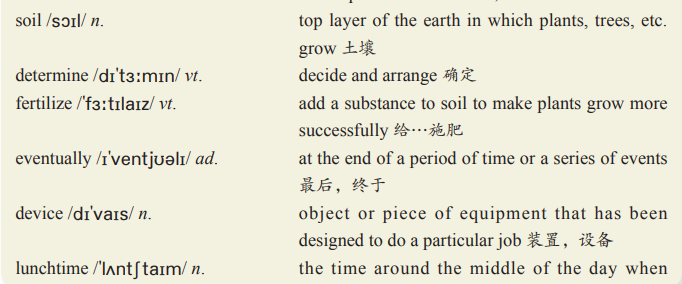
3 Cheaper sensor technology makes the Internet of Things possible. Sensors that detect temperature, position, and people’s faces will be able to constantly observe the world. This will give people access to much more data than ever before, in real time. Artificial intelligence systems will analyze this data and use it to accomplish tasks, learn, and communicate with people. For example, sensors in a farmer’s field could monitor the soil and weather, giving an AI system the data it needs to determine the best time to water or fertilize the crops. Eventually, all devices could learn to know what people need and want before they even ask.
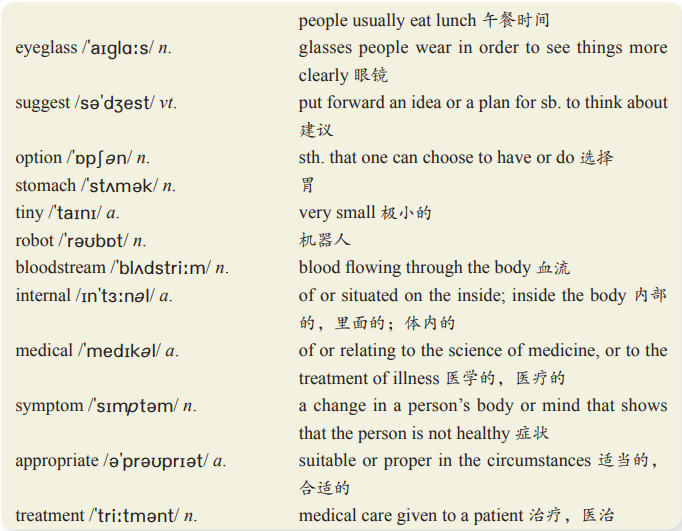
4 In the future, children may get ready to leave for school and have a car pull up to their home automatically. The car arrives on its own because it knows the children always leave at that time. Around lunchtime, before the children are even hungry, a device in their eyeglasses may suggest a few meal options and then automatically place an order for them. Later, a child may start to feel sick to her stomach. Tiny robots in her bloodstream may send information about her internal systems to a medical AI. The AI would then analyze the child’s symptoms and determine an appropriate treatment.
(333 words)