-
1 Faulkner 介绍
-
2 Yoknapatawpha&nbs...
-
3 The Sound&nb...
William Faulkner
Biographical
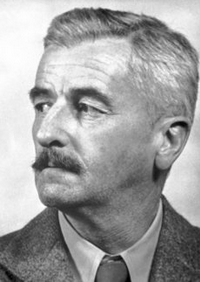
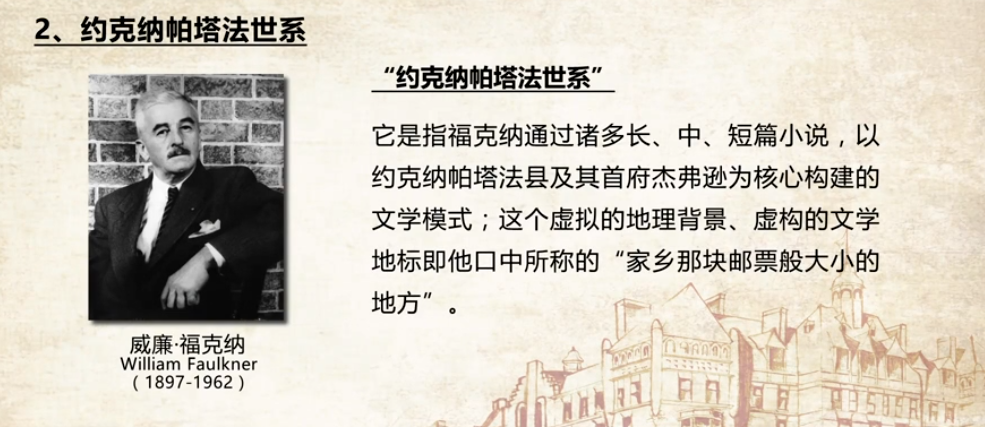
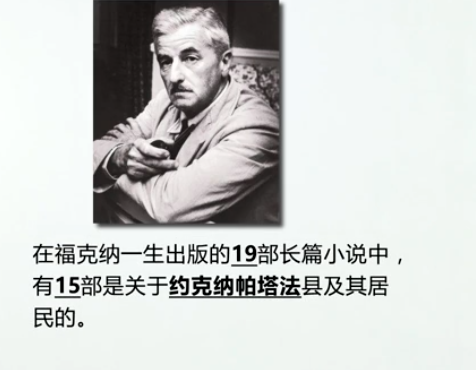
William Faulkner (1897-1962), who came from an old southern family, grew up in Oxford, Mississippi. He joined the Canadian, and later the British, Royal Air Force during the First World War, studied for a while at the University of Mississippi, and temporarily worked for a New York bookstore and a New Orleans newspaper. Except for some trips to Europe and Asia, and a few brief stays in Hollywood as a scriptwriter, he worked on his novels and short stories on a farm in Oxford.
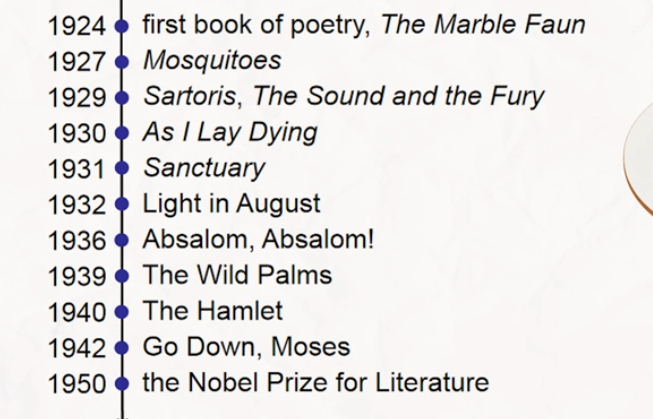
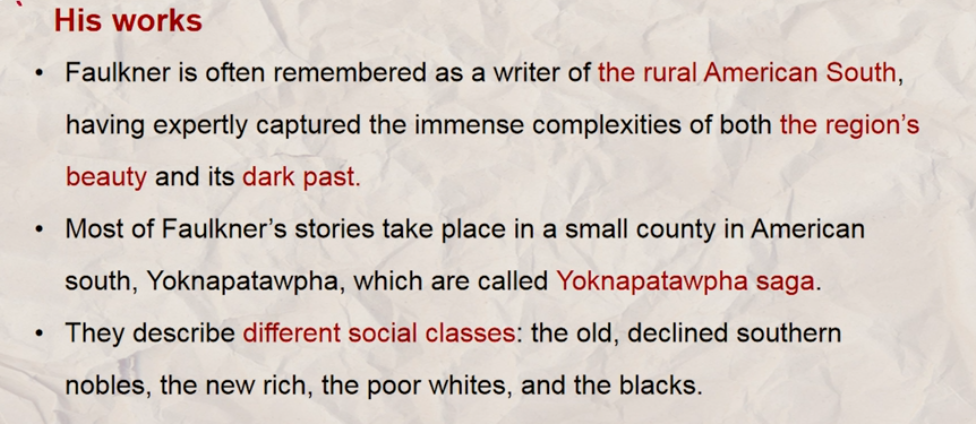
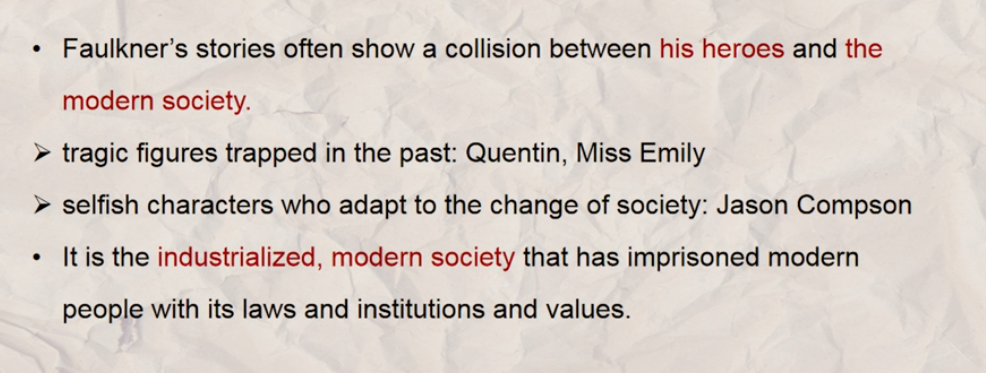
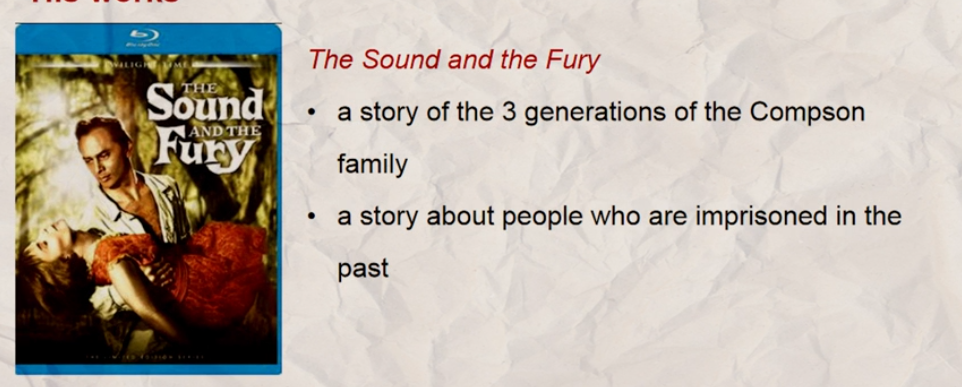
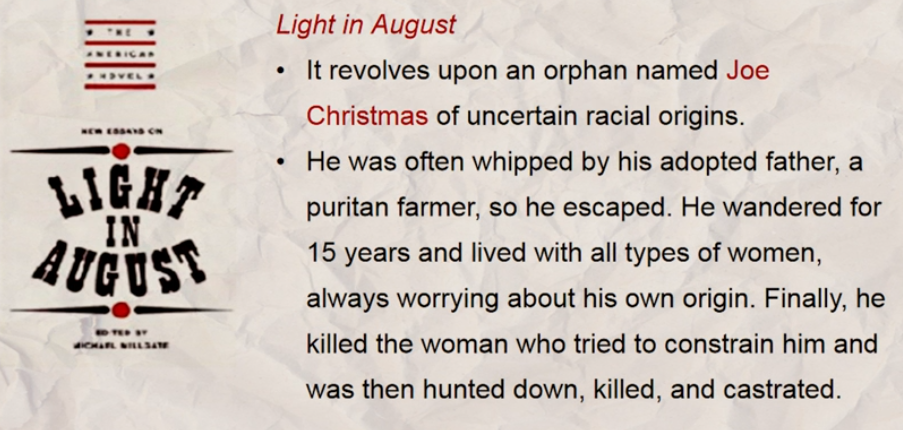
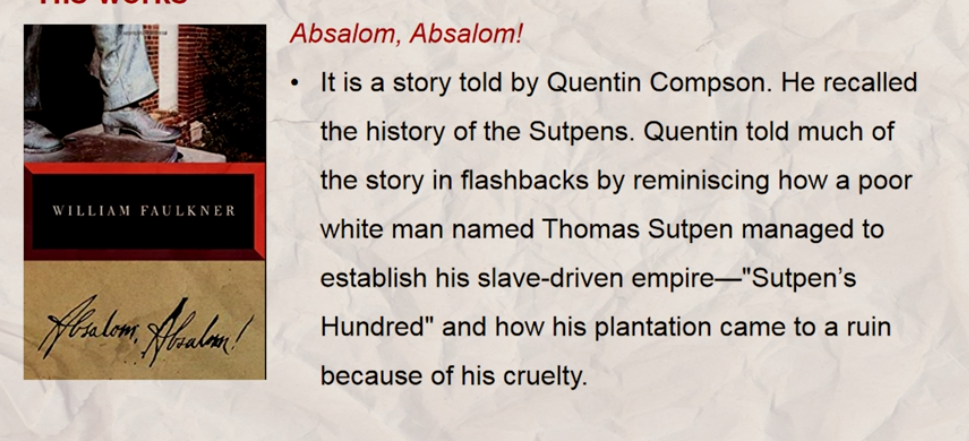
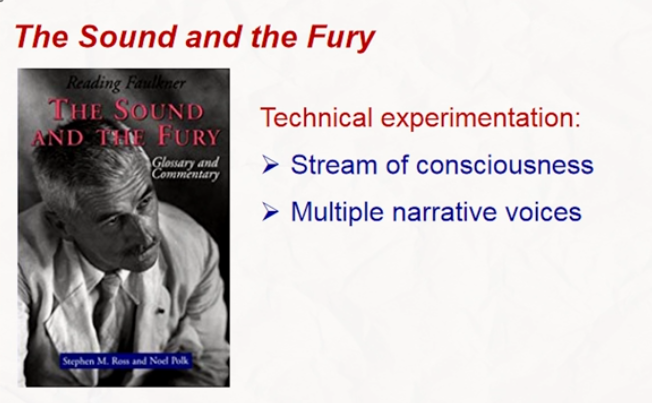
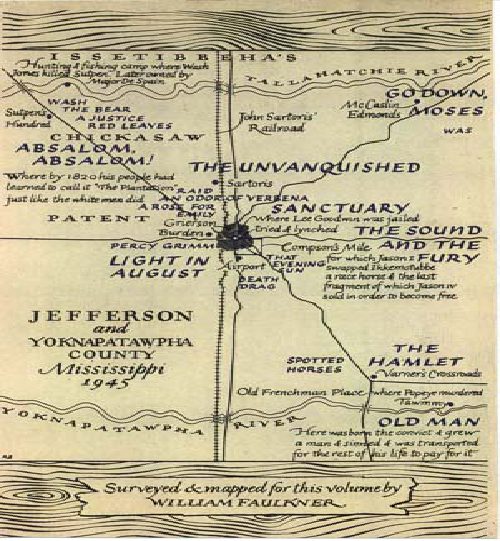
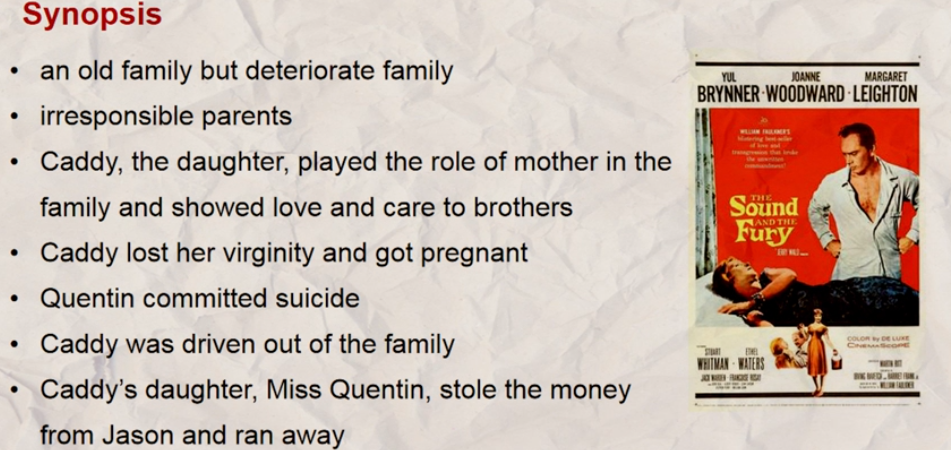
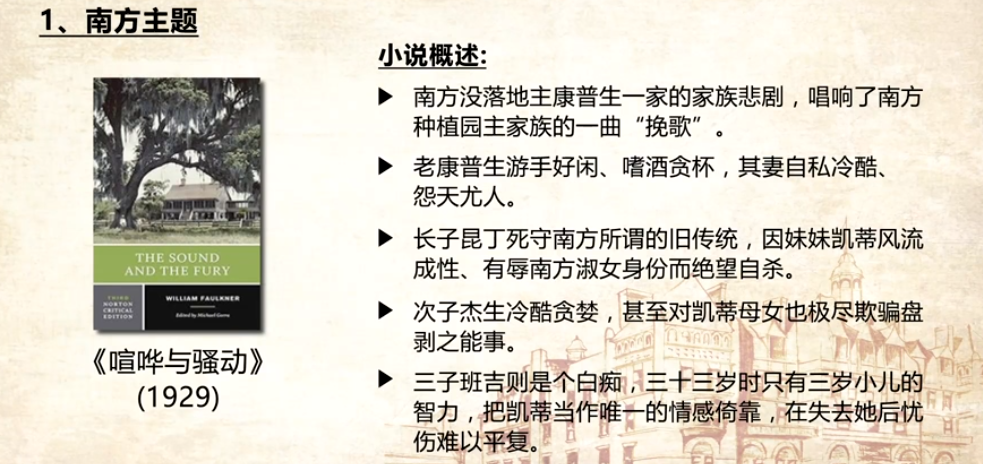
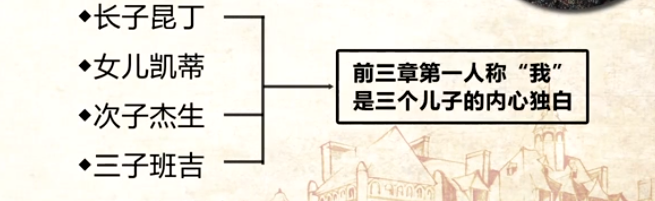
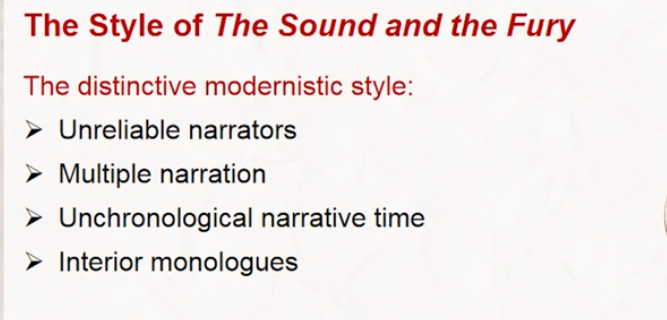
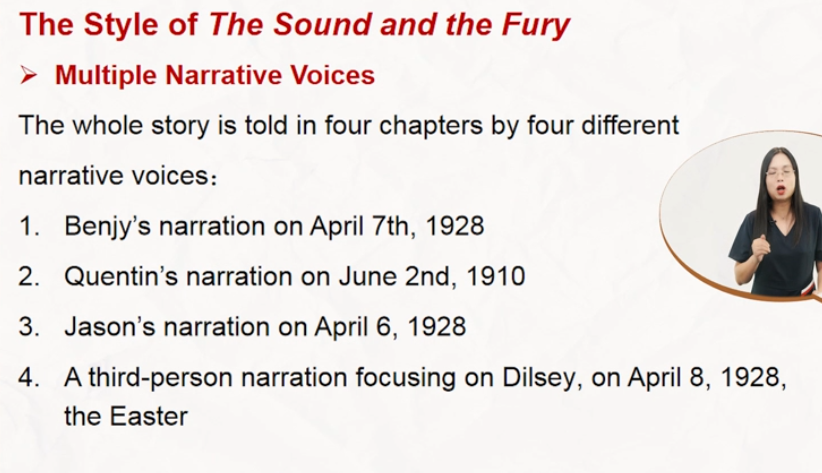
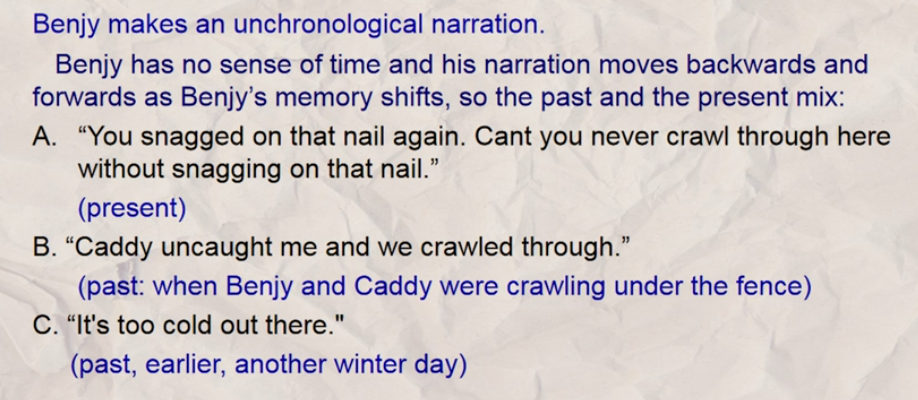
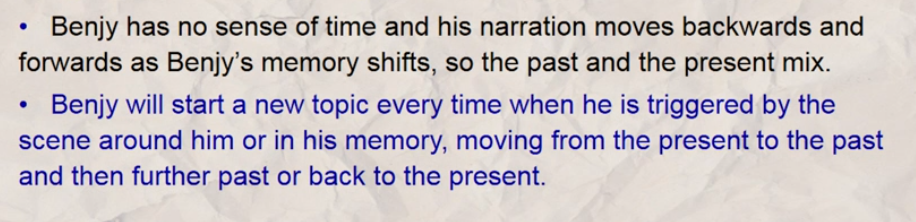
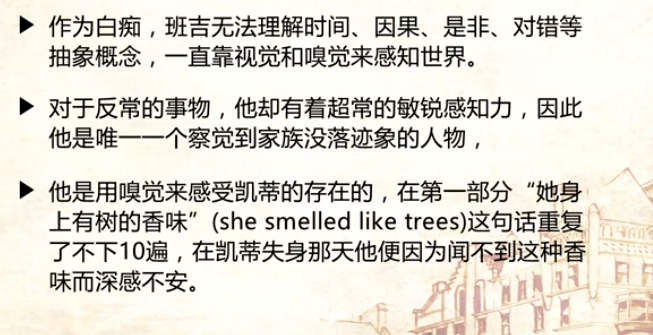
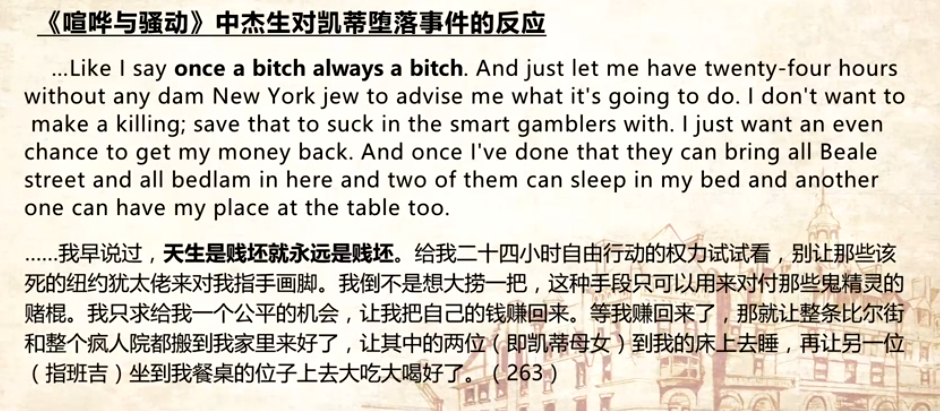
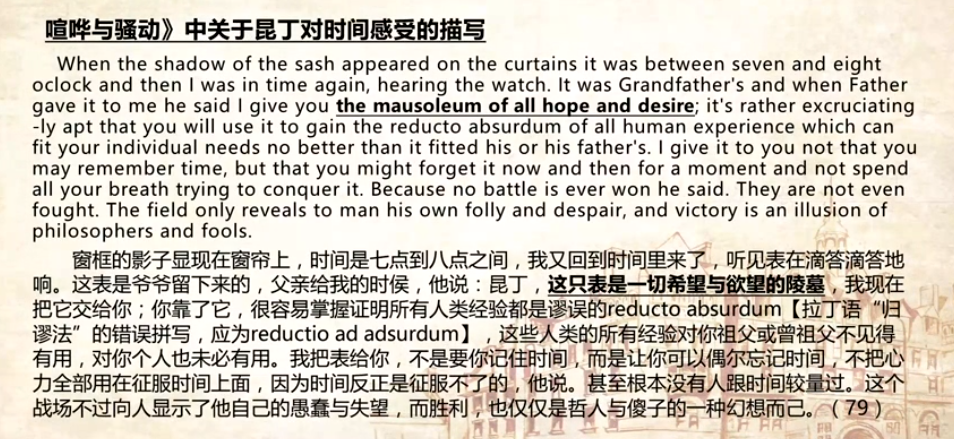
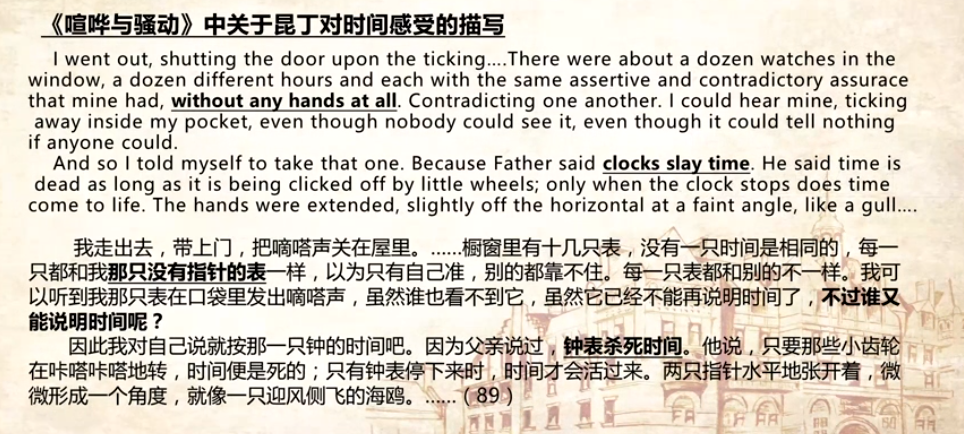
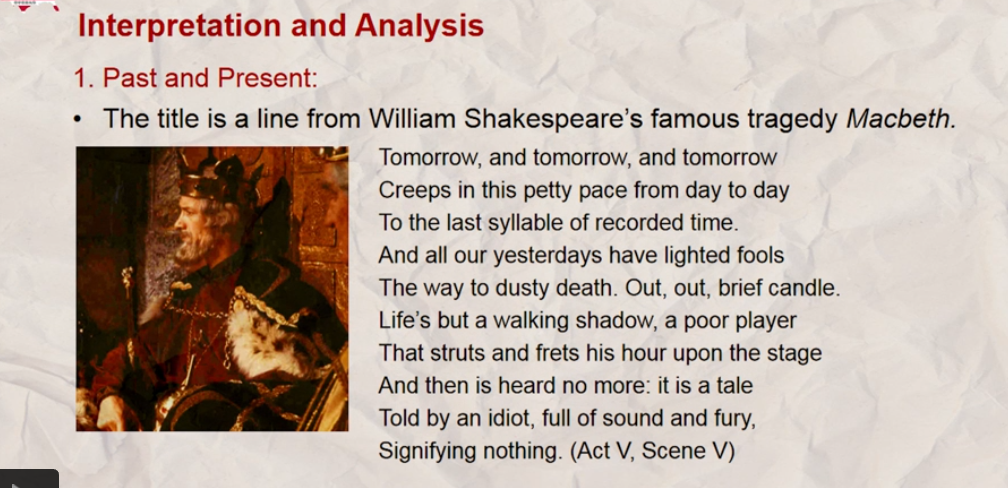
In an attempt to create a saga of his own, Faulkner has invented a host of characters typical of the historical growth and subsequent decadence of the South. The human drama in Faulkner's novels is then built on the model of the actual, historical drama extending over almost a century and a half Each story and each novel contributes to the construction of a whole, which is the imaginary Yoknapatawpha County and its inhabitants. Their theme is the decay of the old South, as represented by the Sartoris and Compson families, and the emergence of ruthless and brash newcomers, the Snopeses. Theme and technique – the distortion of time through the use of the inner monologue are fused particularly successfully in The Sound and the Fury (《喧哗与骚动》) (1929), the downfall of the Compson family seen through the minds of several characters. The novel Sanctuary (1931) is about the degeneration of Temple Drake, a young girl from a distinguished southern family. Its sequel, Requiem For A Nun (1951), written partly as a drama, centered on the courtroom trial of a Negro woman who had once been a party to Temple Drake's debauchery. In Light in August (1932), prejudice is shown to be most destructive when it is internalized, as in Joe Christmas, who believes, though there is no proof of it, that one of his parents was a Negro. The theme of racial prejudice is brought up again in Absalom, Absalom! (1936), in which a young man is rejected by his father and brother because of his mixed blood. Faulkner's most outspoken moral evaluation of the relationship and the problems between Negroes and whites is to be found in Intruder In the Dust (1948).
In 1940, Faulkner published the first volume of the Snopes trilogy, The Hamlet, to be followed by two volumes, The Town (1957) and The Mansion (1959), all of them tracing the rise of the insidious Snopes family to positions of power and wealth in the community. The reivers, his last – and most humorous – work, with great many similarities to Mark Twain's Huckleberry Finn, appeared in 1962, the year of Faulkner's death.