
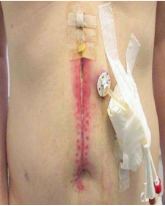
Most clients return from surgery with a sutured wound covered with a dressing, although in some cases, the wound may be left unsutured. Dressings are inspected regularly to ensure they are clean, dry, and intact. Excessive drainage may indicate hemorrhage, infection, or an open wound. When dressings are changed, nurses assess the wound for appearance, size, drainage, swelling, pain and the status of a drain or tubes. Not all surgical dressings require changing. Sometimes surgeons in the operating room apply a dressing that remains in place until sutures are removed, and no further dressings are required. In many situations, however, surgical dressings are changed regularly to prevent the growth of microorganisms. In some instances, a client may have a Penrose drain inserted directly into the incision. In this situation.,the main surgical incision is considered cleaner than the surgical stab wound made for the drain insertion, because there is usually considerable drainage. The main incision is therefore cleaned first.
尽管有些患者伤口可能未缝合,但大多数患者手术后缝合的伤口上都盖有敷料。我们必须定期检查敷料以确保敷料的清洁、干爽和完好无损。过度的湿润,可能表明伤口有出血、感染或裂开。在换敷料时,护士必须评估伤口的外表、大小、出血量、肿胀、疼痛和引流管的状态。并非所有的敷料都需要更换,有时候,手术室的外科医生会使用一种敷料敷在伤口上,直至拆线,都不需要更换敷料。然而,许多外科手术的敷料是要定期更换的,以防止微生物生长。有些病例,患者的手术切口内会直接插入一根彭罗斯引流管,这种情况下,因为引流量大,主要手术切口部位比刺开伤口插入引流管的伤口要更干净,因此,要先清洗手术切口处。

