Gratitude and Health
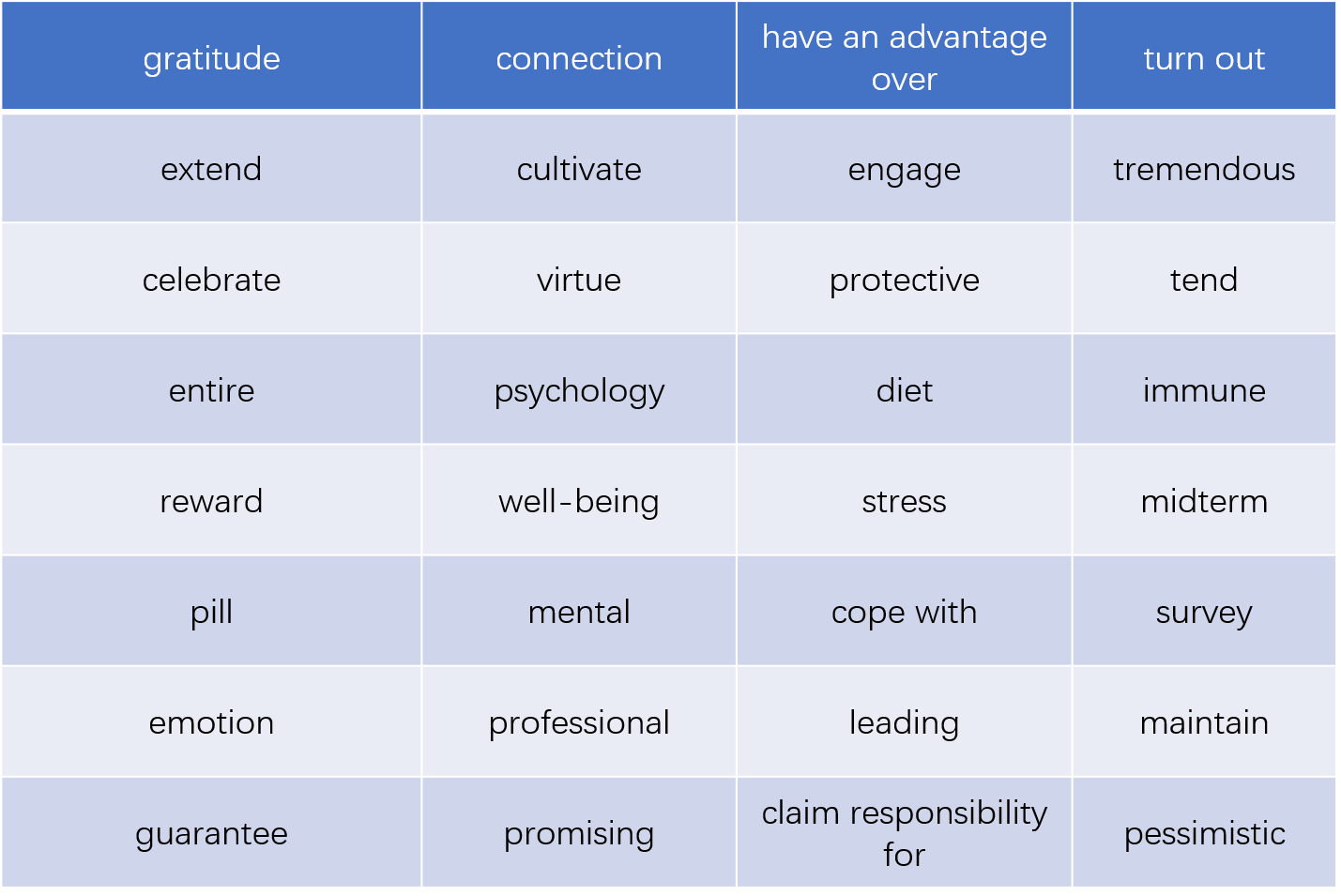
1 What would happen if we extended the tradition of giving thanks, typically celebrated just once a year during the holiday season, throughout the entire year? Such gratitude would be rewarded with better health, say researchers.
2 No pill? Can just a positive emotion such as gratitude guarantee better health? It may be a lot different from what we’ve been taught about how to get healthier, but the connection between gratitude and health actually goes back a long way.
3 “For thousands of years, people have been talking about the benefits of cultivating gratefulness as a virtue,”says University of California Davis psychology professor Robert Emmons. Throughout history, philosophers and religious leaders have regarded gratitude as good to health and well-being. Now, mental health professionals are taking a close look at how virtues such as gratitude can benefit our health. And there are some promising results.
4 Grateful people have an advantage over the not-so-grateful when it comes to health. They take better care of themselves and engage in more protective health behaviors like regular exercise, a healthy diet, regular physical examinations.
5 It’s no secret that stress can make us sick, particularly when we can’t cope with it. It’s related to several leading causes of death, including heart disease and cancer, and claims responsibility for up to 90% of all doctor visits. Gratitude, it turns out, can help us better manage stress. “Gratitude research is beginning to suggest that feelings of thankfulness have tremendous positive value in helping people cope with daily problems, especially stress,” Emmons says.
6 Grateful people tend to be more optimistic. There are some very interesting studies linking optimism to better immune function. In one, researchers comparing the immune systems of healthy, first-year law students under stress found that, by midterm, students who were optimistic (based on survey responses) maintained higher numbers of blood cells that protect the immune system, compared with their more pessimistic classmates.
7 Optimism also has a positive health effect on people in some poor health conditions. In some studies, patients suffering AIDS, as well as those preparing to have surgery, had better health conditions when they adopt the attitude of optimism.
Notes of Text B
1. It’s no secret … cope with it.: It is known to all that stress can make us sick, especially when we can’t deal with it.
2. Gratitude research … especially stress: Research is starting to suggest that feelings of gratitude have marvelous positive effect on helping people deal with everyday problems, especially stress.
3. In one, … pessimistic classmates.: In contrast with the more pessimistic classmates, researchers found in one of their studies that the first-year law students under stress who are more optimistic maintained higher numbers of blood cells that can protect the immune system.
4. In some studies, … of optimism.: In some studies, patients suffering AIDS, and those patients who are preparing to have surgery, had better health conditions when they are optimistic.
as well as: and 和,以及
感恩和健康
通常情况下人们只在庆祝一年一度的感恩节时才会互道感激之情,试想如果我们将这个传统推而广之,一年中的每一天都充满感恩,又会怎么样呢?研究人员表明:这样的感恩将会收获更好的健康。
真的不需要药吗?只需要感恩这样的健康积极的情绪就能保证身体更健康吗?这也许与我们过去被教导的保健之道迥异,但实际上感恩和健康之间的联系可以追溯到很久以前。
“几千年来,人们一直在谈论培养感恩作为一种美德的很多好处,”加州大学戴维斯分校的心理学教授罗伯特·埃蒙斯说。历史上的哲学家和宗教领袖们也把充满感恩看做健康和幸福的良药。而现在,心理健康专家正在仔细研究感恩之类的美德有怎样的保健功效,而且已经有了一些预期成果。
内心充满感恩的人比那些不懂得感恩的人更容易获得健康。他们更会照顾自己,更注重保健,比如经常运动,健康饮食,定期体检。
众所周知,压力会使我们生病,尤其是当压力大到我们应付不了的时候。压力还跟一些主要的死亡原因有关,包括心脏病和癌症,90%来看医生的人其疾病都是由压力造成的。研究结果证明,感恩能够帮助我们更好地处理压力。“感恩研究开始显示,感激的那种感觉对于帮助人们处理日常问题,尤其是压力,能产生巨大的积极影响。”埃蒙斯说。
懂得感恩的人们往往更为乐观。有一些有趣的研究把乐观和免疫功能联系起来。在其中的一项研究中,研究人员比较了一些身体健康的一年级法学院学生处在压力下的免疫系统。他们发现,到了学期中间,那些比较乐观的学生(基于调查结果)相对于那些比较悲观的学生而言,其保护免疫系统的血球数更高。
乐观开朗对于一些健康状况恶劣的人们来说也会产生积极的保健功效。一些研究发现,当艾滋病患者以及正准备动手术的病人采取积极乐观的态度时,其健康状况会有所好转。