
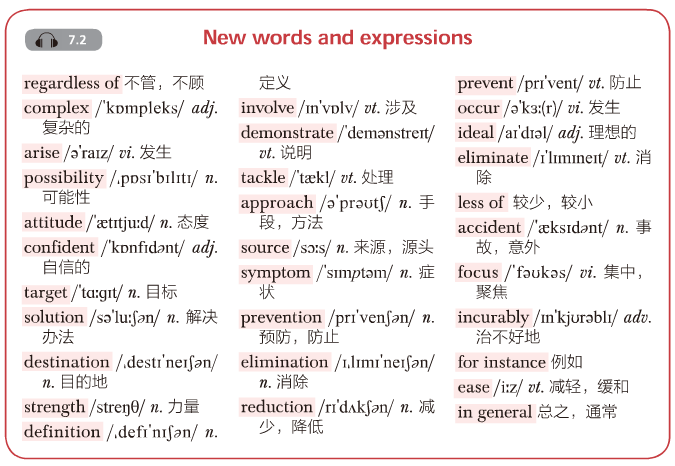
regardless of不管,不顾
Every problem you have is your responsibility,regardless of who caused it. 你面对的每个问题都是你的责任,不管是谁造成的。
arise vi.发生 / rise、arise、raise、arouse
arise 没有“上升”之意,多指“产生、发生和出现”,常用于抽象事物
rise既用于具体事物的“上升、增长”,又用于抽象事物的“上涨”
raise及物动词,表示把某具体事物抬起高处或提高某抽象事物
arouse意为“激起,唤醒;使... 奋发”,可用于被动语态
A crisis has arisen in the office. 办事处出现了危机。
More problems like those are certain to arise.肯定还会出现那样的问题。
He fell into a sound sleep, don't arouse him. 他睡熟了,别唤醒他。
Salaries have now been raised. 现在薪水已增加了。
The river is rising after the rain. 雨后河水涨了。
attituden.态度
The people have a very positive attitude to life.这些人的生活态度很积极。
negative attitudes消极态度
solution n.解决办法/ solve v.
to find a peaceful solution寻求和平的解决办法
There are no simple solutions to the problem ofoverpopulation. 人口过多的问题没有简单的解决方法。
destination n.目的地/ destiny命运,定数
a popular tourist destination很受欢迎的旅游目的地
strength n.力量/ strengthen 力量;strong强壮的
She has always been encouraged to swim to buildup the strength of her muscles. 她总是被鼓励去游泳以增强肌肉力量。
He threw it forward with all his strength. 他使尽全部的力气把它向前扔出。
involve 涉及/ be involved in涉及;卷入
What will the job involve? 这份工作包括什么?
I didn’t realise putting on aplay involved so much work. 我没想到上演一出戏剧需要做这么多的工作。
demonstrate vt.说明
The study demonstrates the link between povertyand malnutrition. 这项研究证明了贫困与营养不良之间的联系。
tackle vt.处理 / deal with
There is more than one way to tackle the problem.解决这个问题的办法不止一个。
prevention n.预防,防止/ preventvt.防止
Educating new drivers is important for theprevention of accidents. 教育新司机对于预防事故很重要。
He said this would prevent companies fromcreating new jobs. 他说这将阻止公司创造新的工作。
to prevent accidents预防事故
elimination n.消除/ eliminate vt.消除
elimination of disagreement消除分歧
There is no solution that will totally eliminatethe possibility of theft. 没有办法可以完全杜绝盗窃案的发生。
occur vi.发生
A third of accidental deaths occur in the home. 有三分之一的意外死亡事件发生在家里。
The explosion occurred at 5:30 am. 爆炸发生在清晨5点30分。
ideal adj.理想的
an ideal opportunity for youngsters to gettraining为年轻人提供了获得培训的极好机会
less of较少,较小
When your deadline is two years out, you feelless of an urgency. 如果最后期限是两年后,您会感觉没那么紧急。
If you tip badly, people think less of you. 如果你掏的小费少,人们就会看轻你。
focus vi.集中,聚焦
Focus on who you want to be and how you want tofeel. 把精力集中在你想成为谁和你想要何种感觉上。
incurably adv.治不好地
ease vt.减轻,缓和 /easy 容易的
Tensions had eased. 紧张缓解了。
I gave him some brandy to ease the pain. 我给了他一些白兰地以减轻疼痛。
in general总之,通常 /generally speaking 一般来说
And in general, what you give you tend to getback from the world around you. 通常情况下,你给予他人的,也往往可以从你的身边的人那里得到。
Solving problems
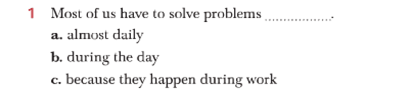
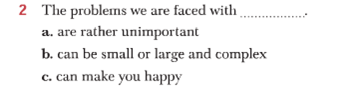
Most of us, regardless of what we do for a living or where we live,spend most of our days solving problems. Most problems we face are small butsome are large and complex. Let’s think about just what we mean by a problem.
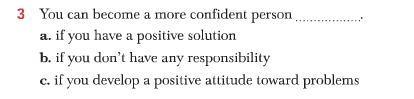
A problem can be an opportunity to make yourself or some situationbetter. The problems need not arise because of a bad event. Often thepossibility for improvement brings a “problem” for you to solve. Developing apositive attitude toward problems can make you into a happier, more confidentperson who feels much more in control of life.
A problem is the difference between your present situation and your target.When you know where you are and where you want to be, you have a problem. Ifyou find a solution to the problem you will find a way to get to yourdestination.
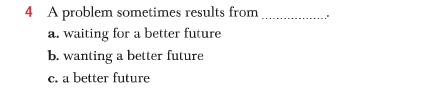
A problem results from wanting a better future. Believing that youcan get this better future will give you the strength to deal with any problemsthat stand in the way of this. A challenge is another definition of a problem.
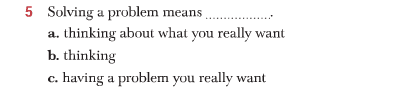
Problem solving involves thinking about what you really want.
Here is an example: you have just brought some dim sum home from therestaurant and it is beginning to cool. If you only like very hot dim sum, thenyou have a problem: how to keep the dim sum from cooling. On the other hand, ifyou like warm dim sum, then you do not have a problem.
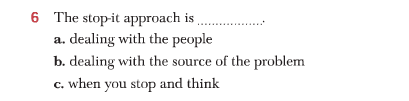
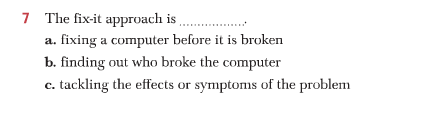
This example demonstrates that people must think about what they wantbefore tackling a problem. There are two ways to solve a problem: the stop-itapproach where the source of the problem is dealt with and the fix-it approachwhere the effects or symptoms of the problem are tackled.
There are three forms of a stop-it approach, which are prevention, elimination,and reduction. By preventing a problem from occurring we have perhaps the idealsolution. For example, you can prevent feeling cold by putting on enoughclothes. Eliminating a problem is also an excellent way of attacking a problembut can be expensive and sometimes it just does not work. For example, if yourneighbours are terrible, you can move to somewhere else, but to buy a new houseis a lot of trouble and costs a lot of money. In some cases, a strategy ofreduction can be highly effective. Reducing the size of a problem can make itless of a problem. For example, we cannot eliminate traffic accidents, but withstrict regulations we can make it happen less.
A fix-it approach focuses on treating the effects of the problem. Whensomeone is incurably ill, a fix-it solution is all that they can do: there isno elimination solution for that, but the doctors can, for instance, lower thefever or ease the pain, to make the patient feel better.
In general, however, it is best to consider the possibility of usinga stop-it solution before you focus on fix-it ones.
1.Text comprehension
Choose the correct answers for each sentences.

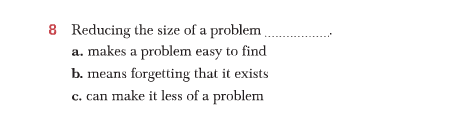
2.language points
(1)mean by
What do you mean by asking such aquestion?
你问这一个问题,是什么意思?
(2) stop-it approach
英语含连字符的合成词
Well-known 著名的
Well-paid job高薪的工作
up-to-date information 最新的信息
70-year-old elders
self-respect自尊
good-natured 和蔼的,和善的
kind-hearted(好心肠的)
cold-blooded (冷血的)
world-wide (世界范围的)
ice-cold (冰冷的)
one-eyed (独眼的)
four-storeyed (四层的)
two-faced (两面的)
four-footed (四只脚的)one-child policy (独生子女政策/)
two-hour talk (两小时的谈话)
(3)The problem need not arise because of a bad event.
It is not necessarily a bad event thatcauses the problem.
need既可以作名词,也可以作动词;作动词时既可以作情态动词,也可以作实意动词。
作名词时,意为“需要,需求”。
e.g. 1.Jack did not feel the need to boast about his success. 杰克觉得没必要吹嘘自己的成功。
2.There’s a growing need for newhousing in many rural areas. 许多农村地区对新住房的需求不断增长。
作情态动词时,意为“需要,必要,一定”,用于劝告或建议,后跟动词原形。
e.g. 1."I'll put the key in the window." "You needn't bother," hesaid gruffly. “我会把钥匙放进窗户里去。”“不必麻烦。”他粗声粗气地说。
2.We have learned that a market crashneed not lead to economic disaster. 我们已经认识到一次市场崩溃未必导致经济灾难。
作实意动词时,意为“需要,必要”,后跟名词或动词不定式。
e.g.1. He desperately needed money. 他急需钱。
2.I need to make a phone call. 我需要打个电话。
need后面也可以跟名词或动名词表示被动关系。
e.g.1.The building needs quite a few repairs. 这栋楼不少地方需要修缮。
2.Does this shirt need ironing? 这件衬衫要熨烫吗?
解决问题
我们绝大多数人,不论做什么营生,也不论住在什么地方,每天大多数时候都在解决问题。我们面对的问题大多数都是小问题,但也有复杂的大问题。让我们来思考一下问题到底是什么。
问题可以是提高你自己或改善情况的机会。问题的产生不一定是坏事。通常改进的可能性就是你需要解决的“问题”。对待问题保持积极的态度,你就可以变得更加快乐、自信,更能把控生活。
问题是你当前的状况与目标之间的差距。如果你知道自己的现状,也知道你想要达成的目的,那么你就要面对一个问题。找到解决问题的办法,你就能找到实现目标的途径。
问题产生于对更好未来的向往。相信自己能实现更好的未来,你就有力量应对阻碍这个目标的问题。挑战是问题的另一个名称。
解决问题需要思考自己真正想要什么。
这里有个例子:你刚从餐馆买了一些点心带回家,点心开始变冷了。如果你只喜欢特别热的点心,那么你就面临一个问题:如何防止点心变冷。另一方面,如果你喜欢温热的点心,那么你就没有问题。
这个例子说明在解决问题之前必须思考自己想要的东西。解决问题的方法有两种:解决问题根源的预防型和处理问题效果或症状的修理型。
预防型解决办法有三种形式,即预防、消除和削减。防止问题发生或许是最理想的解决办法。例如,你可以通过多穿衣服预防寒冷。消除问题也是极好的解决问题的办法,但是可能代价高昂,有时候可能不起作用。例如,如果你的邻居很难相处,你可以搬家,但买新房很麻烦,而且要花很多钱。某些情况下,削减的办法非常有效。减小问题的规模可以降低其严重程度。例如,交通事故是无法消除的,但通过严格的法规就可以降低其发生率。
修理型的解决办法主要处理问题的结果。如果某人得了绝症,就只能采取修理型的解决办法:绝症是无法消除的,但是医生可以降低发热的程度或者缓解疼痛,从而使病人感觉好点。
但是,总而言之,在采取修理型解决办法之前最好先考虑预防型解决办法的可能性。

