What is selfie?
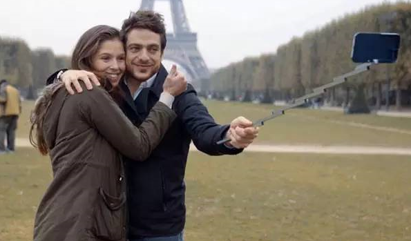
A selfie is a self-portrait photograph, typically taken with a digital camera or camera phone held in the hand or supported by a selfie stick. Selfies are often shared on social networking services such as Facebook, Instagram and Twitter. They are usually flattering and made to appear casual. Most selfies are taken with a camera held at arm’s length or pointed at a mirror, rather than by using a self-timer.

Initially popular with young people, selfies gained wider popularity over time. By the end of 2012, Time magazine considered selfie one of the “top 10 buzzwords” of that year; although selfies had existed long before, it was in 2012 that the term “really hit the big time”. A poll commissioned by smartphone and camera maker Samsung found that selfies make up 30% of the photos taken by people aged 18–24. By 2013, the word “selfie” had become commonplace enough to be monitored for inclusion in the online version of the Oxford English Dictionary. In November 2013, the word “selfie” was announced as being the “word of the year” by the Oxford English Dictionary, which gave the word itself an Australian origin.
Selfie
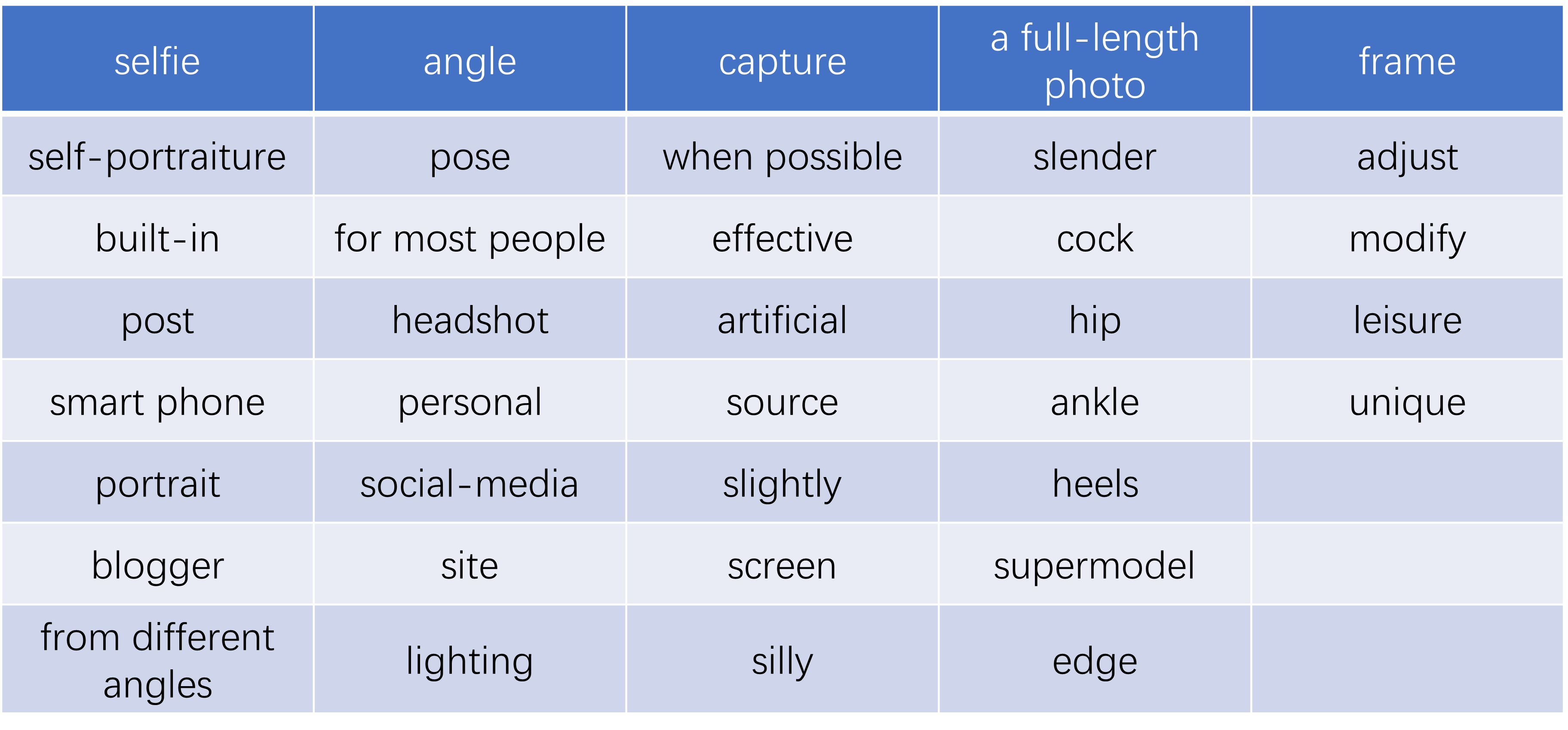
Self-portraiture has never been so popular an act since the days of Picasso. Smart phones’ high-quality built-in cameras are making “selfies” a good form of self-expression among young people.
Tina Craig takes and posts a lot of smart phone self-portraits. She is a well-known blogger who has taken hundreds of practice photos of herself from different angles. She often depends on some magazines to study the poses.
For most people, the most useful self-portrait is the headshot, which can be used as a personal picture for social-media sites like Facebook or Twitter. Ms. Craig says lighting is important: She stands in front of a window to capture the natural light when possible or finds a soft but effective artificial source. She angles the camera to capture her face slightly from the left, which she believes is her good side, and lets her face and hair fill the screen. Smile at the camera, she says, even if you feel silly. Frequently, Ms. Craig takes a full-length photo of herself to show how she looks in a new dress. Then she posts it on Twitter or Sina Weibo, a popular site in China. “This is a way to show my personal style, and then readers will get to know me,” she says.
To appear slender, Ms. Craig suggests, all you need to do is cock your hip — on the side where you’re holding the camera — and let the other shoulder go forward. The legs should be crossed at the ankle. And no matter what you plan to wear when you leave the house, wear heels.“This creates the look of a long line,” she says, adding, “I have read a lot of interviews with supermodels of the 1980s and 1990s.”
Ms. Craig has a rule for taking photos of her shoes. She aims the camera straight down, with the edge of the frame reaching the area between her hips and her knees. “It makes you look like you have mile-long legs,” she says. After the photo is taken, it can be adjusted for a better effect before it is posted. Instagram allows users to modify the photos and make them appear more beautiful.
Knowing how to take a good smart phone self-portrait has been an important professional skill for young people, like Ms. Craig. It’s part of their leisure life and a way to show their unique personality. Lack of the skill may mean a lot!
自拍照
自毕加索以来,自画像从未像现在这样流行。智能手机的内置高品质相机正在使自拍照变成年轻人表达自我的很好的方式。
蒂娜·克雷格发布了很多用智能手机拍的自拍照。她是一个知名的博客作者,从不同角度拍摄了数以百计的自拍照。她经常通过阅读一些杂志研究如何在镜头前摆姿势。
对大多数人来说,最有用的自拍像是头部照片,可以用作脸谱或推特等社交媒体网站的个人照片。克雷格女士说,布光很重要:她站在窗口前尽可能捕捉自然光,或找到一个柔和、有效的人工光源。她调整相机角度,微微从左侧来拍摄她的脸,因为她认为她左侧脸角度比较好看,同时让她的脸和头发填满屏幕。她说,对镜头微笑,即使你觉得这样很傻。克雷格女士经常拍一张全身照,来秀她的新裙子。然后她把照片发布在推特或新浪微博上,新浪微博是一个在中国广受欢迎的网站。她说,“这是一种表达个人风格的方式,这样读者才会了解我。”
克雷格女士建议,为了显得苗条,你需要在你拿相机的那一边翘起臀部,让另一侧的肩膀向前倾。双腿应该交叉在脚踝处。而且无论你离家时打算穿什么衣服,都得穿带跟的鞋子。“这会显得身材修长,”她补充道,“我读过很多对20世纪80年代和90年代超模的采访。”
克雷格女士有一套拍摄她鞋子照片的办法。她把相机径直朝下,边框覆盖臀部和膝盖之间的区域。她说,“这样会使你的腿看起来很长”。拍照后,可以再把照片调整下,以达到更好的效果,然后再发布。Instagram美图软件允许用户修饰照片,使之显得更加漂亮。
对像克雷格女士这样的年轻人来说,知道如何使用智能手机自拍一直是一个重要的专业技能,这是他们休闲生活的一部分,也是展示他们独特个性的方式。缺乏这种技能可不是小事!