目录

  • 1 第一单元
    • 1.1 课程考核方案
    • 1.2 第二课时
  • 2 第二单元
    • 2.1 Task 1: How the Normans changed the history of Europe
    • 2.2 Canterbury Tales by Geoffrey Chaucer
      • 2.2.1 Characters
      • 2.2.2 Plot Summary
      • 2.2.3 The Wife of Baths Prologue
      • 2.2.4 Themes
  • 3 第三单元
    • 3.1 Tercet/Haiku
    • 3.2 ​The Wife of Bath's Prologue and Tale
      • 3.2.1 Medical Chart Completion Assignment
  • 4 第四单元
    • 4.1 Introduction
    • 4.2 William Shakespeare | Biography
    • 4.3 Expressions from Shakespeare
    • 4.4 Shakespeare Sonnet 18
    • 4.5 Shakespeare Sonnet 116
    • 4.6 Seven Ages of Man
      • 4.6.1 On Feeling Melancholy
      • 4.6.2 Metaphor and Symbol
  • 5 第五单元
    • 5.1 There Is No Escaping Shakespeare
    • 5.2 Hamlet
    • 5.3 Shakespeare Sonnet 130
  • 6 第六单元
    • 6.1 The Flea
    • 6.2 No Man is an Island
    • 6.3 Life Story of John Donne
  • 7 第七单元
    • 7.1 Daniel Defoe
      • 7.1.1 A Journal of the Plague Year
        • 7.1.1.1 Excerpt
  • 8 第八单元
    • 8.1 Introduction
    • 8.2 Robert ‘Rabbie’ Burns
      • 8.2.1 Robert Burns A Red Red Rose
      • 8.2.2 'Auld Lang Syne'
      • 8.2.3 Burn's Supper/Night
    • 8.3 Intertextuality
    • 8.4 World Book and Copyright Day
    • 8.5 Why should you read Charles Dickens
  • 9 第九单元
    • 9.1 She Walks in Beauty
      • 9.1.1 Overview
      • 9.1.2 Themes
    • 9.2 There Was Once
      • 9.2.1 Questions and Discussion
    • 9.3 Antigone
  • 10 第十单元
    • 10.1 My Heart Leaps Up
    • 10.2 William Wordsworth
      • 10.2.1 I wandered lonely as a Cloud
  • 11 第十一单元
    • 11.1 Introduction
    • 11.2 Antithesis/Alliteration/Anaphora
    • 11.3 Edgar Allan Poe
      • 11.3.1 The Tell-tale Heart
      • 11.3.2 Annabel Lee
    • 11.4 The Selfish Giant
    • 11.5 THE NIGHTINGALE AND THE ROSE
  • 12 第十二单元
    • 12.1 Geneviève Emy
  • 13 第十三单元
    • 13.1 The Second Coming- by William Butler Yeats
      • 13.1.1 Analysis of William Butler Yeats's -The Second Coming
    • 13.2 Down By the Salley Gardens
      • 13.2.1 Down by the Sally Gardens-Maura O'Connell with Karen Matheson
    • 13.3 The Stolen Child
  • 14 第十四单元
    • 14.1 Kurt Vonnegut
  • 15 第十五单元
    • 15.1 Week 15
    • 15.2 Virginia Woolf-Moments of Being
      • 15.2.1 The Hours
    • 15.3 James Joyce -Ulysses
    • 15.4 William Blake
      • 15.4.1 Genre: illustration/painting
    • 15.5 Infinite Jest
      • 15.5.1 Hamlet
      • 15.5.2 An Excerpt from This Is Water
  • 16 第十六单元
    • 16.1 第一课时
    • 16.2 第二课时
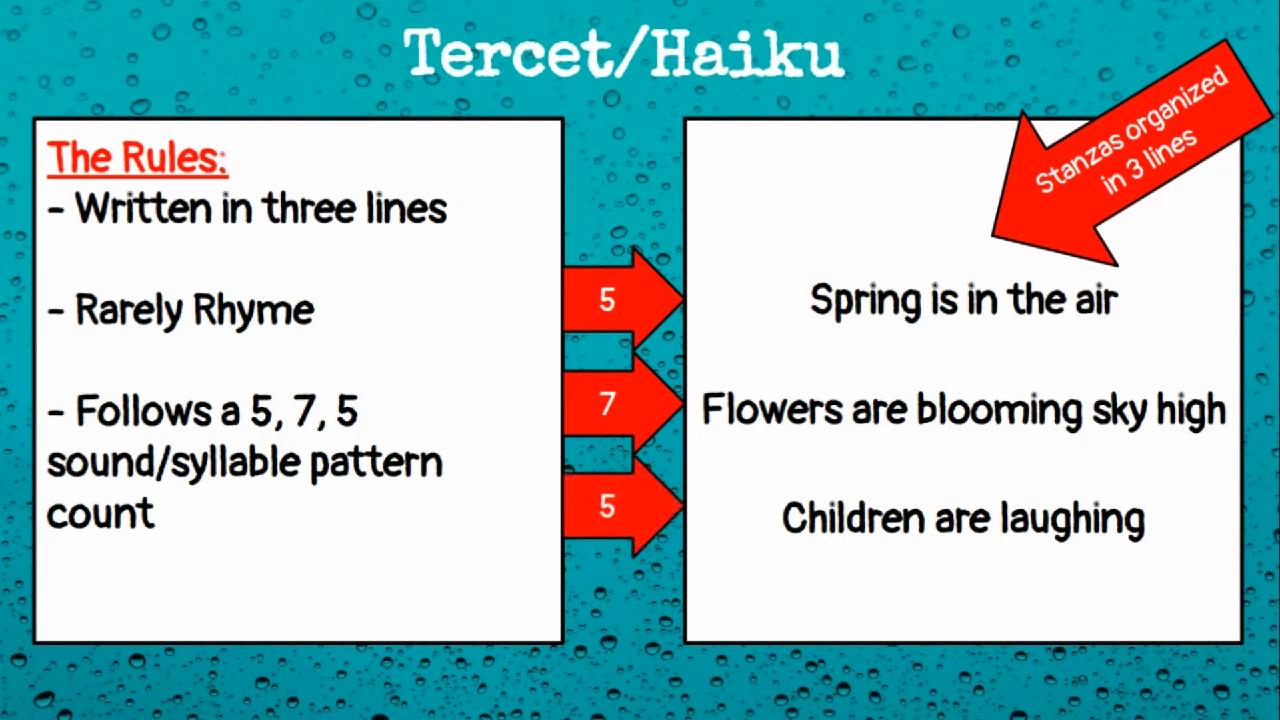
Tercet/Haiku


A haiku is a form of tercet, which is a three-lined stanza or poem. However, haiku has a specific structure and thematic focus that distinguish it from other tercets. Traditionally, a haiku follows a syllable pattern of 5-7-5 across its three lines and often captures moments of natural beauty, seasons, or fleeting aspects of the human experience, offering a philosophical or emotional insight. While all haikus are tercets because they consist of three lines, not all tercets are haikus, as tercets can vary widely in form, theme, and syllable count.