-
1 Reading A
-
2 Listening
-
3 Speaking
-
4 Writing
-
5 Project
Reading A
0-1'16 Reading A Vocabulary
参考译文
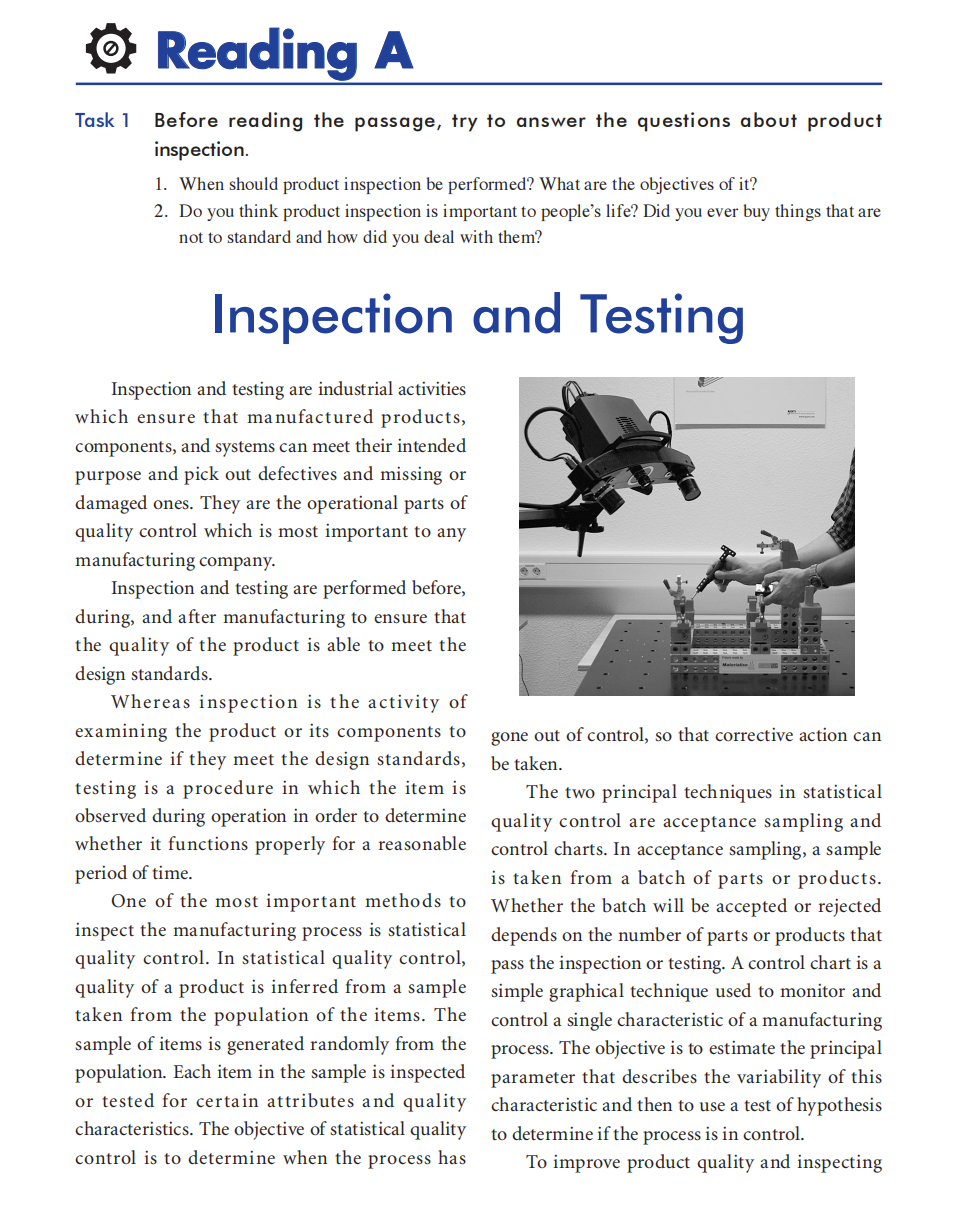
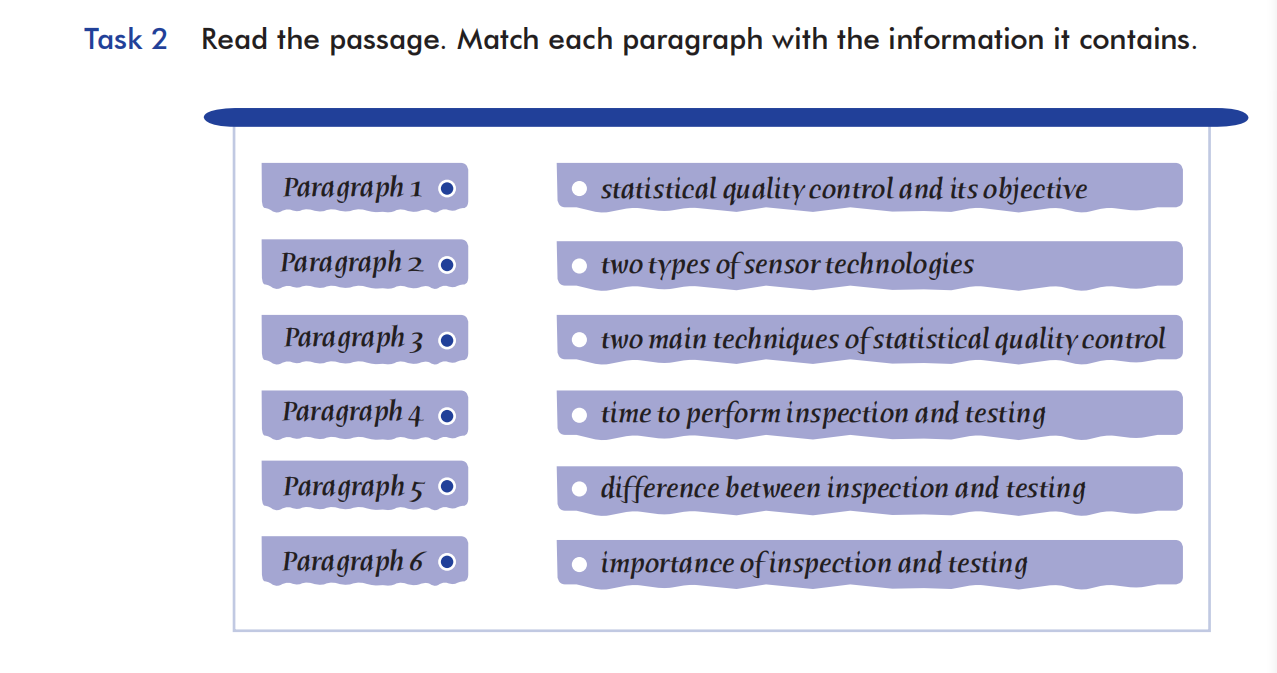
检验和检测检验和检测是工业活动。用于确保制造的产品、部件或者系统符合设计要求,并可挑出次品和有缺损的产品。检验和检测是质量控制的操作性部分。对制造企业十分重要。
检验和检测可以出现在生产开始之前、过程之中,或者生产之后,以确保产品的质量能够达到设计标准。
检验是指通过检查产品或者部件来确定它们是否达到设计标准,而检测则是在产品运行过程中对其观察,确定其在一段合理的时间内运行正常。
检验生产过程最重要的手段之一是统计质量管理。在统计质量管理中,通过对从产品总体中抽取的样品进行检验来判断产品的质量。样品从总体中随机抽取。对所采样品中的每一件产品的某种品质和特征进行检验和检测。统计质量管理的目标是判断生产过程是否游离于质量管理之外,以便采取纠正措施。
统计质量管理的两项主要技术是抽样验收和管理图表。在抽样验收中,从一批部件或产品中抽取样品,根据通过检验和检测的样品的数量,确定该批部件或产品是否合格。管理图表则是一项简单的图表技术,用于监测和控制生产过程中的某一项特征。其目标是估算描述该特征变量的主要参数值,然后用假设检验来确定生产过程是否在控制之中。
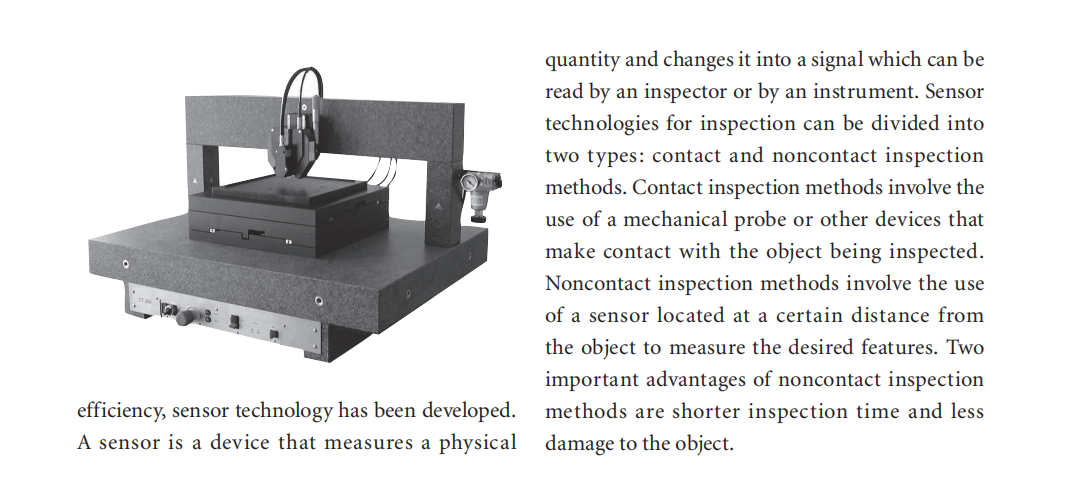
为改进产品质量,提高检验效率,传感器技术得到了发展。传感器是一种测量物理量并将测量到的物理量转换成检验员或者检验仪器可读的信号的装置。用于检验的传感器技术可以分为两种:接触检验技术和非接触检验技术。接触检验技术使用机械探针或者其他装置和被检验对象发生接触。非接触检验技术使用置于被检验对象一定距离之外的传感器来测量所需要的特征。非接触检验的两大优势是检验时间短,对检验对象造成的损害小。
Tasks for Reading A
Task 3 Read the passage again and decide whether the following statements are true (T) or false (F).
( )1. Inspection and testing are part of the operational techniques and activities to assure the
quality of a product.
( )2. Quality control is very important to the survival of a manufacturing company.
( )3. Inspection and testing are only performed after the product is manufactured.
( )4. The objective of testing is to examine whether a product or its components meet its
design standards.
( )5. The procedure of determining whether a product functions properly during operation is
called inspection.
( )6. In statistical quality control, the sample of products is chosen by chance rather than
according to a plan.
( )7. Most of the items in the sample are inspected or tested for certain quality characteristics.
( )8. Corrective measures will be taken when the manufacturing process is found to be out of
control.
( )9. Whether a batch of items will be accepted or rejected depends on the number of items that
pass the inspection or testing.
( )10. Acceptance sampling is a graphical technique to control a single characteristic of the
manufacturing process.
Task 4 There are two types of censor technologies for inspection: contact and noncontact inspection methods. What's the difference between them? Discuss it with your partner.