第一课时
-
1 Reading A
-
2 Listening
-
3 Speaking
-
4 Writing
-
5 Project
上一节
下一节
Reading A
Task 1
Before reading the passage, try to answer the questions about CAM.
1. What's the complete form of CAM? Can you say something about CAM?
2. Robots are not easily separated from CAM. What tasks can they handle in industrial automation?
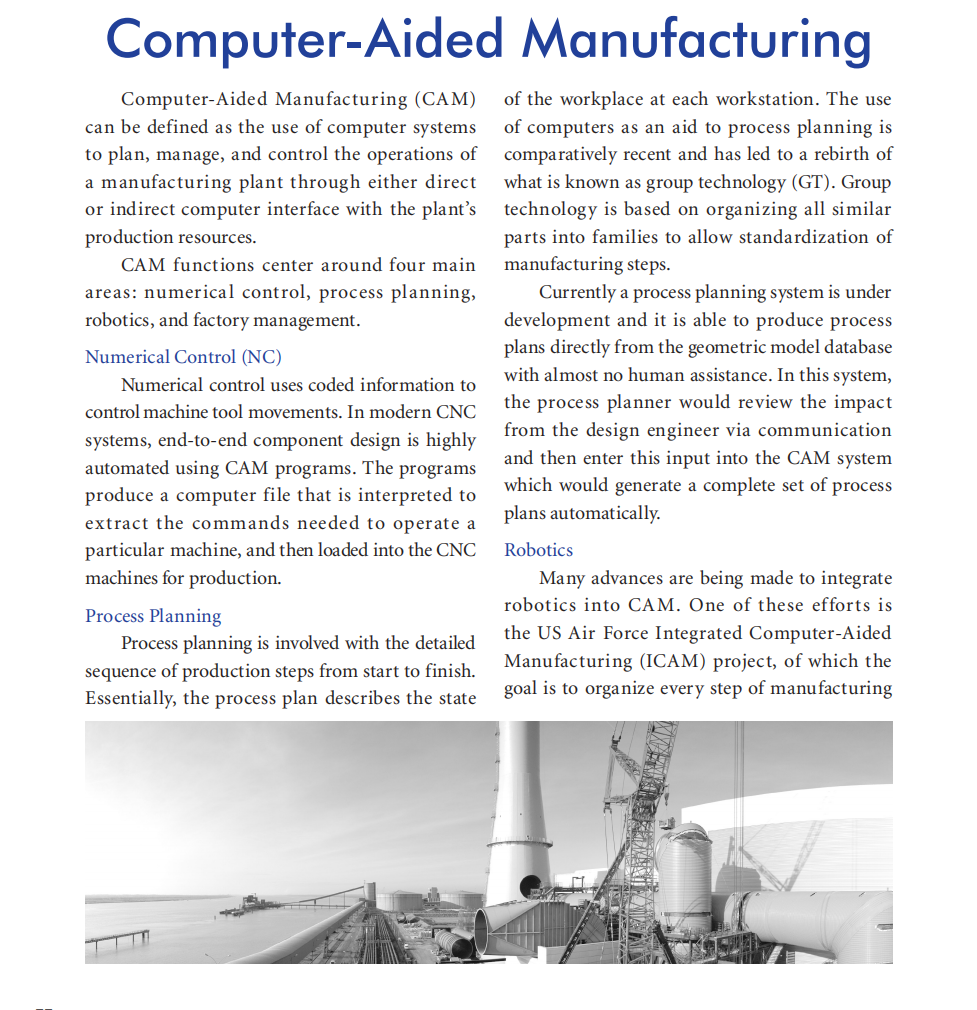
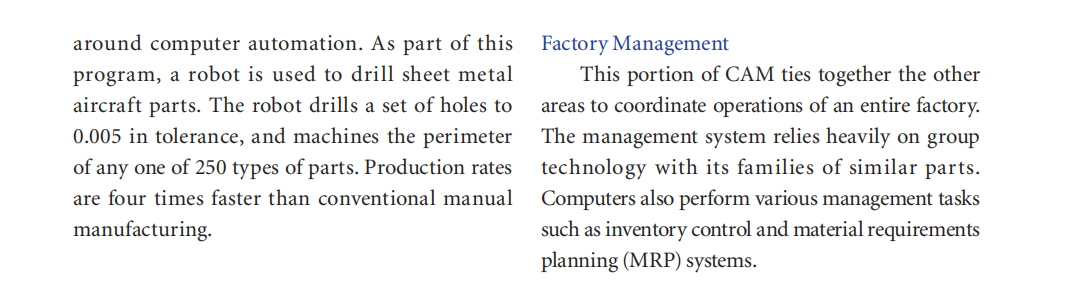
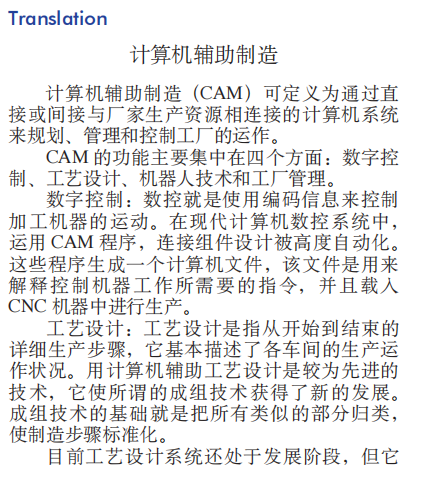
参考译文

Tasks for Reading A
Task 2
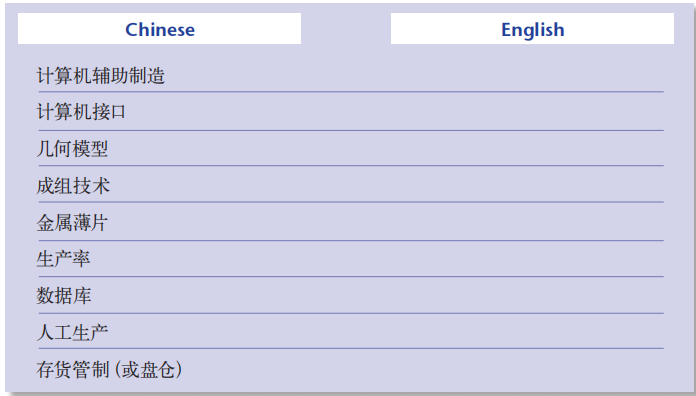
Read the passage and find the corresponding English equivalents for the following Chinese.
Task 3
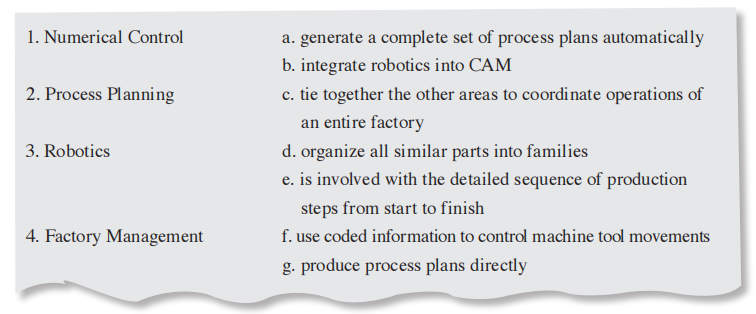
Read the passage again and match the items on the left with their functions on the right.
Task 4
Discuss in groups. How is CAM applied in the operations of a manufacturing plant? What do you think the benefits of CAM are?