目录

  • 1 Chapter 1 Introduction
    • 1.1 1.0 Course Contents
    • 1.2 1.1 Basic Conception
      • 1.2.1 Lecture 1
      • 1.2.2 Lecture 2
    • 1.3 1.2 Compiler Structure
      • 1.3.1 Lecture 1
      • 1.3.2 Lecture 2
      • 1.3.3 Lecture 3
    • 1.4 1.3 The Technique of Compiler Developing
  • 2 Chapter 2 Conspectus of Formal Language
    • 2.1 2.1 Alphabets and Strings
      • 2.1.1 Lecture 1
      • 2.1.2 Lecture 2
    • 2.2 2.2 Grammars and its Categories
      • 2.2.1 Lecture 1
      • 2.2.2 Lecture 2
    • 2.3 2.3 Languages and Parse Tree
      • 2.3.1 Lecture 1
      • 2.3.2 Lecture 2
    • 2.4 2.4 Notes of Formal Language
    • 2.5 2.5 Basic Parsing Techniques
      • 2.5.1 Lecture 1
      • 2.5.2 Lecture 2
  • 3 Chapter 3 Finite Automata
    • 3.1 3.1 Formal Definition of FA
      • 3.1.1 Lecture 1
      • 3.1.2 Lecture 2
    • 3.2 3.2 Transition from NDFA to DFA
      • 3.2.1 Lecture 1
      • 3.2.2 Lecture 2
      • 3.2.3 Lecture 3
    • 3.3 3.3 RG and FA
    • 3.4 3.4 Regular Expression & Regular Set
      • 3.4.1 Lecture 1
      • 3.4.2 Lecture 2
  • 4 Chapter 4 Scanner(Lexical Analyzer)
    • 4.1 4.1 Lexical Analyzer and Tokens
      • 4.1.1 Lecture 1
      • 4.1.2 Lecture 2
    • 4.2 4.2 Step for developing a lexical analyzer
    • 4.3 4.3  Dealing with Identifier
    • 4.4 4.4  Using Regular Expressions
    • 4.5 4.5 Using Flex
      • 4.5.1 Lecture 1
      • 4.5.2 Lecture 2
  • 5 Chapter 5 Top-Down Parsing
    • 5.1 5.0 Push Down Automata (PDA, Added)
      • 5.1.1 Lecture 1
      • 5.1.2 Lecture 2
      • 5.1.3 Lecture 3
    • 5.2 5.1 Elimination Left-Recursion
    • 5.3 5.2 LL(k) Grammar
      • 5.3.1 Lecture 1
      • 5.3.2 Lecture 2
    • 5.4 5.3 Deterministic LL(1) Analyzer Construction
    • 5.5 5.4 Recursive-descent (Non-backtracking) parsing
    • 5.6 5.5 复习与结课
      • 5.6.1 Lecture1 结课感言
      • 5.6.2 Lecture 2 关于复习
      • 5.6.3 Lecture 3 习题讲解
  • 6 Chapter 6 bottom-up Parsing and precedence analyzer
    • 6.1 6.1 Bottom-Up Parsing
    • 6.2 6.2 Phrase, Simple Phrase and Handle
    • 6.3 6.3 A Shift-Reduce Parser
    • 6.4 6.4 Some Relations on Grammar
    • 6.5 6.5 Simple Precedence Parsing
    • 6.6 6.6 Operator-Precedence Parsing
      • 6.6.1 Lecture 1
      • 6.6.2 Lecture 2
      • 6.6.3 Lecture 3
    • 6.7 6.7 Precedence Functions and Construction
  • 7 Chapter 7  LR Parsing
    • 7.1 7.1 LR Parsers
      • 7.1.1 Lecture 1
      • 7.1.2 Lecture 2
    • 7.2 7.2 Building a LR(0) parse table
      • 7.2.1 Lecture 1
      • 7.2.2 Lecture 2
    • 7.3 7.3 SLR Parse Table Construction
    • 7.4 7.4 Constructing Canonical LR(1) Parsing Tables
    • 7.5 7.5 LALR Parsing Tables Construction
    • 7.6 7.6 Using Ambiguous Grammars
    • 7.7 7.7 Yacc/Bison Overview
  • 8 Chapter 8 Syntax-Directed Translation
    • 8.1 8.1 Syntax-Directed Translation
      • 8.1.1 Lecture1
      • 8.1.2 Lecture 2
      • 8.1.3 Lecture 3
    • 8.2 8.2 Abstract Syntax Tree
    • 8.3 8.3 Intermediate Representation
      • 8.3.1 Lecture 1
      • 8.3.2 Lecture 2
  • 9 Chapter 9 Run-Time Environment
    • 9.1 9.1 Data Area & Attribute
    • 9.2 Section 9.2~9.4 & Section 9.8~9.9
    • 9.3 9.5 Parameter Passing
    • 9.4 9.6 Stack Allocation
    • 9.5 9.7 Heap allocation
  • 10 Chapter 10 Symbol Tables
    • 10.1 10.1 A symbol Table Class
    • 10.2 10.2 Basic Implementation Techniques
    • 10.3 10.3 Block-structured Symbol Table
    • 10.4 10.4 Implicit Declaration
    • 10.5 10.5 Overloading
  • 11 Chapter 11 Code Optimization
    • 11.1 11.1 Control Flow Graph
    • 11.2 11.2 Redundancies
    • 11.3 11.3 Loop Optimizations
    • 11.4 11.4 Instruction Dispatch
      • 11.4.1 Lecture 1
      • 11.4.2 Lecture 2
  • 12 Chapter 12 Code Generation
    • 12.1 12.1 Code generation issues
    • 12.2 12.2 Simple Stack Machine
    • 12.3 12.3 Register Machine
    • 12.4 12.4 A Simple Code Generator
  • 13 13 Extended Reading扩展阅读1 斯坦福大学公开课
    • 13.1 Lecture 1
    • 13.2 Lecture 2
    • 13.3 Lecture 3
    • 13.4 Lecture 4
    • 13.5 Lecture 5
    • 13.6 Lecture 6
    • 13.7 Lecture 7
    • 13.8 Lecture 8
    • 13.9 Lecture 9
    • 13.10 Lecture 10
    • 13.11 Lecture 11
    • 13.12 More sources
  • 14 14 Extended Reading 2 扩展阅读2 illinois.edu lectures
    • 14.1 Lecture 1 Overview
    • 14.2 Lecture 2 Strings, Languages, DFAs
    • 14.3 Lecture 3 More on DFAs
    • 14.4 Lecture 4 Regular Expressions and Product Construction
    • 14.5 Lecture 5 Nondeterministic Automata
    • 14.6 Lecture 6 Closure properties
    • 14.7 Lecture 7 NFAs are equivalent to DFAs
    • 14.8 Lecture 8 From DFAs/NFAs to Regular Expressions
    • 14.9 Lecture 9 Proving non-regularity
    • 14.10 Lecture 10 DFA minimization
    • 14.11 Lecture 11 Context-free grammars
    • 14.12 Lecture 12 Cleaning up CFGs and Chomsky Normal form
    • 14.13 Lecture 13 Even More on Context-Free Grammars
    • 14.14 Lecture 14 Repetition in context free languages
    • 14.15 Lecture 15 CYK Parsing Algorithm
    • 14.16 Lecture 16 Recursive automatas
    • 14.17 Lecture 17 Computability and Turing Machines
    • 14.18 Lecture 18 More on Turing Machines
    • 14.19 Lecture 19 Encoding problems and decidability
    • 14.20 Lecture 20 More decidable problems, and simulating TM and “real” computers
    • 14.21 Lecture 21 Undecidability, halting and diagonalization
    • 14.22 Lecture 22 Reductions
    • 14.23 Lecture 23 Rice Theorem and Turing machine behavior properties
    • 14.24 Lecture 24 Dovetailing and non-deterministic Turing machines
    • 14.25 Lecture 25 Linear Bounded Automata and Undecidability for CFGs
  • 15 15 Extended Reading3 扩展阅读3 Extended  Reference Books
    • 15.1 15.1 English Text Book
    • 15.2 15.2 编译原理(何炎祥,伍春香,王汉飞 2010.04)
    • 15.3 15.3 编译原理(陈光建主编;贾金玲,黎远松,罗玉梅,万新副主编 2013.10)
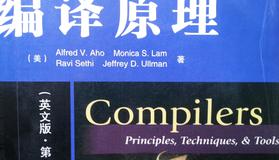
    • 15.4 15.4 编译原理((美)Alfred V. Aho等著;李建中,姜守旭译 2003.08)
    • 15.5 15.5 编译原理学习与实践指导(金登男主编 2013.11)
    • 15.6 15.6 编译原理及编译程序构造 第2版(薛联凤,秦振松编著 2013.02)
    • 15.7 15.7 编译原理学习指导(莫礼平编 2012.01)
    • 15.8 15.8 JavaScript动态网页开发案例教程
  • 16 16 中文版课件(pdf)辅助学习
    • 16.1 第1章 引论
    • 16.2 第2章 形式语言概论
    • 16.3 第3章 有穷自动机
    • 16.4 第4章 词法分析
    • 16.5 第5章 自上而下分析
    • 16.6 第6章 优先分析方法
    • 16.7 第7章 自下而上的LR(k)分析方法
    • 16.8 第8章 语法制导翻译法
    • 16.9 第9章 运行时的存储组织与管理
    • 16.10 第10章 符号表的组织与查找
    • 16.11 第11章 优化
    • 16.12 第12章 代码生成
  • 17 17 Extended Reading4 扩展阅读4 Static Single Assignment
    • 17.1 17.1 SSA-based Compiler Design
    • 17.2 17.2 A Simple, Fast Dominance Algorithm (Rice Computer Science TR-06-33870)
    • 17.3 17.3 The Development of Static Single Assignment Form(KennethZadeck-Presentation on the History of SSA at the SSA'09 Seminar, Autrans, France, April 2009)
    • 17.4 17.4 SPIR-V Specification(John Kessenich, Google and Boaz Ouriel, Intel Version 1.00, Revision 12 January 16, 2018)
    • 17.5 17.5 Efficiently Computing Static Single Assignment Form and the Control Dependence Graph
    • 17.6 17.6 Global Value Numbers and Redundant Computations
  • 18 18 Extended Reading4 扩展阅读5 Computer Science
    • 18.1 1 实地址模式和保护模式的理解
    • 18.2 2 实模式和保护模式
    • 18.3 3 实模式和保护模式区别及寻址方式
    • 18.4 计算机专业术语
    • 18.5 Bit Math in c Language
    • 18.6 Auto-generating subtitles for any video file
    • 18.7 Autosub
    • 18.8 C语言中的内联函数(inline)与宏定义(#define)
  • 19 19 相关学习
    • 19.1 龙书、鲸书和虎书
    • 19.2 Complexity
    • 19.3 MPC Complexity
    • 19.4 NP-completeness
    • 19.5 Computational complexity theory
  • 20 20 全球战疫-武汉战疫延伸与扩展
    • 20.1 Extraordinary G20 Leaders’ Summit Statement on COVID-19
    • 20.2 Experts urge proactive measures to fight virus
    • 20.3 covid-19病毒下贫穷国家
    • 20.4 正确理解病亡率、压平曲线、疫情高峰术语
    • 20.5 为什么全球经济可能陷入长期衰退
    • 20.6 为何新冠病毒检测会出现“假阴性”
    • 20.7 在纽约,几乎每个人身边都有人感染病毒
    • 20.8 An Address by Her Majesty The Queen
    • 20.9 Boris Johnson admitted to hospital over virus sympto
    • 20.10 Edinburgh festivals cancelled due to coronavirus
    • 20.11 US set to recommend wearing of masks
    • 20.12 Boris Johnson in self-isolation after catching coronavirus
    • 20.13 Covid-19:The porous borders where the virus cannot be controlled
    • 20.14 当欧洲人开始戴上口罩
    • 20.15 Lockdown and ‘Intimate Terrorism’
    • 20.16 Us Election 2020: Bernie Sanders Suspends Presidential Campaign
    • 20.17 The aircraft carrier being infected with the coronavirus
    • 20.18 Spent to the W.H.O.
    • 20.19 Unemployment
    • 20.20 The beat of a heart the glimmer of a soul
    • 20.21 Coronavirus pandemic: EU agrees €500bn rescue package
    • 20.22 the world after coronavirus冠状病毒之后的世界
  • 21 21 课程思政方案
    • 21.1 21.1 课程思政
    • 21.2 21.2 实施方案
Unemployment

为什么美国的失业率会突然这么高

来源:卫报双语阅读

More than three million Americans filed for unemployment benefits last week, a total far higher than in any previous week in the modern history of the United States, has been greeted with surprising equanimity by the nation’s political leaders.
上周,三百多万美国人申请失业救济金。这个数字远远高于美国现代史上任何一周。而美国国家领导人却对此镇定得令人吃惊。
 
But the sudden collapse of employment was not inevitable. It is instead a disastrous failure of public policy that has caused immediate harm to the lives of millions of Americans, and that is likely to leave a lasting mark on their future, on the economy and on our society.
就业的突然崩溃并非不可避免。但现在,公共政策的彻底失败不仅直接伤害了数百万美国人的生活,还可能对他们未来的经济和我们社会都产生深远的影响。

A number of European countries, after similarly failing to control the spread of the virus, and thus being forced to lock down large parts of their economies, have chosen to protect jobs.Denmark has agreed to compensate Danish employers for up to 90 percent of their workers’ salaries.
一些欧洲国家同样未能控制住病毒的传播,因而不得不限制大部分的经济活动,但他们选择保护就业。例如,丹麦承诺对本国雇主所支付的90%的工人工资予以补偿。
 
Some countries only pay employers for workers who aren’t working. The German government chips in even for workers kept on part time. In either case, the goal is to preserve people in existing jobs — to preserve the antediluvian fabric of the economy to the greatest extent possible, for the benefit of workers and firms.
而有的国家只向雇主支付没有上班工人的工资。德国政府甚至贴补兼职工。无论是哪种方式,其目的都是为了保住人们现有的工作,以便最大程度地保护经济的原有结构,而工人和公司都将获益。
 
Preserving jobs is important because a job isn’t merely about the money. Compensated labor provides a sense of independence, identity and purpose; an unemployment check does not replace any of those things.
保住工作非常重要,因为工作不仅仅只是钱。有偿劳动可以提供独立感,认同感和目的感,而失业救济支票替代不了这其中的任何东西。
 
People who lose jobs also lose their benefits — and in the United States, that includes their health insurance. And a substantial body of research on earlier economic downturns documents that people who lose jobs, even if they eventually find new ones, suffer lasting damage to their earnings potential, health and even the prospects of their children. The longer it takes to find a new job, the deeper the damage tends to be.
失业的人也同时也失去了福利,而在美国,这还包括医疗保险。大量针对经济衰退早期文献的研究发现,即便失业的人最后找到了新工作,其收入潜力,健康,甚至是孩子的未来都将遭受持久的损害。寻找新工作的时间越长,其遭受的损害就越大。
 
American companies have long fought to maximize their freedom to shed workers during economic downturns, and American economists have tended to agree, arguing that easy separation facilitates adjustments in the allocation of resources, allowing weaker businesses to shrink and stronger businesses to grow.
长期以来,美国公司一直努力争取在经济衰退的时候尽可能自由裁员的权利。而美国经济学家倾向于同意这一点,认为简单的脱离有利于优化资源配置,促进企业优胜劣汰。

This is a dubious argument even in normal times. The American economy has outpaced Europe, and the freedom to fire workers may well be a factor. But the benefits have accrued primarily to shareholders. The European model has been better for workers, who have experienced faster income growth than in the United States.
即使是在平时,这种说法都非常可疑。美国经济能够超过欧洲,自由的裁员也许是其中一个因素。但美国主要是股东获益,而欧洲模式对工人更有利,其收入的增长比美国快。
 
And this downturn is not an example of the kind of periodic free-market “creative destruction”  — it’s a public-health crisis.
并且,这次经济下行并非属于自由市场定期“创造性破坏”,这是一场公共卫生危机。
 
There’s no obvious reason to think the economy would benefit from the kinds of big economic shifts facilitated by mass unemployment.
没什么理由认为经济将从大量人员失业所导致的重大变化中获益。