实模式和保护模式
(From https://blog.csdn.net/qq_37653144/article/details/82818191)
从80386开始,CPU有三种工作模式:实模式、保护模式和虚拟8086模式。80286开始的CPU引入保护模式,实际上,实模式概念是在保护模式推出之后为了区别保护模式之前的8086CPU工作模式才有的,在8086时代CPU工作模式只有一种,自然没有实模式之说。实模式有着先天的缺陷(下文详述),但出于向上兼容的考虑,现代CPU仍然保持着对16位操纵模式的兼容。
所谓工作模式,是指CPU的寻址方式、寄存器大小、指令用法和内存布局等。
实模式
实模式的“实”体现在程序中用到的地址都是真实的物理地址,“段基址:段内偏移地址”产生的逻辑地址就是物理地址,即程序员可见的地址完全是真实的内存地址。
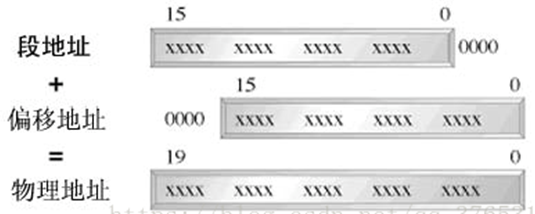
在实模式下,内存寻址方式和8086相同,由16位段寄存器的内容乘以16(左移4位)作为段基址,加上16位段偏移地址形成20位的物理地址,最大寻址空间1MB,最大分段64KB。可以使用32位指令,即32位的x86 CPU也可以兼容实模式,此时的实模式相当于高速的8086(32位CPU的实模式可以使用32位下的资源)。在32位CPU下,系统复位或加电时都是以实模式启动,然后再切换为保护模式。在实模式下,所有的段都是可以读、写和可执行的。
下图是实模式下的内存访问模型:
8086CPU的实模式开创性地提出了地址分段的概念,改变了在它之前的CPU只能“硬编码”,程序无法重定位的缺点。然而实模式还是有很多缺陷,其中最主要的是实模式的安全隐患。在实模式下,用户程序和操作系统拥有同等权利,因为实模式下没有特权级。此外,程序可以随意修改自己的段基址,加上实模式下对地址的访问就是实实在在的物理地址,因此程序可以随意修改任意物理地址,甚至包括操作系统所在的内存,这给操作系统带来极大的安全问题。
保护模式
尽管在Intel 80286手册中已经提出了保护模式,但实际上它只是一个指引。80286虽然有了保护模式但其依然是16位的CPU,其通用寄存器还是16位宽,只不过其地址线由20位变成了24位,即寻址空间扩大到了16MB(但受限于寄存器位宽,单个寄存器的寻址空间仍然为64KB)。80286只是一个“过渡”产品,很快就被淘汰。
真正的32位地址出现在Intel 80386上,它的地址总线和寄存器都是32位的,因此其单寄存器的寻址空间扩大到了4GB——在当时甚至其后的数年,仅通过段内偏移地址都足以访问内存的任意角落,这也开启了“平坦模型”的时代。
保护模式本身是80286及以后的x86系列处理器产生的一种操作模式,它具有许多特性设计为提高系统的多道任务和系统的安全性及稳定性——例如内存的保护,分页机制和硬件虚拟存储的支持。现代多数的x86处理器操作系统都运行在保护模式下,包括Linux, Free BSD, 和Windows3.0(它也运行在实模式下,为了和Windows 2.x应用程序兼容)及以后的版本。
在保护模式中,内存的管理模式分为两种——段模式和页模式。其中页模式也是基于段模式的。也就是说,保护模式的内存管理模式事实上是:纯段模式和段页式。进一步说,段模式是必不可少的,而页模式则是可选的——如果使用页模式,则是段页式,否则这是纯段模式。
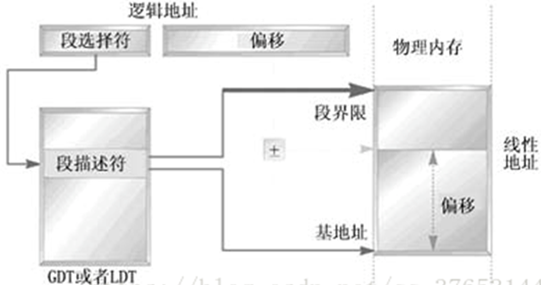
为了改进实模式下内存访问的不安全性,保护模式给内存段添加了段属性来限制用户程序对内存的操作权限。保护模式引入了全局描述符表(Global Descriptor Table,GDT),GDT的表项是描述段类型属性的数据结构——段描述符。GDT中的每一个段描述符都描述了一个内存段的基本属性,如段基址、段界限、类型、DPL等等。
正是由于以上概念的提出,使得“段地址:段内偏移地址”的访问策略从实模式下对物理地址的直接映射变成了保护模式下对GDT或LDT的间接映射(如下图所示),进程在访问内存段(无论是数据段还是代码段)前都需要通过特权级检查。段属性的加入让用户程序对内存的访问不再“为所欲为”。
实模式和保护模式
(From https://blog.csdn.net/weixin_38970751/article/details/80274229)
为何要了解Intel 80386的保护模式和分段机制?首先,我们知道Intel 80386只有在进入保护模式后,才能充分发挥其强大的功能,提供更好的保护机制和更大的寻址空间,否则仅仅是一个快速的8086而已。没有一定的保护机 制,任何一个应用软件都可以任意访问所有的计算机资源,这样也就无从谈起操作系统设计了。且Intel 80386的分段机制一直存在,无法屏蔽或避免。其次,在我们的bootloader设计中,涉及到了从实模式到保护模式的处理,我们的操作系统功能(比如分页机制)是建立在Intel 80386的保护模式上来设计的。如果我们不了解保护模式和分段机制,则我们面向Intel 80386体系结构的操作系统设计实际上是建立在一个空中楼阁之上。
【注意】虽然大家学习过X86汇编,对X86硬件架构有一定了解,但对X86保护模式和X86系统编程可能了解不够。为了能够清楚了解各个实验中汇编代码的含义,我们建议大家阅读如下参考资料:
(1) 实模式
在bootloader接手BIOS的工作后,当前的PC系统处于实模式(16位模式)运行状态,在这种状态下软件可访问的物理内存空间不能超过1MB,且无法发挥Intel 80386以上级别的32位CPU的4GB内存管理能力。
实模式将整个物理内存看成分段的区域,程序代码和数据位于不同区域,操作系统和用户程序并没有区别对待,而且每一个指针都是指向实际的物理地址。这样,用户程序的一个指针如果指向了操作系统区域或其他用户程序区域,并修改了内容,那么其后果就很可能是灾难性的。通过修改A20地址线可以完成从实模式到保护模式的转换。有关A20的进一步信息可参考附录“关于A20 Gate”。
(2) 保护模式
只有在保护模式下,80386的全部32根地址线有效,可寻址高达4G字节的线性地址空间和物理地址空间,可访问64TB(有2^14个段,每个段 最大空间为2^32字节)的逻辑地址空间,可采用分段存储管理机制和分页存储管理机制。这不仅为存储共享和保护提供了硬件支持,而且为实现虚拟存储提供了硬件支持。通过提供4个特权级和完善的特权检查机制,既能实现资源共享又能保证代码数据的安全及任务的隔离。
【补充】保护模式下,有两个段表:GDT(GlobalDescriptor Table)和LDT(LocalDescriptor Table),每一张段表可以包含8192 (2^13)个描述符[1],因而最多可以同时存在2 * 2^13 = 2^14个段。虽然保护模式下可以有这么多段,逻辑地址空间看起来很大,但实际上段并不能扩展物理地址空间,很大程度上各个段的地址空间是相互重叠的。目前所谓的64TB(2^(14+32)=2^46)逻辑地址空间是一个理论值,没有实际意义。在32位保护模式下,真正的物理空间仍然只有2^32字节那 么大。注:在ucore lab中只用到了GDT,没有用LDT。
Reference: [1] 3.5.1 Segment Descriptor Tables, Intel® 64 and IA-32 Architectures SoftwareDeveloper’s Manual
(3) 分段存储管理机制
只有在保护模式下才能使用分段存储管理机制。分段机制将内存划分成以起始地址和长度限制这两个二维参数表示的内存块,这些内存块就称之为段(Segment)。编译器把源程序编译成执行程序时用到的代码段、数据段、堆和栈等概念在这里可以与段联系起来,二者在含义上是一致的。
分段机涉及4个关键内容:逻辑地址、段描述符(描述段的属性)、段描述符表(包含多个段描述符的“数组”)、段选择子(段寄存器,用于定位段描述符 表中表项的索引)。转换逻辑地址(Logical Address,应用程序员看到的地址)到物理地址(PhysicalAddress, 实际的物理内存地址)分以下两步:
[1] 分段地址转换:CPU把逻辑地址(由段选择子selector和段偏移offset组成)中的段选择子的内容作为段描述符表的索引,找到表中对应的段描述符,然后把段描述符中保存的段基址加上段偏移值,形成线性地址(Linear Address)。如果不启动分页存储管理机制,则线性地址等于物理地址。[2] 分页地址转换,这一步中把线性地址转换为物理地址。(注意:这一步是可选的,由操作系统决定是否需要。在后续试验中会涉及。
上述转换过程对于应用程序员来说是不可见的。线性地址空间由一维的线性地址构成,线性地址空间和物理地址空间对等。线性地址32位长,线性地址空间容量为4G字节。分段地址转换的基本过程如下图所示。
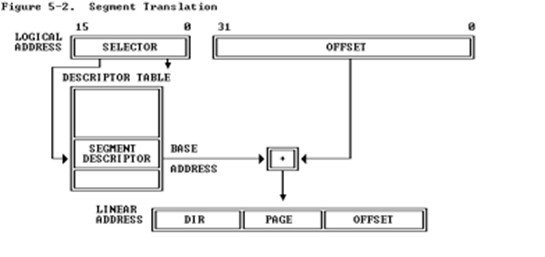
图1 分段地址转换基本过程
分段存储管理机制需要在启动保护模式的前提下建立。从上图可以看出,为了使得分段存储管理机制正常运行,需要建立好段描述符和段描述符表(参看bootasm.S,mmu.h,pmm.c)。
段描述符
在分段存储管理机制的保护模式下,每个段由如下三个参数进行定义:段基地址(BaseAddress)、段界限(Limit)和段属性(Attributes)。在ucore中的kern/mm/mmu.h中的struct segdesc 数据结构中有具体的定义。
上述参数通过段描述符来表示,段描述符的结构如下图所示:
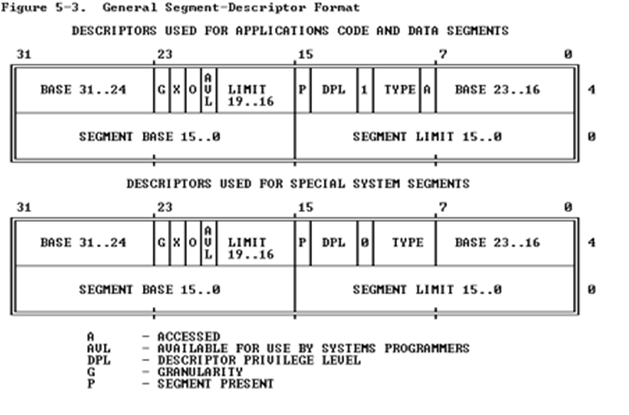
图2 段描述符结构
全局描述符表
全局描述符表的是一个保存多个段描述符的“数组”,其起始地址保存在全局描述符表寄存器GDTR中。GDTR长48位,其中高32位为基地址,低16位为 段界限。由于GDT 不能有GDT本身之内的描述符进行描述定义,所以处理器采用GDTR为GDT这一特殊的系统段。注意,全部描述符表中第一个段描述符设定为空段描述符。 GDTR中的段界限以字节为单位。对于含有N个描述符的描述符表的段界限通常可设为8*N-1。在ucore中的boot/bootasm.S中的gdt 地址处和kern/mm/pmm.c中的全局变量数组gdt[]分别有基于汇编语言和C语言的全局描述符表的具体实现。
选择子
线性地址部分的选择子是用来选择哪个描述符表和在该表中索引一个描述符的。选择子可以做为指针变量的一部分,从而对应用程序员是可见的,但是一般是由连接加载器来设置的。选择子的格式如下图所示:

图3 段选择子结构
索引(Index):在描述符表中从8192个描述符中选择一个描述符。处理器自动将这个索引值乘以8(描述符的长度),再加上描述符表的基址来索引描述符表,从而选出一个合适的描述符。
表指示位(Table Indicator,TI):选择应该访问哪一个描述符表。0代表应该访问全局描述符表(GDT),1代表应该访问局部描述符表(LDT)。
请求特权级(Requested Privilege Level,RPL):保护机制,在后续试验中会进一步讲解。
全局描述符表的第一项是不能被CPU使用,所以当一个段选择子的索引(Index)部分和表指示位(Table Indicator)都为0的时(即段选择子指向全局描述符表的第一项时),可以当做一个空的选择子(见mmu.h中的SEG_NULL)。当一个段寄存 器被加载一个空选择子时,处理器并不会产生一个异常。但是,当用一个空选择子去访问内存时,则会产生异常。
(4) 保护模式下的特权级
在保护模式下,特权级总共有4个,编号从0(最高特权)到3(最低特权)。有3种主要的资源受到保护:内存,I/O端口以及执行特殊机器指令的能 力。在任一时刻,x86 CPU都是在一个特定的特权级下运行的,从而决定了代码可以做什么,不可以做什么。这些特权级经常被称为为保护环(protection ring),最内的环(ring 0)对应于最高特权0,最外面的环(ring 3)一般给应用程序使用,对应最低特权3。在ucore中,CPU只用到其中的2个特权级:0(内核态)和3(用户态)。
有大约15条机器指令被CPU限制只能在内核态执行,这些机器指令如果被用户模式的程序所使用,就会颠覆保护模式的保护机制并引起混乱,所以它们被保留给操作系统内核使用。如果企图在ring 0以外运行这些指令,就会导致一个一般保护异常(general-protectionexception)。对内存和I/O端口的访问也受类似的特权级限制。
数据段选择子的整个内容可由程序直接加载到各个段寄存器(如SS或DS等)当中。这些内容里包含了请求特权级(Requested Privilege Level,简称RPL)字段。然而,代码段寄存器(CS)的内容不能由装载指令(如MOV)直接设置,而只能被那些会改变程序执行顺序的指令(如 JMP、INT、CALL)间接地设置。而且CS拥有一个由CPU维护的当前特权级字段(Current Privilege Level,简称CPL)。二者结构如下图所示:
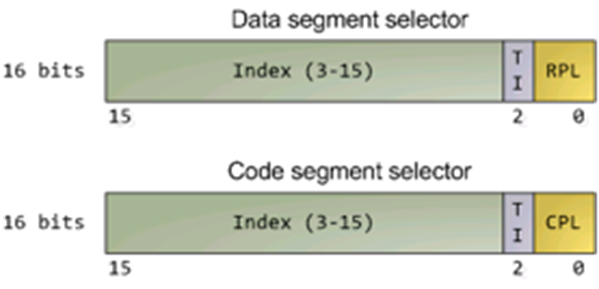
图4 DS和CS的结构图
代码段寄存器中的CPL字段(2位)的值总是等于CPU的当前特权级,所以只要看一眼CS中的CPL,你就可以知道此刻的特权级了。
CPU会在两个关键点上保护内存:当一个段选择符被加载时,以及,当通过线性地址访问一个内存页时。因此,保护也反映在内存地址转换的过程之中,既包括分段又包括分页。当一个数据段选择符被加载时,就会发生下述的检测过程:

图5 内存访问特权级检查过程
因为越高的数值代表越低的特权,上图中的MAX()用于选择CPL和RPL中特权最低的一个,并与描述符特权级(Descriptor Privilege Level,简称DPL)比较。如果DPL的值大于等于它,那么这个访问可正常进行了。RPL背后的设计思想是:允许内核代码加载特权较低的段。比如,你可以使用RPL=3的段描述符来确保给定的操作所使用的段可以在用户模式中访问。但堆栈段寄存器是个例外,它要求CPL,RPL和DPL这3个值必须完全 一致,才可以被加载。下面再总结一下CPL、RPL和DPL:
CPL:当前特权级(Current Privilege Level) 保存在CS段寄存器(选择子)的最低两位,CPL就是当前活动代码段的特权级,并且它定义了当前所执行程序的特权级别)
DPL:描述符特权(Descriptor Privilege Level) 存储在段描述符中的权限位,用于描述对应段所属的特权等级,也就是段本身真正的特权级。
RPL:请求特权级RPL(Request Privilege Level) RPL保存在选择子的最低两位。RPL说明的是进程对段访问的请求权限,意思是当前进程想要的请求权限。RPL的值由程序员自己来自由的设置,并不一定 RPL>=CPL,但是当RPL<CPL时,实际起作用的就是CPL了,因为访问时的特权检查是判断:max(RPL,CPL)& lt;=DPL是否成立,所以RPL可以看成是每次访问时的附加限制,RPL=0时附加限制最小,RPL=3时附加限制最大。
原文地址:https://objectkuan.gitbooks.io/ucore-docs/content/lab1/lab1_3_2_1_protection_mode.html