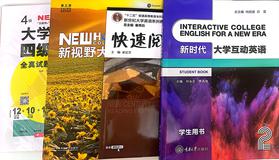
2023级线上线下混合式大学英语(二)

余潇潇,张远濛,邹琼,庾丹,何晓惠,刘诗琴

目录

  • 1 导学
    • 1.1 线上学习指南
    • 1.2 线下学习指南
  • 2 Unit 1 How to Approach Career Planning
    • 2.1 学习目标
    • 2.2 导言
    • 2.3 词汇模块
      • 2.3.1 Project 2 Word-attacking
      • 2.3.2 Project 3 Word-attacking
    • 2.4 课文模块
    • 2.5 听力模块
      • 2.5.1 Gap-filling& Inferring
      • 2.5.2 Unit 1 Video
    • 2.6 语法模块
    • 2.7 阅读模块
      • 2.7.1 拓展阅读练习
    • 2.8 对话与演讲模块
    • 2.9 写作模块
      • 2.9.1 How to write a good CV
      • 2.9.2 How to write a cover letter
  • 3 Unit4 How to Introduce a Company
    • 3.1 学习目标
    • 3.2 导言
    • 3.3 词汇模块
      • 3.3.1 Project 2 Word-attacking
      • 3.3.2 Project 3 Word-attacking
    • 3.4 课文模块
    • 3.5 听力模块
      • 3.5.1 Gap-filling& Inferring
      • 3.5.2 Retelling
    • 3.6 语法模块
    • 3.7 阅读模块
      • 3.7.1 拓展阅读练习
    • 3.8 对话与演讲练习
    • 3.9 写作模块
    • 3.10 阅读技巧拓展
  • 4 Unit 5 How to Establish Business Relations
    • 4.1 导言
    • 4.2 学习目标
    • 4.3 词汇模块
      • 4.3.1 Project 2 Word-attacking
      • 4.3.2 Project 3 Word-attacking
    • 4.4 课文模块
    • 4.5 听力模块
      • 4.5.1 Gap-filling& Inferring
        • 4.5.1.1 Retelling
    • 4.6 语法模块
    • 4.7 阅读模块
      • 4.7.1 阅读拓展练习
    • 4.8 对话与演讲练习
    • 4.9 写作模块
    • 4.10 阅读技巧拓展
  • 5 Unit 6 How to cater visitors
    • 5.1 导言
    • 5.2 学习目标
    • 5.3 词汇模块
      • 5.3.1 Project 2 Word-attacking
      • 5.3.2 Project 3 Word-attacking
    • 5.4 课文模块
    • 5.5 听力模块
      • 5.5.1 Gap-filling& Inferring
      • 5.5.2 Retelling
    • 5.6 语法模块
    • 5.7 阅读拓展练习
    • 5.8 对话与演讲练习
    • 5.9 写作模块
  • 6 大学英语语法(20讲)
    • 6.1 构词法
    • 6.2 介词
    • 6.3 连词
    • 6.4 助动词和情态动词
    • 6.5 非谓语动词
    • 6.6 动词短语和短语动词
    • 6.7 句子(按功能分类)
    • 6.8 句子(按结构分类)
    • 6.9 名词性从句
    • 6.10 定语从句
    • 6.11 状语从句
    • 6.12 时态1
    • 6.13 时态2
    • 6.14 时态3
    • 6.15 被动语态
    • 6.16 虚拟语气
    • 6.17 三种特殊结构
    • 6.18 语序与强调
    • 6.19 搭配
    • 6.20 主谓一致和时态一致
  • 7 英语阅读技巧微课(20讲)
    • 7.1 Skimming
    • 7.2 Scanning
    • 7.3 Finding the main idea
    • 7.4 Predicting
    • 7.5 Summarizing
    • 7.6 ​ Identifying topic sentences
    • 7.7 Identifying  key words
    • 7.8 Identifying Passage Organization
    • 7.9 Finding Supporting Details
    • 7.10 Making Use of Cue Words
    • 7.11 Guessing the Meaning of Words
    • 7.12 Understanding Conceptual Meaning
    • 7.13 Understanding propositional meaninig
    • 7.14 Understanding contextual meaning
    • 7.15 Understanding Pragmatic Meaning
    • 7.16 Distinguishing Facts from Opinions
    • 7.17 Identifying the author’s tone
    • 7.18 Making inferences-
    • 7.19 Drawing Conclusions
    • 7.20 Identifying author's purpose
  • 8 大学英语技能微课(30讲)
    • 8.1 目录
    • 8.2 Listening Skills SPOC(2讲)
      • 8.2.1 Improving your listening skills in English
      • 8.2.2 Getting high marks in Listening Comprehension
    • 8.3 Speaking Skills SPOC(6讲)
      • 8.3.1 Pronouncing like a native speaker
      • 8.3.2 Conducting a discussion
      • 8.3.3 Making yourself stand out
      • 8.3.4 Following a conversation
      • 8.3.5 Keeping a conservation going
      • 8.3.6 Dealing with a counter-argument
    • 8.4 Reading Skills SPOC(3讲)
      • 8.4.1 Enhancing your reading strategies
      • 8.4.2 Taking notes: Cornell Note-taking System
      • 8.4.3 Avoiding plagiarism
    • 8.5 Writing Skills SPOC(9讲)
      • 8.5.1 Supporting the topic sentence with details
      • 8.5.2 Writing a paragraph with problem-solution pattern
      • 8.5.3 Writing a paragraph with comparison and contrast
      • 8.5.4 Writing a paragraph with cause-effect pattern
      • 8.5.5 Writing a paragraph with question-example-conclusion pattern
      • 8.5.6 Writing a paragraph with time order
      • 8.5.7 Writing a paragraph with listing
      • 8.5.8 Writing a paragraph with examples
      • 8.5.9 Writing summaries for papers
    • 8.6 Presentation Skills SPOC(3讲)
      • 8.6.1 Confirming a topic for presentation
      • 8.6.2 Developing the content of the presentation
      • 8.6.3 Delivering your presentation effectively
    • 8.7 Career Skills SPOC(7讲)
      • 8.7.1 Writing a good personal letter
      • 8.7.2 Writing English emails
      • 8.7.3 Writing a report in English
      • 8.7.4 Writing practical letters
      • 8.7.5 Making questionnaires
      • 8.7.6 Writing a winning CV
      • 8.7.7 Writing your personal statement
目录

Lecture 1. Pronouncing like a native speaker   如何像老外一样地道发音

Lecture 2. Conducting a discussion   如何展开讨论

Lecture 3. Making yourself stand out  如何让自己脱颖而出

Lecture 4. Improving your listening skills in English  如何提升英语听力技巧

Lecture 5. Following a conversation  如何听懂对话

Lecture 6. Keeping a conservation going   如何让谈话进行下去

Lecture 7. Confirming a topic for presentation  如何确定演讲题目

Lecture 8. Developing the content of the presentation  如何丰富演讲内容

Lecture 9. Delivering your presentation effectively  如何有效传递演讲信息

Lecture 10. Enhancing your reading strategies   如何强化阅读技巧

Lecture 11. Writing a good personal letter  如何写好自我介绍信

Lecture 12. Writing English emails  如何书写英文邮件

Lecture 13. Supporting the topic sentence with details   如何用细节支撑主题句

Lecture 14. Writing a report in English  如何写英文报告

Lecture 15. Writing practical letters   如何写实用信函

Lecture 16. Writing a paragraph with problem-solution pattern   如何写问题-方案类型段落

Lecture 17. Writing a paragraph with comparison and contrast  如何写对比类型段落

Lecture 18. Writing a paragraph with cause-effect pattern  如何写因果关系段落

Lecture 19. Writing a paragraph with question-example-conclusion pattern 如何写问题-例子类型段落

Lecture 20. Writing a paragraph with time order  如何以时间顺序写作

Lecture 21. Writing a paragraph with listing  如何在写作中列举

Lecture 22. Writing a paragraph with examples  如何在写作中举例子

Lecture 23. Writing summaries for papers  如何撰写论文结论

Lecture 24. Getting high marks in Listening Comprehension   如何在听力理解中取得高分 

Lecture 25. Making questionnaires  如何做问卷

Lecture 26. Writing a winning CV  如何撰写简历

Lecture 27. Taking notes: Cornell Note-taking System  如何做笔记——康奈尔笔记法

Lecture 28. Dealing with a counter-argument  如何写驳论文

Lecture 29. Writing your personal statement  如何写个人陈述

       Lecture 30. Avoiding plagiarism 如何避免抄袭